Intermediate Arabic (CEFR B1–B2) is the stage where learners move beyond survival phrases into genuine communication — reading Arabic news, holding extended conversations, writing structured paragraphs, and understanding native speakers on familiar topics. Reaching this level typically requires 600–1,200 hours of study from zero, depending on learning intensity and method. The core focus at this stage is complex grammar structures, thematic vocabulary expansion, and active production through speaking and writing.
Key Takeaway Table:
| Feature | Beginner (A1–A2) | Intermediate (B1–B2) | Advanced (C1–C2) |
|---|---|---|---|
| Vocabulary | 500–1,000 words | 2,000–5,000 words | 5,000–10,000+ words |
| Grammar | Basic sentences, present tense | Conditionals, Idafa, derived forms | Full classical grammar, rhetoric |
| Reading | Vowelled texts, simple phrases | Unvowelled news articles, short stories | Literary texts, classical Arabic |
| Listening | Slow, clear speech only | Standard speed on familiar topics | Native speed on all topics |
| Speaking | Introductions, basic needs | Extended conversation, opinions | Debate, formal presentations |
| Study Hours to Reach | 0–600 hrs | 600–1,200 hrs | 1,200–2,200+ hrs |
| CEFR Level | A1–A2 | B1–B2 | C1–C2 |
The objectives of Intermediate Arabic are, in general, to solidify knowledge of the basic rules of Arabic grammar, to expand vocabulary in terms of complexity, and to increase the acquisition of words for active use in a wide variety of topics and settings. Emphasis is placed on the use of authentic reading and listening materials and on communicative writing and speaking tasks.
What Is Intermediate Arabic? (CEFR B1–B2 Explained)
Intermediate Arabic corresponds to B1–B2 on the Common European Framework of Reference for Languages (CEFR) — the international standard for language proficiency. These two sub-levels represent meaningfully different stages of the same broad intermediate phase:
B1 — Lower Intermediate:
At B1, you can handle straightforward communication on familiar topics — your work, family, hobbies, travel. You can read simple Arabic articles with occasional dictionary support, write short structured texts, and manage basic travel situations in Arabic-speaking countries. Native speakers need to make some effort to understand you.
B2 — Upper Intermediate:
At B2, you can understand the main ideas of complex texts on concrete and abstract topics. You can interact with native speakers with enough fluency that conversation flows without strain for either party. You can write detailed, coherent texts on a range of subjects, and you can follow extended Arabic audio on familiar topics at near-normal speed.
The defining characteristic of intermediate Arabic is the shift from recognition to production — from understanding Arabic when you see or hear it, to generating correct, natural Arabic independently. This is the hardest transition in Arabic learning, and it is why many learners stall at this stage.
The intermediate plateau is real. Learners who push through it by increasing authentic input and output — rather than continuing to study grammar rules — are the ones who reach advanced level.

Am I Intermediate Level? How to Self-Assess Your Arabic
Before diving into intermediate content, it is worth knowing whether you are actually at this level — or whether you are at advanced beginner (A2) or already approaching advanced (C1). Many learners misjudge their level, which leads to studying material that is either too easy (wasting time) or too difficult (causing frustration.
You are likely at Intermediate Arabic (B1) if you can:
- ✅ Read short, vowelled Arabic texts on familiar topics without a dictionary
- ✅ Write a paragraph of 6–8 sentences about yourself, your routine, or your opinions
- ✅ Hold a 3–5 minute conversation on familiar topics with some hesitation
- ✅ Understand slow-to-moderate Arabic audio when the topic is familiar
- ✅ Use past, present, and future tense correctly most of the time
- ✅ Recognise the definite article, basic gender agreement, and simple verb conjugations automatically
You are likely at Upper Intermediate (B2) if you can also:
- ✅ Read unvowelled Arabic text slowly with occasional dictionary use
- ✅ Follow Arabic news broadcasts on familiar topics with 60–70% comprehension
- ✅ Write a multi-paragraph essay with logical structure
- ✅ Use Idafa, relative pronouns, and conditional sentences correctly in speech
- ✅ Understand native speakers when they speak at normal (not reduced) speed on familiar subjects
You are probably still at Advanced Beginner (A2) if:
- ❌ You need vowels (tashkeel) on every word to read
- ❌ You can only produce memorised phrases, not construct original sentences
- ❌ You cannot follow any Arabic audio without a transcript
- ❌ Basic gender agreement and verb conjugation still require conscious effort
Be honest with your self-assessment. Intermediate content studied at A2 level produces confusion. Beginner content studied at B1 level produces boredom. Both slow progress.
Read also: Arabic language levels
Intermediate Arabic Grammar: The 5 Structures That Change Everything
Below we will review some little grammar rules in the Arabic language for the intermediate level.

1. Idafa (الإضافة) — The Arabic Construct State
What it is:
Idafa is the primary way Arabic expresses possession and noun-to-noun relationships. Rather than using a separate word like “of” or an apostrophe-s, Arabic joins two nouns directly — and the joining itself communicates the relationship.
The word إضافة (idāfa) literally means “addition” — you are adding one noun to another to create a unified meaning.
The Structure:
First Noun (المُضَاف) + Second Noun (المُضَاف إليه)
[The possessed] [The possessor — always genitive case]
The Three Rules You Must Know:
Rule 1: The first noun never takes the definite article ال — even when the meaning is definite.
Rule 2: The first noun loses its tanwin (nunation) if it had one.
Rule 3: The second noun takes the genitive case (kasra) and may take ال if it is a specific, definite entity.
Worked Examples — Simple Idafa:
| Arabic | Transliteration | Meaning | Note |
|---|---|---|---|
| كِتَابُ الطَّالِبِ | Kitābu al-ṭālibi | The student’s book | First noun: no ال, no tanwin |
| بَابُ الْبَيْتِ | Bābu al-bayti | The door of the house | Second noun: genitive kasra |
| مَدِينَةُ النُّورِ | Madīnatu al-nūri | The city of light | Both nouns definite in meaning |
| مَكْتَبُ الْمُدِيرِ | Maktabu al-mudīri | The director’s office | Director = definite, takes ال |
| كَلِمَةُ اللهِ | Kalimatu Allāhi | The word of Allah | Proper noun as second element |
Worked Examples — Extended Idafa (Chain):
Arabic can chain multiple nouns in a single Idafa construction:
بَابُ غُرْفَةِ الْمُدِيرِ
Bābu ghurfati al-mudīri
“The door of the director’s room”
كِتَابُ مُعَلِّمِ اللُّغَةِ الْعَرَبِيَّةِ
Kitābu muʿallimi al-lughati al-ʿarabiyyati
“The Arabic language teacher’s book”
In a chain, only the last noun can take ال. All preceding nouns remain without it, regardless of definiteness.
Idafa With Adjectives:
This is where learners most commonly make errors. An adjective modifying the first noun of an Idafa must come after the entire Idafa construction — and must agree in definiteness with the first noun’s implied definiteness:
الْكِتَابُ الْجَدِيدُ لِلطَّالِبِ ✅
The new book of the student
كِتَابُ الطَّالِبِ الْجَدِيدُ ✅
The student’s new book (adjective follows full Idafa)
Common Mistakes:
| Mistake | Wrong | Right | Why |
|---|---|---|---|
| Adding ال to first noun | الكِتَابُ الطَّالِبِ | كِتَابُ الطَّالِبِ | First noun never takes ال in Idafa |
| Keeping tanwin on first noun | كِتَابٌ الطَّالِبِ | كِتَابُ الطَّالِبِ | Tanwin drops in Idafa |
| Nominative on second noun | كِتَابُ الطَّالِبُ | كِتَابُ الطَّالِبِ | Second noun must be genitive (kasra) |
Practice Sentences — Try translating these:
- The teacher’s office is large.
- The door of the mosque is old.
- The words of the Quran are beautiful.
- The student’s Arabic book is on the table.
- The director of the school spoke.
Answers:
- مَكْتَبُ الْمُعَلِّمِ كَبِيرٌ
- بَابُ الْمَسْجِدِ قَدِيمٌ
- كَلِمَاتُ الْقُرْآنِ جَمِيلَةٌ
- كِتَابُ الطَّالِبِ الْعَرَبِيُّ عَلَى الطَّاوِلَةِ
- مُدِيرُ الْمَدْرَسَةِ تَكَلَّمَ
2. Derived Verb Forms (الأوزان) — Unlocking Arabic Word Families
What it is:
This is arguably the single most powerful grammar concept in Arabic — and the one that most dramatically accelerates vocabulary acquisition once understood.
Arabic verbs are built on three-letter roots (and occasionally four-letter roots). From each root, up to ten standard verb forms (أوزان — awzān) can be derived, each carrying a predictable modification of the root’s basic meaning. When you understand the pattern of each form, you do not need to memorise each derived verb individually — you can predict its approximate meaning from its form.
The Root System in Action:
Take the root د-ر-س (D-R-S) — carrying the core concept of study/lesson:
| Form | Arabic Verb | Meaning | Pattern |
|---|---|---|---|
| Form I | دَرَسَ | He studied | Basic action |
| Form II | دَرَّسَ | He taught | Causative — to cause someone to study |
| Form III | دَارَسَ | He studied with (someone) | Reciprocal — doing together |
| Form V | تَدَرَّسَ | It was studied | Reflexive of Form II |
| Form VI | تَدَارَسَ | They studied together | Reciprocal reflexive |
The Ten Forms — Patterns and Meanings:
| Form | Pattern (فَعَلَ scale) | Typical Meaning Modification | Example |
|---|---|---|---|
| I | فَعَلَ | Basic action | كَتَبَ — he wrote |
| II | فَعَّلَ | Causative / intensive | كَذَّبَ — he called someone a liar (from كَذَبَ — he lied) |
| III | فَاعَلَ | Reciprocal / doing with another | كَاتَبَ — he corresponded with |
| IV | أَفْعَلَ | Causative (making something happen) | أَكْرَمَ — he honoured (from كَرِيم — generous) |
| V | تَفَعَّلَ | Reflexive of Form II | تَعَلَّمَ — he learned (reflexive of عَلَّمَ — he taught) |
| VI | تَفَاعَلَ | Reciprocal of Form III | تَكَاتَبَ — they wrote to each other |
| VII | اِنْفَعَلَ | Passive / result of action | اِنْكَسَرَ — it broke (intransitive, from كَسَرَ — he broke it) |
| VIII | اِفْتَعَلَ | Reflexive / active result | اِجْتَمَعَ — they gathered (from جَمَعَ — he gathered) |
| IX | اِفْعَلَّ | Colours and physical defects | اِحْمَرَّ — it turned red |
| X | اِسْتَفْعَلَ | To consider / to request | اِسْتَعْمَلَ — he used (considered for use) |
Why This Changes Everything:
Once you know that Form II is typically causative and Form V is its reflexive, you can decode new verbs instantly:
You know فَهِمَ (fahima — he understood — Form I)
You can predict فَهَّمَ (fahhama — he explained / caused understanding — Form II)
You can predict تَفَهَّمَ (tafahhama — he came to understand gradually — Form V)
Three new verbs from one known root — without memorisation.
Worked Examples Across Roots:
| Root | Form I | Form II | Form IV | Form V | Form X |
|---|---|---|---|---|---|
| ع-ل-م | عَلِمَ (he knew) | عَلَّمَ (he taught) | أَعْلَمَ (he informed) | تَعَلَّمَ (he learned) | اِسْتَعْلَمَ (he inquired) |
| خ-ر-ج | خَرَجَ (he exited) | خَرَّجَ (he graduated someone) | أَخْرَجَ (he brought out) | تَخَرَّجَ (he graduated) | اِسْتَخْرَجَ (he extracted) |
| ك-ت-ب | كَتَبَ (he wrote) | كَتَّبَ (he dictated) | أَكْتَبَ (he made write) | تَكَتَّبَ (it was written up) | اِسْتَكْتَبَ (he asked to write) |
Common Mistake:
Learners often try to memorise each derived verb as a separate vocabulary item — the same way they memorise vocabulary in European languages. This approach works for European languages with limited derivation. In Arabic, it fails because the system is too productive. Learn the patterns, not just the words.
Practice:
Given the root س-م-ع (to hear), predict the meaning of:
- سَمَّعَ (Form II)
- أَسْمَعَ (Form IV)
- تَسَامَعَ (Form VI)
- اِسْتَمَعَ (Form X — this one is very common)
Answers:
- He made someone hear / he recited aloud
- He caused to hear / he played for someone
- They heard about each other / word spread between them
- He listened attentively (the most common Form X in everyday Arabic)
Master Arabic with Kalimah Center
Join our expert-led online classes and start your journey toward Arabic fluency today.
Book Your Free Trial3. Relative Pronouns (الأسماء الموصولة) — Who, Which, That in Arabic
What it is:
Relative pronouns connect a main clause to a relative clause that provides additional information about a noun. In English, we use “who,” “which,” and “that” regardless of the noun’s gender or number. Arabic uses different relative pronouns for each gender and number combination — and requires a resumptive pronoun in the relative clause when the noun is not the subject.
The Arabic Relative Pronouns:
| Pronoun | Arabic | Used For |
|---|---|---|
| Who / Which / That (masc. singular) | الَّذِي | Masculine singular nouns |
| Who / Which / That (fem. singular) | الَّتِي | Feminine singular nouns |
| Who / Which (masc. dual) | اللَّذَانِ / اللَّذَيْنِ | Masculine dual (nom. / gen-acc.) |
| Who / Which (fem. dual) | اللَّتَانِ / اللَّتَيْنِ | Feminine dual |
| Who / Which (masc. plural) | الَّذِينَ | Masculine plural (human beings) |
| Who / Which (fem. plural) | اللَّاتِي / اللَّوَاتِي | Feminine plural |
| What / That (non-specific) | مَا | Non-human, indefinite reference |
| Who / What (non-specific) | مَنْ | Human, indefinite reference |
Worked Examples — Basic Relative Clauses:
الطَّالِبُ الَّذِي يَدْرُسُ كَثِيرًا يَنْجَحُ
Al-ṭālibu alladhī yadrusu kathīran yanjaḥu
“The student who studies a lot succeeds”
(Masculine singular noun → الَّذِي)
الْمَرْأَةُ الَّتِي تَعْمَلُ هُنَا مُعَلِّمَةٌ
Al-marʾatu allatī taʿmalu hunā muʿallimatun
“The woman who works here is a teacher”
(Feminine singular noun → الَّتِي)
الطُّلَّابُ الَّذِينَ نَجَحُوا سَعِيدُونَ
Al-ṭullābu alladhīna najaḥū saʿīdūna
“The students who succeeded are happy”
(Masculine plural human → الَّذِينَ)
The Resumptive Pronoun — The Rule Most Learners Miss:
When the relative pronoun’s antecedent is not the subject of the relative clause — when it is the object, or follows a preposition — Arabic requires a resumptive pronoun (ضَمِير عَائِد) inside the relative clause referring back to it.
الْكِتَابُ الَّذِي قَرَأْتُـهُ مُفِيدٌ
Al-kitābu alladhī qaraʾtuhu mufīdun
“The book that I read it is useful”
In English, “I read it” sounds redundant — we say “the book that I read.” In Arabic, the -hu (it) is grammatically required. Without it, the sentence is incomplete.
الْبَيْتُ الَّذِي أَسْكُنُ فِيـهِ كَبِيرٌ
Al-baytu alladhī askunu fīhi kabīrun
“The house that I live in it is large”
Again — “in it” (فِيهِ) is required in Arabic even though English drops the pronoun.
Indefinite Antecedents — When to Drop the Relative Pronoun:
When the antecedent noun is indefinite (no ال), Arabic drops the relative pronoun entirely and uses a relative clause directly:
رَأَيْتُ طَالِبًا يَدْرُسُ
Raʾaytu ṭāliban yadrusu
“I saw a student studying” (lit. “I saw a student — he studies”)
No الَّذِي — because “a student” is indefinite. The relative clause follows directly.
Common Mistakes:
| Mistake | Wrong | Corrected | Explanation |
|---|---|---|---|
| Wrong gender agreement | الرَّجُلُ الَّتِي | الرَّجُلُ الَّذِي | رَجُل is masculine — use الَّذِي |
| Missing resumptive pronoun | الْكِتَابُ الَّذِي قَرَأْتُ | الْكِتَابُ الَّذِي قَرَأْتُهُ | Object position requires resumptive pronoun |
| Using relative pronoun with indefinite noun | رَأَيْتُ طَالِبًا الَّذِي يَدْرُسُ | رَأَيْتُ طَالِبًا يَدْرُسُ | Indefinite antecedent drops relative pronoun |
Practice Sentences:
Translate these into Arabic using the correct relative pronoun:
- The teacher who teaches Arabic is Egyptian.
- The book that I bought is expensive.
- The students who passed the exam are happy.
- The city that I live in is beautiful.
- I met a man who speaks Arabic.
Answers:
- الْمُعَلِّمُ الَّذِي يُدَرِّسُ الْعَرَبِيَّةَ مِصْرِيٌّ
- الْكِتَابُ الَّذِي اشْتَرَيْتُهُ غَالٍ
- الطُّلَّابُ الَّذِينَ نَجَحُوا فِي الِامْتِحَانِ سُعَدَاءُ
- الْمَدِينَةُ الَّتِي أَسْكُنُ فِيهَا جَمِيلَةٌ
- قَابَلْتُ رَجُلًا يَتَكَلَّمُ الْعَرَبِيَّةَ
4. Conditional Sentences (الجُمَل الشَّرطية) — If and When in Arabic
What it is:
Conditional sentences express relationships between a condition and its result — “if X happens, then Y follows.” Arabic has a rich and precise conditional system with distinct particles for different types of conditions, and the way verbs behave in conditionals differs significantly from English.
The Two Main Conditional Particles:
إِذَا (Idhā) — Real Conditionals
Used for conditions that are likely, expected, or certain to occur. The English equivalent is “if” or “when” in real conditionals.
لَوْ (Law) — Unreal Conditionals
Used for conditions that are hypothetical, unlikely, or impossible. The English equivalent is “if” in second and third conditional (subjunctive) — “if I were…”, “if I had…”
The Verb Tense Rule — The Most Confusing Part for English Speakers:
In Arabic conditionals, both the condition clause and the result clause typically use past tense verbs — even when referring to future events. This is because Arabic uses past tense to express a completed hypothetical, regardless of actual time reference.
إِذَا دَرَسْتَ، نَجَحْتَ
Idhā darasta, najaḥta
Literally: “If you studied, you succeeded”
Meaning: “If you study, you will succeed” (future real conditional)
This use of past tense for future real conditionals is one of the features that most surprises intermediate Arabic learners.
Worked Examples — إِذَا (Real Conditionals):
| Arabic | Transliteration | Meaning |
|---|---|---|
| إِذَا جَاءَ الْمَطَرُ، بَقِيْنَا فِي الْبَيْتِ | Idhā jāʾa al-maṭaru, baqīnā fi al-bayti | If it rains, we will stay home |
| إِذَا أَكَلْتَ كَثِيرًا، مَرِضْتَ | Idhā akalata kathīran, mariḍta | If you eat too much, you will get sick |
| إِذَا سَافَرْتَ إِلَى مِصْرَ، زُرِ الْأَهْرَامَ | Idhā sāfarta ilā Miṣra, zur al-ahrāma | If you travel to Egypt, visit the pyramids |
| إِذَا اجْتَهَدْتَ، بَلَغْتَ هَدَفَكَ | Idhā ijtahadta, balaghta hadafaka | If you work hard, you will reach your goal |
Worked Examples — لَوْ (Unreal Conditionals):
| Arabic | Transliteration | Meaning |
|---|---|---|
| لَوْ كُنْتُ غَنِيًّا، لَسَافَرْتُ | Law kuntu ghaniyyan, lasāfartu | If I were rich, I would travel |
| لَوْ دَرَسْتَ أَكْثَرَ، لَنَجَحْتَ | Law darasta akthara, lanajaḥta | If you had studied more, you would have passed |
| لَوْ كَانَ عِنْدِي وَقْتٌ، لَزُرْتُكَ | Law kāna ʿindī waqtun, lazurttuka | If I had time, I would visit you |
| لَوْ كُنَّا فِي الْمَدِينَةِ، لَرَأَيْنَاهُ | Law kunnā fi al-madīnati, laraʾaynāhu | If we were in the city, we would see him |
Key Structural Difference Between إِذَا and لَوْ:
| Feature | إِذَا | لَوْ |
|---|---|---|
| Condition type | Real / likely | Unreal / hypothetical |
| Verb in condition | Past tense | Past tense |
| Result clause | No لَ prefix required | Result clause often begins with لَ |
| Implication | “This could actually happen” | “This won’t or didn’t happen” |
The لَ Prefix on the Result Clause:
With لَوْ conditionals, the result clause frequently begins with لَ (a “lam” of correlation):
لَوْ كُنْتُ طَائِرًا، لَطِرْتُ إِلَى بَيْتِكَ
“If I were a bird, I would fly to your house”
This لَ is not always obligatory, but its presence strongly signals an unreal conditional result clause.
Additional Conditional Particles at Intermediate Level:
| Particle | Meaning | Usage |
|---|---|---|
| إِنْ (In) | If | More formal/classical than إِذَا — common in Quran and formal writing |
| كُلَّمَا (Kullamā) | Whenever / every time | Repeated conditions |
| مَهْمَا (Mahmā) | Whatever / no matter what | Concessive conditionals |
Worked Examples — Additional Particles:
كُلَّمَا قَرَأْتُ، تَعَلَّمْتُ شَيْئًا جَدِيدًا
Kullamā qaraʾtu, taʿallamtu shayʾan jadīdan
“Whenever I read, I learn something new”
مَهْمَا حَدَثَ، سَأَبْقَى هُنَا
Mahmā ḥadatha, saʾabqā hunā
“Whatever happens, I will stay here”
Common Mistakes:
| Mistake | Wrong | Correct | Explanation |
|---|---|---|---|
| Using present tense in condition | إِذَا تَدْرُسُ | إِذَا دَرَسْتَ | Past tense required in condition clause |
| Using إِذَا for impossible condition | إِذَا كُنْتُ مَلِكًا | لَوْ كُنْتُ مَلِكًا | “If I were a king” is unreal → لَوْ |
| Missing لَ on لَوْ result clause | لَوْ جِئْتَ ذَهَبْنَا | لَوْ جِئْتَ لَذَهَبْنَا | لَ strengthens the unreal result |
Practice Sentences:
- If you wake up early, you will succeed. (real)
- If I were the teacher, I would explain differently. (unreal)
- If it is cold, I will wear a coat. (real)
- If we had left earlier, we would have arrived on time. (unreal)
- Whenever I listen to Arabic, I improve.
Answers:
- إِذَا اسْتَيْقَظْتَ مُبَكِّرًا، نَجَحْتَ
- لَوْ كُنْتُ الْمُعَلِّمَ، لَشَرَحْتُ بِطَرِيقَةٍ مُخْتَلِفَةٍ
- إِذَا كَانَ الْجَوُّ بَارِدًا، لَبِسْتُ مِعْطَفًا
- لَوْ غَادَرْنَا مُبَكِّرًا، لَوَصَلْنَا فِي الْوَقْتِ الْمُنَاسِبِ
- كُلَّمَا اسْتَمَعْتُ إِلَى الْعَرَبِيَّةِ، تَحَسَّنْتُ
5. Modal Verbs — Can, Should, Must in Arabic
What it is:
Modal verbs express ability, obligation, permission, possibility, and necessity. English modals (can, should, must, may, might) are auxiliary verbs that attach to a main verb. Arabic expresses these meanings differently — through a combination of dedicated modal words, specific verb patterns, and constructions that intermediate learners must recognise and use actively.
The Core Arabic Modals:
Expressing Ability — “Can / Is Able To”
يَسْتَطِيعُ (yastaṭīʿu) — the most common and versatile modal for ability:
أَسْتَطِيعُ أَنْ أَتَكَلَّمَ الْعَرَبِيَّةَ
Astaṭīʿu an atakallama al-ʿarabiyyata
“I can speak Arabic”
هَلْ تَسْتَطِيعُ أَنْ تَأْتِيَ غَدًا؟
Hal tastaṭīʿu an taʾtiya ghadan?
“Can you come tomorrow?”
يَقْدِرُ (yaqdiru) — slightly less formal, also common:
لَا أَقْدِرُ عَلَى الذَّهَابِ الْآنَ
Lā aqdiru ʿalā al-dhahābi al-ān
“I cannot go now”
Key Structure: Arabic modals of ability are followed by أَنْ + subjunctive verb (the verb loses its final vowel or takes a sukun in the subjunctive form).
Expressing Obligation — “Must / Have To”
يَجِبُ (yajibu) — the standard word for obligation, equivalent to “it is necessary”:
يَجِبُ أَنْ تَدْرُسَ كُلَّ يَوْمٍ
Yajibu an tadurusa kulla yawmin
“You must study every day”
يَجِبُ عَلَيْكَ أَنْ تَحْضُرَ الِاجْتِمَاعَ
Yajibu ʿalayka an taḥḍura al-ijtimāʿa
“You must attend the meeting”
Note: يَجِبُ عَلَى + person is the most natural structure when specifying who bears the obligation.
لَازِمٌ (lāzimun) — more colloquial, widely used in spoken Arabic:
لَازِمْ تِرُوحْ دَلْوَقْتِي (Egyptian colloquial)
“You have to go now”
Expressing Recommendation — “Should / Ought To”
يَنْبَغِي (yanbaghī) — formal, carries a sense of what is appropriate or recommended:
يَنْبَغِي أَنْ تَحْتَرِمَ مُعَلِّمَكَ
Yanbaghī an taḥtarama muʿallimaka
“You should respect your teacher”
يَنْبَغِي لِلْمُسَافِرِ أَنْ يَصِلَ مُبَكِّرًا
Yanbaghī lil-musāfiri an yaṣila mubakkiran
“A traveller should arrive early”
يُسْتَحْسَنُ (yustahsanu) — “it is recommended / preferable”:
يُسْتَحْسَنُ أَنْ تَبْدَأَ الْيَوْمَ
Yustahsanu an tabdaʾa al-yawma
“It is recommended that you start today”
Expressing Possibility — “May / Might / Perhaps”
قَدْ (qad) — one of the most important particles in Arabic, with different meanings depending on verb tense:
With past tense → indicates certainty or completion (emphasises the action happened):
قَدْ وَصَلَ الطَّائِرَةُ
“The plane has indeed arrived”
With present tense → indicates possibility or uncertainty:
قَدْ يَمْطُرُ غَدًا
Qad yamṭuru ghadan
“It may rain tomorrow”
رُبَّمَا (rubbamā) — “perhaps / maybe”:
رُبَّمَا يَأْتِي مُحَمَّدٌ الْيَوْمَ
Rubbamā yaʾtī Muḥammadun al-yawma
“Perhaps Muhammad will come today”
Full Modal Comparison Table:
| Meaning | Formal Arabic | Transliteration | Structure |
|---|---|---|---|
| Can (ability) | يَسْتَطِيعُ أَنْ | yastaṭīʿu an | Modal + أَنْ + subjunctive verb |
| Can (ability) | يَقْدِرُ عَلَى | yaqdiru ʿalā | Modal + عَلَى + verbal noun |
| Must (obligation) | يَجِبُ أَنْ | yajibu an | Modal + أَنْ + subjunctive verb |
| Must (on someone) | يَجِبُ عَلَى | yajibu ʿalā | Modal + عَلَى + person + أَنْ |
| Should (recommendation) | يَنْبَغِي أَنْ | yanbaghī an | Modal + أَنْ + subjunctive verb |
| May / Might | قَدْ + present | qad + present | Particle + present tense verb |
| Perhaps | رُبَّمَا | rubbamā | Particle + verb |
| Is allowed to | يُسْمَحُ لَـ | yusmahu la | Passive + لَ + person |
Worked Dialogue — All Modals in Context:
أَسْتَطِيعُ أَنْ أَذْهَبَ إِلَى الْمَكْتَبَةِ غَدًا، وَيَنْبَغِي أَنْ أَعُودَ الدُّرُوسَ قَبْلَ الِامْتِحَانِ. يَجِبُ عَلَيَّ أَيْضًا أَنْ أَتَكَلَّمَ مَعَ الْمُعَلِّمِ، لَكِنْ رُبَّمَا يَكُونُ مَشْغُولًا.
Astaṭīʿu an adhhaba ilā al-maktabati ghadan, wa yanbaghī an aʿūda al-durūsa qabla al-imtiḥān. Yajibu ʿalayya ayḍan an atakallama maʿa al-muʿallimi, lākin rubbamā yakūnu mashghūlan.
“I can go to the library tomorrow, and I should review the lessons before the exam. I also must speak with the teacher, but perhaps he will be busy.”
Common Mistakes:
| Mistake | Wrong | Correct | Explanation |
|---|---|---|---|
| Using indicative after modal | يَجِبُ أَنْ تَذْهَبُ | يَجِبُ أَنْ تَذْهَبَ | After أَنْ, verb must be in subjunctive (final vowel changes) |
| Confusing قَدْ with past vs present | قَدْ يَذْهَبَ (past) = certainty | قَدْ يَذْهَبُ (present) = possibility | Tense of following verb changes قَدْ’s meaning entirely |
| Using يَجِبُ without أَنْ | يَجِبُ تَذْهَبَ | يَجِبُ أَنْ تَذْهَبَ | أَنْ is required between يَجِبُ and the subordinate verb |
Practice Sentences:
- I can read Arabic newspapers.
- You should practice speaking every day.
- She must submit the assignment tomorrow.
- It may snow this winter.
- Perhaps he will understand the lesson.
Answers:
- أَسْتَطِيعُ أَنْ أَقْرَأَ الْجَرَائِدَ الْعَرَبِيَّةَ
- يَنْبَغِي أَنْ تَتَدَرَّبَ عَلَى الْكَلَامِ كُلَّ يَوْمٍ
- يَجِبُ عَلَيْهَا أَنْ تُقَدِّمَ الْوَاجِبَ غَدًا
- قَدْ يَتَثَلَّجُ هَذَا الشِّتَاءَ
- رُبَّمَا يَفْهَمُ الدَّرْسَ
Grammar Section Summary Table
| Grammar Structure | Core Function | Key Rule to Remember | Difficulty |
|---|---|---|---|
| Idafa (الإضافة) | Possession and noun relationships | First noun: no ال, no tanwin. Second noun: genitive | ⭐⭐⭐ |
| Derived Verb Forms (الأوزان) | Unlocking word families from roots | Learn the pattern, not just the word | ⭐⭐⭐⭐⭐ |
| Relative Pronouns (الموصولات) | Connecting clauses to nouns | Match gender/number + add resumptive pronoun for objects | ⭐⭐⭐ |
| Conditional Sentences (الشرطية) | Expressing if/when relationships | إِذَا = real conditions, لَوْ = unreal. Both use past tense verbs | ⭐⭐⭐⭐ |
| Modal Verbs | Ability, obligation, possibility | يَجِبُ/يَسْتَطِيعُ + أَنْ + subjunctive verb | ⭐⭐⭐ |
Master Arabic with Kalimah Center
Join our expert-led online classes and start your journey toward Arabic fluency today.
Book Your Free TrialIntermediate Arabic Vocabulary: 60+ Essential Words by Category
Assuming you’ve passed the beginner level, your next step is to learn some intermediate Arabic words and phrases to help you press forward.
Learning vocabulary is the most important variable once you have the basics down.
| Arabic Word | pronunciation | English Translation |
| الشاشَة | al-šāšah | “Screen” |
| لَوْحَةُ المَفاتيح | lawḥaẗu al-mafātīḥ | “Keyboard” |
| الفَأرَة | al-faʾrah | “Mouse” |
| الجِهاز اللَوْحي | al-ǧihāz al-lawḥī | “Tablet” |
| التِلِفِزيون | al-tilifizīūn | “TV” |
| وِحدَةُ التَحَكُّم | wiḥdaẗu al-taḥakkum | “Console” |
| الشاحِن | al-šāḥin | “Charger” |
| مَوْقِع الوِيب | mawqiʿ al-wib | “Website” |
| حِساب | ḥisāb | “Account” |
| كَلِمَةُ المُرور | kalimaẗu al-murūr | “Password” |
| مَلف | malaf | “File” |
| مُجَلَّد | muǧallad | “Folder” |
| بَرنامَج | barnāmaǧ | “Software” |
| خَدَمَ | ḫadama | “To serve” |
| غادَرَ | ġādara | “To leave” |
| سَمَحَ | samaḥa | “To allow” |
| أَرسَلَ | ʾarsala | “To send” |
| اِستَقبَلَ | istaqbala | “To receive” |
| عاشَ | ʿāša | “To live” |
| اِتَّصَلَ | ittaṣala | “To call” |
| تَذَكَّرَ | taḏakkara | “To remind” |
| قَدَّمَ | qaddama | “To introduce” |
| قَبِلَ | qabila | “To accept” |
| رَفَضَ | rafaḍa | “To refuse” |
| عَمِلَ | ʿamila | “To work” |
| لَعِبَ | laʿiba | “To play” |
| تَعَرَّفَ | taʿarrafa | “To recognize” |
| اِختارَ | iḫtāra | “To choose” |
| لَمَسَ | lamasa | “To touch” |
| شَرَحَ | šaraḥa | “To explain” |
| نَهَضَ | nahaḍa | “To get up” |
| فَتَحَ | fataḥa | “To open” |
| أَغلَقَ | ʾaġlaqa | “To close” |
| فازَ | fāza | “To win” |
| خَسِرَ | ḫasira | “To lose” |
| وَجَدَ | waǧada | “To exist” |
| نَجَحَ | naǧaḥa | “To succeed” |
| غَيَّرَ | ġayyara | “To change” |
| أَتى | ʾatā | “To come” |
| دَرَسَ | darasa | “To study” |
| نامَ | nāma | “To sleep” |
| مَشى | mašā | “To walk” |
| حاوَلَ | ḥāwala | “To try” |
| تَوَقَّفَ | tawaqqafa | “To stop” |
| اِستَمَرَّ | istamarra | “To continue” |
| طَبَخَ | ṭabaḫa | “To cook” |
| اِنتَمى | intamā | “To belong” |
| خاطَرَ | ḫāṭara | “To risk” |
| تَعَلَّمَ | taʿallama | “To learn” |
| اِلتَقى | iltaqā | “To meet” |
| أَنشَأَ | ʾanšaʾa | “To create” |
| حَصَلَ | ḥaṣala | “To get” |
| دَخَلَ | daḫala | “To enter” |
| خَرَجَ | ḫaraǧa | “To exit” |
| عَرَضَ | ʿaraḍa | “To offer” |
| قَدَّمَ | qaddama | “To bring” |
| اِستَخدَمَ | istaḫdama | “To use” |
| وَصَلَ | waṣala | “To reach” |
| حَضَّرَ | ḥaḍḍara | “To prepare” |
| أَضاف | ʾaḍāf | “To add” |
| دَفَعَ | dafaʿa | “To pay” |
| اِعتَبَرَ | iʿtabara | “To consider” |
| اِشتَرى | ištarā | “To buy” |
Intermediate Arabic Phrases for Real Conversations
There are many common sentences in intermediate Arabic level and below we show some of these sentences used.
| English | Arabic | Transliteration |
| I need to see a doctor | أنا في حاجة لرؤية طبيب | ‘ana fi hajat liruyat tabib |
| I don’t feel very well | لا أشعر أنني بحالة جيدة | la ‘asheur ‘anani bihalat jayida |
| I’m sorry, how much does this cost? | آسف، كم تكلفة هذا؟ | Asif, kam taklifat hadha? |
| Where can I buy rice? | أين يمكنني شراء الأرز؟ | ‘Ayn yumkinuni shiraa’ al-‘arz? |
| I’m just looking | أنا فقط أتفحص | ‘Ana faqat ‘atifhis |
| Could you speak slower, please? | هل يمكنك التحدث بشكل أبطأ من فضلك؟ | hal yumkinuk altahaduth bishakl ‘abta min fadlika? |
| Can I use your Wi-Fi? | هل يمكنني استخدام شبكة Wi-Fi الخاصة بك؟ | Hal yumkinuni astikhdam shabakat Al Wi-Fi Alkhasah bika (M) / biki (F)? |
| Do you have any vegetarian dishes? | هل لديك أي أطباق نباتية؟ | Hal ladayk ‘ayu ‘atbaq nabateyyan? |
| Can I have the bill, please? | هل يمكنني أن أحصل على الفاتورة من فضلك؟ | Hal yumkinuni ‘an ahsul Ala Al-faturah min fadlika? |
| You look great today and every day | تبدو رائعًا اليوم وكل يوم | Tabdu ra’ean alyawm wakula yawm |
| Are you a native of this area? | هل أنت من مواليد هذه المنطقة؟ | hal ‘ant min mawalid hadhih almintaqati? |
| Can I get any assistance? I have to get there. | هل يمكنني الحصول على أي مساعدة؟ لا بد لي من الوصول إلى هناك. | hal yumkinuni alhusul ealaa ‘ayi musaeadatin? la buda li min alwusul ‘iilaa hunakin. |
| Could you please direct me to the Big Hotel? | هل يمكنك توجيهي إلى الفندق الكبير من فضلك؟ | hal yumkinuk tawjihi ‘iilaa alfunduq alkabir min fadliki? |
| Could you please inform them how to go to the railway station, please? | هل يمكن أن تخبرهم كيف يذهبون إلى محطة السكة الحديد من فضلك؟ | hal yumkin ‘an tukhbirahum kayf yadhhabun ‘iilaa mahatat alsikat alhadid min fadlika? |
| Could you tell me where to go? | هل يمكن أن تخبرني إلى أين أذهب؟ | hal yumkin ‘an tukhbirani ‘iilaa ‘ayn ‘adhhabi? |
| Do we have London in our sights? | هل لدينا لندن في بصرنا؟ | hal ladayna landan fi basarna? |
| Excuse me, how does one get to… if I’m lost? | معذرةً، كيف يمكن للمرء أن يصل إلى … إذا تاهت؟ | ma‘dhiratan, kayf yumkin lilmar’ ‘an yasil ‘iilaa … ‘iidha tahati? |
| Have you got a guide? | هل لديك دليل؟ | hal ladayk dalil? |
| How are we going to go to High Park? | كيف سنذهب إلى هاي بارك؟ | kayf sanadhhab ‘iilaa hay bark? |
| How can I locate…? | كيف يمكنني تحديد موقع …؟ | kayf yumkinuni tahdid mawqie …? |
| Is it far? | انه بعيد؟ | anah baeid? |
| I’m trying to find… | أحاول أن أجد… | uhawil ‘an ‘ajdi… |
| I’m trying to locate this location. | أحاول تحديد موقع هذا الموقع. | uhawil tahdid mawqie hadha almawqiei. |
| Please provide me with a map. | من فضلك زودني بالخريطة. | min fadlik zudani bialkharitati. |
| What location is the closest post office? | ما هو أقرب مكتب بريد؟ | ma hu ‘aqrab maktab birid? |
| Where can I find the library? | أين يمكنني أن أجد المكتبة؟ | ayn yumkinuni ‘an ‘ajid almaktabata? |
| Which method is the best to…? | ما هي الطريقة الأفضل …؟ | ma hi altariqat al’afdal …? |
| I’m sorry, but I’m unable to attend. | أنا آسف، لكني غير قادر على الحضور. | ana asf, lakiniy ghayr qadir ealaa alhuduri. |
| I’m unable to make that commitment at this time. | أنا غير قادر على تقديم هذا الالتزام في هذا الوقت. | ana ghayr qadir ealaa taqdim hadha alailtizam fi hadha alwaqti. |
| Thanks for asking; I’m not really into it. | شكرا على السؤال؛ أنا لست مهتمًا بها حقًا. | shukran ealaa alsuwal; ‘ana last mhtman biha haqan. |
| It’s a great question, but I’m not sure. | إنه سؤال رائع، لكني لست متأكدًا. | innahu suaal ra’i‘, lakinniy last muta’akkid. |
| I’ll check again and let you know. | سوف أتحقق مرة أخرى وأعلمك بذلك. | sawf ‘atahaqaq maratan ‘ukhraa wa ‘alimuka bidhalika. |
| We had a wonderful time. | كان لدينا وقت رائع. | kan ladayna waqtan ra’i‘an. |
| Are there any other ways we can support you? | هل هناك طرق أخرى يمكننا من خلالها دعمك؟ | hal hunak turuq ‘ukhraa yumkinuna min khilaliha da’muka? |
| You are so generous! | أنتَ في غاية الكرم! | anta fi ghayati al-karam! |
| You have wonderful taste! | ذوقك رائع! | thawquka ra’i‘ |
Arabic Numbers at Intermediate Level: Gender Agreement and Complex Forms
Intermediate Arabic learners already know the basic numbers 1–100. The complexity that appears at this level — and that many learners get wrong for years — is number-gender agreement, which works opposite to what English speakers expect.
The Counter-Intuitive Rule: Numbers 3–10 Take the Opposite Gender of the Noun
| Noun | Gender | Correct Number Form | Example |
|---|---|---|---|
| كِتَاب (book) | Masculine | Feminine number | ثَلَاثَةُ كُتُبٍ (three books) |
| طَالِبَة (female student) | Feminine | Masculine number | ثَلَاثُ طَالِبَاتٍ (three female students) |
This rule — called مُخَالَفَة (mukhālafa), meaning “opposition” — applies to numbers 3–10 only. Numbers 11–99 follow different rules again.
Numbers 11–12: Both parts agree with the noun’s gender
Numbers 13–19: The unit takes opposite gender, the “ten” takes same gender
Numbers 20 and above: The noun returns to singular form (unlike English)
عِنْدِي عِشْرُونَ كِتَابًا (not كُتُب)
ʿIndī ʿishrūna kitāban
“I have twenty books” — singular كِتَاب, not plural كُتُب
This is one of the most tested and most failed areas of intermediate Arabic grammar. Mastering it marks a clear B2 competency.
Where Intermediate Sits in the Full Arabic Journey
Understanding where intermediate Arabic fits in the broader learning journey helps you study with intention rather than anxiety.
A1 Beginner → A2 Advanced Beginner → B1 Intermediate → B2 Upper Intermediate → C1 Advanced → C2 Mastery
| Stage | What You Can Do | Approx. Hours |
|---|---|---|
| A1 Beginner | Alphabet, greetings, numbers, basic phrases | 0–150 hrs |
| A2 Advanced Beginner | Simple sentences, present tense, basic reading | 150–400 hrs |
| B1 Intermediate | Extended conversation, article reading, paragraph writing | 400–800 hrs |
| B2 Upper Intermediate | Complex grammar, news reading, unscripted conversation | 800–1,200 hrs |
| C1 Advanced | Literary texts, formal writing, near-native comprehension | 1,200–1,800 hrs |
| C2 Mastery | Native-level proficiency across all domains | 1,800–2,200+ hrs |
Your current position: If you are working through this intermediate guide, you are approximately 400–800 hours into your Arabic journey. You have completed the hardest part — the beginning. The intermediate-to-advanced transition is challenging, but learners who reach B1 have demonstrated they can acquire Arabic. The question now is not ability — it is method and consistency.
How long does it take to learn intermediate Arabic?
In the intermediate level, learners expand their vocabulary, work on more complex grammatical structures, and acquire additional language skills. This stage involves more extensive reading, writing, and speaking exercises, allowing learners to express themselves with greater fluency and accuracy.

You’ll be able to engage also in most everyday conversations (if spoken slowly) and ask questions as needed to make sure you understand. This level will also allow you to read the news and watch videos in Arabic without major problems. If you’re traveling, you’ll be able to have interactions with the locals about familiar subjects, as well as ask for and follow directions.
To reach an intermediate level, it’s estimated you’ll need 1000–1200 hours of study time (including classes, homework, and practice time).
If you’re serious about learning Arabic fast and are motivated, you can do this in about a year by dedicating at least 20 hours a week to studying.
Read more about Learn Arabic In 30 Days: 1 Month Experience-Based Guide
How to Move from Intermediate to Advanced Arabic: A Practical Roadmap
The intermediate plateau is where most Arabic learners stall. The shift from intermediate to advanced requires a deliberate change in strategy — not just more of the same study.
1. Stop Studying Grammar — Start Using It
At intermediate level, most learners already know more grammar than they can actively use. The bottleneck is not knowledge — it is production. Replace 50% of your grammar study time with writing practice: journal entries, emails, short essays in Arabic. Submit them for correction to a native speaker or tutor. Active error correction accelerates advancement faster than passive grammar review.
2. Read Authentic Arabic Daily — Start With Graded Sources
- Al Jazeera Arabic — start with short news reports on familiar topics
- Qisas Arabiyya (Arabic Stories) — graded readers specifically designed for intermediate learners, free online
- Arabic children’s novels — vocabulary is accessible but grammar is fully authentic
The target: read 20–30 minutes of unvowelled Arabic every day. Comfortable reading of unvowelled text is the clearest marker of advanced level.
3. Learn the Arabic Root System Systematically
Arabic’s three-letter root system means that learning one root unlocks an entire family of related words. At intermediate level, you have enough vocabulary to start recognising root patterns. Begin with the ten verb forms (أوزان — awzān): understanding that Form II (فَعَّلَ) typically means to cause or intensify, Form III (فَاعَلَ) suggests reciprocal action, and Form V (تَفَعَّلَ) is the reflexive of Form II — this framework multiplies your vocabulary acquisition rate dramatically.
4. Listen at Native Speed — Raise the Input Level
Intermediate learners often plateau by consuming content that is too easy. If you understand 95% of what you hear, it is too comfortable. Seek content where you understand 70–80% — that gap is where acquisition happens. Arabic news broadcasts, unscripted interviews, and Arabic podcasts for native speakers (not language learners) are the target.
5. Speak With Native Speakers — Minimum Twice Per Week
Fluency is not built by studying about Arabic. It is built by producing Arabic under real communicative pressure — when you must retrieve words and structures in real time without preparation. Two 45-minute sessions per week with a native speaker on italki or a similar platform, focusing on topics slightly above your comfort level, will advance your spoken Arabic faster than any other single activity.
6. Learn and understand grammar:
Grammar and syntax are important as they help you form correct sentences.
When you know the right form of the sentence, you will be able to speak and write things that others can understand quickly and effortlessly.
Master Arabic with Kalimah Center
Join our expert-led online classes and start your journey toward Arabic fluency today.
Book Your Free TrialInside Kalimah Center: Moments from Our Courses
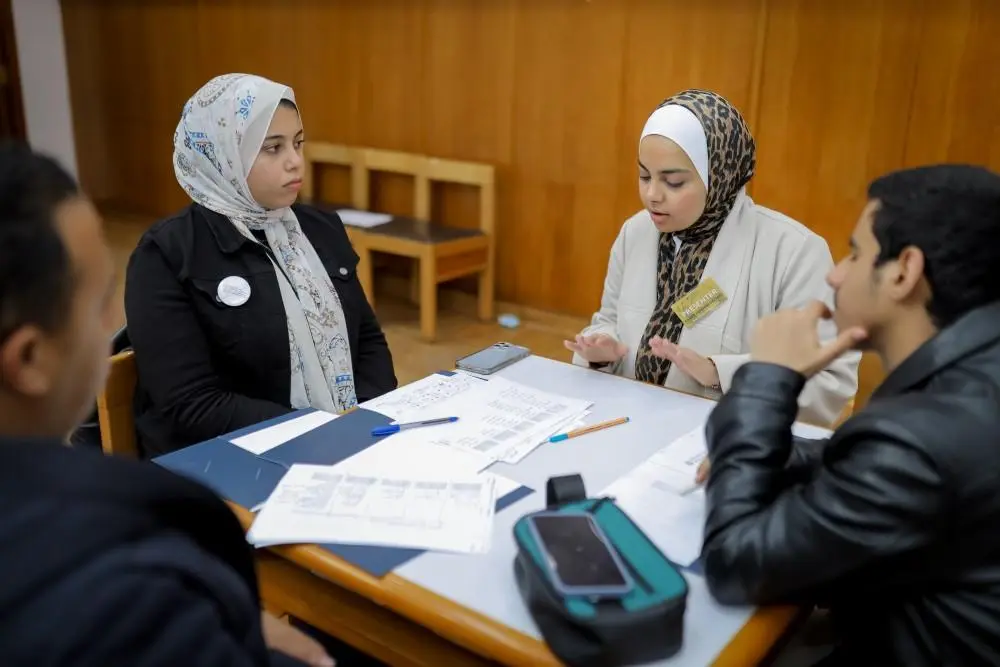
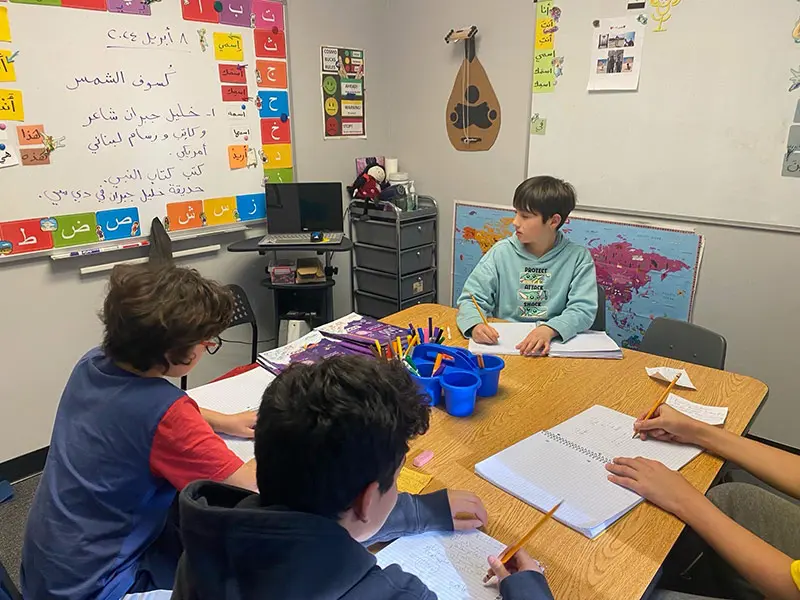
Get a glimpse into the vibrant learning experience at Kalimah Center. These snapshots capture real moments from our live classes—where students engage deeply, connect with passionate instructors, and grow in a welcoming, supportive environment.
Here Are The Reviews On Our Courses:
Our students frequently commend the excellence of our courses and the commitment shown by our instructors. You can read their complete reviews on Trustpilot.
Read more reviews on Trustpilot

Learn Arabic intermediate level free With Kalimah (Free trail session)
Get Started to Improve your Arabic Language & Linguistic Skills! If you wish to fluently and confidently speak Arabic, you’ve landed in the right place.
If you wish your child would get close to the Quran and learn it by heart, you’ve reached the right place!
All our courses are presented in unique attractive presentations and supported by interactive materials to boost the learning experience.
📚 Explore Our Courses:
Online Arabic Course: Tailored to your level, our comprehensive Arabic program includes 16 teaching levels and 400+ hours of personalized sessions.
Online Quran With Tajweed Course: Perfect for non-Arabic speakers, our course spans 13 levels and equips you with Tajweed mastery from beginner to advanced.
Online Arabic Course For Kids: Nurture your child’s love for Arabic with our engaging and structured program, available in 24 levels for primary, intermediate, and secondary stages.
🚀 Start Your Free Trial Today! 🚀
Don’t miss out on this life-changing opportunity to deepen your faith and knowledge. Sign up now for your free trial and take the first step towards becoming a better practicing Muslim with Kalimah Center!
Conclusion: Intermediate Arabic Is the Turning Point
Intermediate Arabic — B1 to B2 on the CEFR scale — is where the Arabic journey becomes genuinely rewarding. The survival-phrase stage is behind you. The ability to read Arabic news, hold real conversations, and understand native speakers on familiar topics is within reach.
The grammar structures covered in this guide — Idafa, conditional sentences, derived verb forms, relative pronouns — are the frameworks that unlock complex Arabic expression. The vocabulary you build at this stage compounds: every new word learned connects to roots and patterns you already know, making acquisition progressively faster.
The most important thing to understand about intermediate Arabic is that progress at this stage is driven by authentic use, not more structured study. Read Arabic. Write Arabic. Speak Arabic with native speakers. The intermediate plateau is not broken by studying harder — it is broken by using more.
Your next milestone is B2 upper intermediate, then C1 advanced. The foundation you are building now makes every subsequent stage faster. Keep going.
FAQs about Intermediate Arabic Level
Q1: What level is intermediate Arabic — B1 or B2?
Intermediate Arabic spans both B1 and B2 on the CEFR scale, but they represent meaningfully different stages. At B1, learners can handle straightforward communication on familiar topics, read simple Arabic articles, and manage basic travel situations. At B2, learners can understand the main ideas of complex texts, engage in extended conversations with native speakers without strain, and write detailed paragraphs on a range of subjects. Most Arabic learners spend 12–18 months in the B1–B2 range before reaching advanced level.
Q2: How do I know if I am at intermediate Arabic level?
You are likely at intermediate level if you can: read short Arabic news articles with occasional dictionary use, hold a 5–10 minute conversation on familiar topics, write a structured paragraph of 8–10 sentences, understand Arabic audio when spoken at moderate speed on familiar subjects, and use basic grammar structures (verb conjugation, definite article, gender agreement) automatically. If you still need to consciously apply every grammar rule and cannot read unvowelled text at all, you are more likely at advanced beginner level.
Q3: How long does it take to reach intermediate Arabic from zero?
Most learners reach B1 intermediate level after 600–800 hours of focused study — approximately 12–18 months at 1 hour per day, or 6–9 months at 2 hours per day. Reaching B2 requires an additional 400–600 hours. These estimates assume structured study combining grammar instruction, vocabulary building with spaced repetition, regular speaking practice with native speakers, and consistent reading and listening practice. Unstructured study takes significantly longer.
Q4: What grammar topics should I focus on at intermediate Arabic level?
The five most important grammar areas for intermediate Arabic learners are: Idafa (the construct state for possessive relationships), derived verb forms (the ten Arabic verb patterns/أوزان), relative pronouns (الذي، التي، الذين), conditional sentences (إذا، لو), and modal verbs expressing obligation, ability, and possibility. Mastering these five areas unlocks the ability to form complex, natural-sounding sentences and read authentic Arabic texts.
Q5: What is the best way to move from intermediate to advanced Arabic?
The most effective strategy for breaking through the intermediate plateau — the stage where many learners stall — is shifting from structured study to authentic immersion. At intermediate level, you have enough foundation to consume real Arabic content: news articles (Al Jazeera Arabic has a simplified version called Al Jazeera Mubasher), Arabic novels graded for intermediate readers, and unscripted conversation with native speakers. Reading widely in Arabic exposes you to the vocabulary range and grammatical complexity that textbooks alone cannot provide. The intermediate plateau is broken by volume of authentic input, not by more grammar study.