Arabic alphabet pronunciation differs from English in three key ways: guttural sounds produced deep in the throat (ع، غ، ح، خ), emphatic consonants pronounced with heavier tongue pressure (ص، ض، ط، ظ), and a vowel system of diacritical marks (harakat) rather than separate vowel letters.
The 28 Arabic letters are highly phonetically consistent — once you know how a letter sounds, it almost always makes that sound, making pronunciation more predictable than English once the unique sounds are mastered.
✅ Quick Pronunciation Reference by Sound Category:
| Category | Letters | Difficulty | Key Feature |
|---|---|---|---|
| Soft/Familiar | ب، ت، د، ر، ز، س، ف، ك، ل، م، ن، ه، و، ي | Easiest | Close to English equivalents |
| Guttural | ع، غ، ح، خ، ق | Hardest | Produced in throat/back of mouth |
| Emphatic | ص، ض، ط، ظ | Hard | Heavier, more forceful versions of familiar sounds |
| Other | أ، ث، ج، ذ، ش | Moderate | Exist in some languages but not standard English |
What is the Arabic Alphabet Phonetic?
The Arabic alphabet phonetic system refers to how the unique sounds of Arabic letters are represented using a set of phonetic symbols or English equivalents. Phonetics allows learners to grasp the pronunciation of Arabic letters, particularly those that don’t exist in the English language, by providing a written representation of their sounds.
The phonetic system is particularly helpful for non-native speakers who struggle with Arabic’s guttural and emphatic sounds. For instance, letters like “ح” (Haa) and “خ” (Khaa) are distinctly different from their English counterparts, requiring learners to understand subtle variations in sound production.
This system also makes it easier to distinguish between hard-to-pronounce letters like “ق” (Qaf) and “ك” (Kaaf), which sound similar to English speakers but are quite different in their throat placement and articulation in Arabic.
Understanding these phonetic representations is a crucial step in mastering Arabic language pronunciation and speaking the language fluently.
How to Pronounce the Arabic Alphabet?
Learning the pronunciation of the Arabic alphabet requires understanding the specific location in the mouth, throat, and tongue from which each sound is produced. Arabic sounds are more diverse than English, with unique guttural, emphatic, and soft sounds that can be challenging for beginners.
Here’s a detailed breakdown of how to pronounce the Arabic Alphabet:
1. Guttural Sounds
These sounds originate from the back of the throat, which is a feature that sets Arabic apart from many other languages. For example:
- “ع” (Ayn): This is a deep, throaty sound that has no equivalent in English. It is produced by constricting the throat.
Check its sound here.
- “غ” (Ghayn): Similar to the French “R,” this sound is pronounced by vibrating the back of the throat, creating a rolling effect.
Check its sound here.
2. Emphatic Sounds
Emphatic consonants are pronounced with a deeper, more forceful articulation. These sounds are heavier and resonate more compared to their non-emphatic counterparts:
- “ط” (Taa): This sound is a stronger, more forceful version of the English “T.” The tongue is pressed against the roof of the mouth, and it has a fuller sound.
Check its sound Here.
- “ض” (Daad): Unique to the Arabic language, “ض” requires the tongue to be pressed against the side teeth, creating a thick, emphatic “D” sound.
Check its sound Here.
3. Soft Sounds
These sounds are relatively lighter and closer to English sounds, making them easier for beginners:
- “ب” (Ba): This is similar to the English “B,” pronounced with the lips coming together and releasing quickly.
Check its sound Here.
- “ت” (Ta): Close to the English “T,” this letter is pronounced by lightly touching the tongue to the roof of the mouth without much force.
Check its sound Here.
Learn Arabic pronunciation through this helpful YouTube video.
Utilizing these audio resources to hear each sound while practicing articulation will enhance your learning experience, allowing you to accurately pronounce these distinct sounds over time.
Arabic Alphabet with English Pronunciation
For beginners learning Arabic, having an Arabic alphabet with an English pronunciation guide is an invaluable tool. By associating Arabic letters with approximate sounds in English, learners can more easily grasp the basics of pronunciation.
This method provides a simplified bridge between the unfamiliar sounds of Arabic and the more familiar sounds of English, helping to build confidence early on.
Here is how the complete Arabic letters correspond to English sounds:
| Arabic Letter | Arabic Name | Approximate English Sound |
| أ | Alif | “A” as in “Apple” (short) or “Ah” |
| ب | Ba | “B” as in “Boy” |
| ت | Ta | “T” as in “Top” |
| ث | Tha | “Th” as in “Think” |
| ج | Jeem | “J” as in “Jam” |
| ح | Haa | A soft, breathy “H” from the throat |
| خ | Khaa | “Kh” (a guttural sound) as in “Bach” |
| د | Dal | “D” as in “Dog” |
| ذ | Dhal | “Th” as in “This” |
| ر | Ra | A rolled “R” like in Spanish |
| ز | Zay | “Z” as in “Zoo” |
| س | Seen | “S” as in “Sun” |
| ش | Sheen | “Sh” as in “Shine” |
| ص | Saad | Emphatic “S” (deeper than “S”) |
| ض | Daad | Emphatic “D” (deeper than “D”) |
| ط | Taa | Emphatic “T” (stronger “T”) |
| ظ | Thaa | Emphatic “Th” (as in “This” but heavier) |
| ع | Ayn | A deep guttural sound (no English equivalent) |
| غ | Ghayn | A guttural “R” (like the French “R”) |
| ف | Fa | “F” as in “Fish” |
| ق | Qaf | A deep “K” sound from the throat |
| ك | Kaaf | “K” as in “King” |
| ل | Laam | “L” as in “Lamp” |
| م | Meem | “M” as in “Moon” |
| ن | Noon | “N” as in “Night” |
| ه | Ha | “H” as in “Hat” |
| و | Waw | “W” as in “Water” |
| ي | Ya | “Y” as in “Yes” |
Check out their pronunciation here: Arabic Alphabet Pronunciation Guide.
This guide will serve as a solid foundation to build upon as you advance in learning the Arabic language.
Arabic Alphabet Pronunciation Chart — All 28 Letters by Sound Category
Learning the Arabic alphabet step-by-step requires practical tools such as a pronunciation chart and engaging resources to guide learners through each letter’s shape, sound, and position.
Here is a breakdown of how you can master the Arabic alphabet using a pronunciation chart and other key resources:
Arabic Alphabet Chart with Pronunciation
An Arabic alphabet chart with pronunciation is an essential tool for anyone starting to learn Arabic. It provides an easy way to associate each Arabic letter with its correct sound, which is a key step in building strong pronunciation habits.
Category 1: Soft Sounds — Closest to English
| Letter | Name | Pronunciation | Memory Aid |
|---|---|---|---|
| ب | Baa | /b/ | “B” in “boy” |
| ت | Taa | /t/ | “T” in “top” |
| د | Daal | /d/ | “D” in “dog” |
| ر | Raa | /r/ (rolled) | Spanish “R” |
| ز | Zaay | /z/ | “Z” in “zoo” |
| س | Seen | /s/ | “S” in “sun” |
| ف | Faa | /f/ | “F” in “fish” |
| ك | Kaaf | /k/ | “K” in “king” |
| ل | Laam | /l/ | “L” in “lamp” |
| م | Meem | /m/ | “M” in “moon” |
| ن | Noon | /n/ | “N” in “night” |
| ه | Haa | /h/ | “H” in “hat” |
| و | Waw | /w/ or /uː/ | “W” in “water” or “oo” in “moon” |
| ي | Yaa | /j/ or /iː/ | “Y” in “yes” or “ee” in “see” |
Category 2: Arabic-Specific Sounds — Require Practice
| Letter | Name | Pronunciation | Technique |
|---|---|---|---|
| ث | Thaa | /θ/ | “Th” in “think” — tongue between teeth |
| ج | Jeem | /dʒ/ | “J” in “jam” (MSA) or “G” in “game” (Egyptian) |
| ذ | Dhaal | /ð/ | “Th” in “this” — voiced version |
| ش | Sheen | /ʃ/ | “Sh” in “ship” |
Category 3: Emphatic Sounds — Heavy Versions
| Letter | Name | Non-Emphatic Partner | Key Difference |
|---|---|---|---|
| ص | Saad | س (Seen) /s/ | Tongue pressed down, deeper resonance |
| ض | Daad | د (Daal) /d/ | Unique to Arabic — tongue presses side teeth |
| ط | Taa | ت (Taa) /t/ | Stronger, fuller — tongue to roof |
| ظ | Dhaa | ذ (Dhaal) /ð/ | Emphatic version of “th” sound |
Category 4: Guttural Sounds — No English Equivalent
| Letter | Name | Description | Practice Tip |
|---|---|---|---|
| ح | Haa | Voiceless pharyngeal fricative | Breathe out forcefully — like fogging a mirror, but from deeper |
| خ | Khaa | Velar fricative | Like clearing throat gently — Scottish “loch” |
| ع | Ayn | Voiced pharyngeal consonant | Constrict throat as if about to cough — then voice it |
| غ | Ghayn | Voiced uvular fricative | Like French “R” — gargling gently |
| ق | Qaaf | Uvular stop | Like “K” but produced at the very back of the throat |

Struggling With Guttural Sounds? A Native Teacher Makes the Difference
Reading about how to produce ع (Ayn) is one thing. Hearing your own attempt corrected by a native Arabic speaker in real time is another.
Kalimah Center’s qualified native Arabic teachers hear your pronunciation and correct it immediately — the thing no chart, PDF, or audio recording can do.
Your first lesson is completely free.
Experience Kalimah Center Classes
Watch real excerpts from our live sessions at Kalimah Center and see how we bring learning to life. These clips highlight our interactive, student-centered teaching approach across all our courses—designed to keep learners engaged, motivated, and actively involved every step of the way.
Master Arabic with Kalimah Center
Join our expert-led online classes and start your journey toward Arabic fluency today.
Book Your Free TrialRead also: Arabic consonants
Arabic Alphabet Chart for Letter Forms at the Beginning, Middle, and End of Words
An essential resource for beginners in learning Arabic is an Arabic alphabet chart that shows how each letter changes depending on its position in a word: the beginning, middle, or end.
Unlike English, where letters generally maintain the same form, Arabic letters change based on their placement within a word. For beginners, this might seem challenging, but with the help of a structured chart, recognizing these variations becomes much easier.
Example of Letter Forms:
Take the letter ع (Ayn) as an example:
- Beginning: عـ
- Middle: ـعـ
- End: ـع
Now consider the letter ب (Baa):
- Beginning: بــ
- Middle: ــبــ
- End: ــب
Using this chart will help learners identify how each letter changes and becomes familiar with the pattern, which simplifies reading and writing Arabic words accurately.

Arabic Alphabet Pronunciation PDF
Effective teaching requires the appropriate resources. At Kalimah Center, we offer students a wide range of materials to enhance their educational journey.
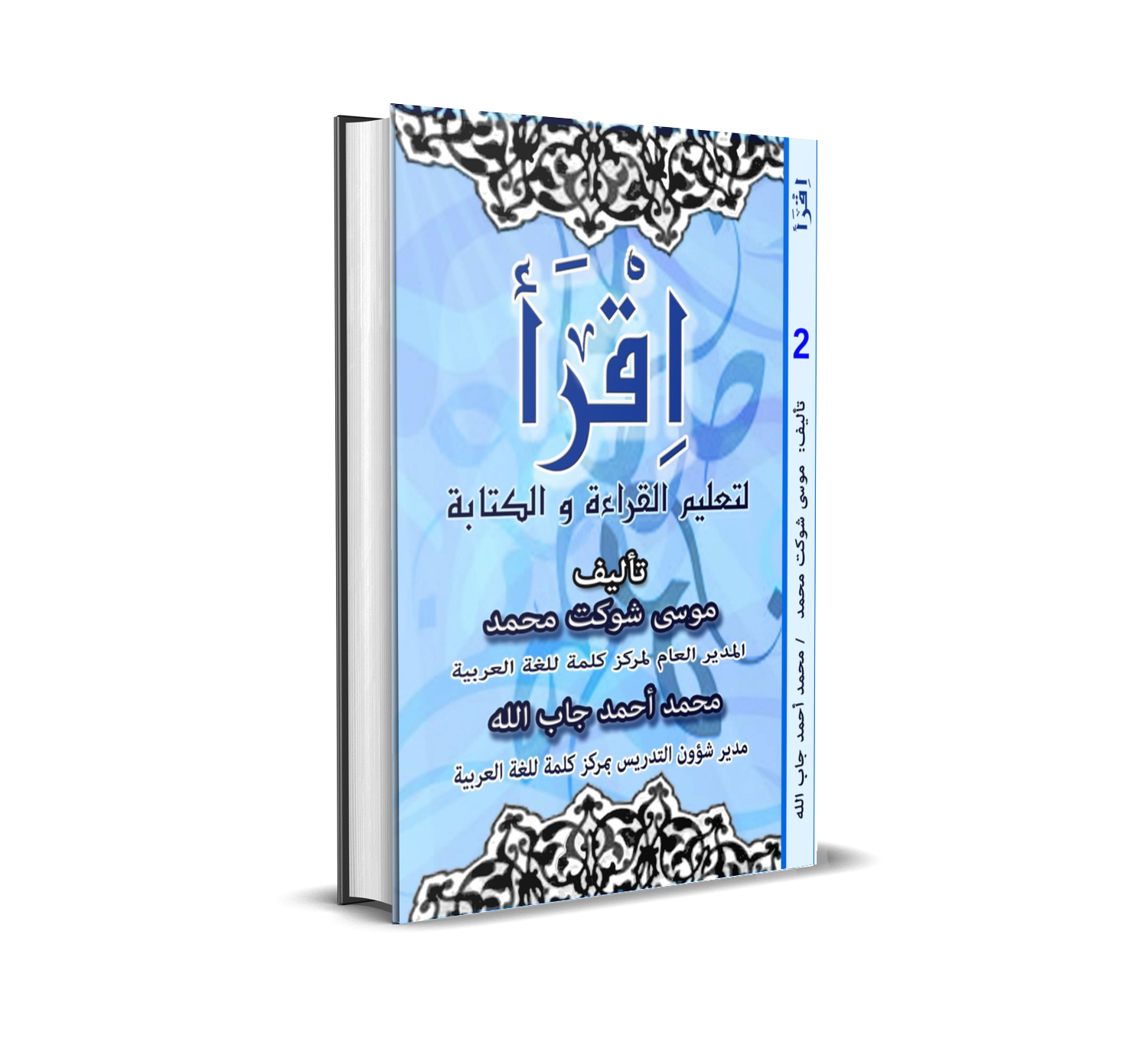
For example, we utilize specialized textbooks such as “اقرأ” (Eqraa), which is designed to teach the alphabet along with fundamental reading and writing abilities.
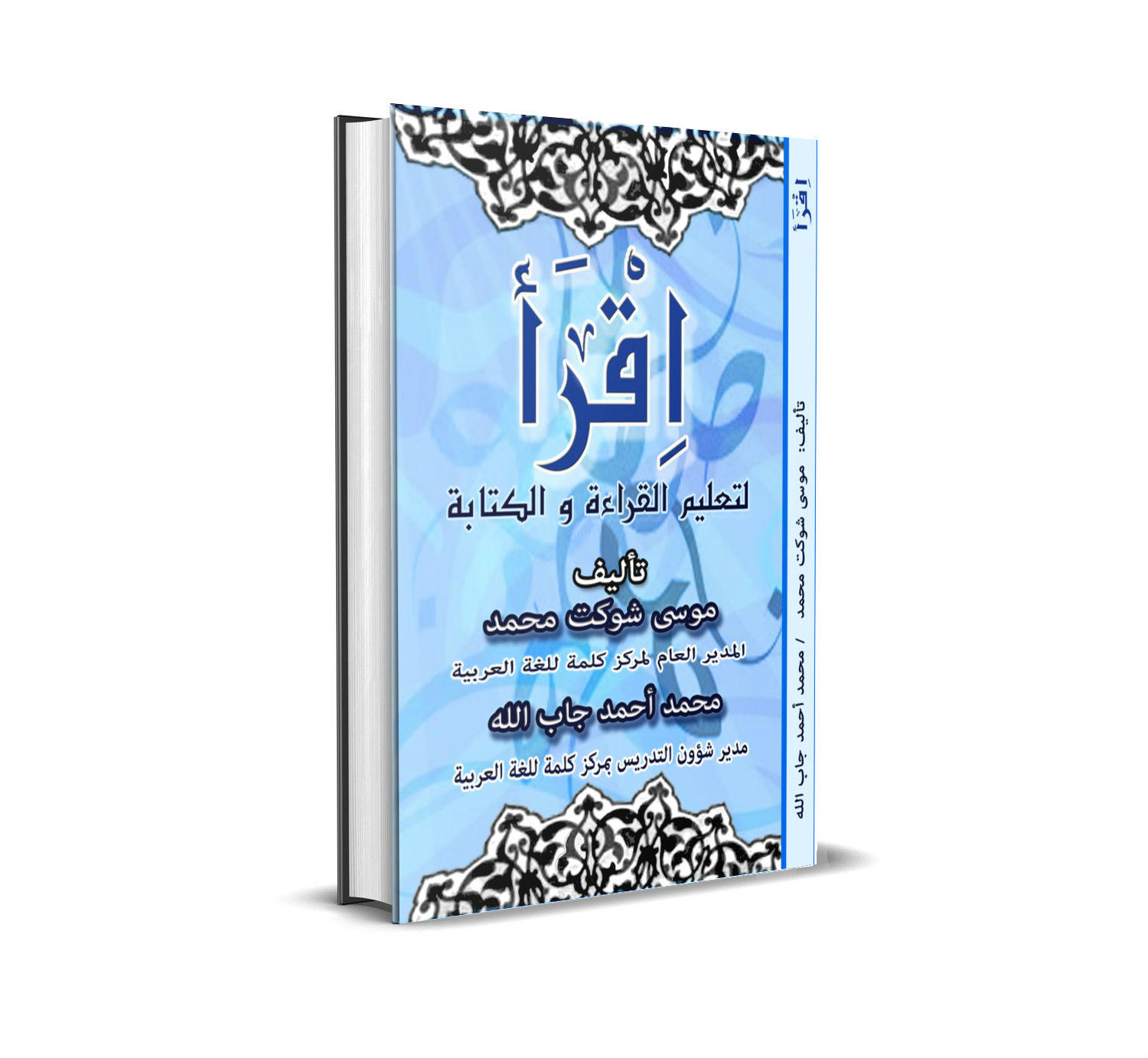
The book uses a permutation method where each letter is paired with others and pronounced with all three vowel sounds, helping students understand the relationship between letters and sounds.
By comparing similar phonetic patterns and reinforcing these through structured vocal exercises, the book ensures that learners grasp the correct pronunciation while gradually advancing their reading skills.
Ultimately, having both visual and auditory elements in your learning tools like Arabic Alphabet Pronunciation Chart, Arabic alphabet pronunciation PDF, or Arabic Alphabet Phonetics audio helps you connect the written form of the letter with its correct sound. That ensures a comprehensive approach to mastering the Arabic alphabet with pronunciation.
1. Arabic Alphabet Pronunciation Chart PDF
The complete 28-letter pronunciation chart from this article — all letters with English sound equivalents, phonetic category, and memory aids. Printable reference for study sessions.
🔗 [Download Pronunciation Chart PDF →]
2. Guttural and Emphatic Sounds Practice Sheet
A focused practice PDF for the hardest Arabic sounds — ع، غ، ح، خ، ق، ص، ض، ط، ظ — with articulation descriptions and example words.
🔗 [Download Difficult Sounds Practice PDF →]
3. Arabic Vowels and Pronunciation Quick Reference
One-page reference: all harakat marks with their sounds and examples, plus the three long vowels.
🔗 [Download Vowels Reference PDF →]
Is Arabic a Phonetic Language?
Yes — Arabic is significantly more phonetically consistent than English.
In Arabic, each letter almost always makes the same sound regardless of what word it appears in. There are no “silent letters” in the English sense, no letters that change pronunciation depending on surrounding letters (like English “C” which is /k/ in “cat” but /s/ in “city”), and no irregular vowel patterns.
Comparison:
| Feature | Arabic | English |
|---|---|---|
| Letters with consistent sounds | ✅ Almost always | ❌ Frequently change |
| Silent letters | ❌ Rare | ✅ Common (knight, know, write) |
| Same sound, different spellings | ❌ Rare | ✅ Very common (see, sea, me) |
| Vowels shown in everyday text | ❌ Omitted (inferred from vocabulary) | ✅ Always present |
The catch: While Arabic letters are phonetically consistent, everyday Arabic text omits short vowels (harakat). Readers must know which vowels to supply from vocabulary knowledge — which is why beginners read vowelled text (with harakat) and native speakers read unvowelled text from context.
For learners: Once you know how each Arabic letter sounds, you can read any vowelled Arabic text accurately — including the Quran, which is fully vowelled. This makes pronunciation in Arabic more learnable than English once the initial unfamiliar sounds are mastered.
The Vowel System in Arabic (Harakat)
Arabic Vowels and Pronunciation: Harakat Overview
Arabic pronunciation is fundamentally shaped by its vowel system — called harakat (حَرَكَات). Unlike English, Arabic does not have separate vowel letters. Instead, short vowels are indicated by small marks placed above or below consonant letters:
| Mark | Name | Sound | Example |
|---|---|---|---|
| ـَ | Fatha | Short “a” — like “cat” | بَ = “ba” |
| ـِ | Kasra | Short “i” — like “sit” | بِ = “bi” |
| ـُ | Damma | Short “u” — like “put” | بُ = “bu” |
Long vowels — Alif (ا), Waw (و), Yaa (ي) — extend these sounds: Alif extends Fatha to “aa,” Waw extends Damma to “uu,” and Yaa extends Kasra to “ii.”
For the complete harakat guide — including Sukoon, Shadda, Tanwin, and grammar functions:
Arabic Harakat and Tashkeel: Complete Guide →
For all 28 letters marked with Fatha, Kasra, and Damma:
Arabic Alphabet With Fatha, Kasra, and Damma →
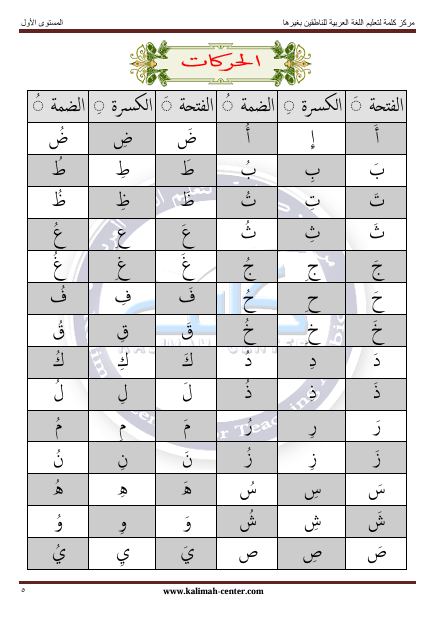
This chart from Kalimah’s online Arabic course emphasizes the importance of Arabic vowels as a key part of its curriculum .

Master Arabic with Kalimah Center
Join our expert-led online classes and start your journey toward Arabic fluency today.
Book Your Free TrialInside Kalimah Center: Moments from Our Courses
Get a glimpse into the vibrant learning experience at Kalimah Center. These snapshots capture real moments from our live classes—where students engage deeply, connect with passionate instructors, and grow in a welcoming, supportive environment.
Here Are The Reviews On Our Arabic Courses:
Our students frequently commend the excellence of our courses and the commitment shown by our instructors. You can read their complete reviews on Trustpilot.

Master Arabic Alphabet Pronunciation with Kalimah Center: Enhance Your Quran Learning Experience!
Unlock the full potential of your Arabic language skills with Kalimah Center’s expertly designed online courses. Our guide on “Learn Arabic Alphabet Pronunciation with Sound and Phonetics” will help you perfect your pronunciation and deepen your understanding of the Quran.
At Kalimah Center, we offer tailored online Arabic and Quran courses to suit all levels and ages, taught by our handpicked, professional tutors.
Explore our comprehensive courses:
- Online Arabic Course: Improve your Arabic pronunciation and comprehension with 400+ hours of interactive sessions across 16 levels. Perfect for learners seeking a personalized approach to mastering Arabic.
- Online Quran With Tajweed Course: Learn to recite the Quran with proper Tajweed from introductory to advanced levels, guided by certified teachers to enhance your Quranic understanding and recitation.
- Online Arabic Course For Kids: Engage your child in a fun, structured learning environment with 24 levels of Arabic instruction tailored for young learners.
Visit Kalimah Center today to explore our courses and try a free lesson. Start your journey towards fluent Arabic and enriched Quranic knowledge now!
Conclusion: Arabic Pronunciation Is Learnable — Start With the Categories
Arabic alphabet pronunciation becomes manageable when you approach it by category rather than letter-by-letter. Soft sounds come first — they are close to English. Emphatic sounds come second — they are harder versions of familiar sounds. Guttural sounds come third — they require new muscle memory that only audio practice and expert correction can build.
Your pronunciation learning sequence:
| Stage | Focus | Tool |
|---|---|---|
| 1 | Soft sounds (14 letters) | Audio resources + repetition |
| 2 | Other sounds (Tha, Jim, Dhal, Shin) | Audio + phonetic chart |
| 3 | Emphatic sounds (4 letters) | Audio + native speaker feedback |
| 4 | Guttural sounds (5 letters) | Native teacher correction |
| 5 | Vowel sounds (harakat) | Vowelled text reading practice |
Download the free pronunciation PDF above for offline reference. Use the audio links for ear training. And for the guttural sounds that no text guide can fully teach — a qualified teacher makes the critical difference.
FAQs about Arabic Alphabet Pronunciation
Q1: How do you pronounce the Arabic alphabet?
Arabic alphabet pronunciation divides into three categories: soft sounds close to English (ب، ت، د، س، ف، ك، ل، م، ن، ه، و، ي), emphatic sounds that are heavier versions of familiar consonants (ص، ض، ط، ظ), and guttural sounds with no English equivalent (ع، غ، ح، خ، ق). The complete pronunciation guide with all 28 letters, their English equivalents, and phonetic category is in the chart above. For audio practice, listen to each letter pronounced by a native speaker through the audio links in this article.
Q2: What are the hardest Arabic letters to pronounce for English speakers?
The five most challenging Arabic letters for English speakers are: ع (Ayn) — a voiced pharyngeal consonant produced by constricting the throat; غ (Ghayn) — a guttural sound similar to the French “R”; ح (Haa) — a voiceless pharyngeal fricative like a very breathy “H”; ق (Qaaf) — a deep “K” produced at the back of the throat; and ض (Daad) — unique to Arabic, requiring the tongue to press against the side teeth. These sounds require dedicated practice with audio modelling — text descriptions alone are insufficient.
Q3: Is Arabic a phonetic language?
Yes — Arabic is significantly more phonetically consistent than English. Each Arabic letter almost always makes the same sound regardless of its position in a word. There are no silent letters (in the English sense) and no irregular pronunciation patterns. However, everyday Arabic text omits short vowel marks (harakat) — readers must supply the correct vowels from vocabulary knowledge. Fully vowelled text (as in the Quran and learning materials) is completely phonetically readable once the 28 letter sounds are known.
Q4: Where can I find Arabic alphabet pronunciation audio?
The best free sources for Arabic alphabet pronunciation audio are: ArabicPod101 on YouTube (search “Arabic alphabet pronunciation” — structured audio-visual lessons for each letter), Learn Arabic with Maha on YouTube (native Egyptian speaker with explicit articulation guidance), and Forvo.com (native speaker recordings of individual Arabic words and letters). Kalimah Center also provides audio pronunciation resources for all 28 letters — see the download links in this article.
Q5: What is the difference between Arabic guttural and emphatic sounds?
Guttural sounds (ع، غ، ح، خ، ق) are produced in the throat and pharynx — deep, resonant sounds with no English equivalent that require the learner to develop entirely new muscle memory. Emphatic sounds (ص، ض، ط، ظ) are produced in a similar position to their non-emphatic counterparts (س، د، ت، ذ) but with the tongue pressed down and back, creating a heavier, more resonant version of the sound. Emphatic sounds also affect the quality of surrounding vowels, making them sound “deeper.” Both categories require audio practice — reading descriptions without hearing the sounds is insufficient for developing correct articulation.
Q6: Is there a free Arabic alphabet pronunciation PDF?
Yes — free Arabic alphabet pronunciation PDFs are available in the download section of this article, including: a complete 28-letter pronunciation chart with English sound equivalents and phonetic categories, a guttural and emphatic sounds practice sheet, and an Arabic vowels quick reference. Additionally, Kalimah Center’s Iqraa curriculum uses a permutation method pairing each letter with all three vowel sounds — structured pronunciation practice across every letter-vowel combination.