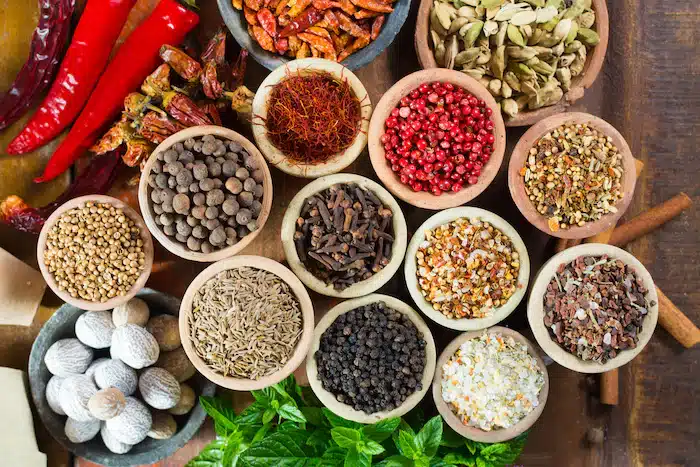
Learning food vocabulary is one of the easiest ways to make Arabic useful in daily life. If you cook, shop for groceries, read recipes, or order food, you will often need to know the names of herbs and spices in Arabic.
Arabic cuisine uses many aromatic herbs and flavorful spices. Words like cumin, turmeric, saffron, mint, basil, and paprika appear in recipes, markets, restaurants, and home cooking.
This guide gives you a clear and practical list of spices in Arabic and English, along with common Arabic herbs names, pronunciation help, and simple usage notes.
The goal is not just to memorize names. It is to help you recognize these words in real situations, whether you are buying spices from an Arab market or reading an Arabic recipe.
What Are Herbs and Spices in Arabic?
In Arabic, herbs and spices are usually called:
أعشاب وتوابل
aʿshāb wa tawābil
Herbs and spices
The word أعشاب means herbs.
The word توابل means spices.
You may also hear:
بهارات
bahārāt
Spices / spice mix
In many Arab countries, بهارات is a very common word for spices, especially spice blends used in cooking.
Herbs vs Spices in Arabic
Before learning the vocabulary, it helps to understand the difference between herbs and spices.
Herbs usually come from the leaves of plants. They can be fresh or dried.
Examples:
نعناع — mint
ريحان — basil
شبت — dill
إكليل الجبل — rosemary
Spices usually come from seeds, roots, bark, fruits, or dried plant parts. They are often used dried, ground, or crushed.
Examples:
كمون — cumin
كركم — turmeric
زعفران — saffron
قرفة — cinnamon
In Arabic cooking, both herbs and spices are used to add flavor, aroma, color, and warmth to food.
Herbs and Spices in Arabic
Learning the names of herbs and spices in Arabic is a great way to build practical vocabulary that connects language learning with everyday life.
| English | Arabic | Transliteration |
| Herbs | أعشاب | aʿshāb |
| Spices | توابل | tawābil |
| Spice mix | بهارات | bahārāt |
| Mint | نعناع | naʿnāʿ |
| Basil | ريحان | rayḥān |
| Dill | شبت | shabat |
| Rosemary | إكليل الجبل | iklīl al-jabal |
| Cumin | كمون | kammūn |
| Turmeric | كركم | kurkum |
| Saffron | زعفران | zaʿfarān |
| Paprika | بابريكا | bābrīkā |
| Cinnamon | قرفة | qirfah |
This table is a simple starting point for beginners who want a quick list of spices in Arabic.
Common Spices in Arabic and English
Here are some of the most useful spices in Arabic names for learners.
Cumin in Arabic
كمون
kammūn
Cumin
Cumin is one of the most common spices in Arabic cooking. It has a warm, strong flavor and is used with beans, rice, meat, chicken, seafood, and vegetable dishes.
Example:
كمون is often used in dishes like lentil soup, grilled meat, and chickpea recipes.
Turmeric in Arabic
كركم
kurkum
Turmeric
Turmeric has a warm earthy flavor and a bright yellow color. It is used in rice dishes, chicken, fish, lentils, and vegetable recipes.
In many recipes, turmeric is added for both flavor and color.
Saffron in Arabic
زعفران
zaʿfarān
Saffron
Saffron is one of the most valuable spices. It gives food a golden color and a strong aroma. It is used in rice dishes, desserts, seafood, and special recipes.
Because saffron has a powerful flavor, it is usually used in small amounts.
Paprika in Arabic
بابريكا
bābrīkā
Paprika
Paprika is made from ground red pepper. It may be sweet, hot, or smoky depending on the type.
It is used with eggs, potatoes, chicken, fish, sauces, and grilled dishes.
Cinnamon in Arabic
قرفة
qirfah
Cinnamon
Cinnamon is used in both sweet and savory dishes. It is common in desserts, tea, rice, meat dishes, and warm drinks.
Black Pepper in Arabic
فلفل أسود
filfil aswad
Black pepper
Black pepper is one of the most basic spices in Arabic kitchens. It is used in almost every type of dish.
Red Pepper in Arabic
فلفل أحمر
filfil aḥmar
Red pepper
Red pepper may refer to ground red pepper or chili powder depending on the context. It is used to add heat and color.
Cardamom in Arabic
هيل
hayl
Cardamom
Cardamom is very popular in Arab coffee, tea, desserts, and some rice dishes. It has a strong, sweet aroma.
Cloves in Arabic
قرنفل
qurunful
Cloves
Cloves have a strong smell and warm flavor. They are often used in tea, desserts, rice, meat dishes, and spice blends.
Ginger in Arabic
زنجبيل
zanjabīl
Ginger
Ginger can be fresh or dried. It is used in drinks, desserts, soups, meat dishes, and marinades.
Read also: Which Is Older Arabic Or Hebrew?
Master Arabic Online with Confidence – Start Your Journey with Kalimah Center
Learning Arabic online is now more accessible and structured than ever with the Online Arabic Course at Kalimah Center. This program is designed to help learners of all levels develop strong skills in speaking, reading, writing, and understanding Arabic through interactive, personalized lessons with qualified native tutors. The step-by-step approach ensures steady progress while building real confidence in using the language.
At Kalimah Center, the focus is not only on teaching Arabic but on helping students use it in real-life situations—whether for daily communication, travel, Islamic studies, or personal development. With flexible online learning and continuous support, students can achieve their language goals at their own pace in a motivating environment.
Start your Arabic learning journey today with a trusted platform that has helped thousands of students worldwide.
Experience Kalimah Center Classes
Watch real excerpts from our live sessions at Kalimah Center and see how we bring learning to life. These clips highlight our interactive, student-centered teaching approach across all our courses—designed to keep learners engaged, motivated, and actively involved every step of the way.
Master Arabic with Kalimah Center
Join our expert-led online classes and start your journey toward Arabic fluency today.
Book Your Free TrialCommon Arabic Herbs Names
Now let’s look at common arabic herbs names used in cooking and daily life.
Mint in Arabic
نعناع
naʿnāʿ
Mint
Mint is very popular in Arab culture. It is used in tea, salads, cold drinks, sauces, and some cooked dishes.
Basil in Arabic
ريحان
rayḥān
Basil
Basil has a fresh, slightly sweet smell. It can be used fresh or dried. It works well with tomatoes, garlic, olive oil, salads, soups, and sauces.
Dill in Arabic
شبت
shabat
Dill
Dill is used in salads, pickles, egg dishes, potatoes, beans, and creamy dishes. Both dill leaves and dill seeds can be used.
Parsley in Arabic
بقدونس
baqdūnis
Parsley
Parsley is one of the most common herbs in Arabic food. It is used in salads, soups, grilled dishes, and famous recipes like tabbouleh.
Coriander / Cilantro in Arabic
كزبرة
kuzbarah
Coriander / cilantro
In Arabic, كزبرة may refer to fresh coriander leaves or coriander seeds, depending on context.
Fresh coriander is used in soups, sauces, and cooked dishes. Coriander seeds are used as a spice.
Rosemary in Arabic
إكليل الجبل
iklīl al-jabal
Rosemary
Rosemary has a strong woody flavor. It is often used with meat, chicken, roasted vegetables, potatoes, bread, and marinades.
Marjoram in Arabic
مردقوش
mardaqūsh
Marjoram
Marjoram has a warm herbal flavor. It can be used with soups, meat, chicken, vegetables, pizza sauces, and Mediterranean dishes.
Thyme and Za’atar in Arabic
زعتر
zaʿtar
Thyme / za’atar
The word زعتر can refer to thyme as an herb, but it can also refer to the famous za’atar mix made with herbs, sesame, sumac, and spices.
Za’atar is commonly eaten with bread and olive oil.
Arabic Spices Names and Pictures
Many learners search for Arabic spices names and pictures because visual learning makes vocabulary easier to remember and more enjoyable. When students connect each spice with a clear image, the word becomes more meaningful and stays in memory for a longer time, especially for beginners and children.
If you are creating a learning chart, flashcards, or classroom activity, you can organize Arabic spice vocabulary in a simple and effective way by including the English name, Arabic name, transliteration, a clear picture, and an example of how it is used in food. For example, cumin (كمون – kammūn) is commonly used in beans, rice, and meat dishes, while turmeric (كركم – kurkum) is added to rice, chicken, and lentils. Saffron (زعفران – zaʿfarān) is often used in rice, seafood, and desserts to give color and flavor.
This visual method helps learners build strong vocabulary faster by linking each word to real-life usage and images, making Arabic learning more practical and engaging.
How to Ask for Herbs and Spices in Arabic?
Learning how to ask for herbs and spices in Arabic is very useful when shopping in markets, grocery stores, or even while cooking with Arabic speakers. These simple phrases help you communicate easily and get exactly what you need.
Here are some common expressions you can use in real-life situations:
- I want cumin.
Urīd kammūn. - Do you have turmeric?
Hal ʿindakum kurkum? - I need fresh mint.
Aḥtāj naʿnāʿ ṭāzaj. - Do you sell mixed spices?
Hal tabīʿūn bahārāt mushakkalah? - How much is saffron?
Kam siʿr al-zaʿfarān?
These useful phrases make it easier to interact in everyday situations and give learners more confidence when using Arabic in real conversations, especially in markets and cooking environments.
Fresh, Dried, and Ground in Arabic
When talking about herbs and spices, you also need words like fresh, dried, and ground.
طازج — ṭāzaj — fresh
مجفف — mujafaf — dried
مطحون — maṭḥūn — ground
حب — ḥabb — whole seeds / whole spice
ناعم — nāʿim — fine
حار — ḥār — spicy / hot
خفيف — khafīf — mild / light
Examples:
نعناع طازج — fresh mint
كزبرة مجففة — dried coriander
كمون مطحون — ground cumin
فلفل حار — hot pepper
بهارات ناعمة — fine spices
These words make your Arabic cooking vocabulary more complete.
Common Spice Blends in Arabic Cooking
Arabic cooking is known for its rich and layered flavors, and a big part of that comes from traditional spice blends used across different regions. These blends are carefully mixed to create balanced tastes that define many classic dishes, and the exact combination can vary from one country to another.
Common examples include:
بهارات مشكلة (mixed spices), سبع بهارات (seven spices), بهارات كبسة (kabsa spices), بهارات شاورما (shawarma spices), and زعتر (za’atar mix). These blends often include ingredients like black pepper, cinnamon, cardamom, cumin, coriander, cloves, nutmeg, and paprika, among others.
When shopping in an Arab grocery store, the word بهارات is especially useful, as it is commonly used to refer to ready-made spice mixtures that save time while still delivering authentic flavor.
Read also: Difference Between Arabic And Hebrew
Best Way to Learn Spices in Arabic
The most effective way to learn spices in Arabic is by organizing them into simple categories and learning step by step. This method helps learners remember vocabulary faster and use it in real-life situations instead of memorizing random words.
Start with common spices such as: كمون، كركم، قرفة، فلفل أسود، هيل
Then move to common herbs: نعناع، بقدونس، ريحان، شبت، زعتر
After building this basic vocabulary, try to practice it in real contexts like reading recipes, cooking at home, or identifying items while grocery shopping. This helps reinforce the words naturally through repetition and use.
You can also create flashcards to make learning easier and more visual. Each card can include the English name, Arabic name, a picture, and one simple example sentence. This approach is especially helpful for visual learners because it connects words with images and real-life meaning, making Arabic vocabulary easier to retain and use confidently.
Inside Kalimah Center: Moments from Our Courses
Get a glimpse into the vibrant learning experience at Kalimah Center. These snapshots capture real moments from our live classes—where students engage deeply, connect with passionate instructors, and grow in a welcoming, supportive environment.
Here Are The Reviews On Our Courses:
Our students frequently commend the excellence of our courses and the commitment shown by our instructors. You can read their complete reviews on Trustpilot.
Read more reviews on Trustpilot

Learn Arabic Herbs & Spices the Easy Way with Kalimah Center
Learning food vocabulary like herbs and spices in Arabic becomes much easier when you follow a structured and interactive learning approach. At Kalimah Center, students are guided step by step to build practical Arabic skills that can be used in real-life situations such as shopping, cooking, reading recipes, and daily conversations. Instead of memorizing random words, learners understand how vocabulary works in context, which makes retention faster and more effective.
Through engaging lessons and clear explanations, Kalimah Center helps you master essential Arabic topics like everyday vocabulary, pronunciation, and usage in real sentences. This approach is especially helpful for beginners who want to connect language learning with practical life skills, such as recognizing ingredients in Arabic markets or understanding cooking content online.
Start your journey today and improve your Arabic with real, useful vocabulary that you can apply immediately in daily life.
📚 Explore Our Courses:
Online Arabic Course: Tailored to your level, our comprehensive Arabic program includes 16 teaching levels and 400+ hours of personalized sessions.
Online Quran With Tajweed Course: Perfect for non-Arabic speakers, our course spans 13 levels and equips you with Tajweed mastery from beginner to advanced.
Online Arabic Course For Kids: Nurture your child’s love for Arabic with our engaging and structured program, available in 24 levels for primary, intermediate, and secondary stages.
🚀 Start Your Free Trial Today! 🚀
Don’t miss out on this life-changing opportunity to deepen your faith and knowledge. Sign up now for your free trial and take the first step towards becoming a better practicing Muslim with Kalimah Center!
Master Arabic with Kalimah Center
Join our expert-led online classes and start your journey toward Arabic fluency today.
Book Your Free TrialConclusion
Learning herbs and spices in Arabic is a practical way to improve your Arabic vocabulary. These words appear in recipes, markets, restaurants, cooking videos, and everyday conversations.
Start with the most common words, such as كمون, كركم, قرفة, زعفران, نعناع, ريحان, and بقدونس. Then learn how to describe them as fresh, dried, ground, mild, or spicy.
With practice, you will be able to recognize spices in Arabic names, understand spices in Arabic and English, and use Arabic food vocabulary more naturally.
FAQ
How do you say herbs and spices in Arabic?
Herbs and spices in Arabic are called أعشاب وتوابل — aʿshāb wa tawābil.
How do you say spices in Arabic?
Spices in Arabic can be توابل — tawābil or بهارات — bahārāt.
What are common spices in Arabic and English?
Common spices include كمون — cumin, كركم — turmeric, زعفران — saffron, قرفة — cinnamon, هيل — cardamom, and فلفل أسود — black pepper.
What are common Arabic herbs names?
Common Arabic herbs names include نعناع — mint, ريحان — basil, بقدونس — parsley, شبت — dill, زعتر — thyme, and إكليل الجبل — rosemary.
What is the Arabic word for cumin?
Cumin in Arabic is كمون — kammūn.
What is the Arabic word for turmeric?
Turmeric in Arabic is كركم — kurkum.