Kalimah Center offers Arabic lessons in Dallas for adults, children, and families across Texas. Sessions cover Modern Standard Arabic, conversational Arabic, reading, writing, and grammar through live one-on-one classes with native, professionally certified tutors.
Finding a qualified Arabic teacher in Dallas who fits your work schedule or your child’s school timetable is not straightforward. Kalimah Center solves that directly — sessions run fully online at times you choose, with no commute and no fixed classroom hours.
Arabic Classes in Dallas Covering Every Skill Area
Arabic classes in Dallas through Kalimah Center cover the four core language skills: reading, writing, speaking, and listening.
The curriculum addresses Modern Standard Arabic for professional and academic use, conversational Arabic for daily interaction, and Quranic Arabic for those with a religious focus.
Tutors hold recognized academic qualifications in Arabic language and instruction.
Learners at every stage are accommodated — complete beginners start with the Arabic alphabet and foundational grammar, while intermediate and advanced students work on fluency, nahw, and sarf.
All instruction is delivered in English, making Arabic classes in Dallas fully accessible regardless of prior background.
How Online Arabic Lessons in Dallas Actually Work
Kalimah Center runs live, tutor-led sessions entirely online. Each class is private, structured, and built around the individual learner’s level and goals from the first session onward.
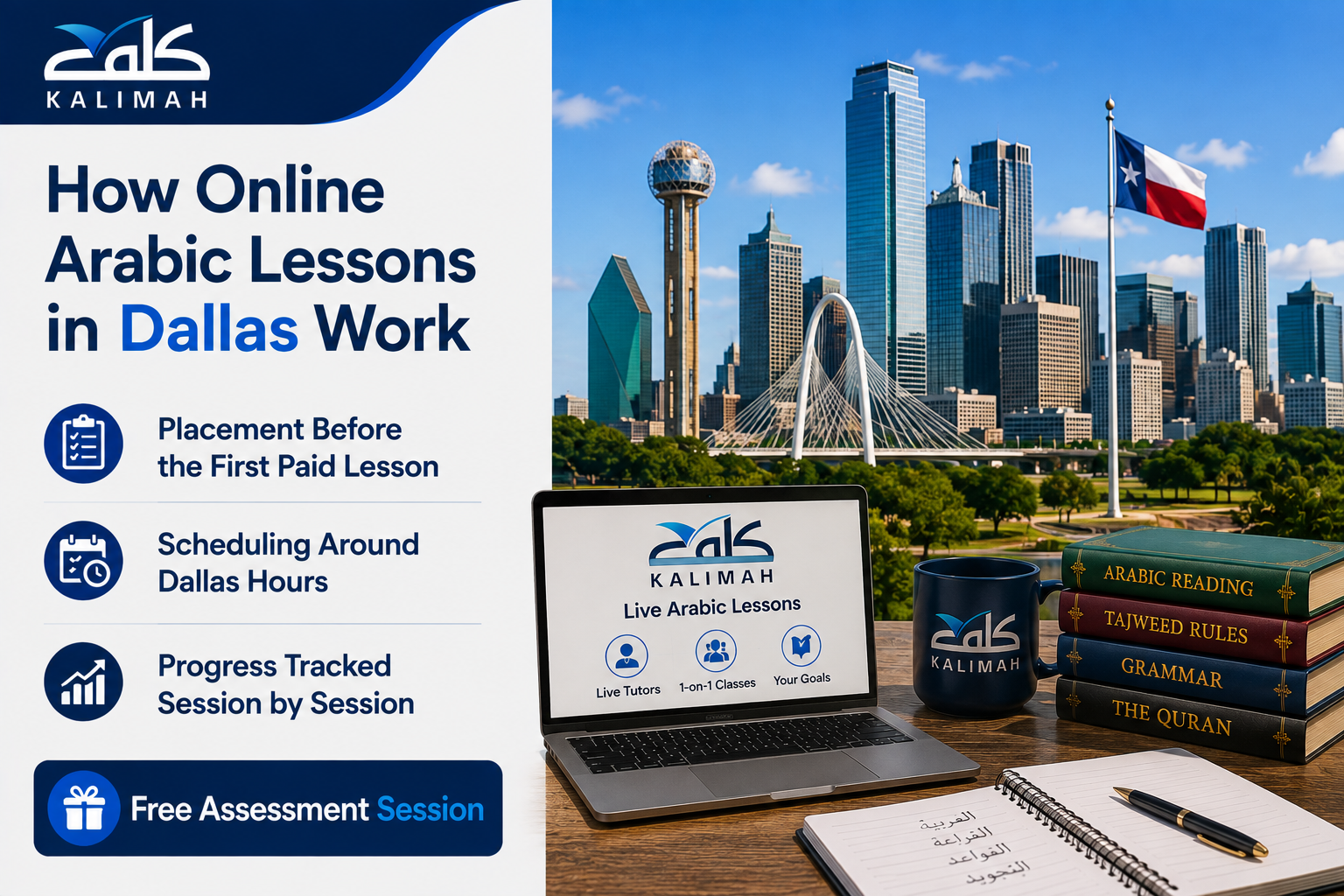
1. Placement Comes Before the First Paid Lesson
Every new student completes a placement assessment so instruction begins at the right level.
Complete beginners are placed into foundational tracks; returning learners pick up where their previous study left off. No time is wasted covering material already mastered.
2. Scheduling Around Dallas Work Hours and School Days
Sessions are booked at times that fit the Texas Central Time zone — early mornings before the work day, evenings after school, and weekends.
Parents enrolling children can book around the Dallas Independent School District calendar without adjusting any other commitment.
3. Progress Tracked Session by Session
Tutors monitor student development across reading accuracy, spoken fluency, grammar retention, and writing.
Feedback is delivered directly during each session, not through automated scoring. Students and parents can see exactly where improvement is happening and what comes next.
Book a free assessment session.
What Students Learn in Arabic Lessons in Dallas
Kalimah Center’s Arabic lessons in Dallas follow a structured, level-appropriate sequence. Each subject area builds directly on the previous one so learners develop real, usable Arabic skills from the earliest sessions.
1. Arabic Alphabet and Script Recognition
Beginners start by learning all 28 letters of the Arabic alphabet in their isolated, initial, medial, and final forms. Tutors work on correct letter identification and handwriting from the first session so students can read and write basic Arabic words before moving to grammar.
2. Building Grammar Through Nahw and Sarf
Arabic grammar instruction covers nahw (syntax) and sarf (morphology) in a sequenced way. Students learn how nouns decline, how verb patterns change across tenses, and how sentence structure works in Modern Standard Arabic — skills that transfer across all written and spoken registers.
3. Modern Standard Arabic for Professional Use
Modern Standard Arabic is the form used in media, government, and international business.
Dallas learners pursuing careers in law, diplomacy, international trade, or NGO work build vocabulary and reading comprehension in MSA through structured texts and direct dialogue practice with their tutor.
4. Conversational Arabic for Everyday Situations
Students who need Arabic for daily interaction — whether in Dallas’s Arab-American community or for travel — practice real spoken exchanges with their tutor.
Sessions simulate greetings, directions, shopping, workplace conversation, and other practical scenarios so spoken confidence develops alongside written skills.
5. Reading Comprehension and Text Analysis
At intermediate and advanced levels, students work through Arabic texts — news articles, literature, and classical passages — with tutor guidance.
Reading is approached through vocabulary acquisition, contextual analysis, and comprehension checks so learners can handle Arabic-language material independently.
6. Quranic Arabic for Meaning and Understanding
For students whose goal is to understand the Quran directly, Kalimah Center offers dedicated Quranic Arabic instruction.
This track covers classical vocabulary, root-word analysis, and the grammatical structures specific to Quranic text — taught separately from MSA to preserve accuracy in both.
Start your first Arabic lesson free
What Dallas Students Achieve Through Arabic Classes
Arabic classes in Dallas with Kalimah Center produce specific, measurable results. Each outcome listed below reflects what students at the relevant level can demonstrate after completing their sessions.
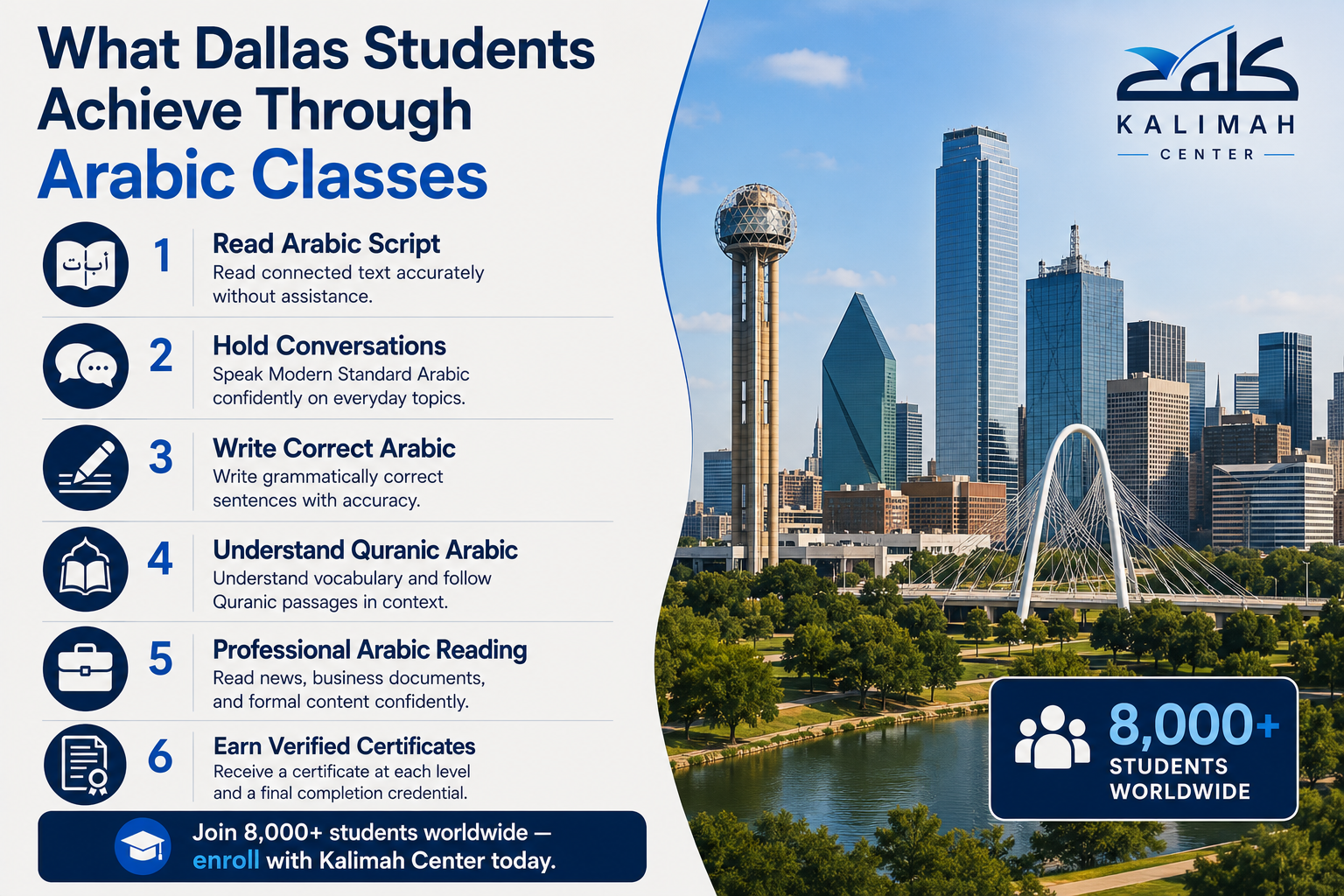
1. Reading Arabic Script Without Assistance
Students who begin at zero leave the foundational track reading connected Arabic text correctly.
They can identify all letter forms, decode voweled text accurately, and read basic sentences without transliteration support — a prerequisite for all further Arabic study.
2. Holding a Conversation in Modern Standard Arabic
Intermediate students develop the spoken fluency to conduct structured conversations on familiar topics.
By the time they complete this stage, students can introduce themselves, discuss their work or studies, and navigate everyday social interactions in Arabic without preparation.
3. Writing Grammatically Correct Arabic Sentences
Students at the grammar level can produce written Arabic sentences with correct noun case endings, verb conjugation, and sentence structure.
Written output is assessed by the tutor in each session so errors are corrected before they become habits.
4. Understanding Quranic Vocabulary in Context
Students in the Quranic Arabic track can identify root words, recognize recurring Quranic vocabulary, and follow the meaning of short passages without relying entirely on translation.
This outcome is particularly relevant for Dallas’s Muslim community members who pray and recite daily.
5. Professional Arabic Reading for Career Application
Advanced learners who complete MSA-focused tracks can read Arabic news, business documents, and formal correspondence independently.
This level of reading proficiency directly supports career paths in international business, translation, government, and nonprofit organizations operating in the Arab world.
6. Earning a Verified Certificate at Each Level
Kalimah Center issues a certificate upon successful completion of each level.
Students who complete the full program receive a recognized credential confirming their Arabic proficiency — useful for professional portfolios, academic applications, and personal documentation of their progress.
Read also: Arabic Lessons in Chicago for All Levels
Enroll with Kalimah Center today.
Kalimah Center Serving Dallas and Across Texas
Kalimah Center is an online Arabic and Quran teaching platform serving students throughout Texas, including Dallas, Fort Worth, Plano, Irving, and Garland.
Students across the United States — from Texas to Massachusetts — learn through Kalimah Center’s live one-on-one sessions, with over 8,000 active students enrolled worldwide.
Kalimah Center’s teaching team includes more than 40 qualified Arabic and Quran instructors, all native speakers with recognized academic credentials.
Every curriculum level was developed in-house by language education specialists, and the platform issues certificates at each completed stage so student progress is formally documented.
Explore Kalimah Center’s programs
Dallas Arabic Teachers at Kalimah Center
Kalimah Center’s Arabic tutors are native Arabic speakers holding university-level qualifications in Arabic language, linguistics, or Islamic studies.
All tutors have verified teaching experience across multiple age groups and proficiency levels. Male and female tutors are available so every student can choose the instructor that suits them.
Browse all Arabic teachers and pick the one that fits you best.
Experience Kalimah Center Classes
Watch real excerpts from our live sessions at Kalimah Center and see how we bring learning to life. These clips highlight our interactive, student-centered teaching approach across all our courses—designed to keep learners engaged, motivated, and actively involved every step of the way.
Master Arabic with Kalimah Center
Join our expert-led online classes and start your journey toward Arabic fluency today.
Book Your Free TrialWhat Sets Kalimah Center Apart for Dallas Learners
Dallas has a multicultural community and a real demand for qualified Arabic instruction. Kalimah Center delivers something local options rarely offer — a native-certified tutor assigned to one student, with a curriculum built specifically for that student’s level and goals.
1. Native Tutors Holding Recognized Academic Credentials
Every Kalimah Center tutor is a native Arabic speaker with a university degree in Arabic language, linguistics, or a related field.
Teaching credentials are verified before any tutor joins the platform, so Dallas students are not learning from informal instructors or self-taught speakers.
2. Private One-on-One Sessions Every Time
Arabic classes in Dallas through Kalimah Center are always private. No shared classrooms, no group pacing.
The tutor’s attention goes entirely to one student per session, which means faster progress and immediate correction of pronunciation, grammar, and reading errors.
3. Female Tutors Available for Sisters and Girls
Kalimah Center maintains a team of qualified female Arabic tutors for female students and girls of all ages.
Families in Dallas’s Muslim community who require a female instructor for religious or personal reasons can select one directly when enrolling.
4. Flexible Booking Around Texas Schedules
Sessions are available across a wide range of time slots in the Central Time zone.
Working adults in Dallas can book early mornings or evenings; parents enrolling children can schedule around school hours and extracurriculars without disrupting any existing routine.
5. Proprietary Curriculum Developed by Language Specialists
Kalimah Center’s course materials were developed in-house by Arabic language educators.
Students do not follow a generic textbook sequence — the curriculum is sequenced by proficiency level and adjusted to the student’s specific goal, whether that is MSA, Quranic Arabic, or spoken fluency.
6. Certificate Awarded at Each Completed Level
Kalimah Center issues a verified certificate when a student successfully completes each level.
Students who finish the full program receive a credential that documents their Arabic proficiency — recognized for professional portfolios, academic records, and personal achievement.
7. Placement Assessment Before Lessons Begin
New students are placed at the correct level before their first paid session.
The assessment identifies current reading, grammar, and comprehension ability so no student repeats material they already know or jumps ahead of content they are not ready for.
8. Choosing Between MSA and Dialect Based on Your Goal
Kalimah Center tutors help Dallas students choose the right Arabic track from the start.
Those targeting professional or academic use focus on Modern Standard Arabic; those seeking daily conversation with Arab community members can focus on spoken dialect. Both pathways are available within the same platform.
Read also: Arabic Classes in Zurich for All Levels
Here are the reviews on our Arabic Courses:
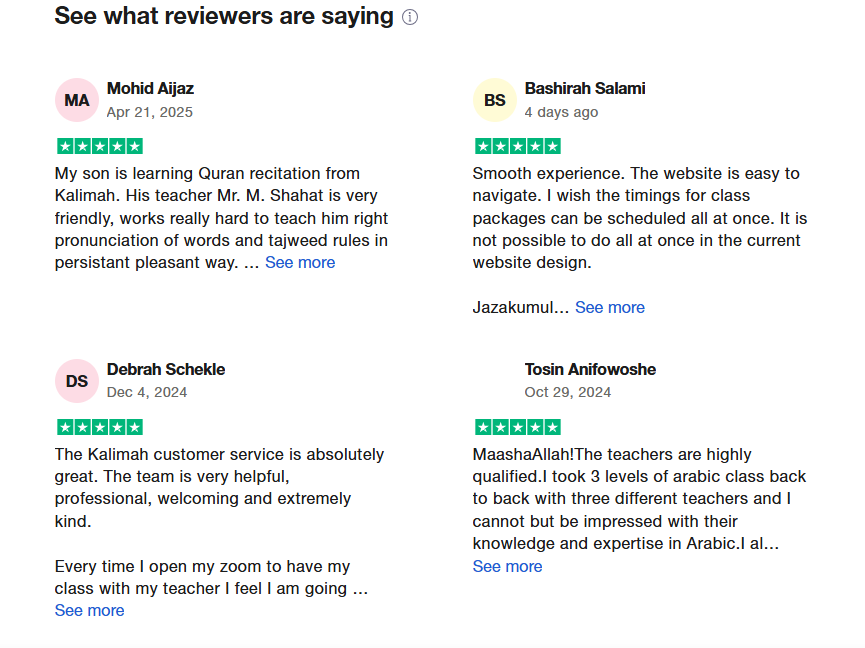
https://www.trustpilot.com/review/kalimah-center.com
Prices:
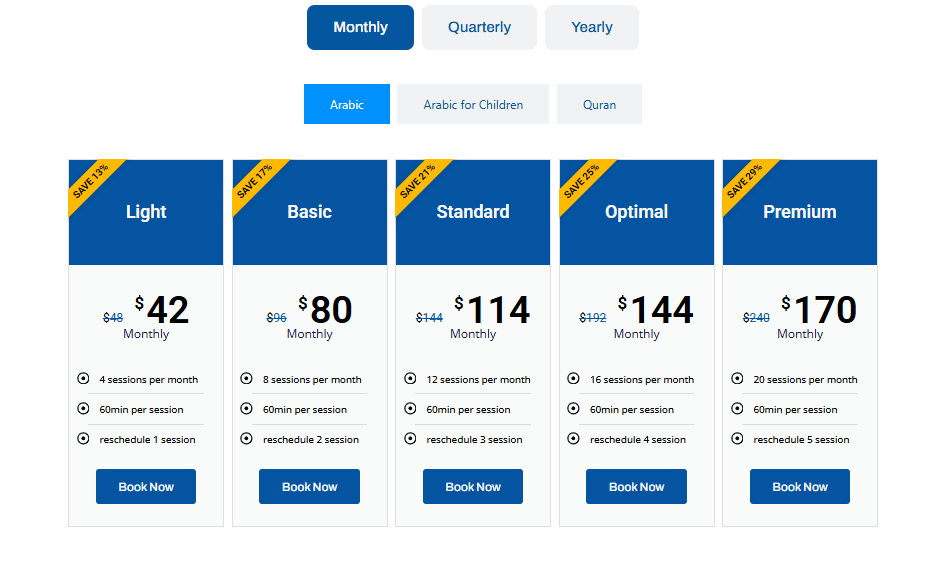
Start with a free class first.
Inside Kalimah Center: Moments from Our Courses
Get a glimpse into the vibrant learning experience at Kalimah Center. These snapshots capture real moments from our live classes—where students engage deeply, connect with passionate instructors, and grow in a welcoming, supportive environment.
Read also: Arabic Classes in Winnipeg for All Levels
Start Arabic Lessons in Dallas This Week
Dallas has one of the most culturally diverse populations in Texas, with Arabic-speaking communities across the city and a growing number of residents seeking qualified Arabic instruction for professional, academic, and religious reasons.
Finding a native-certified tutor who can accommodate a Texas schedule — and teach at the right level from day one — is what Kalimah Center delivers directly.
Kalimah Center offers a free trial class with no payment required upfront. Choose your subject, confirm your level through the placement process, and begin your first session with a qualified Arabic tutor at a time that works around your Dallas life — mornings, evenings, or weekends.
Start today your first Arabic class
📚 Explore Our Courses:
Online Arabic Course: Tailored to your level, our comprehensive Arabic program includes 16 teaching levels and 400+ hours of personalized sessions.
Online Quran With Tajweed Course: Perfect for non-Arabic speakers, our course spans 13 levels and equips you with Tajweed mastery from beginner to advanced.
Online Arabic Course For Kids: Nurture your child’s love for Arabic with our engaging and structured program, available in 24 levels for primary, intermediate, and secondary stages.
🚀 Start Your Free Trial Today! 🚀
Don’t miss out on this life-changing opportunity to deepen your faith and knowledge. Sign up now for your free trial and take the first step towards becoming a better practicing Muslim with Kalimah Center!
Master Arabic with Kalimah Center
Join our expert-led online classes and start your journey toward Arabic fluency today.
Book Your Free TrialConclusion
Arabic lessons in Dallas at Kalimah Center cover Modern Standard Arabic, conversation, Quranic Arabic, Nahw, Sarf, reading comprehension, and writing from beginner to advanced levels. Live one-on-one classes are taught by native certified tutors with flexible Texas scheduling, male and female instructors, and certificates at each level. A free trial class is available.
Frequently Asked Questions About Arabic Lessons in Dallas
Are These Arabic Classes Suitable for Complete Beginners?
Yes. Kalimah Center’s Arabic lessons in Dallas start with the Arabic alphabet for students with no prior knowledge. A placement assessment identifies each student’s level, ensuring instruction begins at the appropriate stage.
Can Children in Dallas Enroll in Arabic Classes?
Yes. Children of all ages are welcome. Kalimah Center offers Arabic classes taught by tutors experienced with young learners. Dallas parents can schedule sessions around school hours and the Texas school calendar.
Are Female Arabic Tutors Available for Women and Girls?
Yes. Kalimah Center has qualified female Arabic tutors for female students of all ages. Families who prefer a female instructor can request one during enrollment without affecting scheduling or curriculum quality.
What Time Slots Are Available for Dallas Students?
Sessions are available during early mornings, evenings, and weekends in the Central Time zone. Dallas students and working adults can choose convenient times that fit their schedules instead of following a fixed class timetable.
How Is a Student’s Progress Tracked Over Time?
Tutors assess reading, speaking, grammar, and writing during sessions and provide direct feedback. Progress is monitored continuously, allowing students and parents to see specific improvements and understand which skills need further development.
Is There a Free Trial Class Before Committing to a Plan?
Yes. Kalimah Center offers new students a free trial class with no upfront payment. The trial is a real lesson rather than a sales call, allowing students to experience the teaching quality before enrolling.
Do Students Receive a Certificate After Completing the Course?
Yes. Kalimah Center awards a certificate after each completed level. Students who complete all levels receive a final credential documenting their Arabic proficiency, which can serve as a record for professional, academic, or personal purposes.