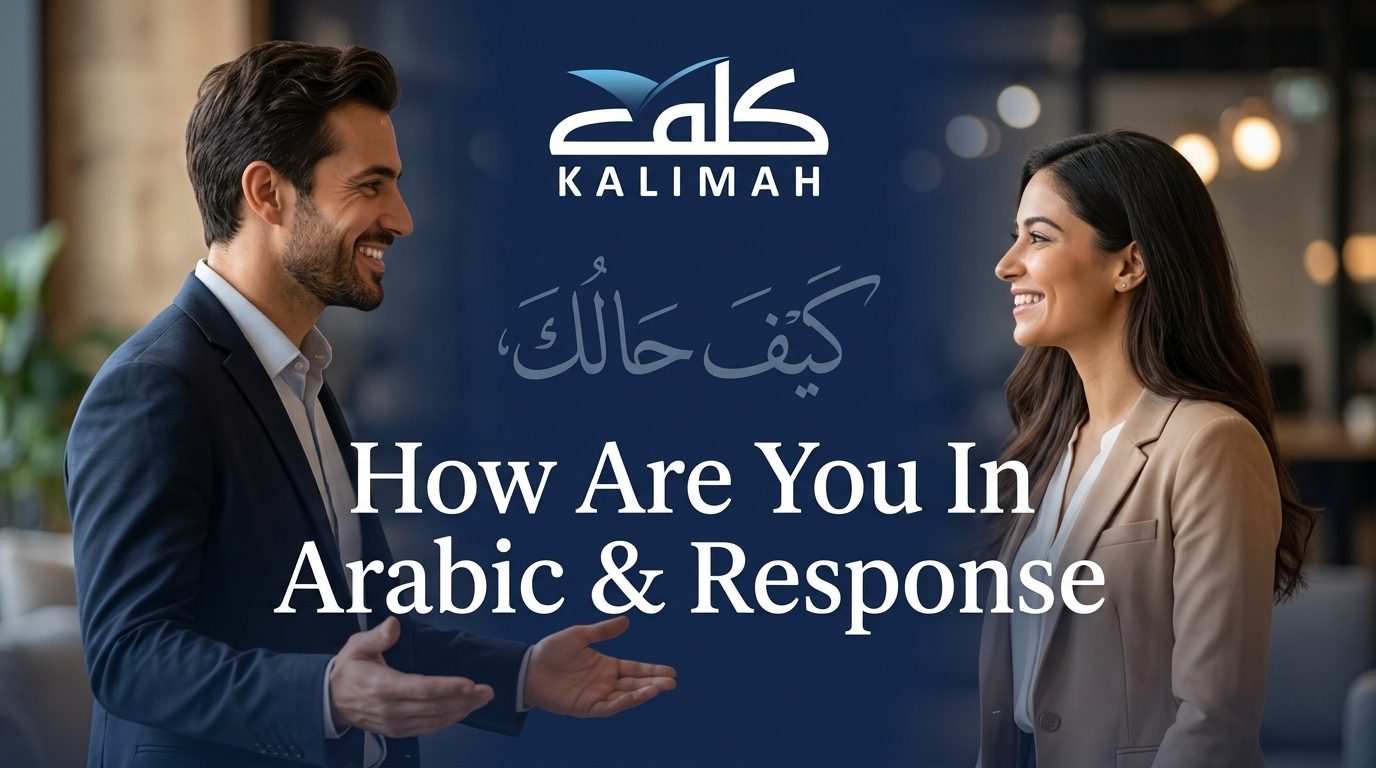
Someone smiles at you and says “kayfa ḥāluka?” You know it means “how are you.” But what do you say back? This guide on how are you in Arabic & response gives you the question, the answer, and the right words for each person you talk to.
Here is the quick answer. To ask “how are you” in Arabic, say كيف حالكَ؟ (kayfa ḥāluka) to a man. Say كيف حالكِ؟ (kayfa ḥāluki) to a woman. The most common reply is بخير، الحمد لله (bikhayr, al-ḥamdu lillāh). It means “fine, thank God.”
Below, you will learn the forms for men, women, and groups. You will also learn the dialect words, how to say each phrase, and how to reply by text.
What You Will Learn In This Article
- How to say “how are you” in Arabic to a man, a woman, and a group.
- How to say kayfa ḥāluka the right way, sound by sound.
- What al-ḥamdu lillāh really means as a reply.
- How Egyptians, Levantines, Gulf Arabs, and Moroccans ask and answer.
- How to reply by text, even when Arabic is written with numbers.
Saying How Are You In Arabic
Formal Arabic is called Modern Standard Arabic, or MSA. It has one main way to ask “how are you.” Every Arabic speaker knows it, so start here before you learn any dialect.
What Kayfa Ḥāluka Means In Arabic
Kayfa ḥāluka is the formal Arabic way to ask “how are you?” Word for word, it means “how is your state?” The phrase has three small parts. Kayfa means “how.” Ḥāl means “state.” The ending -ka means “your” when you talk to one man.
Some people say this phrase is wrong. Their reason is simple. Kayfa already asks about a state. So “how is your state” seems to say the same thing twice. They tell learners to say kayfa anta, “how are you,” instead.
Old Arabic texts show the phrase is fine. In one hadith, the Prophet Muhammad, peace be upon him, met an old friend of his late wife Khadijah.
He asked her, “kayfa antum? kayfa ḥālukum?” This means “How are you all? How is your state?” You can read it in Al-Mustadrak of Al-Hakim, Hadith No. 40. Early Arab poets used the phrase in their poems too.
So you can use kayfa ḥāluka with full trust. It fits a class, a job interview, an email, or a first meeting.
How Are You In Arabic To A Male, A Female, And A Group
In Arabic, the end of the question changes with the person you talk to. A man, a woman, two people, and a group each get their own ending. The table below shows each form in Arabic letters. Next to it, you will see the sound in English letters.
| Speaking To | Arabic | How To Say It |
| One man | كيف حالُكَ؟ | kayfa ḥāluka |
| One woman | كيف حالُكِ؟ | kayfa ḥāluki |
| Two people | كيف حالُكما؟ | kayfa ḥālukumā |
| A group of men, or men and women | كيف حالُكم؟ | kayfa ḥālukum |
| A group of women | كيف حالُكنّ؟ | kayfa ḥālukunna |
| Anyone | كيف الحال؟ | kayfa al-ḥāl |
Look at the first two rows. In normal Arabic writing, حالك looks the same for a man and a woman. Only a tiny vowel mark at the end changes. It is -ka for a man and -ki for a woman. Most texts do not show this mark. So you must hear the difference and say it.
Not sure who will read your message? Use كيف الحال؟ (kayfa al-ḥāl). It has no ending, so it fits anyone. It works well in an email to a company or a group chat.
How To Pronounce Kayfa Ḥāluka Step By Step
You can say kayfa ḥāluka well in six simple steps. Go slowly at first, then build up speed.
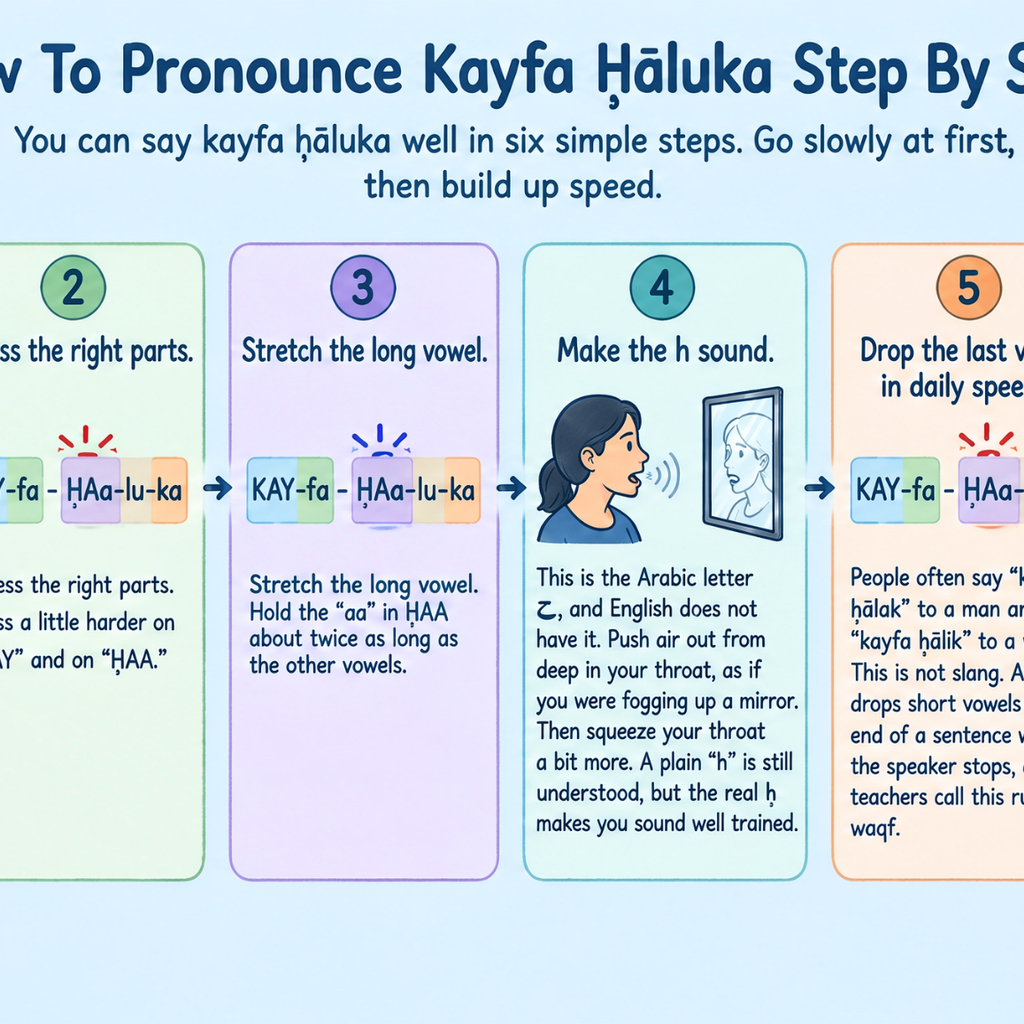
- Split the phrase into four beats: KAY-fa ḤAA-lu-ka. For a woman, only the last beat changes: KAY-fa ḤAA-lu-ki.
- Stress the right parts. Press a little harder on “KAY” and on “ḤAA.”
- Stretch the long vowel. Hold the “aa” in ḤAA about twice as long as the other vowels.
- Make the ḥ sound. This is the Arabic letter ح, and English does not have it. Push air out from deep in your throat, as if you were fogging up a mirror. Then squeeze your throat a bit more. A plain “h” is still understood, but the real ḥ makes you sound well trained.
- Drop the last vowel in daily speech. People often say “kayfa ḥālak” to a man and “kayfa ḥālik” to a woman. This is not slang. Arabic drops short vowels at the end of a sentence when the speaker stops, and teachers call this rule waqf.
- Practice and check yourself. Say the phrase slowly five times, then five times at normal speed. Record yourself and compare it with a native speaker.
Inside Kalimah Center: Moments from Our Courses
Get a glimpse into the vibrant learning experience at Kalimah Center. These snapshots capture real moments from our live classes—where students engage deeply, connect with passionate instructors, and grow in a welcoming, supportive environment.
Read also: Common Arabic Names For Boys and Girls
Responding To How Are You In Arabic
Arabic replies to “how are you” are short, and most of them never change. Many of them thank God. Learn a few formal replies first. Then learn what they really mean to the person who hears them.
Formal Arabic Replies You Can Use Anywhere
These replies come from MSA, so people in every Arab country know them. You can use them with a teacher, a boss, a doctor, or a stranger. The table gives each reply with a sound guide. The part in capital letters is the part you stress.
| Arabic | How To Say It | Meaning |
| أنا بخير، شكراً | A-na bi-KHAYR, SHUK-ran | I’m fine, thank you |
| بخير، الحمد لله | bi-KHAYR, al-ḤAM-du lil-LAAH | Fine, thank God |
| الحمد لله | al-ḤAM-du lil-LAAH | Thank God |
| على ما يرام | ʿA-laa maa yu-RAAM | All is well |
| لستُ بخير | LAS-tu bi-KHAYR | I’m not well |
Two sounds here need care. The “kh” in bikhayr sounds like clearing your throat. It is like the end of the Scottish word “loch.” The mark ʿ in ʿalā is a sound from deep in the throat. It feels like a quick squeeze right before the vowel.
Pick your reply by how you feel. Bikhayr is the safe everyday choice. ʿAlā mā yurām sounds a little more formal. Lastu bikhayr tells the truth on a bad day. Use it only if you want to talk about it.
Why Arabs Reply “Al-Ḥamdu Lillāh” Even On A Bad Day
Al-ḥamdu lillāh (الحمد لله) means “praise be to God” or “thank God.” It is the most common reply to “how are you” in Arabic. These are also the first words of the Quran after the Basmalah. You can find them in Surah Al-Fatihah, Verse 1:2.
In a reply, it does not mean “I feel great.” It means “I thank God for my state, good or bad.” That is why a tired or sick person will often say it first. If they want to share more, they add it after. In spoken Arabic, you might hear: الحمد لله، بس تعبان شوية (il-ḥamdu lillāh, bass taʿbān shwayya). This means “thank God, but I’m a bit tired.”
This teaches you two things. First, you can always reply al-ḥamdu lillāh. It is polite, and Arabs of every faith use it. Second, when a friend says it to you, things may not be perfect. A short, kind follow-up shows you care.
Want the full meaning, spelling, and history of this phrase? Read our guide on how to say thank God in Arabic.
Saying “I Am Fine, How Are You?” In Arabic
“I am fine” in Arabic is أنا بخير (ana bikhayr). Men and women say it the same way. Bikhayr has no male or female ending. Words that describe you are different. A man says أنا مريض (ana marīḍ), “I am sick.” A woman says أنا مريضة (ana marīḍa).
To ask back, add “and you?” Say وأنتَ؟ (wa anta) to a man. Say وأنتِ؟ (wa anti) to a woman. So the full sentence to a man is أنا بخير، وأنتَ؟ (ana bikhayr, wa anta?).
A good reply has three parts. We call it the Answer, Thank, Return rule:
- Answer: say how you are, such as bikhayr.
- Thank: add al-ḥamdu lillāh or shukran.
- Return: ask back with wa anta? or wa anti?
Put together, you get بخير، الحمد لله، وأنتِ؟ (bikhayr, al-ḥamdu lillāh, wa anti?). Many learners stop after step one. Their answer is correct, but it feels cold. In Arab culture, asking back shows you care about the other person.
Sometimes people thank you for asking with the words Jazakallah khair. Learn what Jazakallah Khair means and how to reply.
Knowing the endings on paper is easy. Using them fast in a real talk is harder. In the Online Arabic Course at Kalimah Center, a native Arabic teacher fixes your -ka and -ki the moment you say them. Soon, the right form becomes a habit.
Master Arabic with Kalimah Center
Join our expert-led online classes and start your journey toward Arabic fluency today.
Book Your Free TrialRead also: Good Night in Arabic
How Are You In Arabic Dialects
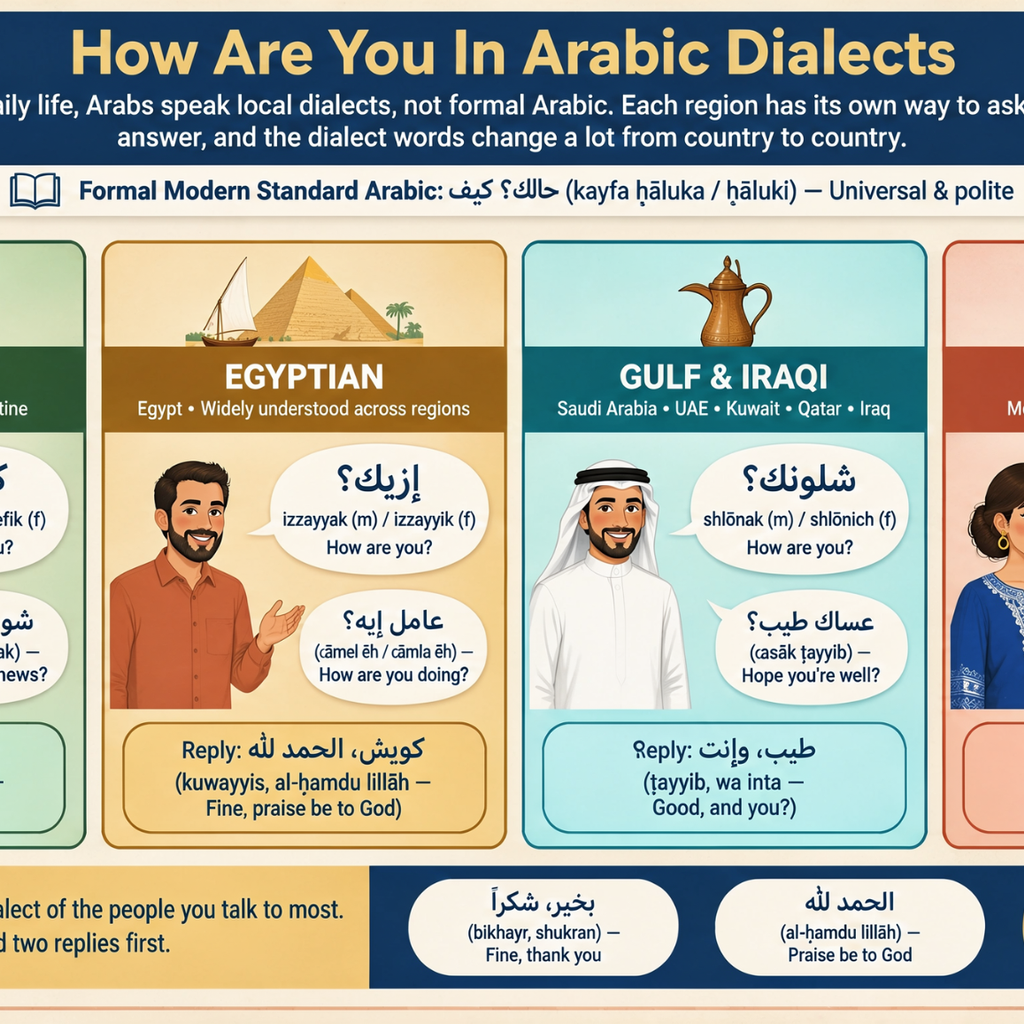
In daily life, Arabs speak local dialects, not formal Arabic. Each region has its own way to ask and answer, and the dialect words change a lot from country to country. Pick the dialect of the people you talk to most. Learn its question and two replies first.
How Are You In Egyptian Arabic
Egyptian Arabic is heard all over the Arab world. This is thanks to Egyptian films, TV shows, and songs. That makes it a smart first dialect for many learners.
The main question is إزيك؟ Say iz-ZAY-yak to a man. Say iz-ZAY-yik to a woman. Say iz-zay-YU-ku to a group. Hold the double “y” for a moment, like “eye-yuh.”
Egyptians have other ways to ask too. عامل إيه؟ (ʿāmil ēh) means “how are you doing?” A woman hears عاملة إيه؟ (ʿāmla ēh). أخبارك إيه؟ (akhbārak ēh) means “what’s your news?” To ask about health, say إزي الصحة؟ (izzay iṣ-ṣiḥḥa?).
The table shows common Egyptian replies. When a reply has a male and a female form, the female form comes second.
| Arabic | How To Say It | Meaning |
| كويس / كويسة، الحمد لله | KWAY-yis / kway-YI-sa, il-ḥamdu lillāh | Good, thank God |
| كله تمام | KUL-lu ta-MAAM | All is great |
| بخير، طول ما إنت بخير | bi-KHEER, ṭool ma IN-ta bi-KHEER | I’m fine as long as you’re fine |
| مش كويس / مش كويسة | mish KWAY-yis / mish kway-YI-sa | Not good |
The reply “ṭūl ma inta bikhēr” is a warm one. It links your good day to the other person’s good day. Egyptians love it. Very few learners use it, so people will notice when you do.
How Are You In Levantine Arabic
Levantine Arabic is also called Shami. It is spoken in Syria, Lebanon, Jordan, and Palestine. Its question is short and easy: كيفك؟
Say KEE-fak to a man. Say KEE-fik to a woman. Say KEEF-kon to a group. You will also hear كيف الحال؟ (kīf il-ḥāl), which sounds soft and friendly.
To reply, a man says منيح (mnīḥ). A woman says منيحة (mnīḥa). Both mean “good.” If you feel bad, put mish before it. Mish mnīḥ means “not good.” You can also say تمام (tamām) for “great.” Or say ماشي الحال (māshi il-ḥāl) for “it’s going okay.” Levantines often shorten al-ḥamdu lillāh to il-ḥamdilla.
A very local touch is الله يسلمك (Allah ysallmak). It means “may God keep you safe.” Say ysallmik to a woman. People use it right after someone asks about them. It works like “thanks for asking.” It sounds much warmer than a plain shukran.
How Are You In Gulf Arabic
Gulf Arabic is spoken in Saudi Arabia, the UAE, Kuwait, Qatar, Bahrain, and Oman. Iraqi Arabic is very close to it. A common question is شلونك؟ Say SHLOH-nak to a man. For a woman, Kuwaitis and Iraqis say shlōnich. Other Gulf speakers say shlōnik. In Saudi Arabia, you will also hear كيف حالك؟ (kēf ḥālak). Another kind question is عساك طيب؟ (ʿasāk ṭayyib?). It means “I hope you are well?”
For replies, زين (zēn) means “good.” طيب (ṭayyib) means “fine,” and a woman says ṭayyiba. بخير وعافية (bkhēr w ʿāfya) means “fine and healthy.”
To show respect, add طال عمرك (ṭāl ʿumrak). It means “may your life be long.” Use it with elders, a boss, or a host. Saying bkhēr w ʿāfya, ṭāl ʿumrak to an older man sounds very polite in any Gulf home.
How Are You In Moroccan Arabic
Moroccan Arabic belongs to the Maghrebi group. This group also includes Algerian, Tunisian, and Libyan Arabic. It sounds quite different from the dialects in the east, and the words also change across North Africa. The examples here are Moroccan.
Ask كيداير؟ (kee-DAA-yir) to a man. Ask كيدايرة؟ (kee-DAA-yra) to a woman. You can also ask لا باس؟ (lā bās?), “are you well?” Or ask كلشي بخير؟ (kulshi bikhīr?), “is all well?”
The neat thing about lā bās is that the question and the answer use the same words. To reply, say lā bās, il-ḥamdu lillāh. You can also say كلشي على خير (kulshi ʿla khīr), “all is fine.” For “so far so good,” say الحمد لله حد الساعة (il-ḥamdu lillāh ḥadd s-sāʿa).
In Algeria, you will often hear a different question: واش راك؟ (wāsh rāk?). Learn it if you plan to visit or work there.
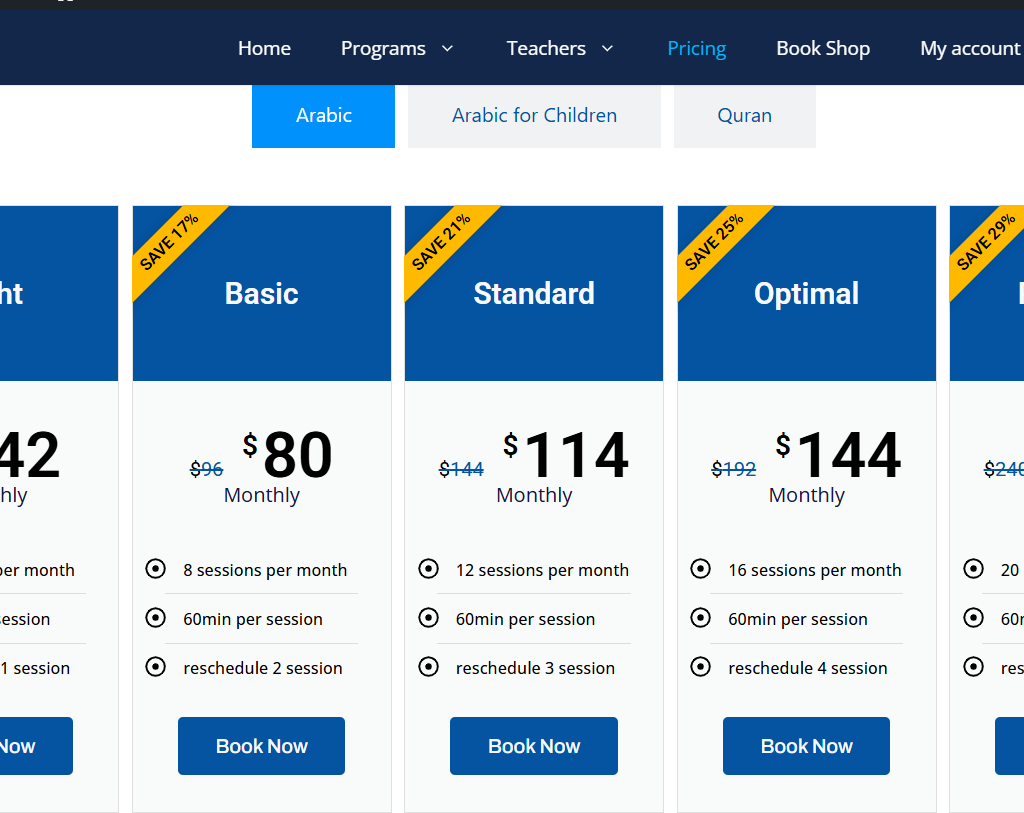
Want to learn one of these dialects with a private teacher? Kalimah Center offers one-on-one and group classes. You can check Kalimah Center’s prices and plans and pick a package that fits your time and budget.
How Are You In Arabic In Real Conversations
Lists help you remember words. Dialogues show you how those words fit together in a real talk. Read each one out loud, then switch roles with a friend.
A Formal Dialogue Between A Man And A Woman
This talk fits a workplace, a class, or a first meeting. Omar is a student. Sara is his teacher.
Omar: السلام عليكم. كيف حالكِ يا أستاذة سارة؟
as-salāmu ʿalaykum. kayfa ḥāluki yā ustādha Sāra?
Peace be upon you. How are you, Ms. Sara?
Sara: وعليكم السلام. بخير، الحمد لله. وكيف حالكَ أنت؟
wa ʿalaykum as-salām. bikhayr, al-ḥamdu lillāh. wa kayfa ḥāluka anta?
And peace be upon you. Fine, thank God. And how are you?
Omar: بخير، شكراً لكِ.
bikhayr, shukran laki.
Fine, thank you.
Look at three small details. First, the Islamic greeting comes before “how are you.” Second, Omar puts yā before the teacher’s title and name. Yā is used when you call someone, like “O” in old English. Third, “thank you” also takes an ending. It is shukran laki to a woman and shukran laka to a man.
A Casual Egyptian Dialogue Between Two Friends
This talk is between two old friends in Cairo. Mona and Noha meet after work.
Mona: إزيك يا نهى؟ عاملة إيه؟
izzayyik yā Noha? ʿāmla ēh?
How are you, Noha? How are you doing?
Noha: كويسة، الحمد لله. وإنتِ؟
kwayyisa, il-ḥamdu lillāh. w inti?
Good, thank God. And you?
Mona: الحمد لله، كله تمام.
il-ḥamdu lillāh, kullu tamām.
Thank God, all is great.
Did you see that Mona asks two questions in a row? Egyptians do this a lot. You do not need to answer each one. One reply covers both. Also note how fast the talk is. Each line has only a few words. Real Egyptian greetings move quickly, so short answers sound the most natural.
Responding To How Are You In Arabic By Text
Text replies follow the same rules as speech, but they are shorter. Many Arabs also type Arabic with English letters and numbers. Knowing both styles helps you read every message you get.
How To Read Arabizi: Numbers That Stand For Arabic Letters
Arabizi is Arabic written with English letters and numbers. People use it on phones and in chats. Some Arabic sounds have no English letter. So a number takes their place. Each number was picked because it looks a bit like the Arabic letter.
Here are the numbers you will see most:
- 2 stands for ء, a short stop in the throat
- 3 stands for ع (ʿ)
- 5 stands for خ (kh)
- 6 stands for ط, a heavy “t”
- 7 stands for ح (ḥ)
Now read this short chat:
Ahmed: salam! ezayak? 3amel eh?
Youssef: el7amdulillah kwayes, w enta?
“3amel eh” is ʿāmil ēh. “El7amdulillah” is al-ḥamdu lillāh. Spelling in Arabizi is loose, so the same word can look a few ways. You may see “ezayak,” “izzayak,” or “ezzayak.” Read it out loud, and the word usually becomes clear. Once you know these five numbers, most Arabizi is easy to read.
Short Text Replies For Friends And For Work
Text replies are usually two or three words. With friends, you will see تمام (tmam) or بخير وانت؟ (bkhair w enta?). You will also see الحمدلله (el7amdulillah). In chats, it is often typed as one word.
Here is a simple rule. Reply in the same style the other person uses. If they write in Arabic letters, answer in Arabic letters. If they use Arabizi, answer in Arabizi. Matching their style feels friendly and natural.
Busy right now? You can still reply kindly. In Egyptian, write تمام، هكلمك بعدين (tamām, hakallimak baʿdēn), “great, I’ll call you later.” In Levantine, write تمام، بحكيك بعدين (tamām, baḥkīk baʿdēn), “great, I’ll talk to you later.”
At work, keep it formal. Use full Arabic letters and full words. A safe work reply is بخير، شكراً لك (bikhayr, shukran lak). For a woman, write شكراً لكِ (shukran laki). Skip Arabizi and slang with a boss, a client, or a new teacher.
Common Mistakes When Answering How Are You In Arabic
A few slips come from turning English habits straight into Arabic. Teachers hear these often from new learners:
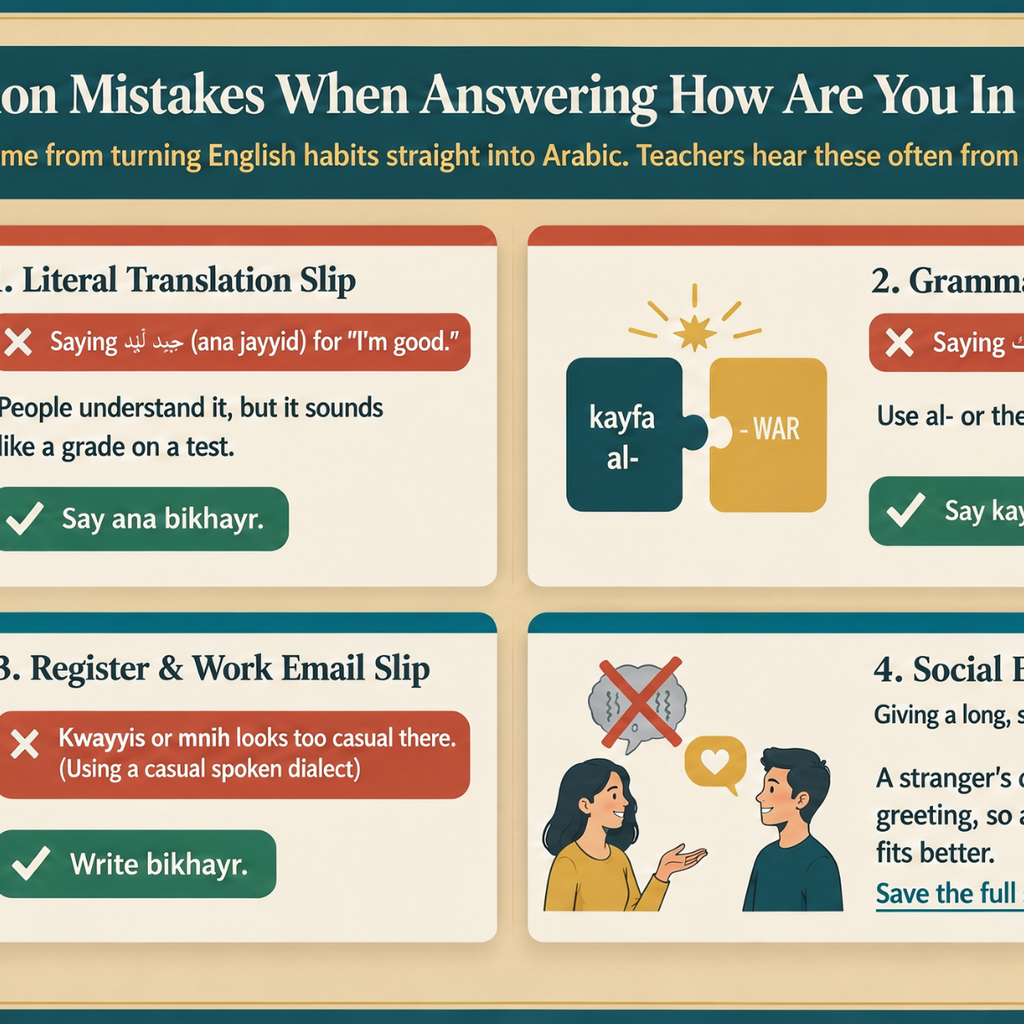
- Saying أنا جيد (ana jayyid) for “I’m good.” People understand it, but it sounds like a grade on a test. Say ana bikhayr.
- Saying كيف الحالك (kayfa al-ḥāluk). Use al- or the ending, never both. Say kayfa al-ḥāl or kayfa ḥāluka.
- Using dialect in a work email. Kwayyis or mnīḥ looks too casual there. Write bikhayr.
- Giving a long, sad answer to a stranger. A stranger’s question is mostly a greeting, so a short, polite answer fits better. Save the full story for close friends.
Experience Kalimah Center Classes
Watch real excerpts from our live sessions at Kalimah Center and see how we bring learning to life. These clips highlight our interactive, student-centered teaching approach across all our courses—designed to keep learners engaged, motivated, and actively involved every step of the way.
Master Arabic with Kalimah Center
Join our expert-led online classes and start your journey toward Arabic fluency today.
Book Your Free TrialSpeak Arabic With Confidence: Start Your Free Trial At Kalimah Center Today
You have the words. Now you need practice to say them fast and right. Kalimah Center has taught Arabic online for more than 14 years. Every class is built to get you speaking.
Here is what you get when you join Kalimah Center:
- Native Arabic teachers who are certified to teach Arabic and Quran
- One-on-one or group classes, so you choose how you learn
- Male and female teachers, so sisters, brothers, and kids can pick who they feel at ease with
- A full course written by Kalimah, with 16 levels and more than 400 hours of lessons
- Mistakes fixed during class, so bad habits never settle in
- Hands-on exercises in every lesson for reading, writing, listening, and speaking
- A certificate each time you pass a level
- Class materials you can open at any time, day or night
Try it before you pay. Book your free lesson now and have your first real Arabic talk this week.

Explore Our Courses:
- Online Arabic Course: Tailored to your level, our comprehensive Arabic program includes 16 teaching levels and 400+ hours of personalized sessions.
- Online Quran With Tajweed Course: Perfect for non-Arabic speakers, our course spans 13 levels and equips you with Tajweed mastery from beginner to advanced.
- Online Arabic Course For Kids: Nurture your child’s love for Arabic with our engaging and structured program, available in 24 levels for primary, intermediate, and secondary stages.
Conclusion
Learning how are you in Arabic & response starts with one formal pair. Ask kayfa ḥāluka to a man or kayfa ḥāluki to a woman. Reply with bikhayr, al-ḥamdu lillāh. These words work in every Arab country, from a class in Cairo to an office in Riyadh.
After that, choose one dialect and stay with it. One dialect used every day will take you further than four you only half know. If you plan to work in the Gulf, start with shlōnak. If you love Egyptian films, start with izzayyak.
Here is a simple plan for your first week. On day one and two, say the MSA forms out loud and drill the ḥ sound. On day three and four, learn your dialect’s question and two replies. On day five, read the dialogues with a friend. On day six and seven, answer real messages in Arabic, in the same style people write to you.
If you are still choosing where to study, look at our list of the best websites to learn Arabic online. With steady practice and a good teacher, “how are you” will soon be the easiest part of your Arabic.
FAQs
These are the questions learners ask most after they learn the basic greeting. Each answer gives you a new phrase you can use right away.
How Do You Say “How Are You Today” In Arabic?
Say كيف حالك اليوم؟ (kayfa ḥāluka al-yawm) to a man, or kayfa ḥāluki al-yawm to a woman. Al-yawm means “today.”
How Do You Say “How Are You, My Friend” In Arabic?
In formal Arabic, say كيف حالك يا صديقي؟ (kayfa ḥāluka yā ṣadīqī). In Egyptian Arabic, friends say إزيك يا صاحبي؟ (izzayyak yā ṣāḥbi).
How Do You Say “How Was Your Day” In Arabic?
Say كيف كان يومك؟ (kayfa kāna yawmuk). In Egyptian Arabic, people say يومك كان عامل إزاي؟ (yōmak kān ʿāmil izzāy).
How Do You Ask “How Is Your Family” In Arabic?
Say كيف حال العائلة؟ (kayfa ḥāl al-ʿāʾila). A common reply is الحمد لله، كلهم بخير (al-ḥamdu lillāh, kulluhum bikhayr), “thank God, they are all well.”
How Do You Say “I Am Tired” In Arabic?
A man says أنا تعبان (ana taʿbān), and a woman says أنا تعبانة (ana taʿbāna). In formal Arabic, say أنا متعب (ana mutʿab) or أنا متعبة (ana mutʿaba).
How Do You Say “Long Time No See” In Arabic?
In Levantine Arabic, say صارلي زمان ما شفتك (ṣārli zamān mā shiftak). In Egyptian Arabic, say وحشتني (waḥashtini), “I missed you,” or وحشتيني (waḥashtīni) to a woman.
What Is The Reply To “As-Salāmu ʿAlaykum”?
The reply is وعليكم السلام (wa ʿalaykum as-salām), “and peace be upon you.” After this, it is natural to ask “how are you.”