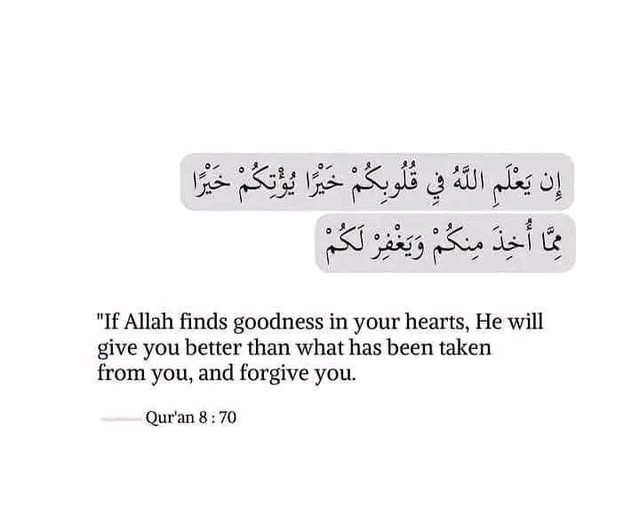
Across 28 verses, Allah (SWT) addresses forgiveness — not as a distant possibility, but as a standing promise for those who turn to Him.
These verses appear in more than a dozen surahs, spanning Meccan and Medinan revelation alike, which tells you something important: the message of divine forgiveness is not occasional. It is foundational.
This article compiles the key Quran verses about forgiveness in Arabic, with their English translations, organized by theme — so you can read them, reflect on them, and understand what each one is actually saying.
What You’ll Learn in This Article
- The most important Quran verses about forgiveness in Arabic, with full text and translation
- How the Quran categorizes forgiveness — by condition, by recipient, and by reward
- The verse that many scholars consider the most hope-giving in the entire Quran
- What the Arabic root غ-ف-ر tells you about the nature of divine forgiveness
- Practical takeaways: what these verses require of you
The Arabic root غ-ف-ر (gh-f-r) carries the image of covering, concealing, and protecting something from further damage. A mighfar (مِغفَر) is a helmet — it covers and shields the head. When Allah yaghfiru (يَغفِر), He doesn’t merely pardon the sin; He conceals it, removes its trace, and shields the believer from its consequences. This is why Al-Ghafoor (الغفور) — one of Allah’s 99 names — is often paired with Ar-Raheem (الرحيم): the forgiveness is complete, and it comes wrapped in mercy.
Quran Verses About Forgiveness in Arabic
The forgiveness verses in the Quran fall into several distinct categories. Each category reflects a different dimension of how Allah approaches human sin and repentance.
1. Unlimited Hope
This is the verse most scholars point to when someone asks whether their sins are too great to be forgiven. It was revealed as a direct address to believers who had despaired of mercy:
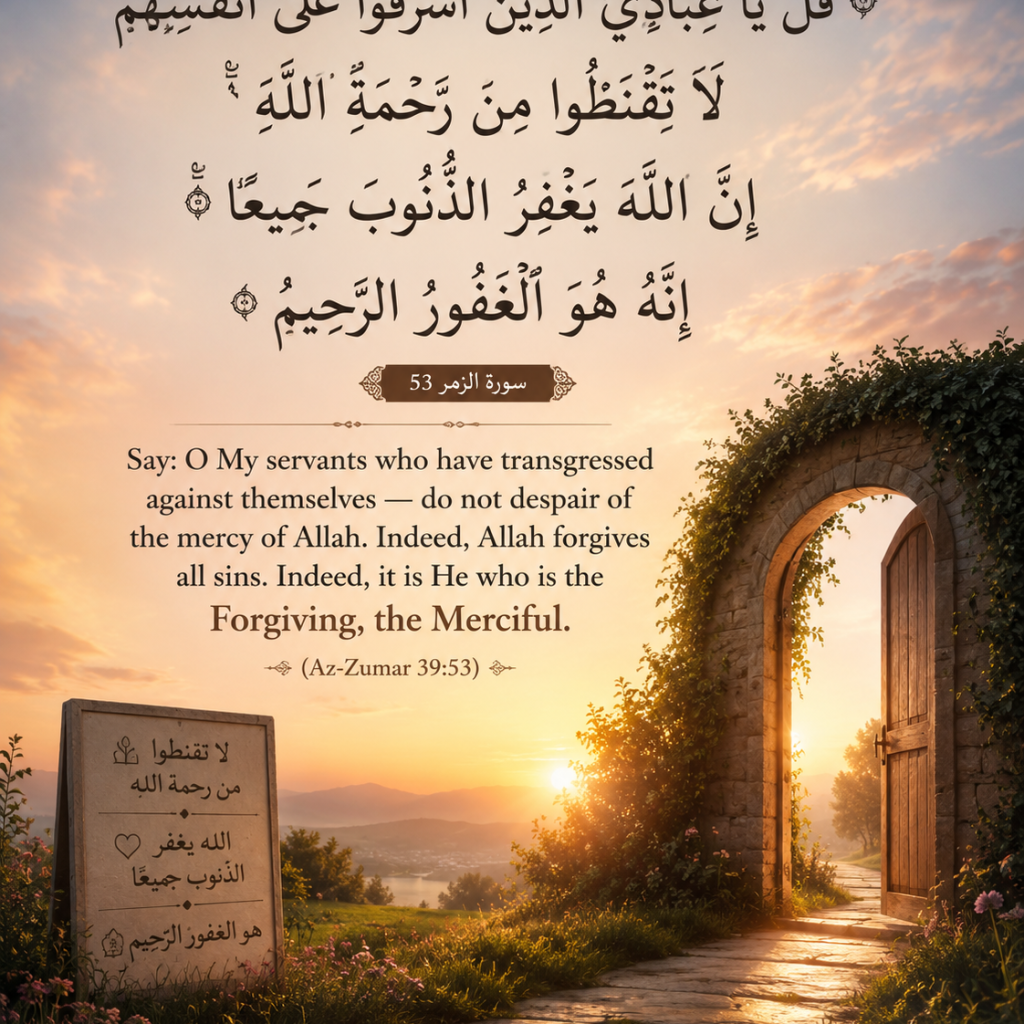
قُلْ يَا عِبَادِيَ الَّذِينَ أَسْرَفُوا عَلَىٰ أَنْفُسِهِمْ لَا تَقْنَطُوا مِن رَّحْمَةِ اللَّهِ ۚ إِنَّ اللَّهَ يَغْفِرُ الذُّنُوبَ جَمِيعًا ۚ إِنَّهُ هُوَ الْغَفُورُ الرَّحِيمُ
“Say: O My servants who have transgressed against themselves — do not despair of the mercy of Allah. Indeed, Allah forgives all sins. Indeed, it is He who is the Forgiving, the Merciful.” (Az-Zumar 39:53)
The phrase أَسْرَفُوا عَلَىٰ أَنْفُسِهِمْ — those who have been excessive against themselves — is deliberate. This verse is addressed specifically to those who feel they’ve gone too far. The answer given is not a qualified hope; it’s an absolute statement: all sins. The scholars of tafsir note that the only sin excluded from this blanket forgiveness is shirk — and even that is forgiven upon sincere repentance before death.
2. Verses Promising Forgiveness to Believers Who Do Good
The most frequently repeated pattern in Quran forgiveness verses pairs mağfirah (مغفرة — forgiveness) with a great reward. This pairing appears across multiple surahs in nearly identical construction, which signals that it is a deliberate Quranic formula, not coincidence:
وَعَدَ اللَّهُ الَّذِينَ آمَنُوا وَعَمِلُوا الصَّالِحَاتِ ۙ لَهُم مَّغْفِرَةٌ وَأَجْرٌ عَظِيمٌ
“Allah has promised those who believe and do righteous deeds — for them is forgiveness and a great reward.” (Al-Ma’idah 5:9)
أُولَئِكَ جَزَاؤُهُمْ مَغْفِرَةٌ مِنْ رَّبِّهِمْ وَجَنَّاتٌ تَجْرِي مِنْ تَحْتِهَا الْأَنْهَارُ خَالِدِينَ فِيهَا ۚ وَنِعْمَ أَجْرُ الْعَامِلِينَ
“For them, their reward is forgiveness from their Lord and gardens beneath which rivers flow, abiding therein forever. Excellent is the reward of the righteous workers.” (Aal Imran 3:136)
These verses establish a direct covenant: iman (belief) combined with righteous action is the path that unlocks forgiveness.
The reward is not only pardon — it is Jannah. This is information-gain worth noting: forgiveness in the Quran is almost never described in isolation. It consistently comes paired with either mercy, reward, or elevated rank — all three representing different dimensions of what Allah gives the repentant believer.
Read Also: Quran Quotes In Arabic And English
3. Forgiveness For Those Who Have Wronged Themselves
This verse addresses a specific situation: someone who has already committed a wrong, whether against others or against themselves, and is wondering whether tawbah (repentance) is still valid.
وَمَنْ يَعْمَلْ سُوءًا أَوْ يَظْلِمْ نَفْسَهُ ثُمَّ يَسْتَغْفِرِ اللَّهَ يَجِدِ اللَّهَ غَفُورًا رَّحِيمًا
“And whoever does evil or wrongs himself but then seeks forgiveness of Allah will find Allah Forgiving and Merciful.” (An-Nisa 4:110)
The structure here is conditional: the act of seeking forgiveness (yastağhfir) leads directly to finding Allah as Al-Ghafoor. There’s no intermediary, no qualifying period, no required suffering. The sequence is immediate — wrong → sincere seeking of forgiveness → divine response.
4. Verses That Call You to Race Toward Forgiveness
Two verses in the Quran use the command form — sāri’ū and sābiqū — both meaning “rush” or “race ahead” — specifically in the context of seeking forgiveness. This is not passive waiting. It’s an urgent pursuit.
وَسَارِعُوا إِلَى مَغْفِرَةٍ مِنْ رَبِّكُمْ وَجَنَّةٍ عَرْضُهَا السَّمَاوَاتُ وَالْأَرْضُ أُعِدَّتْ لِلْمُتَّقِينَ
“And hasten to forgiveness from your Lord and a garden as wide as the heavens and the earth, prepared for the righteous.” (Aal Imran 3:133)
سَابِقُوا إِلَىٰ مَغْفِرَةٍ مِّن رَّبِّكُمْ وَجَنَّةٍ عَرْضُهَا كَعَرْضِ السَّمَاءِ وَالْأَرْضِ
“Race toward forgiveness from your Lord and a garden whose width is like the width of the heavens and the earth.” (Al-Hadid 57:21)
The deliberate shift from “hasten” (Aal Imran) to “race” (Al-Hadid) — a stronger verb — across two separate revelations reinforces one point: the Muslim attitude toward seeking forgiveness should be urgency, not procrastination.
Reading these verses in Arabic and feeling the force of those command verbs is something translation alone can’t fully deliver.
At Kalimah Center, teachers trained in Quranic Arabic help you hear the weight behind words like sābiqū — so the Quran speaks to you, not just at you.
Experience Kalimah Center Classes
Watch real excerpts from our live sessions at Kalimah Center and see how we bring learning to life. These clips highlight our interactive, student-centered teaching approach across all our courses—designed to keep learners engaged, motivated, and actively involved every step of the way.
Master Arabic with Kalimah Center
Join our expert-led online classes and start your journey toward Arabic fluency today.
Book Your Free Trial5. Forgiveness Despite Human Wrongdoing
This verse contains one of the most striking theological statements about divine forgiveness. It acknowledges human ongoing wrongdoing — on top of their injustice — and yet affirms that Allah remains a Lord of forgiveness:
وَإِنَّ رَبَّكَ لَذُو مَغْفِرَةٍ لِّلنَّاسِ عَلَىٰ ظُلْمِهِمْ ۖ وَإِنَّ رَبَّكَ لَشَدِيدُ الْعِقَابِ
“And indeed your Lord is full of forgiveness for the people, despite their wrongdoing. And indeed your Lord is severe in penalty.” (Ar-Ra’d 13:6)
Both realities are stated together. This is the Quranic balance: forgiveness is vast and always available, but accountability is also real. The verse isn’t choosing between mercy and justice — it’s holding both simultaneously.
Read also: Arabic Vocabulary For Breakfast Foods
6. Turning Sins Into Good Deeds
This verse describes a level of divine generosity that goes beyond pardon. For those who truly repent and reform, Allah does not merely remove the sin — He replaces it with a good deed in the record:
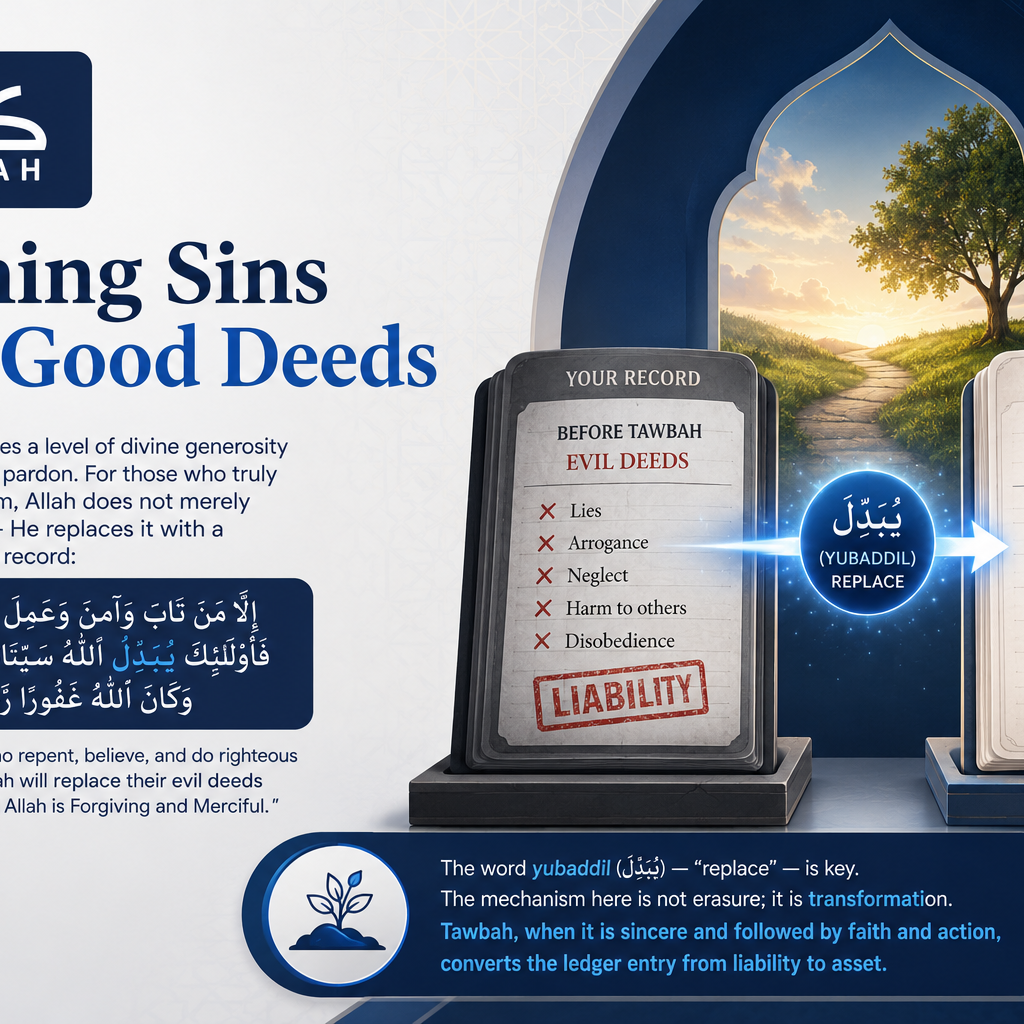
إِلَّا مَن تَابَ وَآمَنَ وَعَمِلَ عَمَلًا صَالِحًا فَأُولَٰئِكَ يُبَدِّلُ اللَّهُ سَيِّئَاتِهِمْ حَسَنَاتٍ ۗ وَكَانَ اللَّهُ غَفُورًا رَّحِيمًا
“Except for those who repent, believe, and do righteous work — for them Allah will replace their evil deeds with good ones. And Allah is Forgiving and Merciful.” (Al-Furqan 25:70)
The word yubaddil (يُبَدِّل) — “replace” — is key. The mechanism here is not erasure; it is transformation. Tawbah, when it is sincere and followed by faith and action, converts the ledger entry from liability to asset.
Read Also: quran verses about jannah in arabic
7. A Call For Forgiving One Another
The Quran does not limit forgiveness to the vertical relationship between the servant and Allah. It addresses human-to-human forgiveness directly — and uses divine forgiveness as the motivating argument:
وَلْيَعْفُوا وَلْيَصْفَحُوا ۗ أَلَا تُحِبُّونَ أَنْ يَغْفِرَ اللَّهُ لَكُمْ ۗ وَاللَّهُ غَفُورٌ رَّحِيمٌ
“Let them pardon and overlook. Would you not like that Allah should forgive you? And Allah is Forgiving and Merciful.” (An-Nur 24:22)
The rhetorical question is the argument: if you want Allah’s forgiveness, model it toward others. Extending pardon is not simply moral virtue — it is presented as the behavior of someone who genuinely understands and desires divine forgiveness.
8. Istighfar And Its Worldly Returns
This passage from Surah Nuh presents something unexpected: the connection between seeking Allah’s forgiveness and tangible blessings in this life — rain, wealth, children, and gardens:
فَقُلْتُ اسْتَغْفِرُوا رَبَّكُمْ إِنَّهُ كَانَ غَفَّارًا يُرْسِلِ السَّمَاءَ عَلَيْكُم مِّدْرَارًا وَيُمْدِدْكُم بِأَمْوَالٍ وَبَنِينَ وَيَجْعَل لَّكُمْ جَنَّاتٍ وَيَجْعَل لَّكُمْ أَنْهَارًا
“And I said: Seek forgiveness from your Lord — indeed He is ever a Pardoner. He will send rain upon you in abundance and provide you with wealth and children and make for you gardens and make for you rivers.” (Nuh 71:10–12)
Classical scholars including Ibn Kathir noted this passage as evidence that istighfar (seeking forgiveness) is not only a spiritual act — it has material consequences. Imam Ahmad ibn Hanbal reportedly advised people facing difficulties — drought, poverty, childlessness — to increase their istighfar, citing these verses directly.
Understanding why specific Quranic words were chosen — why ghaffāran here instead of ghafoor, for instance — is the kind of depth you gain when you study with a qualified teacher. Kalimah Center’s courses teach exactly this: the language behind the meaning, so every verse opens further.
Inside Kalimah Center: Moments from Our Courses
Get a glimpse into the vibrant learning experience at Kalimah Center. These snapshots capture real moments from our live classes—where students engage deeply, connect with passionate instructors, and grow in a welcoming, supportive environment.
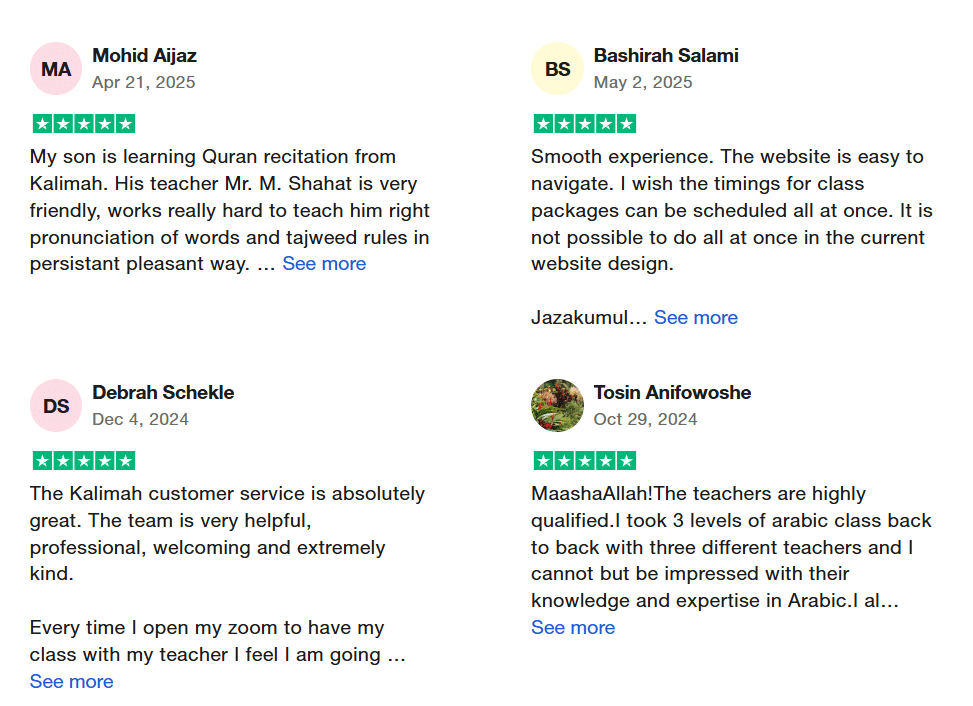
Here Are The Reviews On Our Courses:
Our students frequently commend the excellence of our courses and the commitment shown by our instructors. You can read their complete reviews on Trustpilot.
Read more reviews on Trustpilot
Start Learning the Quran with Confidence with Kalimah Center
Reading these verses is a beginning. Understanding them in their original Arabic — following the grammar, hearing the rhetorical weight of yubaddil and yastağhfir and la taqnatū — transforms the relationship.
At Kalimah Center, qualified teachers help you go beyond translation and into genuine Quranic comprehension. Whether you’re a beginner who has never learned Arabic or a Muslim looking to deepen their understanding of Allah’s words, there’s a course designed for your level.
Explore Our Courses:
- Online Arabic Course: 16 levels, 400+ hours of one-on-one sessions, structured from complete beginner to advanced.
- Online Quran With Tajweed Course: 13 levels designed for non-Arabic speakers, from first reading to fluent, rule-governed recitation.
- Online Arabic Course for Kids: 24 levels across primary, intermediate, and secondary stages, taught by teachers trained to work with young learners.
Master Arabic with Kalimah Center
Join our expert-led online classes and start your journey toward Arabic fluency today.
Book Your Free TrialStart Your Free Trial Today!
Your free trial is one click away. Start with the verse that moved you most in this article — and learn exactly what Allah meant when He chose those words.
Conclusion
Quran verses about forgiveness in Arabic return again and again to the same message: Allah’s capacity to forgive exceeds human capacity to sin. The verse of Az-Zumar commands believers not to despair. The verse of An-Nisa says the door opens the moment you knock. The verse of Al-Furqan says sincere repentance doesn’t just restore the record — it rebuilds it.
What these 28 verses collectively establish is a theology of mercy that is unconditional in scope, conditional only in the sincerity of the one seeking it. The Arabic root غ-ف-ر — covering, concealing, shielding — is the most fitting image: Allah’s forgiveness doesn’t just remove the sin. It covers the trace.
Read also: Quran Verses About Kindness in Arabic And English
Frequently Asked Questions
The questions below are the ones people most commonly ask when searching for Quran verses about forgiveness in Arabic — covering meaning, count, conditions, and how to apply these verses in daily life. If a question you have isn’t answered in the article above, you’ll likely find it here.
1- What is the most powerful verse about forgiveness in the Quran?
Surah Az-Zumar 39:53 is widely regarded as the most expansive verse on forgiveness. It directly addresses those who have sinned excessively and states without qualification that Allah forgives all sins — describing Himself as Al-Ghafoor (the All-Forgiving) and Ar-Raheem (the Most Merciful).
2- How many verses about forgiveness are in the Quran?
The word mağfirah (مغفرة — forgiveness) appears in 28 verses in the Quran. When related forms from the root غ-ف-ر are included — such as yaghfir, ghafoor, and ghaffar — the total number of forgiveness-related references across the Quran exceeds 200.
3- What does the Quran say about forgiving others?
Surah An-Nur 24:22 directly commands believers to pardon and overlook the wrongs of others, using divine forgiveness as the reason: “Would you not like that Allah should forgive you?” The Quran ties the two together — how you treat others mirrors what you expect from Allah.
4- Does the Quran say Allah forgives all sins?
Yes. Az-Zumar 39:53 states that Allah forgives all sins (يَغْفِرُ الذُّنُوبَ جَمِيعًا). Scholars specify that this applies to sincere repentance for any sin, including major ones. The one sin the Quran states is not forgiven without repentance is shirk (associating partners with Allah), as stated in An-Nisa 4:48.
5- What is the Arabic word for forgiveness in the Quran?
The primary word is mağfirah (مغفرة), from the root غ-ف-ر. Allah is called Al-Ghafoor (الغفور — the All-Forgiving) and Al-Ghaffar (الغفار — the Ever-Forgiving). The verb form yastağhfir means “to seek forgiveness,” and tawbah (توبة) refers to the act of turning back to Allah in repentance.
6- What does istighfar mean and how often does the Quran encourage it?
Istighfar (استغفار) means actively seeking Allah’s forgiveness. The Quran encourages it in Surah Nuh with the promise of rain, wealth, and children as worldly results. Surah An-Nasr closes with the command to praise Allah and seek His forgiveness. The Prophet Muhammad (PBUH) reportedly made istighfar more than 70 times daily — establishing it as a continuous practice, not a one-time event.