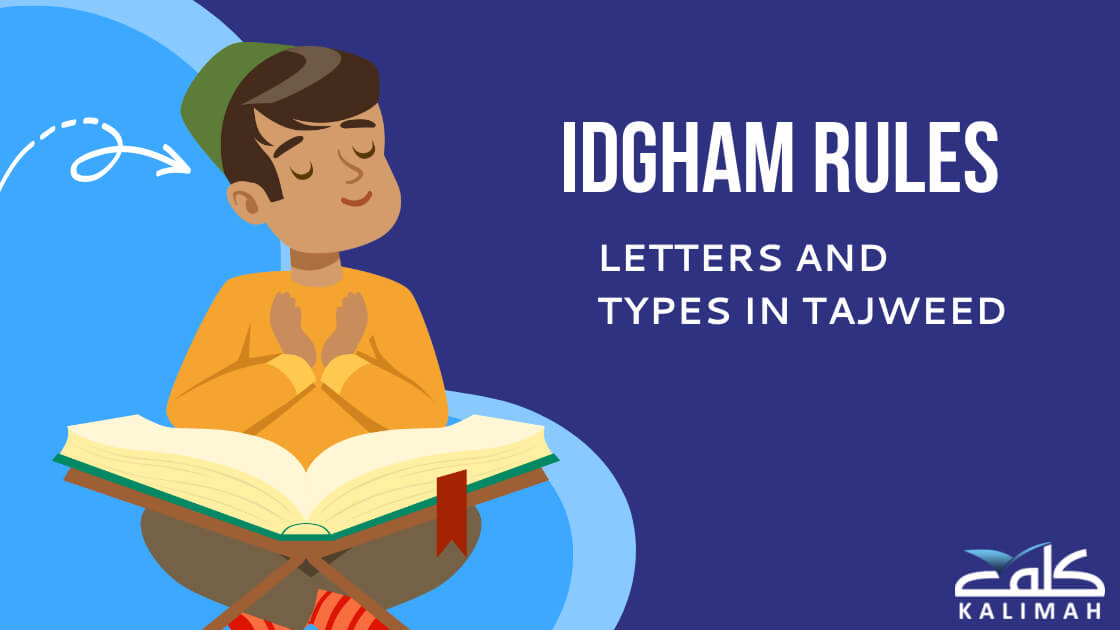
Idgham in Tajweed involves merging or assimilating certain letters when transitioning from one letter to another in specific circumstances, aiming to facilitate smoother recitation. It occurs when a nasal sound is followed by a non-nasal sound within the same word or between two words.
The purpose of Idgham is to maintain the flow and rhythm of Quranic recitation. Examples of Idgham include merging An-Noon As-Sakinah or At-tanween with specific letters like ي, ر, م, ل, و, ن. Mastering Idgham is crucial for proper Quranic recitation. Learning Tajweed, which encompasses these rules, is essential for accurate Quranic recitation.
The following article is talking about a branch of Tajweed knowledge which is Idgham rules in detail.
What Is Idgham?
The definition of the term Idgham in Tajweed knowledge means joining a non-vowel letter with a vowel letter in a way that the two letters become as one sound in pronunciation.

In Other words, Idgham refers to the merging or assimilation of certain letters when transitioning from one letter to another in specific circumstances. This joining or merging between the letters is done to facilitate smoother and more seamless recitation.
Idgham happens when specific Arabic letters come after An-noon Sakinah or At-Nanween. In more detailed words: Idgham occurs when a nasal sound (or Mudgham letter) is followed by a non-nasal sound (a “ghayr mudgham” letter) within the same word or at the end of one word and the beginning of the next.
With Idgham, Instead of pronouncing both letters distinctly, the nasal sound is assimilated or merged into the following non-nasal sound.
In Tajweed knowledge, there are four rulings for what is going to happen in case if a letter comes after the letter noon (ن) which is called An-noon As-saknhah or At-Tanween.
This essay entirely concentrates on Idgham and how to be pronounced proficiently. To gain more information about the rule of Idgham in Tajweed and its different kinds in detail, keep reading this essay.
Let’s see 2 examples from the holy Quran:
- جَنَّاتٍ تَجْرِي “Jannatin tajri” Surah Al-Baqarah (2:25)
The Tanween on “Jannatin” merges with the Ta (ت), creating an Idgham.
- رِيَاحًا مُبَشِّرَاتٍ “Riyahan mubashshiratin” Surah Al-A’raf (7:57)
The Tanween on “mubashshiratin” merges with the Mim (م) creating an Idgham.


Idgham Letters
As we mentioned above Al-Idgham term in Tajweed means joining two letters so that the two letters become one sound. Idgham rule happens if An-Noon As-Sakinah or At-tanween are followed by any of the following Arabic letters:

| ي | ر | م | ل | و | ن |
An Easy Way For MemorizingIdgham Letters There is an easy way for learners to memorize Idgham letters. They can be memorized in the form of an Arabic word which is (يرْمَلُون).
There is another way which is to divide the six letters into two parts as follows: (لر ينمو)
The reason behind this division is the fact that this Arabic phrase divides the letters of Idgham into two types: Idgham with Ghunah and Idgham without Ghunah. Idgham with Ghunnah comes with the letters (ي ن م و), and Idgham without Ghunnah with the letters: (ل ر).
Experience Kalimah Center Classes
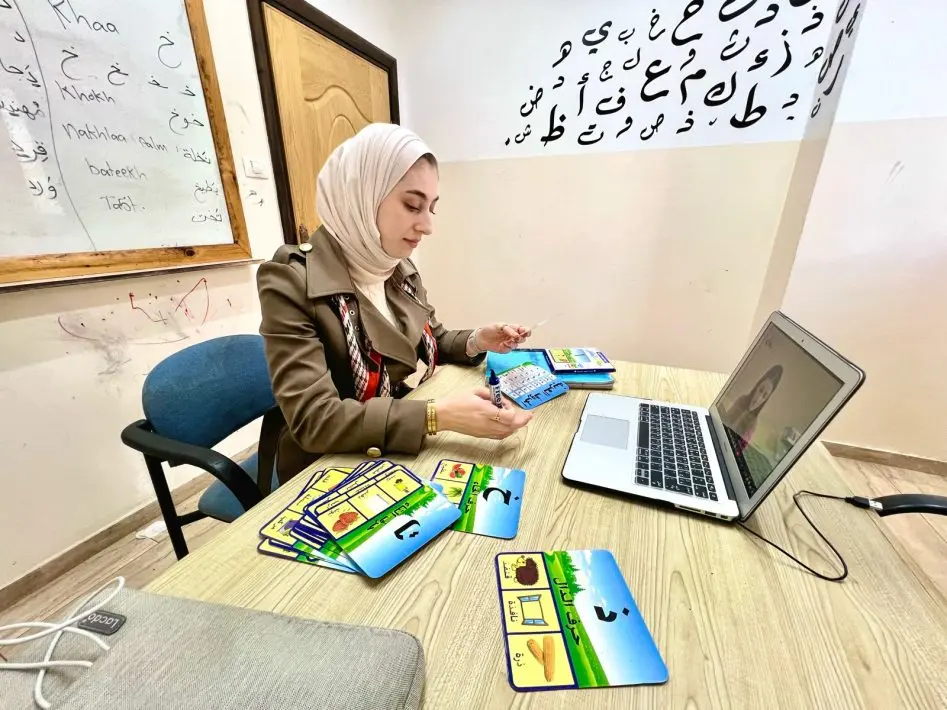
Watch real excerpts from our live sessions at Kalimah Center and see how we bring learning to life. These clips highlight our interactive, student-centered teaching approach across all our courses—designed to keep learners engaged, motivated, and actively involved every step of the way.
What Is The Purpose Of Idgham?
The purpose of idgham is to maintain the flow and rhythm of the recitation of the Quran. The Idgham of the letters specified above is to avoid any disruptions or abruptness in the pronunciation of these letters when joining together in the recitation. It is considered a beautification of the recitation when applied correctly according to the rules of Tajweed.
Mastering idgham is an important aspect of Tajweed for those who seek to recite the Quran with proper pronunciation and adherence to the rules of recitation.
Therefore, we can summarize the answer in six points, which are as follows:
- Ease of Pronunciation: Simplifies the pronunciation of adjacent letters for smoother recitation.
- Improves Flow: Creates a harmonious transition between letters, making recitation sound natural.
- Adherence to Tajweed: Ensures proper application of Quranic recitation rules.
- Correct Pronunciation: Prevents mispronunciations and maintains the integrity of the words.
- Enhances Beauty: Makes recitation more melodic and pleasant to hear.
- Avoids Disjointed Speech: Prevents abrupt pauses between letters for a continuous sound.
In short, Idgham makes recitation easier, smoother, and more beautiful while preserving the correct pronunciation of the Quran.
When To Pronounce The Idgham In Tajweed?
If the Arabic letter An-Noon Es-Sakinah or the Arabic linguistic sign which is called At-tanween is followed by any letter of the six Idgham letters that are mentioned above, then, both of An-Noon Sakinah or Tanween will be merged into this letter to form a new sound that stands in the middle between the two sounds of the main letters.
The stress or emphasis sound will be placed onto the succeeding letter because of the Arabic phonetic sign which is called Esh-Shaddah.
In order to make the concept of the Idgham term more obvious, we have to mention that Idgham only will happen when just two words come together – the first word ends with An-NoonEs-Sakinah or At-tanween, and the second word begins with one of the Idgham six letters.
Read more about: Idgham Types And Examples In Tajweed
Examples of Idgham To Practice:
Here are some examples of Idgham to practice, both with and without ghunnah:
- أَوْ كَصَيِّبٍ مِنَ السَّمَاءِ فِيهِ ظُلُمَاتٌ وَرَعْدٌ وَبَرْقٌ يَجْعَلُونَ أَصَابِعَهُمْ فِي آذَانِهِمْ مِنَ الصَّوَاعِقِ حَذَرَ الْمَوْتِ ۚوَاللَّـهُ مُحِيطٌ بِالْكَافِرِينَ (Al-Baqarah:19)
- إِذْ أَوَى الْفِتْيَةُ إِلَى الْكَهْفِ فَقَالُوا رَبَّنَا آتِنَا مِنْ لَدُنْكَ رَحْمَةً وَهَيِّئْ لَنَا مِنْ أَمْرِنَا رَشَدًا (Al-Kahf: 10)
- From Surah Al-Baqarah (2:286): “مِنْ وَلِيٍّ” (min waliyyin)
- From Surah Al-Ikhlas (112:4): “وَلَمْ يَكُن لَّهُ” (walam yakun lahu)
- From Surah Al-Fil (105:3): “تَرْمِيهِم بِحِجَارَةٍ” (tarmihim bihijarah)
- From Surah Al-Falaq (113:4): “مِن شَرِّ” (min sharri)
- From Surah Al-Qadr (97:4): “مِن كُلِّ أَمْرٍ” (min kulli amrin)
Practice Tips
Listen To Recitations:
Listening to proficient Qaris (reciters) can help you understand how Idgham is applied in practice. Pay attention to how they merge the letters and the nasalization in Idgham with Ghunnah.
Recite With A Teacher:
Having a teacher who can correct your pronunciation and application of Tajweed rules is invaluable. They can provide immediate feedback and guide you through difficult passages.
Choose Your Native Qualified Teacher Now

Use Tajweed Resources:
Utilize resources like Tajweed books, online courses, and apps that provide detailed explanations and examples of Idgham and other Tajweed rules.
Regular Practice:
Regularly practicing recitation and focusing on applying the rules of Idgham will gradually improve your fluency and accuracy. Start with shorter surahs and progressively move to longer ones as you become more comfortable.
Find the Idgham and contact us with the correct answer!
Is It Important To Learn Tajweed?
Tajweed term is a linguistic term used for referring to the rulings of the accurate pronunciation concerning the recitation of the Holy Quran, it includes how we should utter the letters accurately to produce the true sounds of the Arabic letters, it also includes phonetic processes such as opening and hiding letters.
So to recite the Quran correctly you should learn the rules of Tajweed with a specialized tutor.
Inside Kalimah Center: Moments from Our Courses
Get a glimpse into the vibrant learning experience at Kalimah Center. These snapshots capture real moments from our live classes—where students engage deeply, connect with passionate instructors, and grow in a welcoming, supportive environment.
Here Are The Reviews On Our Courses:
Our students frequently commend the excellence of our courses and the commitment shown by our instructors. You can read their complete reviews on Trustpilot.

🌟 Unlock Your Potential in Arabic and Quran with Kalimah Center! 🌟
Ready to deepen your connection with the Quran and enhance your understanding of Arabic? Join Kalimah Center today and embark on a transformative journey of learning and growth! Our professional, handpicked Online Arabic and Quran Tutors are dedicated to helping you master these essential skills with ease and expertise.
📚 Explore Our Courses:
Online Arabic Course: Tailored to your level, our comprehensive Arabic program includes 16 teaching levels and 400+ hours of personalized sessions.
Online Quran With Tajweed Course: Perfect for non-Arabic speakers, our course spans 13 levels and equips you with Tajweed mastery from beginner to advanced.
Online Arabic Course For Kids: Nurture your child’s love for Arabic with our engaging and structured program, available in 24 levels for primary, intermediate, and secondary stages.
💡 Why Choose Kalimah?
Expert Tutors: Learn from native Arabic speakers and Ijazah-certified teachers who prioritize your progress.
Flexible Learning: Enjoy one-on-one classes, 24/7 access to materials, and interactive exercises for a dynamic learning experience.
Comfortable Environment: Benefit from a supportive and encouraging atmosphere, where mistakes are seen as opportunities for growth.
Proven Success: With over 8,000 students worldwide and glowing testimonials, Kalimah Center is your trusted partner in Arabic and Quran education.

🚀 Start Your Free Trial Today! 🚀
Don’t miss out on this life-changing opportunity to deepen your faith and knowledge. Sign up now for your free trial and take the first step towards becoming a better practicing Muslim with Kalimah Center!
Conclusion
Idgham in Tajweed is the merging of certain letters to ensure smooth recitation. It occurs when a nasal sound precedes a non-nasal sound, blending them together. This technique maintains the rhythm of Quranic recitation. Examples include merging An-Noon As-Sakinah or At-tanween with letters like ي, ر, م, ل, و, ن. Learning Tajweed, which covers these rules, is essential for accurate Quranic recitation.