Farsi (Persian) and Arabic are completely different languages — they share a writing script but belong to different language families (Arabic is Semitic, Farsi is Indo-Iranian), have different grammar systems, and are not mutually intelligible.
Farsi and Persian are the same language — “Farsi” is simply the Persian word for “Persian.” Arabic is spoken by 400+ million people across 25+ countries; Farsi is spoken primarily in Iran, Afghanistan (as Dari), and Tajikistan. For most learners, Arabic offers broader global, professional, and religious opportunities.
Quick Comparison Table:
| Feature | Arabic | Farsi (Persian) |
|---|---|---|
| Language Family | Semitic | Indo-Iranian (Indo-European) |
| Native Speakers | 310–420 million | 70–110 million |
| Countries (primary) | 25+ countries | Iran, Afghanistan (Dari), Tajikistan |
| Script | Arabic alphabet (28 letters) | Arabic alphabet + 4 extra letters (32 total) |
| Grammar Complexity | Complex — root-based, case endings | Simpler — no grammatical gender, no case system |
| UN Official Language? | ✅ Yes | ❌ No |
| Quran Language? | ✅ Yes | ❌ No (but Farsi uses Arabic loanwords) |
| Mutual Intelligibility | — | Neither can understand the other speaking |
| Best for | Global communication, Islamic studies, business | Persian culture, literature, Iran/Afghanistan access |
Welcome (أهلًا وسهلًا / خوش آمدید)! Today, I want to help you decide which language you should learn, Arabic or Farsi, by answering some important questions about both languages. We will explore if Farsi and Arabic are the same language, how they compare in many aspects, and which one is more valuable to learn for various reasons.
Is Persian and Farsi the Same Language?
Yes — Persian and Farsi are exactly the same language. There is no difference between them.
“Farsi” (فارسی) is simply the Persian word for “Persian” — it is what native speakers call their own language from the inside. When English speakers say “Persian,” they are using the Western name for the same language. When Iranians say “Farsi,” they are using their own name for it.
Both terms refer to the same language: the official language of Iran, spoken by approximately 80 million people in Iran, and related varieties spoken across Afghanistan (called Dari) and Tajikistan (called Tajik).
Why do both names exist in English?
“Persian” entered English through Greek and Latin — ancient Greeks called the people and language “Persia.” “Farsi” became more common in English during the 20th century as more Iranians themselves began using their own endonym in international contexts.
Summary:
| Term | What It Means | Used By |
|---|---|---|
| Persian | The language of Persia/Iran | English speakers, Western academia |
| Farsi | The same language | Iranians themselves, increasingly in English |
| Dari | Persian dialect spoken in Afghanistan | Afghans, international organisations |
| Tajik | Persian dialect spoken in Tajikistan | Tajiks, post-Soviet context |
For the purposes of this article, “Farsi” and “Persian” are used interchangeably — they mean the same thing.
Is Farsi and Arabic the Same Language?
No, Farsi and Arabic are not the same language. Although they share some similarities—especially in the writing system—linguistically, they are very different.
The main difference between Arabic and Farsi lies in their language families and structures: Arabic is a Semitic language with a complex root-based grammar system, while Farsi (Persian) is an Indo-Iranian language with a more regular grammar and simpler verb patterns.
Arabic is spoken across many countries and is crucial for Islamic studies, whereas Farsi is primarily spoken in Iran and has a rich literary tradition.
Is Farsi an Arabic Language?
No, Farsi is not an Arabic language. Many people think Farsi is a type of Arabic because of the shared script, but they are two distinct languages.
Arabic has influenced Farsi heavily, especially in terms of vocabulary. After the Islamic conquest of Persia in the 7th century, many Arabic words entered the Farsi language, especially in areas like religion, law, and science. For example:
- The word كتاب (kitāb) in Arabic means “book.” In Farsi, it also uses the same word کتاب (ketāb) for “book.”
However, just because Farsi borrowed words from Arabic does not make it an Arabic language. Structurally and grammatically, the two languages operate very differently.
Farsi belongs to the Indo-Iranian branch of the Indo-European family of languages, while Arabic is a member of the Semitic language family.
Which One is Older: Farsi or Arabic?
Historically, Arabic is older than Farsi in its written form. The Arabic script has been used since the 4th century CE, while Farsi, in its current form using the Arabic script, has been around since the Islamic conquest in the 7th century. Before that, ancient forms of Persian existed, but they used different scripts like Old Persian cuneiform.
But if you are comparing spoken languages, both have ancient roots.
Why Do Arabic And Farsi Look Similar?
The confusion might come from the fact that both languages use a similar script. Farsi uses a modified version of the Arabic script, but the sounds, grammar, and vocabulary are different. So, just because you can recognize the letters in Farsi doesn’t mean you’ll understand it as you would in Arabic.
Both Arabic and Persian use the Arabic script, but Persian has four extra letters: پ (p), چ (ch), ژ (zh), and گ (g).
So, if you know how to read Arabic, you can read Persian, but you will see some new letters.
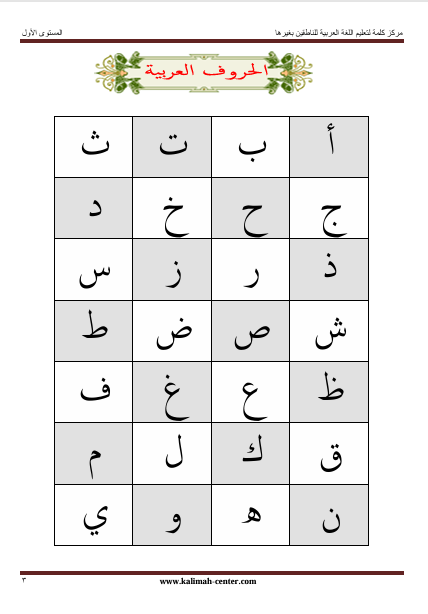
* The Arabic Alphabet From Kalimah’s curriculum for online Arabic Course.
If you are interested in learning Arabic script, consider joining our beginner course “Learn The Whole Arabic Alphabet Online With Illustration”
Our course teaches you ALL the Arabic letters, step-by-step. We use pictures, make it easy. After 2 months, you can read and write Arabic!
Course is good for:
- People who want to learn Arabic, of course!
- People interested in Persian also, it’s a smart start
- Anyone who likes languages, this is the base
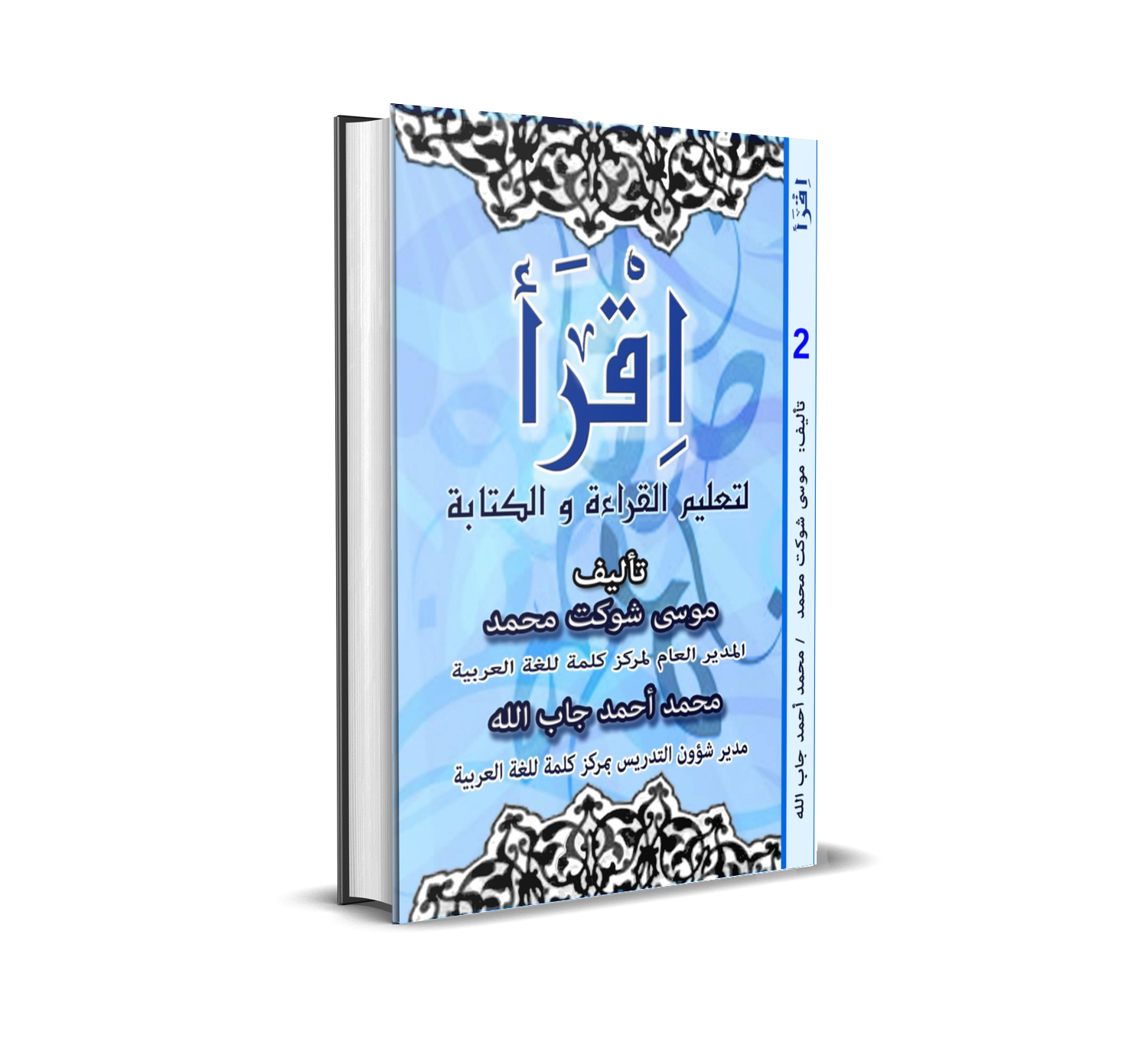
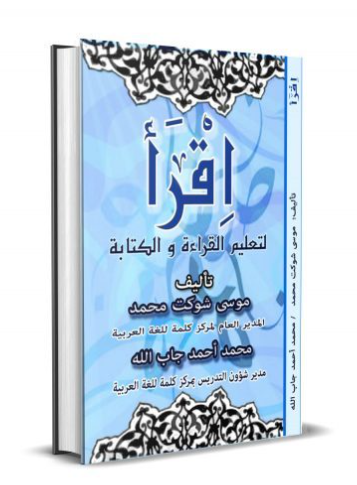
We use a special book “Iqraa'”, very good for learning.
Iqraa’ is very good for learning the Arabic letters (الحروف), the short vowel marks (التشكيل), and the long vowels (المدود). It’s like a first step for beginners.
Join us for a FREE trial class, open the door to TWO languages!
Experience Kalimah Center Classes
Watch real excerpts from our live sessions at Kalimah Center and see how we bring learning to life. These clips highlight our interactive, student-centered teaching approach across all our courses—designed to keep learners engaged, motivated, and actively involved every step of the way.
Master Arabic with Kalimah Center
Join our expert-led online classes and start your journey toward Arabic fluency today.
Book Your Free TrialFarsi vs Arabic Alphabet: Script Similarities and Key Differences
Both languages use the Arabic script — written right to left — but the scripts are not identical.
Arabic Alphabet: 28 letters
Farsi (Persian) Alphabet: 32 letters — the 28 Arabic letters plus 4 additional letters unique to Farsi
The 4 Letters That Exist in Farsi But Not Arabic:
| Letter | Name | Sound | Example |
|---|---|---|---|
| پ | Pe | /p/ — like “P” in “pen” | پدر (pedār — father) |
| چ | Che | /tʃ/ — like “Ch” in “chair” | چای (chāy — tea) |
| ژ | Zhe | /ʒ/ — like “S” in “measure” | ژاپن (Zhāpon — Japan) |
| گ | Gaf | /g/ — like “G” in “go” | گربه (gorbe — cat) |
Note: Arabic does not have a /p/ sound — which is why Arabic loanwords with “p” in other languages become “b” in Arabic. For example, “Pakistan” becomes “بَاكِسْتَان” (Bakistān) in Arabic.
What Arabic speakers can read in Farsi:
If you know how to read Arabic script, you can technically sound out Farsi words — but you will not understand them (different vocabulary and grammar) and may mispronounce them (different sound values for some shared letters).
The most significant sound difference:
The Arabic letter ق (Qaaf) is a deep uvular stop in Arabic. In Farsi, the same letter is typically pronounced as غ (Ghayn) — a softer, fricative sound. This means a Farsi speaker reading Arabic script will produce different sounds than an Arabic speaker for the same letters.
Persian vs. Arabic Language: Complete Comparison
As we mentioned, Persian (Farsi) and Arabic are very different languages. The way they work is very different.
Let’s look at some of the ways they are different:
1. Grammar and Structure Between Farsi And Arabic
In Arabic, we have a root system. This means that most words come from a group of three letters, called a root. For example, the root “ك ت ب” (k-t-b) is for things related to writing. From this, we get words like كتاب (kitāb – “book”) and كاتب (kātib – “writer”).
Persian does not have this system. Its words are more regular, and you don’t need to know roots to guess new words.
2. Pronunciation Of Farsi And Arabic
The pronunciation of Arabic and Persian is also very different. Arabic has some letters that are hard for non-native speakers to pronounce, like ع (ʿayn) and غ (ghayn).
In Persian, these letters are easier, and many of them are pronounced differently. For example, the Arabic letter ق (qāf) is very strong in Arabic, but in Persian, it sounds more like غ (gh), which is softer.
3. Vocabulary Difference between Farsi And Arabic
While Persian borrowed many words from Arabic, their meanings can be different.
For example, in Arabic, سلام (salām) means “peace” or “hello.” In Persian, سلام (salām) is also used for “hello,” but other words around it may not be Arabic. Also, many basic words in Persian have no Arabic connection at all. For example, in Persian, “I” is من (man), while in Arabic, it is أنا (anā).
Here are some examples of Arabic and Persian:
- Arabic: أهلاً وسهلاً (ahlan wa sahlan – “welcome”)
- Persian: خوش آمدید (khosh āmadid – “welcome”)
- Arabic: كيف حالك؟ (kayfa ḥāluka? – “How are you?”)
- Persian: حال شما چطور است؟ (hāl-e shomā chetor ast? – “How are you?”)
Persian vs. Arabic Language Comparison Summary Table
This table shows the main differences between Persian and Arabic.
| Feature | Arabic | Persian (Farsi) |
| Language Family | Semitic | Indo-Iranian |
| Grammar | Root system (e.g. “ك ت ب” – writing) | No root system, more regular verb patterns |
| Pronunciation | Some difficult sounds (e.g., ع, غ) | Softer sounds, غ replaces ق sometimes |
| Script | Arabic alphabet | Arabic alphabet + 4 extra letters |
| Vocabulary | Strong ties to Arabic roots | Many borrowed words from Arabic, different usage |
| Common Phrase | أهلاً وسهلاً (ahlan wa sahlan – “welcome”) | خوش آمدید (khosh āmadid – “welcome”) |
Should I Learn Arabic Or Farsi?
For most learners, Arabic offers broader opportunities — but the right answer depends on your specific goals. Here is an honest breakdown:
Choose Arabic if:
- You want to communicate with the largest possible Arabic-speaking audience (400+ million native speakers across 25+ countries)
- Islamic studies or Quranic understanding is your goal — Arabic is the language of the Quran
- Career opportunities in the Middle East, North Africa, or global Arabic-speaking markets interest you
- You want a language recognised by the United Nations
- You are undecided — Arabic’s global reach gives you the most flexibility
Choose Farsi if:
- You have a specific interest in Iranian culture, history, or Persian literature (Rumi, Hafez, Ferdowsi)
- You plan to travel to, work in, or connect with communities in Iran, Afghanistan, or Tajikistan
- You are specifically drawn to Persian heritage and identity
- You find Arabic’s grammar system more daunting than Farsi’s simpler structure
The honest comparison:
Arabic has a more complex grammar system and takes longer to reach proficiency. Farsi has simpler grammar but a smaller global footprint. Neither language is “wrong” to learn — but if global opportunity is your primary criterion, Arabic consistently offers more.
At Kalimah Center, we have structured Arabic courses designed to ease students into learning Arabic, tackling the grammar step by step. Many students who feared Arabic’s difficulty were surprised at how quickly they could grasp the basics with our approach.
Our online Arabic courses are specially designed to meet your needs:
- We start from the beginning: Whether you’re a complete beginner or have some basic knowledge, we have the right level for you.
- We focus on every skill: Develop your reading, writing, listening, and speaking skills simultaneously.
- We provide an interactive learning environment: You’ll enjoy interactive presentations and fun exercises that make learning easy and enjoyable.
- We offer an accredited certificate: After passing the final exam, you’ll receive a certificate to prove your mastery of the level.
Join us for a FREE trial class and see if Kalimah is the right fit for you.
Is Persian Worth Learning?
Sure, but Arabic has more global impact. Don’t get me wrong, Persian is worth learning if you have a specific interest in Persian culture, history, or literature. Poets like Rumi and Hafez wrote in Farsi, and their works have influenced cultures worldwide.
However, if you’re looking for a language that opens more doors globally, Arabic is your better choice.
Is Persian More Difficult Than Arabic?
For English speakers, Farsi is generally considered easier than Arabic — but the difficulty gap is smaller than many assume.
The US Foreign Service Institute (FSI) classifies both as Category IV languages — the hardest category for English speakers:
| Language | FSI Category | Estimated Hours to Proficiency |
|---|---|---|
| Arabic | Category IV | ~2,200 hours |
| Persian (Farsi) | Category IV | ~1,100 hours |
Why Farsi is easier:
- No grammatical gender — nouns are not masculine or feminine
- No case system — word endings do not change based on grammatical role
- Simpler verb conjugation — fewer irregular forms
- No emphatic consonants — no sounds like ص، ض، ط، ظ
Why Arabic is harder:
- Root-based morphology — most words derive from three-letter roots with many derivative patterns
- Grammatical case endings (rafa’, nasb, jarr) change word pronunciation
- Diglossia — Modern Standard Arabic (formal) and spoken dialects differ significantly
- Emphatic consonants — sounds that do not exist in English or Farsi
- Dual grammatical number — separate forms for “two of something”
What Farsi shares with Arabic in difficulty:
- Completely unfamiliar script (though Farsi uses Arabic script)
- Entirely new vocabulary — almost no shared roots with English
- Sounds that do not exist in English (Farsi has fewer of these than Arabic, but still some)
Honest conclusion: Farsi is approximately half the time investment of Arabic to reach the same proficiency level. However, Arabic proficiency covers a significantly larger global audience.
Can Farsi Speakers Understand Arabic? (And Vice Versa?)
No — Arabic and Farsi are not mutually intelligible in spoken form.
Despite sharing a script and despite Farsi containing thousands of Arabic loanwords, a native Farsi speaker listening to spoken Arabic will understand very little, and vice versa. The reasons:
1. Different pronunciation of shared letters
Farsi speakers pronounce many Arabic letters differently. Arabic ق (Qaaf) becomes غ (Ghayn) in Farsi. Arabic ض (Daad) is not in Farsi at all. The same written word will sound completely different.
2. Different vocabulary for basic concepts
Core, everyday vocabulary — the words that are most frequently used and most resistant to borrowing — is completely different:
| Concept | Arabic | Farsi |
|---|---|---|
| I (first person) | أنا (anā) | من (man) |
| You | أنتَ (anta) | تو (to) |
| Water | ماء (māʾ) | آب (āb) |
| House | بيت (bayt) | خانه (khāne) |
| Book | كتاب (kitāb) | کتاب (ketāb) — borrowed from Arabic |
| Student | طالب (ṭālib) | دانشجو (dāneshjū) |
3. Completely different grammar
Even when the vocabulary is familiar (borrowed Arabic words), the grammar surrounding it is different enough to prevent comprehension.
What Arabic knowledge DOES help with in Farsi:
- Reading Farsi text — the script is the same (with 4 extra letters)
- Recognising Arabic loanwords — approximately 40–50% of formal Farsi vocabulary has Arabic roots
- Understanding religious and formal vocabulary — prayers, Islamic terminology, formal writing
The bottom line: Learning Arabic will not give you Farsi comprehension. Learning Farsi will not give you Arabic comprehension. They must be learned separately.
Master Arabic with Kalimah Center
Join our expert-led online classes and start your journey toward Arabic fluency today.
Book Your Free TrialInside Kalimah Center: Moments from Our Courses
Get a glimpse into the vibrant learning experience at Kalimah Center. These snapshots capture real moments from our live classes—where students engage deeply, connect with passionate instructors, and grow in a welcoming, supportive environment.
Here Are The Reviews On Our Courses:
Our students frequently commend the excellence of our courses and the commitment shown by our instructors. You can read their complete reviews on Trustpilot.

Still Thinking About Learning Arabic or Farsi? Let Kalimah Center Help You Decide!
We know it might be a big decision. That’s why we offer FREE trial classes to help you experience the beauty of Arabic.
At Kalimah Center, we specialize in helping non-Arabic speakers learn Modern Standard Arabic in a structured, friendly environment.
We’ve been teaching Arabic to people from all over the world since 2011.
- We have expert native teachers who are always learning and getting better.
- Our courses are tailored to all levels, and we have had many students achieve fluency through our system.
- We have special books to help you learn Arabic easily.
Our courses:
- Learn Arabic Online For adults. Talk Arabic easy!
- Learn Arabic for Kids: Fun way for kids to learn.
- Learn Quran Online: Read Quran right. Understand it better!
Join us for a FREE trial class today! You’ll see how Kalimah Center can help you learn MSA quickly and easily.
Conclusion:
Choosing between learning Arabic or Farsi involves understanding their fundamental differences. While both languages share a script and have influenced each other historically, they belong to different language families—Arabic is Semitic, and Farsi is Indo-Iranian.
Arabic features a root-based grammar system, intricate pronunciation with challenging sounds, and a vocabulary heavily rooted in its own lexicon. In contrast, Farsi has a more regular grammatical structure, softer pronunciation, and utilizes many borrowed Arabic words with different meanings.
In terms of practicality, Arabic is spoken by over 400 million people across more than 25 countries and is vital for understanding Islamic texts, making it more valuable for global communication, business, and religious studies.
Farsi, primarily spoken in Iran, Afghanistan, and Tajikistan, offers insights into rich Persian culture and literature but has a more limited global impact. Overall, if you’re looking for broader opportunities and connections, Arabic is generally the better choice, while Farsi may be ideal for those specifically interested in Persian culture.
FAQs
Q1: Is Farsi the same as Arabic?
No — Farsi and Arabic are completely different languages. They share a writing script (with Farsi having 4 additional letters), and Farsi borrowed extensively from Arabic vocabulary after the Islamic conquest of Persia in the 7th century. But they belong to different language families (Arabic is Semitic, Farsi is Indo-Iranian), have different grammar systems, different native vocabulary, and are not mutually intelligible. A native Arabic speaker cannot understand spoken Farsi, and vice versa.
Q2: Is Persian the same as Farsi?
Yes — Persian and Farsi are exactly the same language. “Farsi” is simply the Persian word for “Persian” — it is what Iranians call their own language. “Persian” is the English/Western name for the same language. Both terms are correct and used interchangeably in English. Dari (spoken in Afghanistan) and Tajik (spoken in Tajikistan) are closely related varieties of the same language, mutually intelligible with Farsi to varying degrees.
Q3: Which is harder to learn — Arabic or Farsi?
Both are classified as Category IV languages by the US Foreign Service Institute — the hardest category for English speakers. However, Farsi is generally considered easier — estimated at approximately 1,100 hours to professional proficiency vs approximately 2,200 hours for Arabic. Farsi has simpler grammar (no grammatical gender, no case system, simpler verb conjugation) and no emphatic consonants. Arabic’s root-based morphology, case endings, and diglossia (formal vs spoken dialect gap) add significant complexity.
Q4: Should I learn Arabic or Farsi?
If your goal is maximum global reach, professional opportunity, or Islamic studies — Arabic is the stronger choice. Arabic is spoken by 400+ million people across 25+ countries, is a UN official language, and is the language of the Quran. If your goal is specifically Iranian culture, Persian literature (Rumi, Hafez, Ferdowsi), or working in Iran/Afghanistan — Farsi is the right choice. If you are undecided, Arabic’s global footprint makes it the safer investment in most scenarios.
Q5: Can someone who speaks Farsi understand Arabic?
No — Farsi and Arabic are not mutually intelligible. A Farsi speaker can recognise many Arabic words (due to historical borrowing) and can read Arabic script (the same alphabet is used), but the pronunciation differences, the completely different grammar, and the non-borrowed core vocabulary mean spoken Arabic is not comprehensible to Farsi speakers, and spoken Farsi is not comprehensible to Arabic speakers. The two must be learned separately.
Q6: Why does Farsi use the Arabic script if it is not an Arabic language?
Farsi adopted the Arabic script after the Islamic conquest of Persia in the 7th century CE, when Arabic became the language of religion, administration, and scholarship across the Islamic world. Before the conquest, Persians used several different scripts — including Avestan and Pahlavi scripts. After conversion, the Arabic script became standard for written Persian, with four additional letters added (پ، چ، ژ، گ) to represent sounds that exist in Persian but not in Arabic. This historical process is similar to why many European languages adopted the Latin script regardless of their linguistic family.