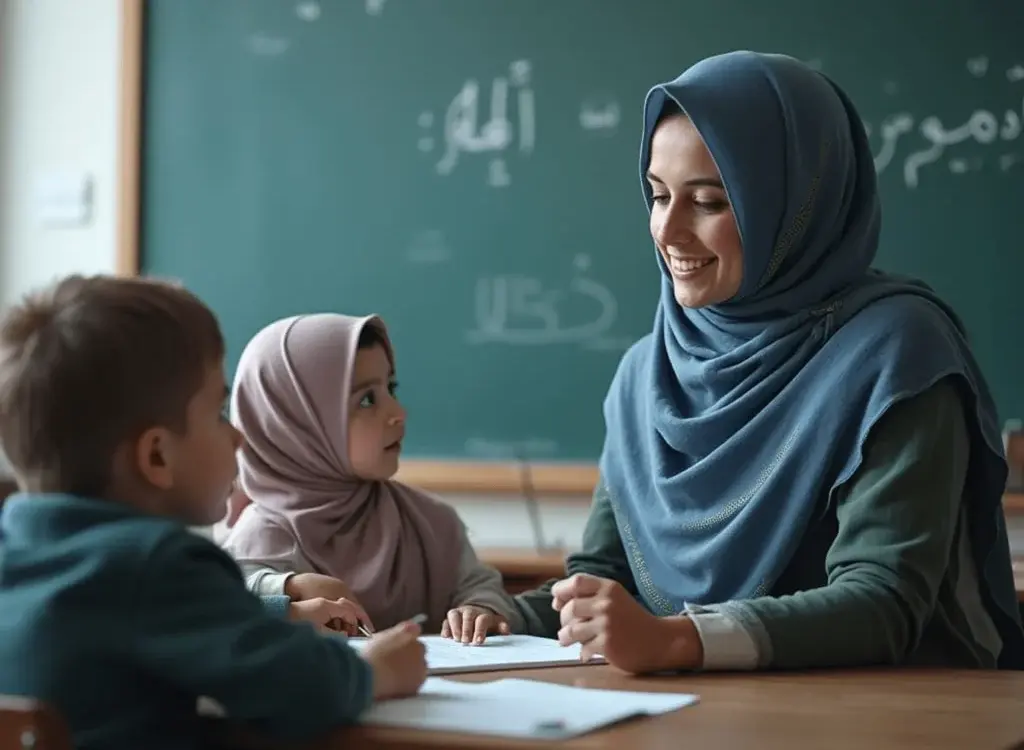
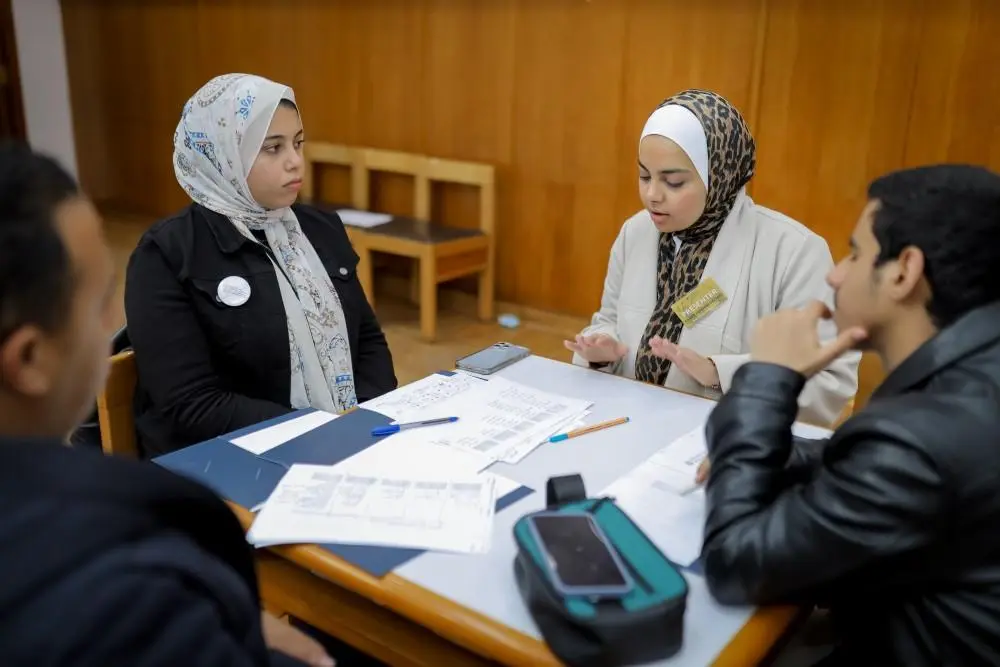
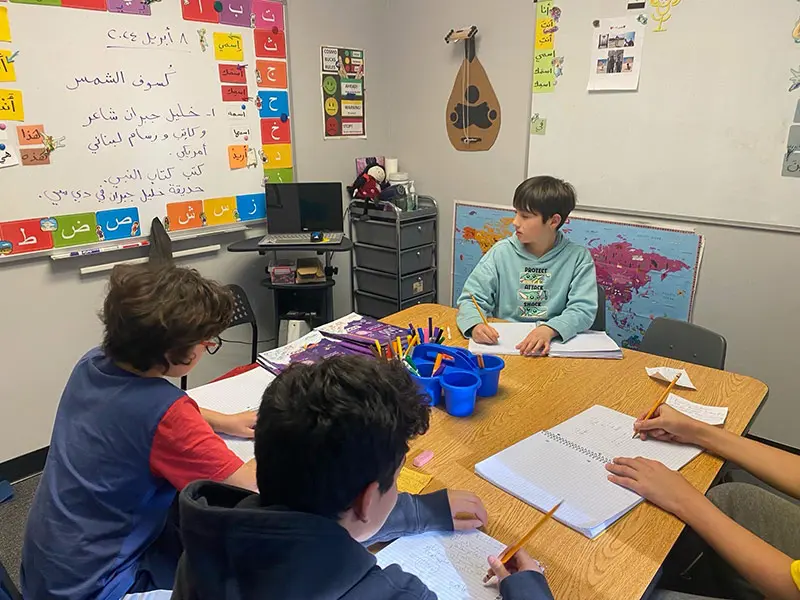
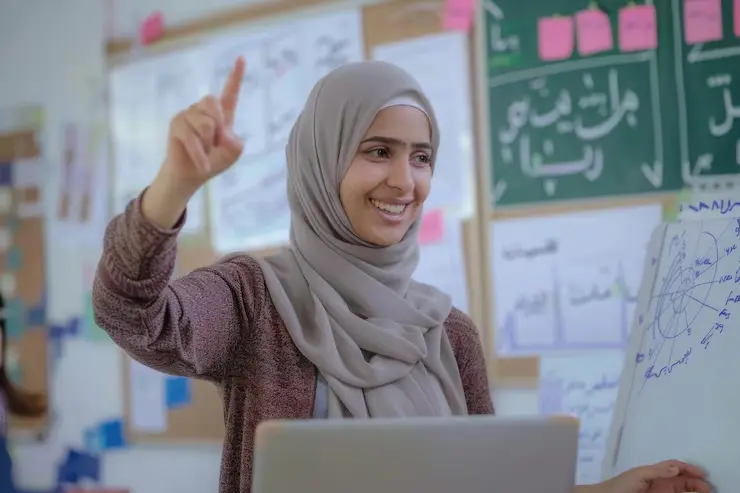
An Arabic speaking course helps you master conversational skills through immersion, repetition, and practical dialogue. Focusing on pronunciation, vocabulary, and grammar, it enables learners to speak confidently in various contexts. At Kalimah Center, native instructors guide you through real-life conversations, offering personalized feedback and cultural insights to make learning both effective and enjoyable. With consistent practice and interactive exercises, you’ll gain fluency and be able to converse comfortably in Arabic.
Many learners actively search for an effective Arabic speaking course to bridge the gap between textbook knowledge and real-world communication. It’s important to understand that spoken Arabic often differs from formal Modern Standard Arabic (MSA).
While dialects (“Ammiya”) vary by region, a structured Arabic speaking course grounded in MSA provides a universal foundation, allowing you to understand and be understood across the Arab world.
What Does It Mean to Learn Spoken Arabic?
Learning to speak Arabic is more than memorizing Arabic vocabulary, Arabic speaking is about making the words work together. Like us, Arabs, how we speak Arabic fluently? We talk Arabic all the time, we listen to Arabic all the time. You need this also to speak Arabic. It is not only from reading, no. You need speak Arabic with people, understand what they say in Arabic, and they understand what you sau in Arabic.
What to Expect from an Arabic Speaking Course
An effective Arabic speaking course focuses on building conversational fluency through immersion, active recall, and real-life dialogue practice. Unlike traditional text-heavy classes, these courses prioritize pronunciation, listening comprehension, and practical vocabulary usage.
At Kalimah Center, our Arabic speaking course connects you with native tutors to practice daily scenarios—from greetings and shopping to complex societal discussions—ensuring you can speak confidently in any setting.
Who Should Enroll in an Arabic Speaking Course?
Our Arabic speaking course is ideal for:
- Travelers: Preparing for a trip to an Arab country.
- Professionals: Needing to communicate with Arabic-speaking clients or colleagues.
- Religious Students: Wanting to understand the language of the Quran and Islamic heritage.
- Heritage Learners: Seeking to reconnect with their family’s language and culture.
- Language Enthusiasts: Anyone passionate about mastering one of the world’s most rich and poetic languages.
The 5 Building Blocks of Speaking Arabic
Mastering spoken Arabic requires mastering five core components, much like building a house:
- Phonetics (Sounds): Mastering unique Arabic sounds like “ع” (Ayn) and “ح” (Haa) ensures you are understood clearly.
- Vocabulary: Building a bank of high-frequency words (e.g., bayt for house, shukran for thank you).
- Grammar (Syntax): Learning sentence structure to say “I go” vs. “He goes” correctly.
- Listening Comprehension: Training your ear to distinguish words in natural speech.
- Conversation Practice: Putting it all together in real dialogue.
Proven Methods for Teaching Spoken Arabic
Okay, so how do good Arabic teachers teach you to speak Arabic? What is the way? Here are some important things:
1. Immersion to Learn Speaking Arabic
Immersion is a cornerstone of any high-quality Arabic speaking course. Effective instructors maximize target language use from day one. Instead of reverting to English, your tutor will use visual cues and simple Arabic commands like “IftaH kitaabak” (Open your book).
This constant exposure helps your brain adapt to Arabic sentence patterns and vocabulary naturally, accelerating your speaking ability.
2. Repetition to Learn Speaking Arabic
We repeat Arabic words and phrases many times. This is how babies learn, and it works for adults too!
For example, if we learn the word “today” (اليوم – al-yawm), we use it in many sentences:
“Today is Monday.”
(اليوم هو الاثنين – al-yawm huwa al-ithnayn).
“What are you doing today?”
(ماذا تفعل اليوم؟ – maadha taf’al al-yawm?).
This repetition helps you remember.
3. Interaction to Learn Speaking Arabic
Language is a social tool, and a robust Arabic speaking course prioritizes interaction over memorization. You won’t just listen to lectures; you will engage in active dialogue. At Kalimah Center, our sessions involve role-playing, Q&A drills, and storytelling.
For example, your tutor might ask, “Maadha akalta ala al-futoor?” (What did you eat for breakfast?), prompting you to formulate an immediate, personalized response in Arabic.
We ask questions in Arabic, we answer in Arabic, we tell stories in Arabic.
For instance, your Arabic conversation tutor might ask you, “What did you eat for breakfast?” (ماذا أكلت على الفطور؟). And you answer in Arabic, even if it’s just a simple sentence at first.
At Kalimah Center, we encourage students to join our group classes, where they can practice speaking with other learners and native speakers. This way, you get used to real conversations, and it helps you stay motivated.
In these group classes, we focus on conversation practice. You’ll be asked to introduce yourself, share your thoughts on a topic, and practice daily conversations. These sessions are a safe space for you to speak without fear of making mistakes.
4. Correcting Mistakes to Learn Speaking Arabic
Making mistakes is normal. A good Arabic teacher will correct you gently. They won’t just say “wrong!” They will show you the right way.
Like, if you say “أنا أذهب إلى البيت أمس” (ana adhhabu ila al-bayt ams – I go to the house yesterday), which is wrong because you mix tenses. They will say, “Ah, almost! We say ‘I went to the house yesterday’ – ‘أنا ذهبت إلى البيت أمس’ (ana dhahabtu ila al-bayt ams).”
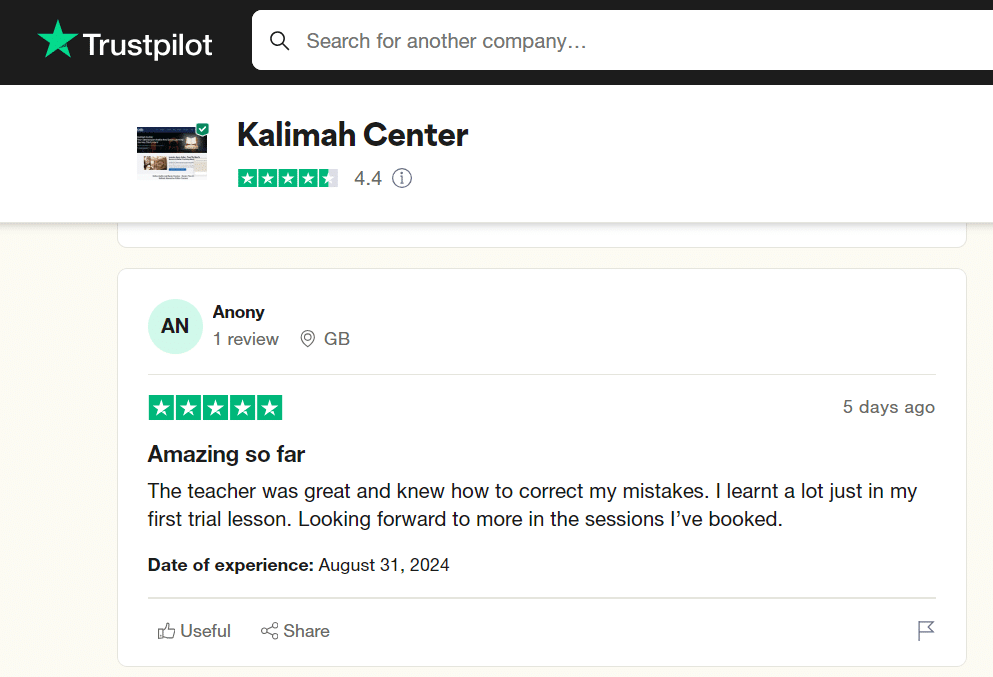
And here is a testimonial review on our page at Trustpilot of a student who said the teacher was great and knew how to correct my mistakes.
5. Knowing Arab Culture to Speak Arabic Well
Language and culture are like two sides of a coin. You cannot have one without the other. So, a good spoken Arabic classes will also teach you about Arab culture. We talk about food, music, customs, traditions. This helps you understand the language better and also makes learning more fun!
Master Arabic with Kalimah Center
Join our expert-led online classes and start your journey toward Arabic fluency today.
Book Your Free TrialCourse Progression: From Beginner to Advanced
A good Arabic speaking course should be well-planned. You have a destination (fluency in speaking Arabic!), and you have steps to get there.
1. Beginner Level in Arabic Speaking
At the beginner level of our Arabic speaking course, the focus is on breaking the silence. You start with essential phonetics and foundational greetings like “Ismee…” (My name is…).
The goal is to equip you with “survival Arabic”—the ability to introduce yourself, describe your family, and navigate basic daily scenarios like shopping or ordering food. This stage builds the confidence needed for more complex interactions.
You learn to introduce yourself, talk about your family, and describe your daily routine. It’s like learning to crawl before you walk. You will learn to talk about daily life activities as home, work, shopping, school, family, hobbies, vacation, health, travel, places, food & drink, Salat, etc.
2. Intermediate Level in Arabic Speaking
Now you learn more grammar, more vocabulary. You can have longer conversations. You discuss more complex topics like your work, your studies, and your opinions.
Here, you will learn how to speak about societal topics such as the Islamic world, career, education, marriage, youth, pollution, energy, city life.. etc. Besides, you will learn Arabic Grammar.
3. Advanced Level in Arabic Speaking
Now you are really talking! You can discuss almost anything. You can debate, tell stories, and understand different Arabic dialects. You can read books, newspapers, and understand the nuances of the language. It is like you are running now! Some courses offer specialized programs for advanced students.
How Beginners Start Speaking Arabic at Kalimah
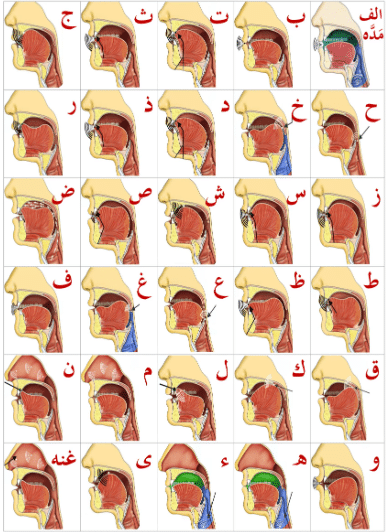
First, you will learn the sounds. Arabic has sounds that are maybe not in your language. Like “ع” (ayn) or “ح” (ha) or “خ” (kha). These are important. You will practice these sounds until they are easy.
For example, try to say these words:
- عَيْن (ayn) – means “eye”
- حَياة (hayat) – means “life”
- خُبْز (khubz) – means “bread”
Then, you will learn basic greetings. “Sabah al-khair” (Good morning), “Masa’ al-khair” (Good evening), “Kaifa haluka?” (How are you?). These are the keys to open the door of conversation.
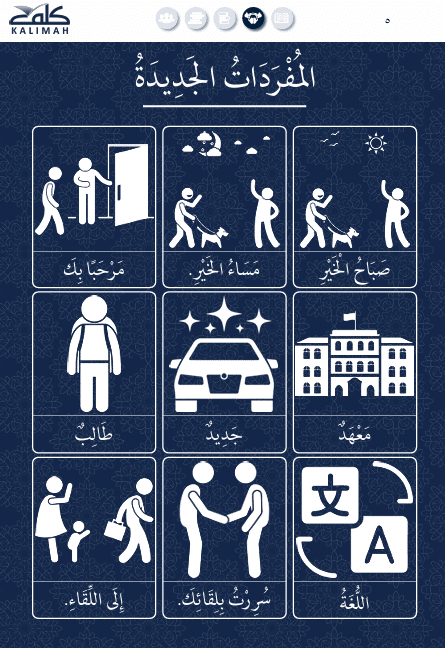
Then, we will build. We will learn vocabulary. Not just any words. Useful words! Words for food, for family, for travel. You will learn how to say, for example, “أريد كوبًا من الماء” (Ureedu kuban min al-maa’) – “I want a cup of water.”
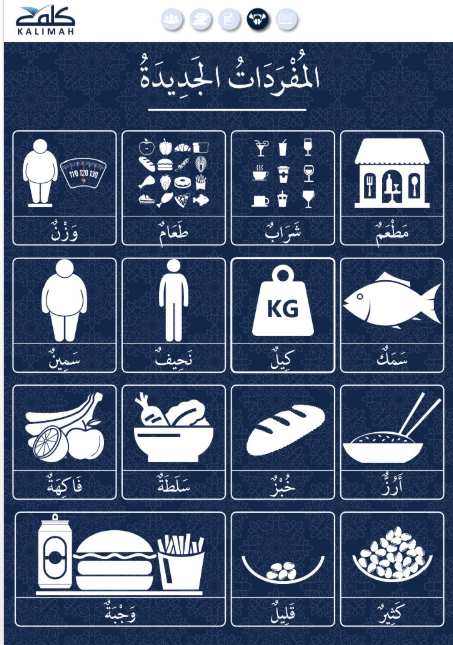
Next, grammar. But don’t worry! We make it easy. You learn the rules step by step. How to make a sentence. How to ask a question. How to say “this is” or “that is.” You will learn to say, “هذا كتاب” (Hadha kitab) – “This is a book.”
Then, we practice. We talk. We make mistakes. We learn. We have conversations. Simple at first, then more complex. We talk about our day, our family, our hobbies.
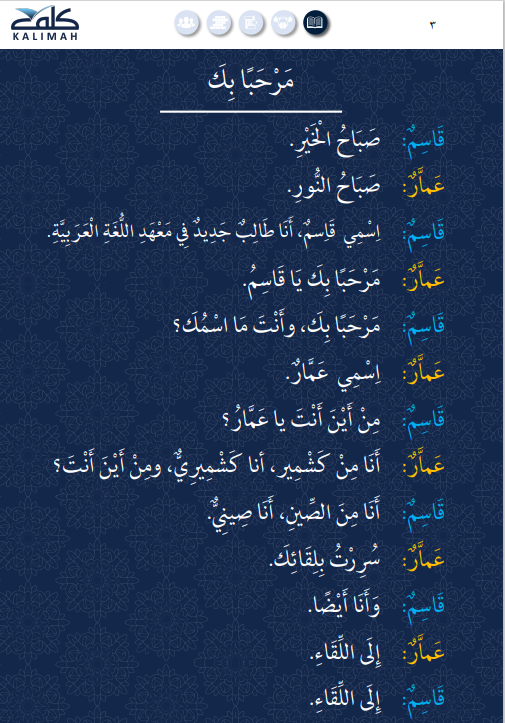
For example, The following exercise reflects Kalimah‘s method of using interactive dialogues to teach Arabic conversation. By engaging learners in active practice, they can better internalize the language and gain confidence in their speaking abilities. This example is just a glimpse of the many interactive exercises Kalimah employs in its curriculum in Online Arabic Learning Courses For Adults & Online Arabic Learning Courses For Children.
Arabic Dialogue:
- Qasim: صباح الخير (sabah al-khayr) (Good morning)
- Ammar: صباح النور (sabah an-noor) (Good morning)
- Qasim: اسمي قاسم، أنا طالب جديد في معهد اللغة العربية (ismii qasim, ana talib jadid fi ma’had al-lughah al-‘arabiyyah) (My name is Qasim, I’m a new student at the Arabic Language Institute)
- Ammar: مرحبا بك يا قاسم (Marhaban bika ya Qasim). (Ammar: Welcome, Qasim).
- Qasim: مرحبا بك، وأنت ما اسمك (Qasim: Marhaban bika, wa anta ma ismuka?) (Nice to meet you, and you, what’s your name?)
- Ammar: اسمي عمار (ismii ‘ammar) (My name is Ammar)
- Qasim: من أين أنت يا عمار؟ (Min ayna anta ya Ammar?) (Where are you from, Ammar?)
- Ammar: أنا من كشمير، أنا كشميري، ومن أين أنت؟ (ana min kashmir, ana kashmiri, wa min ayna ant?) (I’m from Kashmir, I’m Kashmiri, and where are you from?)
- Qasim: أنا من الصين، أنا صيني (ana min as-sin, ana sini) (I’m from China, I’m Chinese)
- Ammar: سررت بلقائك (Sururtu biliqa’ik) (Pleased to meet you.)
- Qasim: وأنا أيضًا (Wa ana aydan) (Me too.)
- Ammar: إلى اللقاء (ila al-liqaa) (Goodbye)
- Qasim: إلى اللقاء (ila al-liqaa) (Goodbye)
Read more about: How to Say Thank You in Arabic
How to Choose the Best Arabic Speaking Course
To truly achieve fluency, selecting the right Arabic speaking course is critical. Look for programs that offer:
- Native Arabic Instructors: Essential for authentic pronunciation and cultural nuance.
- Conversation Focus: A curriculum that prioritizes speaking practice over written theory.
- Interactive Format: Live sessions where you are constantly speaking, not just listening.
- Cultural Context: Lessons that teach you how to use the language in social situations, not just textbook translations.
Why Kalimah’s Arabic-Speaking Curriculum Stands Out
Kalimah Center’s Arabic speaking course stands out because it is meticulously designed for non-native speakers. Our curriculum bridges the gap between theory and practice by focusing on:
1. Arabic Pronunciation and Phonetics
We start with the basics, making sure you master the sounds of Arabic.
2. Arabic Essential Vocabulary
We teach you the most common words and phrases used in everyday conversation.
3. Arabic Practical Grammar for Speaking
We focus on the grammar you need to speak correctly, without overwhelming you with unnecessary rules. We explain it in a way that anyone can understand, and most importantly, apply.
4. Arab Cultural Insights
We introduce you to Arab culture, customs, and traditions, so you can understand the context of the language.
5. Arabic Conversational Skills
We focus on real-life situations, like ordering food, asking for directions, making small talk, and expressing your opinions. You will do a lot of exercises so you can really practice what you learn.
One of the most popular courses at Kalimah Center is Learn Everyday Life Topics & Start A Dialogue in Arabic. This course is for beginners who want to talk about daily life activities like shopping (التسوق), school (المدرسة), family (العائلة), and work (العمل). The course uses the book “Al-Arabiyya Bayna Yadayka” (العربية بين يديك) and includes many dialogue training sessions with your teacher to help you speak confidently.
One of the things that sets Kalimah Center’s Arabic-speaking course apart is its focus on real conversations that you can use in everyday life. In our classes, we don’t just teach isolated words or phrases. Instead, we guide you through dialogues like this one, where a family introduces each member:
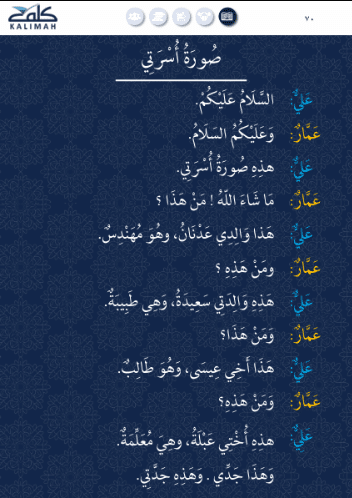
Translation:
Ali: Peace be upon you.
Uthman: And peace be upon you, too.
Ali: This is a picture of my family.
Uthman: Masha’Allah! Who is this?
Ali: This is my father, Adnan. He is an engineer.
Uthman: And who is this?
Ali: This is my mother, Saeeda. She is a doctor.
This is just one example of the many dialogues you will practice in our Arabic course. Each conversation is designed to help you master important vocabulary, understand sentence structure, and improve your ability to hold natural conversations in Arabic.
For those who are already at an intermediate level, Kalimah Center offers the Learn To Speak About Societal Topics in Arabic. This course focuses on discussing important societal topics like marriage (الزواج), education (التعليم), and pollution (التلوث).

At Kalimah Center, we focus a lot on speaking. Why? Because your speaking skill is a mirror of your listening skill. If you don’t hear enough Arabic, it will be hard for you to speak confidently. That’s why, in our Arabic speaking courses, teachers speak mostly in Arabic. We encourage students to listen and then repeat what they hear.
Watch this video showcasing a lesson from Kalimah Center Arabic course in action! You’ll see teacher Hamada Mohamed guiding a student through a conversation practice, focusing on introductions. The teacher reads phrases and the student repeats, building confidence in spoken Arabic.
Our experienced native Arabic teachers provide personalized guidance and support, helping you overcome challenges and achieve your language goals. Ready to start speaking Arabic with confidence?
Join us for a FREE trial lesson today!
What Our Students Say About Our Arabic Speaking Course?
Don’t just take my word for it. Listen to our students:
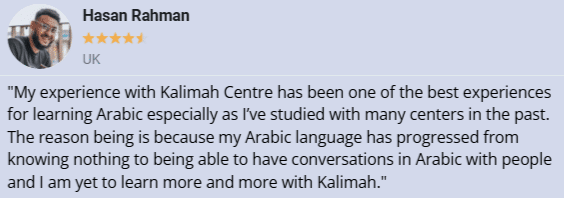
- Hasan from the UK: “My Arabic language has progressed from knowing nothing to being able to have conversations in Arabic with people”
Join Kalimah Today to Take the First Step Towards Arabic Speaking Fluency
Our Arabic speaking course is your path to mastering Arabic speaking an conversational Arabic. We offer a free trial class so you can experience our method for yourself.
Try a FREE class now, and see if Kalimah is the right fit to you
And you can enroll your kids in our specialized children’s courses and watch them blossom into confident Arabic speakers.
Master Arabic with Kalimah Center
Join our expert-led online classes and start your journey toward Arabic fluency today.
Book Your Free TrialFrequently Asked Questions About Our Arabic Speaking Course
Q1: What will I learn in an Arabic speaking course?
A: In a comprehensive Arabic speaking course, you will learn correct pronunciation (Makharij), essential daily vocabulary, and practical grammar for constructing sentences. The focus is on conversational fluency, enabling you to introduce yourself, ask questions, order food, and discuss various topics with native speakers.
Q2: Can I learn spoken Arabic without learning reading and writing?
A: While it is possible to focus solely on spoken Arabic (using transliteration), the best Arabic speaking courses integrate basic reading and writing. Learning the Arabic alphabet helps with accurate pronunciation and allows you to use a wider range of learning resources, accelerating your speaking progress.
Q3: How long does it take to become fluent in spoken Arabic?
A: With a structured Arabic speaking course and consistent practice (3-4 hours per week), beginners can achieve basic conversational fluency in 6-9 months. Reaching an advanced level where you can debate complex topics typically requires 18-24 months of dedicated study.
Q4: Is Modern Standard Arabic (MSA) used in spoken conversations?
A: Modern Standard Arabic (MSA) is universally understood but rarely used in casual daily chats. However, a high-quality Arabic speaking course often uses MSA as a foundation because it allows you to communicate across all Arab countries. Many learners later specialize in a dialect (like Egyptian or Levantine) for local slang.
Q5: Do online Arabic speaking courses really work?
A: Yes. Online Arabic speaking courses are highly effective because they connect you directly with native tutors for 1-on-1 conversation practice. Features like video calls, screen sharing, and interactive dialogue role-plays simulate real-life immersion from the comfort of your home.
Conclusion:
An Arabic speaking course goes beyond learning vocabulary, focusing on building fluency through practice, grammar, and cultural immersion. Unlike Modern Standard Arabic (MSA), spoken Arabic varies by region, with each country having its own dialect, or “Ammiya”. However, the basic structures remain similar, allowing learners of MSA to understand and communicate across Arabic-speaking nations.
Effective courses emphasize immersion, repetition, and interaction to develop conversational skills, encouraging students to engage in real conversations while gradually mastering sounds, vocabulary, and grammar.
At Kalimah Center, the curriculum is designed to make Arabic speaking accessible and practical. The course focuses on pronunciation, essential vocabulary, and grammar, with a strong emphasis on real-life conversations and cultural insights. Students practice dialogues on daily activities and societal topics, improving their ability to communicate confidently in various situations.
The course includes interactive exercises, regular speaking opportunities, and support from native teachers, ensuring students can practice speaking and listening in Arabic for faster fluency.