The Arabic letter “ع” is arguably the most distinctive and crucial letter in the Arabic alphabet. Contrary to most other letters, “ع” cannot be compared with a specific English letter, so it is among the more challenging letters for foreigners to learn. Let’s delve into its form, pronunciation, and practical application to improve your Arabic proficiency.
Learning The Arabic Letter “ع”
The letter “ع” is the eighteenth letter of the Arabic alphabet and distinguished by its throaty, rich sound.

While initially it may appear difficult to pronounce, studying “ع” is of extreme significance when it comes to proper pronunciation of Arabic words since it is frequent in everyday vocabulary.
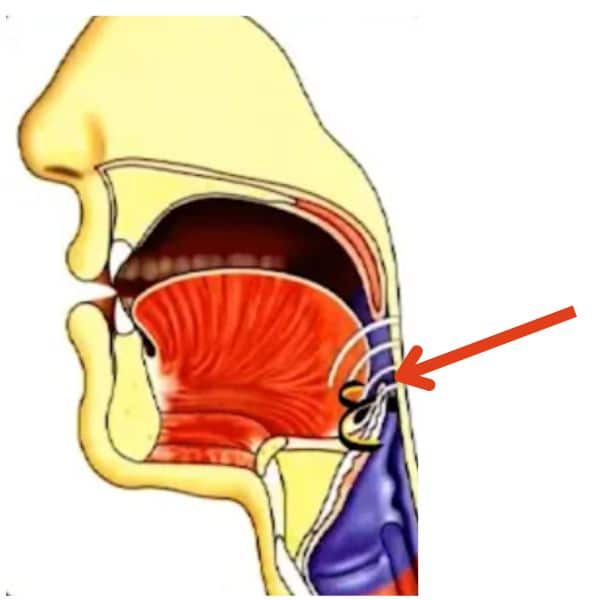
This sound is a voiced pharyngeal sound, meaning that it is produced in the throat at the back. It is not a vowel, nor a normal consonant but a unique sound that carries meaning in written and spoken Arabic.
The Visual Form Of “ع” Ain in Arabic
The shape of the letter “ع” is special and changes according to its position in a word. It has a small loop with a tail when it stands by itself and connects well with other letters when written within words.
Most Arabic letters are dotted, but “ع” is not. This makes “ع” distinguishable from other letters that look alike, such as “غ” (Ghain), which is dotted.
Shapes Of “ع” In Different Positions
The shape of “ع” varies based on its position in a word:

Isolated: “ع”
Initial Position: “عـ”
Medial Position: “ـعـ”
Final Position: “ـع”
Each shape is readily written in Arabic script, and that is why handwriting practice is essential for recognition and fluidity.
How To Pronounce “ع”
The pronunciation of “ع” may seem difficult to beginners because it is not present in English. The sound originates from deep in the throat, from the pharynx. Unlike “أ” (Alef), which is a glottal stop and therefore easy, “ع” is a more back constriction in the throat.
Practice is best achieved by listening to native speakers and attempting to reproduce the sound. Some students find it helpful to attempt to get a little “pressure” in the throat when they pronounce “ع.” With practice and patience, it becomes a natural part of Arabic speech.
Master Arabic with Kalimah Center
Join our expert-led online classes and start your journey toward Arabic fluency today.
Book Your Free TrialWords And Sentences Featuring “ع”
To get comfortable with “ع,” it’s useful to see how it appears in common Arabic words:
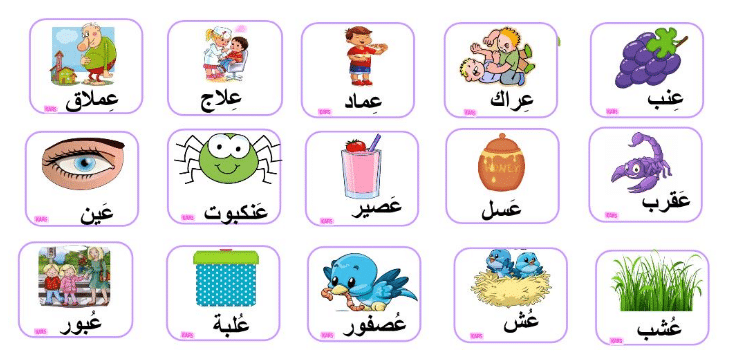
Initial Position:
- عالم (Aalim) – Scholar
- عنب (A’nab) – Grapes
- عائلة (Aa’ila) – Family
Medial Position:
- بعيد (Ba’eed) – Far
- سعيد (Sa’eed) – Happy
- طعام (Ta’aam) – Food
Final Position:
- سريع (Saree’) – Fast
- جوع (Joo’) – Hunger
- وداع (Wadaa’) – Farewell
Example Sentences:
- علي يقرأ الكتاب. (Ali yaqra’ al-kitab.) – Ali is reading the book.
- الطعام لذيذ جدا. (Al-ta’aam ladhidh jiddan.) – The food is very delicious.
- سعيد يزور عائلته يوم الجمعة. (Sa’eed yazoor aa’ilatahu yawm al-jum’a.) – Saeed visits his family on Friday.
Challenges In Learning “ع” And How To Overcome Them
Despite the importance of “ع,” there could be some issues with it for students:

- Pronunciation Issues: The pronunciation of “ع” is problematic for most non-native speakers. The best remedy for this is practice with a native speaker or language-learning software that provides audio examples.
- Writing Difficulty: Since “ع” is a changing form letter, beginner learners might find it difficult to write fluently. Calligraphy worksheets can help in developing muscle memory.
- Confusion with “أ” and “غ”: Students mix up “ع” with “أ” (Alef) or “غ” (Ghain). The most critical difference is the deep throat sound of “ع” compared to the simple stop of “أ” and “غ” sound of “غ.”
Tips To Master The Letter “ع”
Mastering the letter “ع” requires consistent practice in writing, listening, and speaking:

- Practice writing every day to become accustomed to the different forms of “ع.”
- Listen to native speakers of Arabic and repeat words containing “ع” to enhance pronunciation.
- Learn new words with “ع” using Arabic dictionaries or flashcards.
- Engage in conversation practice where “ع” is frequent to enhance fluency.
Read also: Arabic letter ha
Master Arabic with Kalimah Center
Join our expert-led online classes and start your journey toward Arabic fluency today.
Book Your Free TrialInside Kalimah Center: Moments from Our Courses
Get a glimpse into the vibrant learning experience at Kalimah Center. These snapshots capture real moments from our live classes—where students engage deeply, connect with passionate instructors, and grow in a welcoming, supportive environment.
Here Are The Reviews On Our Courses:
Our students frequently commend the excellence of our courses and the commitment shown by our instructors. You can read their complete reviews on Trustpilot.

Unlock Your Potential in Arabic and Quran with Kalimah Center!
Ready to deepen your connection with the Quran and enhance your understanding of Arabic? Join Kalimah Center today and embark on a transformative journey of learning and growth! Our professional, handpicked Online Arabic and Quran Tutors are dedicated to helping you master these essential skills with ease and expertise.
📚 Explore Our Courses:
Online Arabic Course: Tailored to your level, our comprehensive Arabic program includes 16 teaching levels and 400+ hours of personalized sessions.
Online Quran With Tajweed Course: Perfect for non-Arabic speakers, our course spans 13 levels and equips you with Tajweed mastery from beginner to advanced.
Online Arabic Course For Kids: Nurture your child’s love for Arabic with our engaging and structured program, available in 24 levels for primary, intermediate, and secondary stages.
🚀 Start Your Free Trial Today! 🚀
Don’t miss out on this life-changing opportunity to deepen your faith and knowledge. Sign up now for your free trial and take the first step towards becoming a better practicing Muslim with Kalimah Center!
Conclusion
The letter “ع” is a unique and characteristic sound of the Arabic language. Though challenging for beginners, regular practice in writing, pronunciation, and usage will lead to mastery. Focusing on its clear articulation and frequent appearances in daily vocabulary, students can master Arabic to a large extent.
FAQs about The Arabic Letter “ع” (Ain)
Q1: What is the Arabic letter Ain (ع) and its position in the alphabet?
A1: The letter Ain (ع) is the 18th letter of the Arabic alphabet. It is a unique, undotted letter classified as a voiced pharyngeal sound. Unlike English letters, Ain is produced deep within the throat (pharynx) and changes its visual form based on its position in a word.
Q2: How do you write the letter Ain (ع) in different positions?
A2: The Arabic letter Ain changes shape contextually across four distinct visual forms:
Isolated: ع
Initial (start of word): عـ
Medial (middle of word): ـعـ
Final (end of word): ـع
Q3: How do you pronounce the Arabic letter Ain (ع) correctly?
A3: To pronounce the Arabic letter Ain (ع), constrict the muscles in the middle of your throat (the pharynx) to create a deep, rich, throaty sound. Unlike the glottal stop of Alef (أ) or the scraping sound of Ghain (غ), Ain requires physical vocal pressure from the back of the throat.
Q4: What are some common Arabic words that use the letter Ain?
A4: Common examples of the letter Ain (ع) across different word positions include:
Initial: عالم (Aalim – Scholar), عنب (A’nab – Grapes)
Medial: طعام (Ta’aam – Food), سعيد (Sa’eed – Happy)
Final: سريع (Saree’ – Fast), جوع (Joo’ – Hunger)
Q5: Why do non-native speakers find the letter Ain (ع) challenging?
A5: Non-native speakers struggle with Ain because the pharyngeal sound does not exist in the English language. Beginners frequently confuse it with Alef (أ) or Ghain (غ), or find the four fluid handwriting forms difficult to write without daily calligraphy worksheets and native audio practice.