Many Arabic learners ask an important question: is the Arabic alphabet the same for all dialects?
The short answer is yes. The Arabic alphabet is the same in formal writing and across Arabic dialects. Arabic uses 28 basic letters, and these letters are shared across the Arab world.
However, this does not mean all Arabic dialects sound the same.
Egyptian Arabic, Levantine Arabic, Gulf Arabic, Moroccan Arabic, Iraqi Arabic, and other dialects may use the same written alphabet, but they can pronounce some letters differently. They may also use different words, expressions, and grammar patterns.
So, the alphabet is shared, but pronunciation and daily speech can change a lot.
This guide explains how the Arabic alphabet works across dialects, which letters are commonly pronounced differently, and what this means for Arabic learners.
Is the Arabic Alphabet the Same for All Dialects?
Yes, the Arabic alphabet is the same for all dialects in formal writing.
Arabic dialects do not have separate official alphabets. Whether you are learning Egyptian, Levantine, Gulf, Iraqi, Moroccan, or Modern Standard Arabic, the basic Arabic letters remain the same.
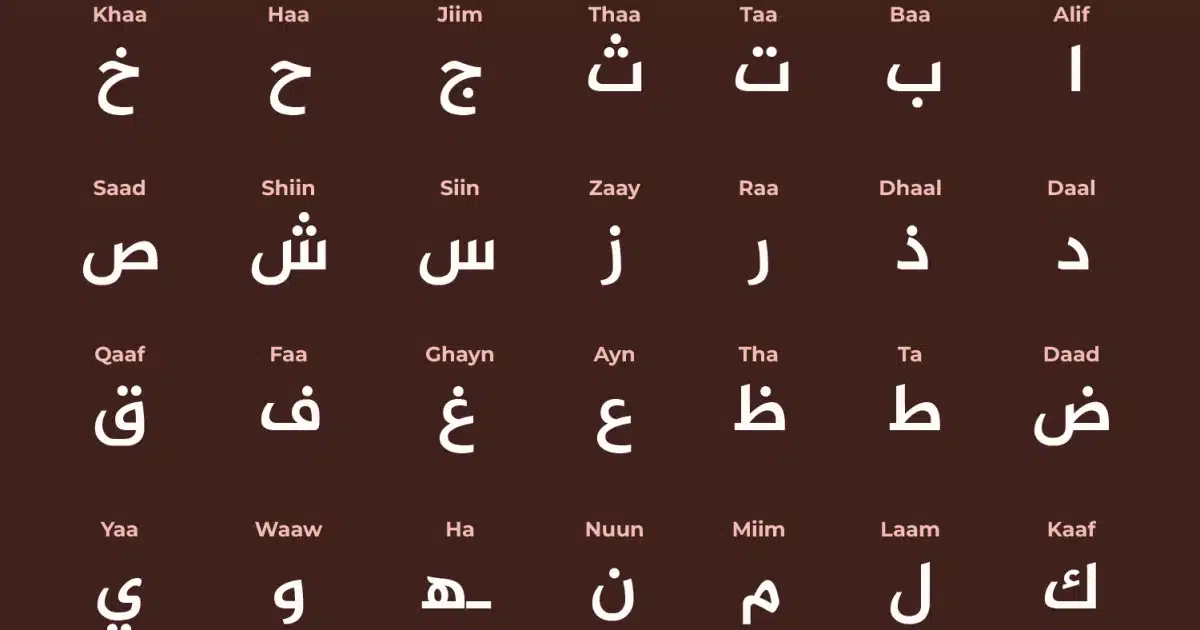
The 28 basic Arabic letters are:
ا، ب، ت، ث، ج، ح، خ، د، ذ، ر، ز، س، ش، ص، ض، ط، ظ، ع، غ، ف، ق، ك، ل، م، ن، ه، و، ي
The difference is not usually in the alphabet itself.
The difference is mainly in:
- Pronunciation
- Vocabulary
- Grammar
- Common expressions
- Informal spelling in digital writing
Arabic Alphabet vs Arabic Dialects
To understand this topic clearly, you need to separate two ideas:
- The Arabic alphabet is the writing system.
- Arabic dialects are spoken varieties of Arabic.
The writing system is mostly unified. The same letters are used in books, newspapers, schools, Quranic texts, official documents, and Modern Standard Arabic.
Dialects, however, are mostly spoken. People use them in daily life, family conversations, markets, TV shows, social media, and casual messages.
That is why someone may write the same Arabic letter but pronounce it differently depending on their dialect. For example, the letter ق is written the same everywhere, but its pronunciation can change from one region to another.
The Arabic Alphabet Is Unified in Formal Writing
In formal Arabic, the alphabet is stable and standardized.
Modern Standard Arabic uses the same 28 letters across the Arab world. This means that a student in Egypt, Jordan, Saudi Arabia, Morocco, or Iraq learns the same basic alphabet in school.
The shapes of the letters do not change because of dialect.
For example:
ب is still bā’.
ت is still tā’.
م is still mīm.
ق is still qāf.
ج is still jīm.
This is why Arabic learners should start by learning the standard Arabic alphabet first. It gives them a foundation that works across dialects.
What Changes Between Arabic Dialects?
Although the alphabet is the same, dialects differ in how people speak.
The main differences are:
1. Pronunciation
Some letters are pronounced differently from one dialect to another.
For example, ق may sound like a deep q in formal Arabic, but in some dialects it may sound like a glottal stop, g, or another sound.
2. Vocabulary
Different dialects may use different words for the same thing.
For example, a word used in Egypt may not be the same word used in Morocco or the Gulf.
3. Grammar
Dialect grammar can be simpler or different from Modern Standard Arabic. Verb forms, negation, question words, and sentence structure may change.
4. Everyday Expressions
Each dialect has its own common phrases, greetings, and idioms.
For learners, this means the alphabet is only the beginning. To understand real speech, you also need exposure to the dialect you want to use.
Master Arabic Confidently with Kalimah Center’s Online Arabic Course
If you are trying to understand the Arabic alphabet and how it changes across dialects, the next step is learning how to actually use the language in real communication. Arabic becomes much easier when you follow a structured path that builds your reading, writing, listening, and speaking skills step by step.
The Online Arabic Course at Kalimah Center is designed to take you from the basics to real fluency through interactive lessons, professional tutors, and a clear learning system. Whether your goal is Modern Standard Arabic or understanding everyday dialects, this course gives you the guidance and practice you need to speak with confidence and understand Arabic in real life. Online Arabic Course at Kalimah Center
Start your journey with Kalimah Center today and turn your Arabic learning into real communication skills that open doors for you worldwide.
Common Arabic Letters That Change Pronunciation by Dialect
Some Arabic letters are especially famous for changing pronunciation across dialects.
The spelling stays the same, but the sound may change.
The Letter ق Across Dialects
The letter ق is one of the clearest examples.
In Modern Standard Arabic, ق is pronounced as qāf, a deep sound from the back of the mouth.
But in dialects, it may change.
In some Egyptian Arabic speech, ق is often pronounced like a glottal stop, similar to the sound in the middle of “uh-oh.”
Example:
قلب
Standard pronunciation: qalb
Egyptian-style pronunciation: alb
In some Gulf and Bedouin dialects, ق may be pronounced closer to g.
In some Levantine dialects, it may also become a glottal stop in many urban accents.
This does not mean the alphabet changed. The letter is still written ق. Only the pronunciation changes.
The Letter ج Across Dialects
The letter ج also changes between dialects.
In Modern Standard Arabic, it is often taught as jīm, similar to the “j” in “jam.”
In Egyptian Arabic, ج is commonly pronounced like a hard g, as in “go.”
Example:
جمل
Standard pronunciation: jamal
Egyptian pronunciation: gamal
In some Levantine and Gulf accents, ج may be pronounced closer to j or sometimes softer, depending on the region.
Again, the written letter remains ج.
The Letters ث and ذ in Dialects
The letters ث and ذ also often change in spoken Arabic dialects.
In Modern Standard Arabic:
ث sounds like “th” in “think.”
ذ sounds like “th” in “this.”
But in many dialects, these sounds may shift.
For example, ثلاثة meaning “three” may be pronounced as:
thalāthah in formal Arabic
talāta in Egyptian Arabic
The letter ث may become ت or sometimes س, depending on the word and dialect.
The letter ذ may become د or ز in some dialects.
This is very common in everyday speech, especially in casual dialects.
The Letter ض in Dialects
The letter ض is another interesting case.
In Modern Standard Arabic, ض is a heavy d sound. Arabic is sometimes called “the language of ض” because this letter is strongly associated with Arabic.
In dialects, the sound may be simplified or become closer to ظ or a heavy d, depending on the region.
For Arabic learners, it is best to learn the standard pronunciation first, then listen to how native speakers pronounce it in the dialect you are studying.
Experience Kalimah Center Classes
Watch real excerpts from our live sessions at Kalimah Center and see how we bring learning to life. These clips highlight our interactive, student-centered teaching approach across all our courses—designed to keep learners engaged, motivated, and actively involved every step of the way.
Master Arabic with Kalimah Center
Join our expert-led online classes and start your journey toward Arabic fluency today.
Book Your Free TrialDo Arabic Dialects Have Their Own Alphabets?
Although Arabic dialects share the same writing system, they often include unique vocabulary, expressions, and pronunciation patterns that differ significantly from Modern Standard Arabic (MSA). As a result, a word may be written differently depending on the region or the speaker’s preference. This flexibility reflects the spoken nature of dialects and the lack of a single standardized spelling system.
In recent years, dialect writing has become increasingly common in digital communication. People frequently use their local dialects when chatting online, posting on social media, or sending text messages because it feels more natural and conversational. Even though the spelling may vary from one person to another, speakers of the same dialect can usually understand each other without difficulty thanks to their shared pronunciation and everyday language use.
Read also: Arabic Letters With No English Equivalent
Arabic Dialects in Digital Writing
As social media and messaging apps have become part of everyday life, dialect writing has become more visible than ever. Because dialects are primarily spoken rather than formally taught, writers often spell words according to how they sound in their local speech. This creates flexibility in writing, but it can also lead to multiple spelling variations for the same word. Whether written in Arabic script or Arabizi, dialect writing helps speakers communicate naturally and express their regional identity in online conversations.
For example:
- 3 may represent ع.
- 7 may represent ح.
- 5 or kh may represent خ.
- 2 may represent a glottal stop.
Arabizi is common online, but it is not the official Arabic alphabet. It is only an informal digital writing system.
Modern Standard Arabic vs. Arabic Dialects
Modern Standard Arabic (MSA) is the formal version of the language used throughout the Arab world. It is the variety you will encounter in books, newspapers, schools, official documents, academic writing, formal speeches, and many religious and educational texts. Because MSA follows standardized grammar and spelling rules, it serves as a common language that can be understood across different Arabic-speaking countries.
Arabic dialects, on the other hand, are used in everyday communication. They are the languages of family conversations, street interactions, movies, TV shows, social media content, and casual messages. Although dialects use the same Arabic alphabet as MSA, their pronunciation, vocabulary, and even some grammatical structures can differ significantly. As a result, many learners find that they can read and understand written Arabic in MSA but still face challenges when listening to native speakers using regional dialects in daily life.
Build a Strong Arabic Foundation for Your Child with Kalimah Center’s Arabic Course for Kids
Learning Arabic at an early age is not just about memorizing letters—it is about building a lifelong connection with the language in a fun, structured, and engaging way. When children start with the Arabic alphabet and gradually move into reading and communication, they develop confidence and love for the language naturally.
The Online Arabic Course for Kids at Kalimah Center is specially designed to guide young learners step by step through this journey. With interactive lessons, experienced teachers, and a child-friendly curriculum, kids learn pronunciation, reading, writing, and basic communication in an enjoyable learning environment. The program is carefully structured to match different levels so every child can progress at their own pace while staying motivated and confident. Arabic Course for Kids at Kalimah Center
Give your child the advantage of learning Arabic in a professional and supportive environment that makes education both effective and enjoyable.
Should Beginners Learn the Arabic Alphabet or a Dialect First?
For most learners, the best starting point is the Arabic alphabet. Learning the alphabet provides the foundation for reading, writing, pronunciation, and understanding how Arabic words are formed. Once you can recognize letters and read basic words, it becomes much easier to move on to Modern Standard Arabic (MSA) or a specific regional dialect.
After mastering the alphabet, the right path depends on your goals. If you want to read books, follow the news, understand formal communication, or study Islamic texts, MSA is the best choice. If your goal is everyday conversation, you may benefit from learning a regional dialect such as Egyptian Arabic, Levantine Arabic, Gulf Arabic, or Moroccan Arabic. Regardless of which variety you choose, a strong knowledge of the Arabic alphabet will make the learning process smoother and help you develop accurate reading and pronunciation skills from the very beginning.
Why Can the Same Arabic Alphabet Sound So Different?
Although Arabic dialects share the same alphabet, they can sound very different because of centuries of linguistic development across various regions. As Arabic spread throughout the Middle East and North Africa, it interacted with local languages, cultures, and communities. Over time, this led to differences in pronunciation, vocabulary, and everyday speech patterns. Some dialects preserved sounds that are closer to Classical Arabic, while others simplified or modified them according to local usage.
This type of language variation is not unique to Arabic. English provides a similar example: British, American, Australian, and Scottish English all use the same alphabet and largely the same writing system, yet they differ noticeably in pronunciation and expression. Arabic follows the same principle, although the differences between regional dialects can sometimes be more pronounced. As a result, two Arabic speakers may read the same written text but pronounce certain words differently based on their dialectal background.
Examples of Same Letter, Different Pronunciation
Here are a few simple examples:
قلب — heart
Standard: qalb
Egyptian urban pronunciation: alb
Some Gulf/Bedouin pronunciation: galb
جمل — camel
Standard: jamal
Egyptian pronunciation: gamal
ثلاثة — three
Standard: thalāthah
Egyptian pronunciation: talāta
ذهب — gold / he went
Standard: dhahab
Some dialect forms may pronounce ذ closer to d or z.
These examples show that the alphabet is the same, but spoken pronunciation changes.
Is It Wrong to Pronounce Letters Differently in Dialects?
Different pronunciations across Arabic dialects are a natural part of the language and do not mean that a speaker is making mistakes. Each dialect has its own pronunciation patterns that have developed over time within specific regions and communities.
For example, the letter ق may be pronounced differently in Egyptian, Levantine, Gulf, or Moroccan Arabic. Despite these differences, native speakers generally consider these pronunciations normal within their dialects.
The key is understanding the context. Standard pronunciation is preferred when speaking Modern Standard Arabic or reciting the Quran, while dialect pronunciation is appropriate for everyday conversations and informal communication.
Read also: Difficult Arabic Letters For English Speakers And How To Learn Them
What This Means for Arabic Learners
If you are learning Arabic, do not worry when you hear different pronunciations of the same letter This is normal.
The best approach is:
- Learn the Arabic alphabet first.
- Learn standard letter names and sounds.
- Choose one dialect for speaking practice.
- Listen to native speakers from that dialect.
- Do not mix too many dialects at the beginning.
- Understand that spelling may stay the same even when pronunciation changes.
This approach prevents confusion and helps you build a strong foundation.
Inside Kalimah Center: Moments from Our Courses
Get a glimpse into the vibrant learning experience at Kalimah Center. These snapshots capture real moments from our live classes—where students engage deeply, connect with passionate instructors, and grow in a welcoming, supportive environment.
Here Are The Reviews On Our Courses:
Our students frequently commend the excellence of our courses and the commitment shown by our instructors. You can read their complete reviews on Trustpilot.
Read more reviews on Trustpilot

Why Learn Arabic with Kalimah Center’s Arabic Language Course?
Understanding that the Arabic alphabet remains the same across dialects is an important first step, but achieving real fluency requires much more than recognizing letters and sounds. To confidently read, write, and communicate in Arabic, learners need structured guidance, practical speaking opportunities, and a clear learning path designed by experienced teachers.
At Kalimah Center, our Arabic Language Course is designed to help students build a strong foundation in Arabic while developing the skills needed for real-life communication. Whether you’re interested in Modern Standard Arabic or want to understand everyday dialects, our interactive lessons and expert instructors make the learning journey effective, engaging, and enjoyable.
Enroll in Kalimah Center’s Arabic Language Course today and take your first step toward speaking Arabic with confidence.
📚 Explore Our Courses:
Online Arabic Course: Tailored to your level, our comprehensive Arabic program includes 16 teaching levels and 400+ hours of personalized sessions.
Online Quran With Tajweed Course: Perfect for non-Arabic speakers, our course spans 13 levels and equips you with Tajweed mastery from beginner to advanced.
Online Arabic Course For Kids: Nurture your child’s love for Arabic with our engaging and structured program, available in 24 levels for primary, intermediate, and secondary stages.
🚀 Start Your Free Trial Today! 🚀
Don’t miss out on this life-changing opportunity to deepen your faith and knowledge. Sign up now for your free trial and take the first step towards becoming a better practicing Muslim with Kalimah Center!
Master Arabic with Kalimah Center
Join our expert-led online classes and start your journey toward Arabic fluency today.
Book Your Free TrialConclusion
So, is the Arabic alphabet the same for all dialects? Yes. The Arabic alphabet is unified across Arabic dialects and formal Arabic. It consists of the same 28 basic letters used throughout the Arab world.
What changes is not the alphabet itself, but the way people pronounce certain letters, choose words, and build everyday sentences Letters like ق, ج, ث, ذ, and ض may sound different depending on the dialect, but they are still written with the same Arabic letters.
For learners, the best path is to master the Arabic alphabet first, then choose the dialect that matches your goals. This way, you can read Arabic confidently while also understanding how real people speak in different regions.
FAQ About the Arabic Alphabet and Dialects
Is the Arabic alphabet the same for all dialects?
Yes. The Arabic alphabet is the same for all dialects in formal writing. Arabic dialects use the same basic 28 letters.
Do Arabic dialects have different letters?
No. Arabic dialects do not have separate official letters. The differences are mainly in pronunciation, vocabulary, and grammar.
Why do dialects pronounce ق differently?
The letter ق developed different pronunciations in different regions. In formal Arabic it is pronounced as qāf, but in some dialects it may sound like a glottal stop, g, or another local sound.
Is Egyptian Arabic written with the same alphabet?
Yes. Egyptian Arabic uses the same Arabic alphabet when written, although informal spelling may reflect Egyptian pronunciation.
Is Moroccan Arabic written with the same alphabet?
Yes. Moroccan Arabic uses the same Arabic alphabet, but its pronunciation and vocabulary can be very different from other dialects.
Should I learn Modern Standard Arabic before dialect?
It depends on your goal. If you want to read and write, start with Modern Standard Arabic. If your main goal is speaking, you can learn the alphabet and then focus on one dialect.