To learn Arabic in 1 hour a day, you don’t need a linguistics background, a sabbatical, or a flight to Cairo — you need a structure that makes every minute count.
One focused hour, split correctly across vocabulary, input, and production, builds more usable Arabic than most learners accumulate in months of unstructured study.
Whether you’re starting from scratch with the alphabet or trying to move past an intermediate plateau, the key isn’t how many hours you pour in — it’s what you do with them. This guide gives you a proven daily routine for Arabic in 1 hour, explains why each block works, and shows you how to avoid the mistakes that quietly waste most learners’ time.
What You’ll Learn in This Article?
- A specific 60-minute daily Arabic routine broken into focused blocks.
- Why speaking — not just reading and reviewing — is the skill most people skip.
- The difference between passive and active learning, and which one actually moves you forward.
- How to choose between Arabic dialects and Modern Standard Arabic depending on your goal.
- Common mistakes that keep intermediate learners stuck — and how to fix them.
Why One Hour a Day Beats Five Hours Once a Week?
An hour a day of Arabic study is not just better than occasional longer sessions — it’s categorically different for your brain.
- When you practice daily, your brain links new vocabulary and grammar to previous sessions before the connection fades.
- Space those sessions out to once a week and the brain has to rebuild those links from near-zero each time.
Language acquisition research consistently shows that short, daily exposure produces faster retention than infrequent, longer blocks.
This is the same principle that makes spaced repetition systems like Anki so effective.
Studies Say That It Takes Approximately 2,200 hours to reach professional proficiency
The U.S. Foreign Service Institute classifies Arabic as a Category IV language — the most demanding category for English speakers.
Estimated to require approximately 2,200 hours to reach professional proficiency.
How Daily Consistency Helps
- Daily consistency compresses that timeline by building passive. familiarity that kicks in between study sessions.
- You start recognizing root patterns without trying.
- You start hearing sounds correctly without thinking.
The goal of your daily hour is not to “complete” Arabic — it’s to keep your brain in active contact with it every single day.
Should You Study MSA or a Dialect in Your Daily Hour?
This decision shapes everything about your routine, so settle it before you start.
| Option | Best For | Key Advantage |
| Modern Standard Arabic (MSA) | Reading texts, news, Quran, cross-regional communication | Transfers across all 22 Arabic-speaking countries |
| Egyptian Arabic | Daily conversation, most widely understood dialect globally | Fastest route to real spoken fluency |
| Levantine / Gulf / Moroccan | Connecting with a specific regional community | Deepest cultural fit within its region |
A common mistake: spending months on a dialect without any MSA foundation, then struggling to read any written Arabic at all.
The smarter approach for most learners is MSA as your anchor, with dialect exposure layered in through native content you actually enjoy.
How to Structure Your Daily 60-Minute Arabic Routine?
The most effective 60-minute session isn’t a single activity — it’s four focused blocks, each targeting a different skill.
Splitting your hour this way prevents the mental fatigue that comes from doing one thing for too long, and ensures you’re building vocabulary, listening, reading, and speaking in parallel rather than in isolation.
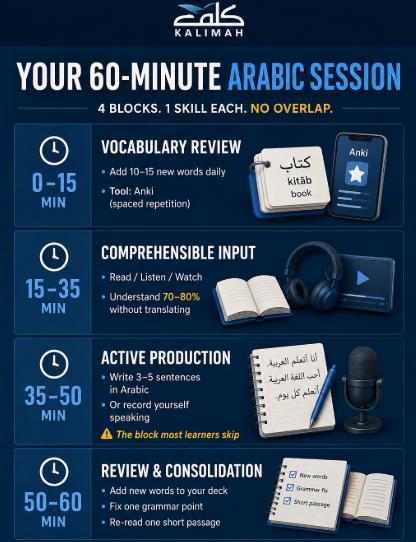
Minutes 0–15 — Vocabulary Review (Active Recall)
Use spaced repetition flashcards — Anki is the most effective tool for this. Two rules that matter here:
- Don’t just review a fixed deck — add 10–15 new words daily from content you’ve recently encountered in Arabic.
- Reviewing the same closed set of 150 words gives you the feeling of progress without the reality of it — your vocabulary needs to keep expanding.
Minutes 15–35 — Comprehensible Input (Reading or Listening)
Read an Arabic article, watch a YouTube video with Arabic subtitles, or listen to a podcast at your level.
The critical word here is “comprehensible” — you should understand roughly 70–80% without translating. If you’re stopping at every sentence with a translation tab open, the content is too hard and you’re spending the session decoding, not absorbing. Find content one level easier than you think you need.
Read also: How To Learn Arabic In 10 Days
Minutes 35–50 — Active Production (Writing or Speaking)
This is the block most learners skip — and it’s the reason they stay stuck at intermediate level for years.
Understanding Arabic passively and producing it actively use completely different neural pathways. Here is what to do in these 15 minutes:
- Write three to five sentences in Arabic about anything — your day, what you read, a topic you care about.
- Use a tool like ChatGPT in Arabic: prompt it to ask you questions in Arabic and correct your answers.
- If speaking feels more natural, record yourself saying those sentences aloud.
This forces your brain to retrieve and construct language, not just recognize it.
Learn More About: Learn Arabic 5 Minutes a day
Minutes 50–60 — Review and Consolidation
Spend the last ten minutes on any of the following:
- Adding new words from today’s session to your flashcard deck.
- Reviewing any grammar point that confused you during the session.
- Re-reading one short passage you want to memorize.
Don’t skip this block — it converts today’s input into tomorrow’s retained knowledge.
The One Weekly Addition That Accelerates Everything
Even with a strong daily routine, there is one element no amount of solo practice can replace: real conversation with a fluent speaker.
Once a week, spend thirty minutes speaking with a native speaker or qualified tutor — through a platform like iTalki or a language exchange app. The reason this works is not just exposure — it’s that you are forced to retrieve Arabic under the light pressure of real communication, and that pressure is exactly what converts passive knowledge into active fluency.
A consistent pattern among learners who plateau at intermediate level: excellent receptive skills, almost no practice generating Arabic spontaneously. Weekly conversation practice fixes that directly.
If speaking still feels intimidating, start with these lower-stakes alternatives:
- Write comments on Arabic social media posts.
- Dictate voice messages to an Arabic-speaking contact.
- Have written conversations with an AI tool set to Arabic.
The production muscle needs training — and any form of it helps.
Read also: Learn Arabic in 60 Days – Real Daily Routine That Actually Works
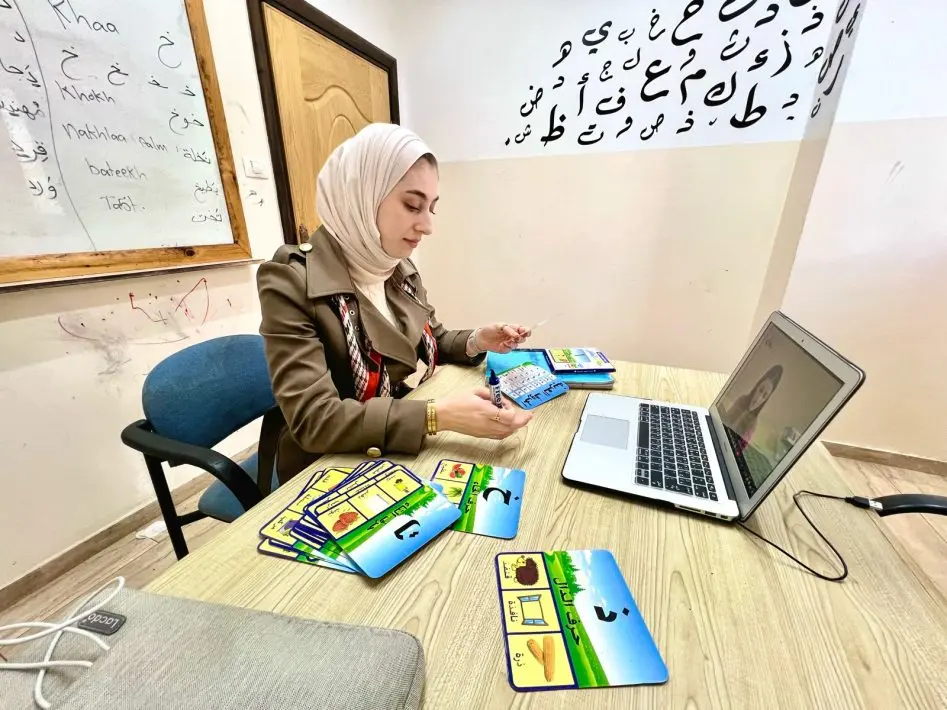
Experience Kalimah Center Classes
Watch real excerpts from our live sessions at Kalimah Center and see how we bring learning to life. These clips highlight our interactive, student-centered teaching approach across all our courses—designed to keep learners engaged, motivated, and actively involved every step of the way.
Master Arabic with Kalimah Center
Join our expert-led online classes and start your journey toward Arabic fluency today.
Book Your Free TrialWhat to Learn in Your First Hour of Arabic (For Beginners)?
If you’re starting from zero, your first hour should focus on the highest-return fundamentals — not everything at once. Here is how to break it down:
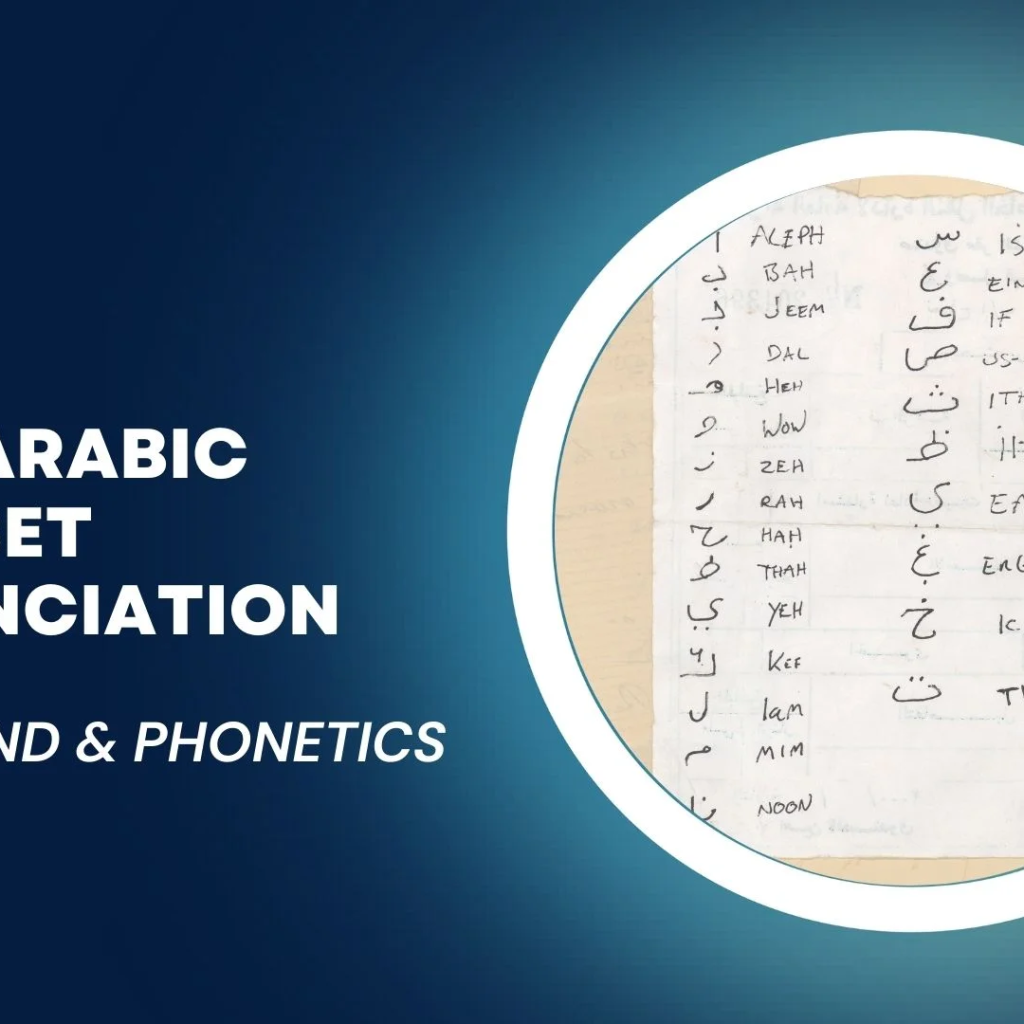
- Minutes 0–10 — The Arabic Alphabet: Arabic has 28 letters. Don’t try to memorize all of them today — focus on recognizing the shape of each letter and hearing its sound. Pay particular attention to sounds that don’t exist in English: ع (a voiced pharyngeal sound), خ (a back-of-throat fricative), and ض (a heavy D sound). Mispronouncing these early and reinforcing the mistakes is harder to undo later than getting them right from the start.
- Minutes 10–25 — Core Greetings and Phrases: Prioritize these: مرحبا (hello), صباح الخير (good morning), شكراً (thank you), عفواً (you’re welcome), كيف حالك؟ (how are you?). These phrases get you into basic social interaction immediately and stay useful at every level.
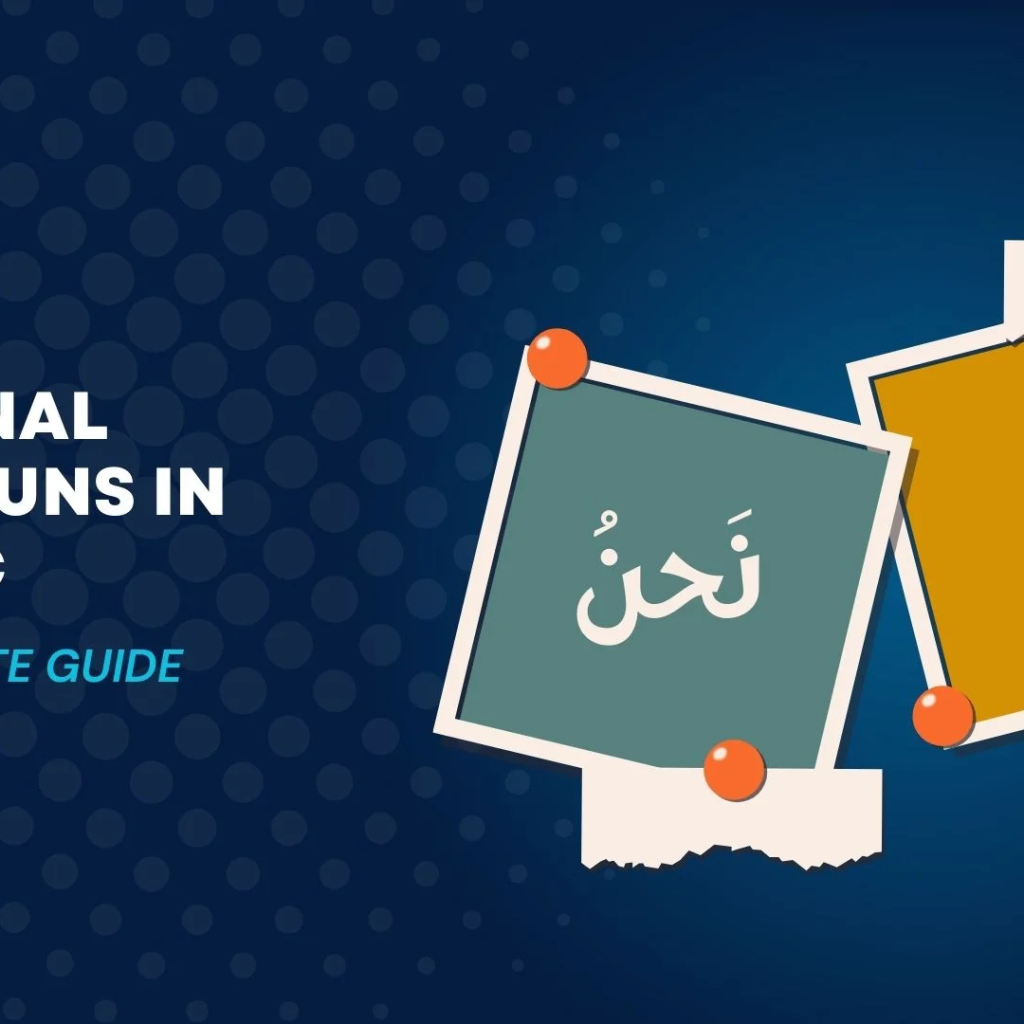
- Minutes 25–40 — Sentence Structure Basics: Arabic has two sentence types: nominal sentences (جملة اسمية), which begin with a noun, and verbal sentences (جملة فعلية), which begin with a verb. Learning this distinction early saves enormous confusion later. Learn the core pronouns: أنا (I), أنت (you, m.), أنتِ (you, f.), هو (he), هي (she), نحن (we).
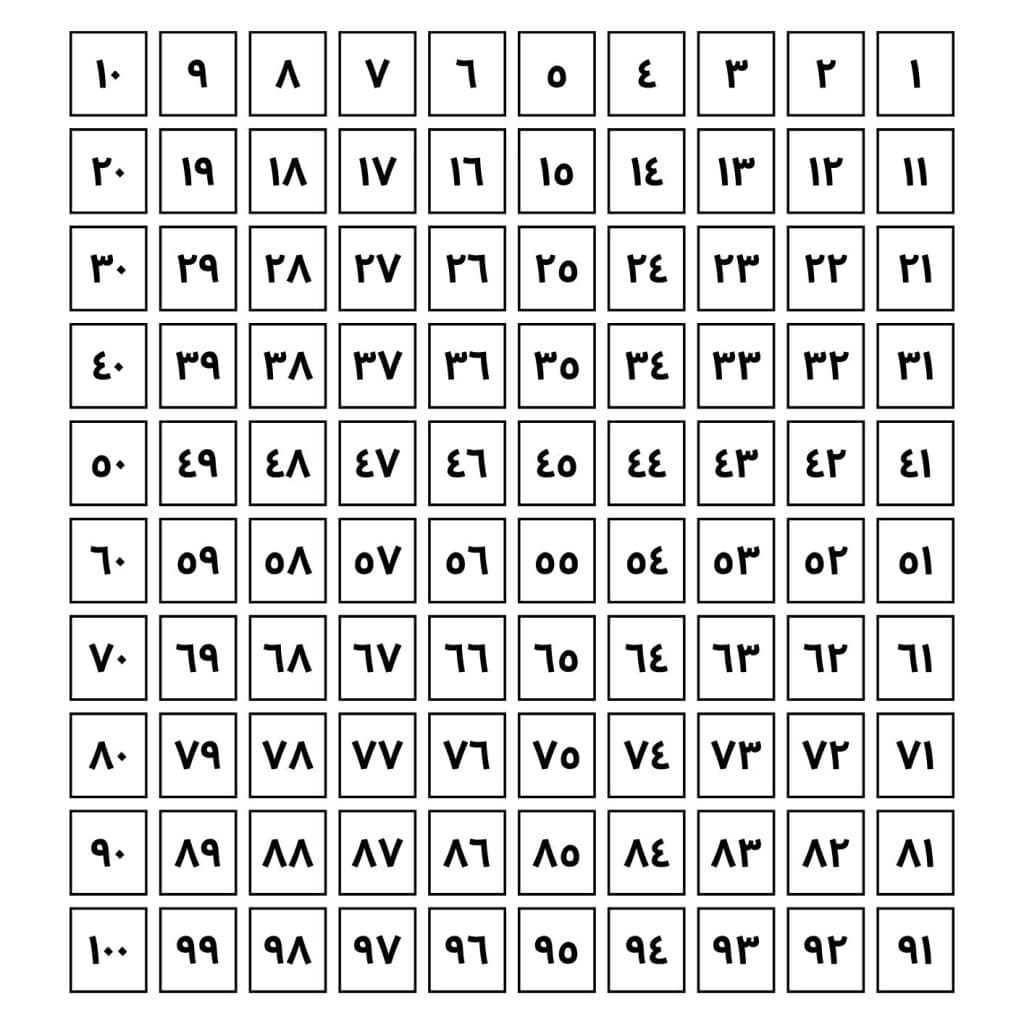
- Minutes 40–50 — Numbers and Days: Numbers 1–10 and days of the week give you practical anchors for talking about time and quantity — useful within days of starting.
- Minutes 50–60 — Speak Out Loud: Combine what you’ve learned into three short sentences and say them aloud. This is not optional. Building a mental image of a word and retrieving that word for speech are distinct processes — you need to practice both from day one.
Read also: How to Learn Arabic in 90 Days with a Daily Routine That Actually Works
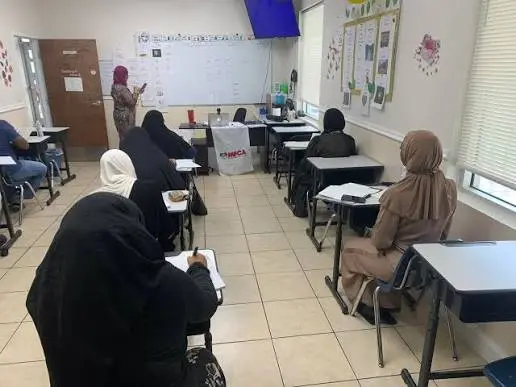
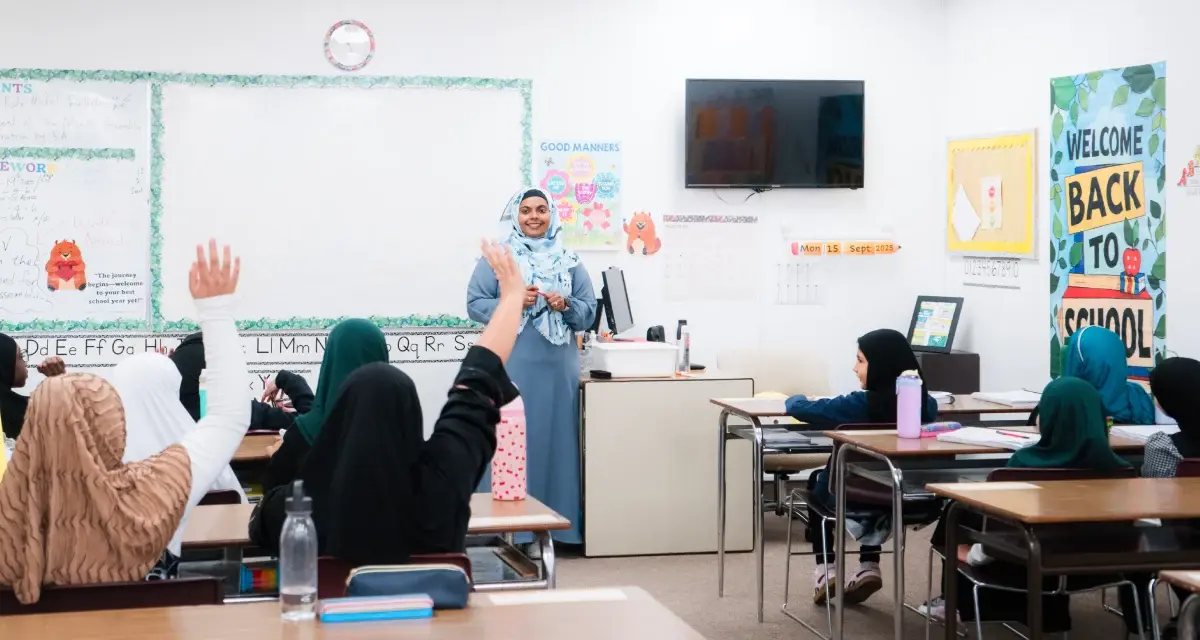
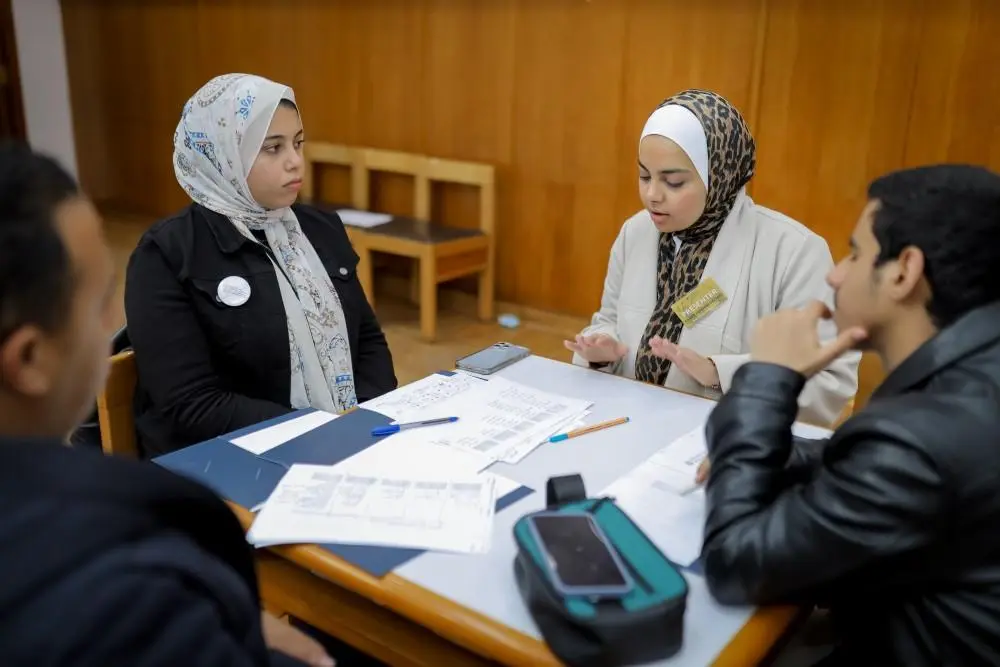
Inside Kalimah Center: Moments from Our Courses
Get a glimpse into the vibrant learning experience at Kalimah Center. These snapshots capture real moments from our live classes—where students engage deeply, connect with passionate instructors, and grow in a welcoming, supportive environment.
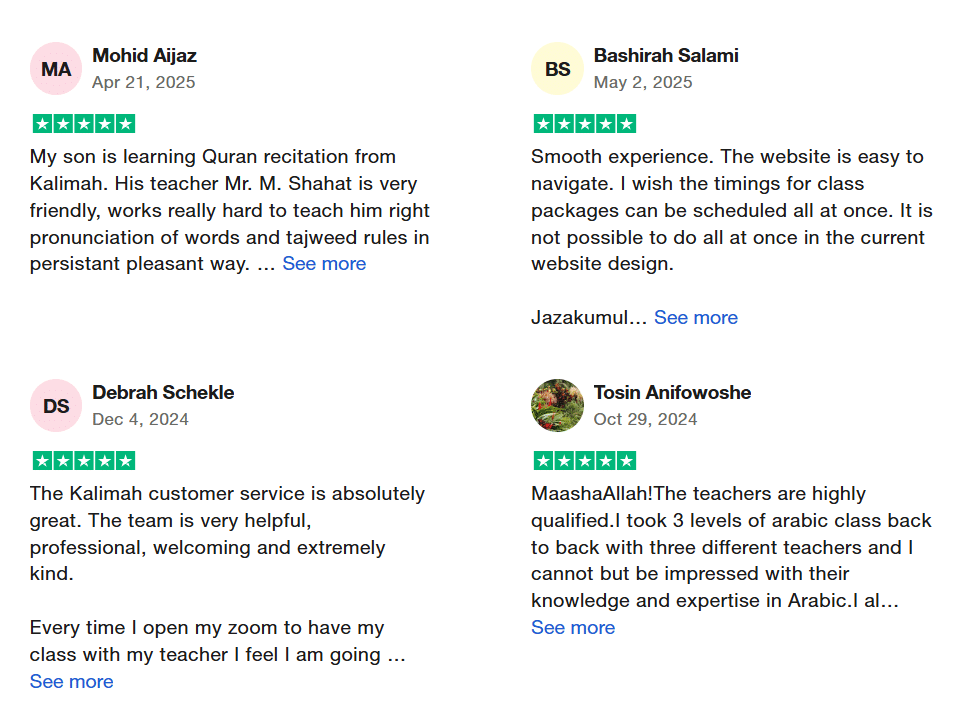
Here Are The Reviews On Our Courses:
Our students frequently commend the excellence of our courses and the commitment shown by our instructors. You can read their complete reviews on Trustpilot.
Read more reviews on Trustpilot
Start Learning Arabic with Expert Guidance — Explore Kalimah Center’s Online Courses
One hour a day gets you moving. Expert instruction gets you there faster — and without the detours that cost self-study learners months of wasted effort.
Three Courses Built Around Where You Are Right Now
Kalimah Center offers online Arabic and Quran courses built for non-native speakers, from absolute beginners through advanced learners:
- Online Arabic Course — 16 teaching levels across 400+ hours of one-on-one sessions, built around your individual pace and learning goals, developing all four skills using interactive tools alongside professional, experienced tutors.
- Online Quran with Tajweed Course — 13 levels designed specifically for non-Arabic speakers who want to read, recite, and understand the Quran, taught by Ijazah-certified teachers from the basics of Tajweed through to confident, correct recitation.
- Online Arabic Course for Kids — 24 levels of child-friendly, age-appropriate instruction taught by teachers specially trained in children’s learning — making Arabic engaging rather than a chore.
Master Arabic with Kalimah Center
Join our expert-led online classes and start your journey toward Arabic fluency today.
Book Your Free TrialStart Your Free Trial at Kalimah Center
You’ve seen the routine. You know the structure. The only thing left is a teacher who keeps you accountable to it.
At Kalimah Center, your first session costs you nothing — because we’d rather show you what expert-guided Arabic learning feels like than tell you about it.

One trial class is enough to know whether the pace, the method, and the tutor are the right fit for where you are right now.
Conclusion
Learning Arabic in 1 hour a day is achievable — not as a shortcut, but as a sustainable system. The difference between learners who make steady progress and those who stay stuck isn’t talent or free time.
It’s structure: daily contact with the language, a clear split between vocabulary, input, and production, and regular speaking practice that forces retrieval.
Start with the 60-minute routine in this guide. Build the habit before you optimize it. And when you’re ready for structured progression with a qualified teacher, Kalimah Center’s online courses are designed to take you exactly where you want to go.
Frequently Asked Questions
Can you really learn Arabic in 1 hour a day?
You can make consistent, meaningful progress learning Arabic in 1 hour a day, provided that hour is structured. Splitting it between vocabulary review, comprehensible input, active production, and consolidation is far more effective than spending 60 minutes on a single activity.
Fluency requires more total hours, but real, usable skill builds steadily with this approach.
How long does it take to learn Arabic at 1 hour a day?
At roughly 5 hours per week, reaching basic conversational ability takes approximately 2–3 years, and professional proficiency takes considerably longer.
Arabic is a Category IV language for English speakers, estimated at around 2,200 total study hours to reach advanced fluency. Daily practice compresses the timeline compared to infrequent longer sessions.
Should a beginner focus on the Arabic alphabet or phrases first?
Both, in the same session. Spend the first 10 minutes on alphabet recognition and pronunciation, then immediately move into core phrases.
Learning phrases before you can read them is possible using audio, and learning letters without connecting them to real words is slow and unmotivating. Combining both from day one is the most efficient approach.
Is Modern Standard Arabic or a dialect better for 1 hour a day?
For most learners with one hour a day, Modern Standard Arabic is the better investment. It transfers across all Arabic-speaking countries, covers written Arabic, and is the foundation of Quranic Arabic.
Build MSA first, layer a dialect on top — unless spoken conversation with one specific community is your only goal.
What is the biggest mistake intermediate Arabic learners make with daily practice?
Spending all their practice time on passive input — reading and listening — without doing any active production. Passive understanding and active speaking use different cognitive processes.
Learners who never practice writing or speaking Arabic aloud consistently plateau at intermediate level regardless of how much content they consume. Even ten minutes of production per session prevents this.
Is one session per week with a tutor necessary if I study an hour every day?
Not necessary, but highly recommended. Daily solo practice builds vocabulary and comprehension.
Weekly speaking sessions with a native speaker or tutor train retrieval under real communicative pressure — a skill that passive study cannot fully develop. Even one thirty-minute conversation per week produces noticeable acceleration.