Your friends are putting on their shoes by the door. It’s late, and you want to say good night in Arabic, but you freeze. Do you say it the same way to his sister? Would people in Morocco even use the same words?
The good news is that one short phrase covers almost every case. You just change the ending a little for a woman or a group. And there’s a reply that goes with it, which surprises most learners the first time they hear it.
Below, you’ll find that phrase, what it really means, and how to answer it. After that come the versions people use in Egypt, the Levant, and Morocco, plus a few sweet ones for family and how to type it in a text.
What You Will Learn in This Article
- The most common way to say good night in Arabic, word by word.
- The reply that native speakers expect to hear.
- The forms for a man, a girl, and a group.
- The difference between good night and good evening.
- Good night in Egyptian, Levantine, and Moroccan Arabic.
- Sweet phrases, text spellings, and mistakes to avoid.
Saying Good Night in Arabic
The main way to say good night in Arabic is تصبح على خير (tisbah ala khair). People say it in every Arab country, at home, on the phone, and at the door.
Before you use it, it helps to know what the words mean. It also helps to know how to answer when someone says it to you.
What Tisbah Ala Khair Means Word by Word
The phrase has only three words. Each word adds one part of the meaning, as you can see below.
| Arabic | Sound | Meaning |
| تصبح | tisbah | you wake up |
| على | ala | on or to |
| خير | khair | goodness |
Put together, the phrase means “may you wake up to goodness.” So the wish is not really about the night. It is about the morning that comes after it.
The first word comes from an old Arabic verb that means “to reach the morning.” That is why you never hear this phrase at noon. It only makes sense when sleep is close.
The Almaany Arabic dictionary says the same thing. It calls the phrase a greeting people repeat when it is time to sleep.
Many English speakers find this idea sweet. You are not just saying “the day is over.” You are hoping the next day starts well for the other person.
Answering When Someone Says Tisbah Ala Khair
The classic answer is وأنت من أهله (wa anta min ahlih). It means “and you are one of its people.” In other words, you belong with goodness too.
A simpler answer is وأنت بخير (wa anta bikhair). It means “and you too, be well.” Both answers are correct and polite.
Some learners just say shukran, which means thank you. That is not wrong. But to an Arab ear, it sounds a little cold, like you took a gift and gave nothing back.
In Arab culture, a kind greeting should get a kind greeting back. The Quran says this in Surah An-Nisa, verse 86 (4:86). It asks people to answer a greeting with a better one or the same one.
So when you hear tisbah ala khair, always send a wish back. It is a small habit that makes you sound warm and natural.
Read also: Assalamualaikum in Arabic & Walaikum Assalam in Arabic
Good Night in Arabic to a Man, a Girl, or a Group
In Arabic, the verb changes when you talk to a man, a woman, or a group. Many guides only show the form for a man, so learners get it wrong without knowing.
The table below shows the spoken form most people use every day. It also shows the formal form you will see in books, plus the matching answer.
| Talking to | Spoken form | Formal form | Answer |
| A man | تصبح على خير (tisbah ala khair) | تُصبِحُ على خير (tusbihu) | وأنتَ من أهله (wa anta min ahlih) |
| A girl or woman | تصبحي على خير (tisbahi ala khair) | تُصبِحينَ على خير (tusbihina) | وأنتِ من أهله (wa anti min ahlih) |
| A group | تصبحوا على خير (tisbahu ala khair) | تُصبِحونَ على خير (tusbihuna) | وأنتم من أهله (wa antum min ahlih) |
Saying Good Night to a Man
To say good night in Arabic to a man, use تصبح على خير (tisbah ala khair). This is the base form, so you already know it. You can make it warmer by adding a word at the end. With a friend, say tisbah ala khair ya sadiqi, which means “good night, my friend.”
Arab men often call each other habibi, which means “my dear.” This is normal between male friends. It does not sound romantic in this setting.
With an older man, add a word of respect. Many people say ya ammo, which means “uncle,” even if he is not family. It shows you were raised with good manners. With a boss or teacher, keep it plain. Just say tisbah ala khair with a smile. In a work setting, short and simple is the polite choice.
Saying Good Night to a Girl or Woman
To say good night in Arabic to a girl, add an “ee” sound at the end. It becomes تصبحي على خير (tisbahi ala khair). In formal Arabic, it is tusbihina ala khair.
That small ending tells everyone you are talking to a female. If you forget it, people will still understand you. But it sounds like you did not notice who you were talking to.
Be careful with sweet words. In many Arab homes, pet names are only for family or a partner. With a woman you do not know well, keep the phrase plain.
With family, you can be warmer. To a sister or daughter, say tisbahi ala khair ya habibti, meaning “good night, my dear.” In Egypt, people also say ya amar, which means “my moon.”
To your mother, say tisbahi ala khair ya mama. Many moms will answer with a short prayer for you. It is one of the sweetest moments in an Arab home.
Want these endings to come out without stopping to think? The Kalimah Center Online Arabic Course trains you with real speaking drills, so the right form becomes a habit.

Master Arabic with Kalimah Center
Join our expert-led online classes and start your journey toward Arabic fluency today.
Book Your Free TrialGood Night or Good Evening: Which One Should You Say?
Good night and good evening are two different phrases in Arabic. You use them at opposite ends of a visit. Mixing them up is one of the most common learner errors. So let’s look at when each one fits.
When to Say Good Evening (Masaa Al-Khayr)
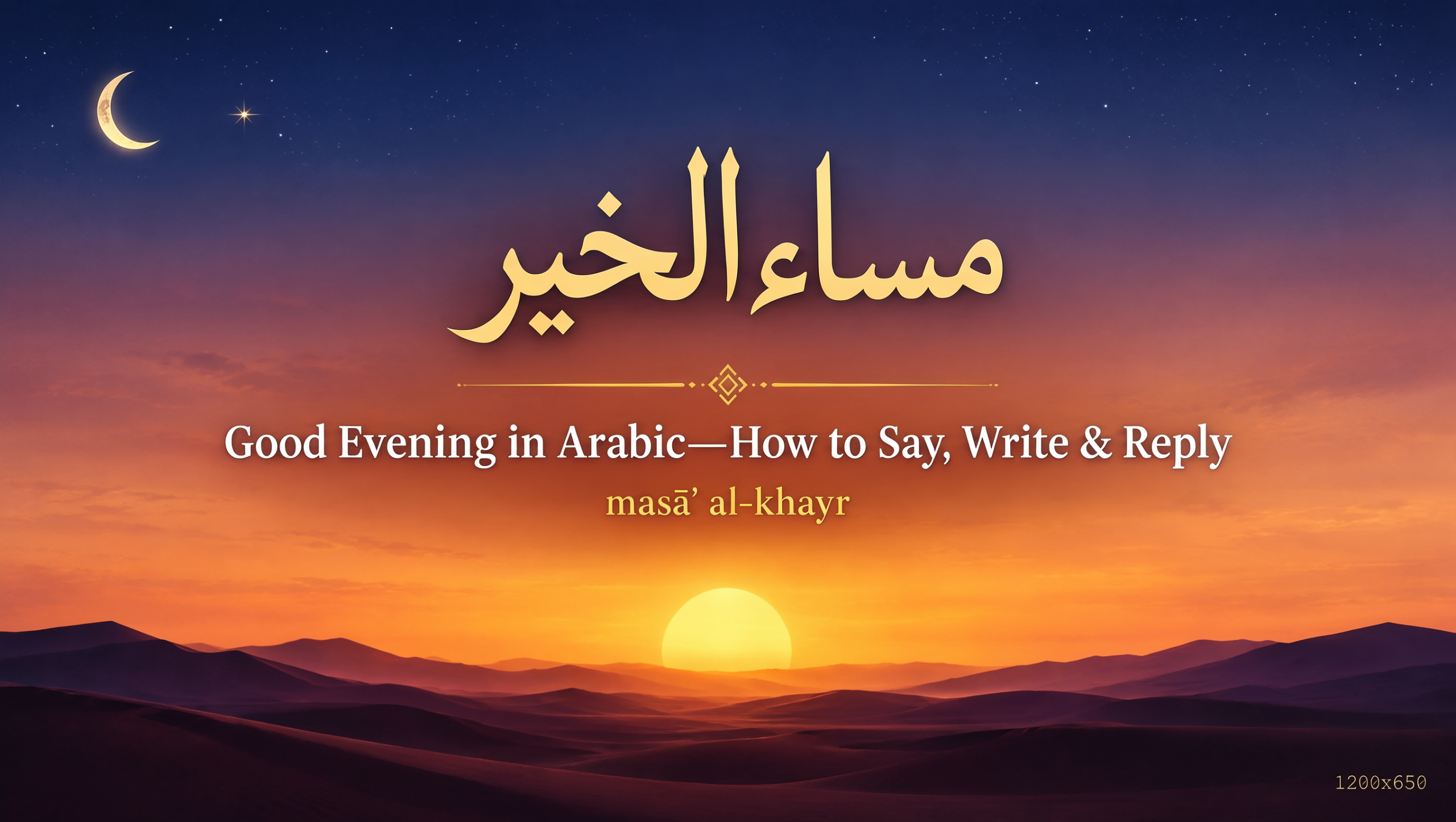
مساء الخير (masaa al-khayr) means “good evening.” You say it when you arrive somewhere, from late afternoon on. Think of it as “hello” for the evening.
This phrase never changes. You say the same words to a man, a woman, or a group. That makes it one of the easiest Arabic greetings to learn. The normal answer is مساء النور (masaa an-noor), which means “an evening of light.” It is a kind way to say your visit brought light with it.
In Egypt, people like to play with this greeting. You may hear masaa al-ward, “an evening of roses,” or masaa al-full, “an evening of jasmine.” These are fun, friendly answers.
If you want more greetings for each time of day, read this guide to saying hi in Arabic. It covers morning, afternoon, and evening greetings with their replies.
When to Say Good Night (Tisbah Ala Khair)
Say tisbah ala khair only at the end of the evening. Use it when you leave someone’s home at night, end a late phone call, or go to bed. The time on the clock does not matter much. If you are parting for the night, even at 9 p.m., tisbah ala khair fits.
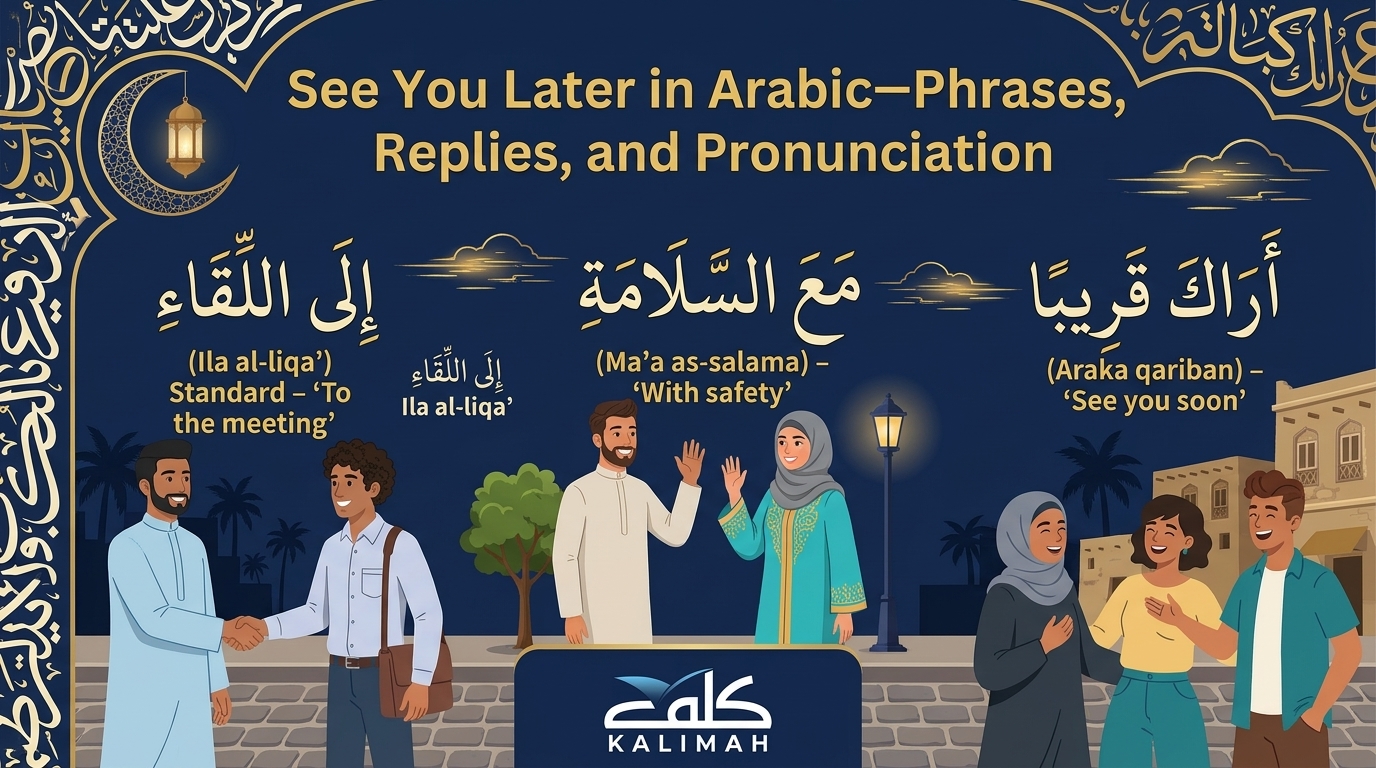
What matters is that you will not see this person again until tomorrow. That is the moment this phrase was made for. If you leave in the afternoon, use a different phrase. Say مع السلامة (maa as-salama), which means “go with safety.” It is the normal goodbye during the day.
An easy way to remember it: masaa al-khayr is “hi” in the evening. Tisbah ala khair is “bye” before bed.
What happens in a Kalimah Center class?
This short sample shows you a real lesson in action, with clear explanations, live practice, and gentle correction from the teacher.
Good Night in Arabic Dialects
A dialect is the local way people speak in a country or region. Every Arab dialect understands tisbah ala khair, but each one says it with its own sound and adds its own local wishes.
Below are the three dialects learners ask about most: Egyptian, Levantine, and Moroccan.
Good Night in Egyptian Arabic
To say good night in Arabic Egyptian style, say تصبح على خير (tisbah ala kheir). The spelling is the same. Only the sound changes, since Egyptians say kheir with a long “ay” sound.
The endings for a woman and a group work just like in the table above. The answer sounds a little different, though. Egyptians say w-inta min ahlu, with w-inti for a woman and w-intu for a group.
Egyptians love to make the wish bigger. You will often hear تصبح على ألف خير (tisbah ala alf kheir), which means “wake up to a thousand good things.”
Between young men, a joking tisbah ala kheir ya basha is common. It means “good night, boss,” and it is always said with a laugh. Egyptian Arabic is heard in films and TV shows across the Arab world. So these forms will help you far beyond Cairo.
Good Night in Levantine Arabic
Levantine Arabic is spoken in Syria, Lebanon, Jordan, and Palestine. Here, good night is also تصبح على خير (tisbah ala kheir), and the answer is w-inta min ahlo.
Levantine speakers often add a wish for good sleep. They say نوم الهنا (nom il-hana), which means “a happy, peaceful sleep.” You may also hear نوم العوافي (nom il-awafi). It means “a healthy sleep.” Some people use it more often when talking to a woman.
For sweet dreams, Levantine speakers say أحلام حلوة (ahlam hilwe). The word hilwe means sweet or nice. You will hear it all day in this dialect, for food, places, and people.
In a Levantine home, the host may also walk you to the door. Saying nom il-hana as you step out is a lovely way to end the night.
Good Night in Moroccan Arabic
To say good night in Arabic Moroccan style, say تصبح على خير (tsbah ala khir). Moroccans say it fast, so the short vowels almost disappear. The answer uses Moroccan words for “you.” Say w nta mn ahlu to a man and w nti mn ahlu to a woman.
You may also hear الله يمسيك على خير (Allah ymssik ala khir). It means “may God give you a good evening.” Moroccans say it when they part in the evening.
For bedtime itself, many say نعس مزيان (nas mzyan), which means “sleep well.” In Moroccan Arabic, nas is the word for sleep. For sweet dreams, they say أحلام زوينة (ahlam zwina). The word zwin means beautiful, and it is one of the most loved words in Morocco.
Beautiful Good Night Phrases in Arabic
Arabic has many lovely ways to wish someone a good night. Some sound like poetry, and some feel like a hug. The first group works for people you respect. The second group is for the people you love.
Formal and Poetic Phrases
طابت ليلتك (tabat laylatuk) means “may your night be pleasant.” It sounds a bit like old poetry. It works well at the end of a speech or in a nice card.
ليلة سعيدة (layla saida) means “a happy night.” You will see it in books and hear it on TV. It is polite and safe with almost anyone.
ليلة هادئة (layla hadia) means “a calm night.” It is a gentle choice for a coworker or a new friend.
عمت مساء (imta masaan) is a very old way to say good evening. Few people say it today. But you will find it in classic stories, so it is good to know.
These phrases show you made an effort to learn more than the basics. Older people, in particular, often love to hear them.
For more polite phrases and blessings like these, see this list of Arabic greeting words.
Sweet and Romantic Phrases
أحلام سعيدة (ahlam saida) means “sweet dreams.” Parents say it to kids, and partners say it to each other.
You can join it with the main phrase. تصبح على خير وأحلام سعيدة (tisbah ala khair wa ahlam saida) means “good night and sweet dreams.” It is warm and very common.
أتمنى لك نوما هانئا (atamanna laka nawman hani’an) means “I wish you a restful sleep.” Say laki instead of laka for a woman.
For a wife or partner, try تصبحي على خير يا قلبي (tisbahi ala khair ya albi). It means “good night, my heart.”
Many Muslims also say أستودعكم الله (astawdiukum Allah), meaning “I leave you in God’s care.” It comes from a farewell prayer of the Prophet, found in Sunan Ibn Majah, hadith 2825.
Many Kalimah Center students say live practice gave them the courage to use phrases like these with Arab friends. You can read their stories in Kalimah Center’s student reviews on Trustpilot.
Writing Good Night in Arabic in a Text
Most good night wishes today are sent by phone. So it helps to know how Arabs really type them. There are two common ways: Arabic letters, and English letters mixed with numbers.
Writing It in Arabic Letters
To write good night in Arabic text, most people type تصبح على خير with no vowel marks. The small marks above and below letters are mostly used in books for kids or in the Quran.
For a woman, type تصبحي على خير. For a family group chat, type تصبحوا على خير. People often add a moon or heart emoji, like ???? or ????. Some people make it longer. They write تصبح على خير وأحلام سعيدة or add a short prayer for the person.
Voice notes are also very popular in the Arab world. Many people send a short recorded “tisbah ala khair” instead of typing it. If you are new to the Arabic keyboard, save the phrase in your phone notes. Then you can copy and paste it until your fingers learn it.
Writing It in Arabizi
Many Arabs, mostly young people in Egypt, type Arabic using English letters and numbers. This is called Arabizi. In Arabizi, good night looks like tesba7 3ala 5eer.
The numbers stand for sounds English does not have. The number 7 is a strong “h” (ح). The number 3 is a deep throat sound (ع). The number 5 is “kh” (خ).
For a woman, you would type tesba7y 3ala 5eer. For a group, it is tesba7o 3ala 5eer. Outside Egypt, you may see “kh” written instead of 5. So tesba7 3ala kheer means the same thing.
Learning Arabizi helps you read group chats and social media posts. Without it, many friendly messages will look like a secret code.
Read also: How to Say Good Day in Arabic
Mistakes to Avoid When You Say Good Night in Arabic
Most learners make the same few mistakes. The good news is that each one is easy to fix. Below are four common ones, plus a quick check to use before you speak.
Four Common Learner Mistakes
The first mistake is saying “sweet dreams” to your boss. Ahlam saida feels too close or too childish at work. Keep it for family and friends.
The second mistake is mixing book Arabic and street Arabic. Saying tusbihina ala kheir blends two styles in one sentence. Pick one style and stick with it.
The third mistake is saying the “kh” in khair like an English “k.” This changes the sound of the word. The “kh” is a rough sound at the back of the throat, like the “ch” in the Scottish word “loch.”
The fourth mistake is using Arabizi with the wrong people. Tesba7 3ala 5eer is fine with friends. But to a teacher, an older person, or a client, write it in Arabic letters.
The Three-Question Check Before You Speak
Before you say good night in Arabic, ask yourself three short questions. They take two seconds and stop most mistakes.
- Who am I talking to? A man, a woman, or a group. This tells you which ending to use.
- Where are they from? Egypt, the Levant, Morocco, or a formal place. This tells you how to say it and which local extras fit.
- How close are we? A coworker gets the plain phrase. A loved one can get tisbah ala alf kheir or ahlam saida.
Try this check for one week. By the end, you will pick the right phrase without thinking about it at all.
A quick look at learning with us
See how a live class works, from the teacher’s explanation to the student’s recitation. It’s a simple way to know what to expect before your first lesson.
Master Arabic with Kalimah Center
Join our expert-led online classes and start your journey toward Arabic fluency today.
Book Your Free TrialBook Your Free Arabic Class at Kalimah Center Today
Knowing how to say good night is a great first step. But the real goal is to talk with confidence, from the first hello to the last good night.
Kalimah Center has taught Arabic to learners from around the world since 2011. Your first class is free, and you do not have to sign up for more. You start with a short placement test, so your lessons begin at the right level for you.
Every Kalimah Center tutor is a native Arabic speaker trained to teach. You can learn formal Arabic, Egyptian Arabic, Levantine Arabic, or Quranic Arabic. You choose one-on-one or group classes, online from home or in person in Cairo.
Classes focus on speaking practice, not long lectures. You pick class times that fit your day. Your tutor gives you personal feedback and checks your progress, and you earn a certificate when you finish a course.
Book your free class now. Your next good night in Arabic could be to a real teacher, this week.

Explore Our Courses:
At Kalimah Center, you can learn formal Arabic, Egyptian or Levantine Arabic, or Quranic Arabic with a native tutor, online or in Cairo. Pick the course that fits your goal, and start with a free first class to find your level.
- Online Arabic Course: Tailored to your level, our comprehensive Arabic program includes 16 teaching levels and 400+ hours of personalized sessions.
- Online Quran With Tajweed Course: Perfect for non-Arabic speakers, our course spans 13 levels and equips you with Tajweed mastery from beginner to advanced.
- Online Arabic Course For Kids: Nurture your child’s love for Arabic with our engaging and structured program, available in 24 levels for primary, intermediate, and secondary stages.
Conclusion:
You now know the key facts. The best way to say good night in Arabic is tisbah ala khair, “may you wake up to goodness.” The best answer is wa anta min ahlih, and the ending changes for a woman or a group.
You also know the local flavors. Egyptians say tisbah ala alf kheir. Levantine speakers add nom il-hana. Moroccans say nas mzyan. Each one shows people that you care about the way they speak.
Knowing is only half the job, though. Words stick when you use them. So here is a simple plan for the next five nights.
On night one, say tisbah ala khair out loud before bed, even if you are alone. On night two, send it as a text in Arabic letters to a friend. On night three, try the Arabizi version in a chat.
On night four, use the right form for a woman or a group. On night five, try a local extra like tisbah ala alf kheir or nom il-hana, and listen to the answer you get back.
Small steps like these build real speaking skills. When you are ready for more, this guide to basic Arabic conversation for beginners shows you the next phrases to learn. One short phrase can open a door. Say it tonight, and let tomorrow’s Arabic start there.
FAQs
Learners often have a few more questions after they learn the main phrase. Here are short, clear answers to the ones we hear most.
Is Tisbah Ala Khair a Religious Phrase?
No, tisbah ala khair is a cultural phrase, not a religious one. Muslims, Christians, and people of any faith in the Arab world use it every night.
How Do You Say Good Morning After Saying Good Night?
To say good morning in Arabic, say sabah al-khair, which means “a morning of goodness.” The usual reply is sabah an-noor, “a morning of light.”
How Do You Say Good Night to Two People in Arabic?
In formal Arabic, you say tusbihani ala khair to two people. In daily speech, most people just use the group form, tisbahu ala khair.
How Do You Say Good Night in Gulf Arabic?
In the Gulf, people also say tisbah ala khair. Many add nom al-awafi, which means “a healthy, restful sleep.”
What Do You Say Back to Ahlam Saida?
You can answer ahlam saida with wa anta kadhalik, which means “and you too.” In Egypt, people often say w-inta kaman.
How Do You Say Good Night to Someone Who Is Sick?
To someone who is sick, say tisbah ala khair, salamtak. Salamtak means “I wish you safety and good health.” Use salamtik for a woman.
Do Arabs Say Good Night in English Too?
Yes, many young Arabs say “good night” in English, mostly in texts. Still, most people smile more when a learner makes the effort to say tisbah ala khair.