An Al-Azhar Arabic course is an Arabic language program based on the teaching methodology and classical texts used at Al-Azhar University in Cairo — the world’s oldest Islamic university, founded in 970 CE. The Azhari method emphasizes Fusha (Classical Arabic), grammar through foundational texts like Al-Ajurrumiyyah, and Quranic Arabic. Kalimah Center offers an online Azhari-based Arabic course taught by Al-Azhar graduates, covering beginner to advanced levels with personalized native instruction.
Key Takeaway Table:
| Feature | Details |
|---|---|
| Course Type | Al-Azhar methodology-based Arabic (online) |
| Levels | Beginner → Intermediate → Advanced |
| Core Method | Azhari grammar (Nahw), Fusha/MSA, classical texts |
| Core Texts | Iqraa, Al-Tamheedi, Al-Arabiyya Bayna Yadayk, Al-Ajurrumiyyah |
| Instructors | Native Egyptian, Al-Azhar graduates |
| Skills Covered | Reading, writing, speaking, listening |
| Class Options | One-on-one + group classes |
| Trial | Free trial class available |
Arabic has many learning paths — but few carry the academic weight and methodological depth of the Al-Azhar tradition. Al-Azhar University in Cairo, founded in 970 CE, has been teaching Arabic and Islamic sciences for over a thousand years, producing scholars whose linguistic precision remains the gold standard in the Muslim world.
An Al-Azhar Arabic course brings this methodology to learners worldwide — combining classical grammar study (Nahw), Fusha (formal Arabic), and the same foundational texts that Azhari students have studied for centuries, now adapted for non-native speakers learning online.
This guide explains exactly what an Azhari-based Arabic course contains, how it differs from standard Arabic programs, and what to look for when choosing a course that genuinely follows the Al-Azhar methodology.
Read also: How to move to Egypt
What is an Al-Azhar Arabic Course?
An Al-Azhar Arabic course is a kind of Arabic language program based on the teaching methods and curriculum used at Al-Azhar institution in Egypt. As you know, Al-Azhar is one of the oldest and most respected centers of Islamic learning in the world, and for over a thousand years it has been teaching Arabic to students from all corners of the globe.
Al-Azhar University vs. Al-Azhar Methodology Courses: What’s the Difference?
Before choosing a course, it’s important to understand two distinct options that both carry the “Al-Azhar” name:
| Feature | Al-Azhar University (Official) | Al-Azhar Methodology Courses (e.g., Kalimah Center) |
|---|---|---|
| Provider | Al-Azhar University, Cairo (official Egyptian government institution) | Independent academies and online centers using Azhari methods |
| Instruction language | Arabic (primary); limited English support | Bilingual — Arabic with English/other language explanation |
| Format | On-campus in Cairo (primary); limited online | Fully online, live sessions |
| Cost | Low tuition for international students; free resources via Riwaq Al-Azhar | Varies by provider; Kalimah Center offers affordable group and private options |
| Certificate | Official Al-Azhar University certificate | Provider’s own certificate (not Al-Azhar University official) |
| Admission | Formal application process; some programs require prior Arabic knowledge | Open enrollment; beginners welcome |
| Best for | Those who want an official academic credential from Al-Azhar | Those who want the Azhari teaching method in an accessible online format |
Which should you choose?
- If your goal is an official Al-Azhar University certificate or degree, you need to apply directly to Al-Azhar University through azhar.edu.eg
- If your goal is to learn Arabic using the Azhari methodology — classical grammar, Fusha, foundational texts — from the comfort of your home with live instruction from Azhari graduates, a methodology-based program like Kalimah Center’s is the practical choice
Both paths lead to authentic Azhari Arabic learning. The difference is context, format, and credential.
Al-Azhar University Free Courses: What’s Available?
Al-Azhar University offers free Islamic and Arabic learning resources through several official channels:
Riwaq Al-Azhar (رواق الأزهر)
Riwaq Al-Azhar is Al-Azhar University’s official free e-learning platform available at learn.azhar.eg. It offers:
- Free Arabic language courses for non-native speakers
- Islamic sciences courses (Fiqh, Aqeedah, Tafsir)
- Quranic studies and Tajweed
- Courses available in Arabic; some with multilingual support
Limitations of Riwaq Al-Azhar:
Riwaq courses are self-paced with pre-recorded content. There is no live instruction, no speaking practice with a teacher, and no personalized feedback on your writing or pronunciation. For many learners — especially those starting from zero — self-paced study without a teacher produces slow progress and frequent plateaus.
What Free Courses Can and Cannot Do
| Learning Need | Free Courses (Riwaq) | Live Azhari-Based Course |
|---|---|---|
| Vocabulary and reading basics | ✅ Available | ✅ Available |
| Grammar foundations | ✅ Available | ✅ Available + explanation |
| Speaking practice | ❌ Not available | ✅ Core component |
| Pronunciation correction | ❌ Not available | ✅ Real-time feedback |
| Personalized curriculum | ❌ Fixed pace | ✅ Adapted to your level |
| Progress accountability | ❌ Self-managed | ✅ Teacher-guided |
Free resources are valuable supplements — but for learners who want measurable progress in speaking, reading, and writing Arabic, a structured program with live Azhari-trained teachers accelerates results dramatically.
Experience Kalimah Center Classes
Watch real excerpts from our live sessions at Kalimah Center and see how we bring learning to life. These clips highlight our interactive, student-centered teaching approach across all our courses—designed to keep learners engaged, motivated, and actively involved every step of the way.
Master Arabic with Kalimah Center
Join our expert-led online classes and start your journey toward Arabic fluency today.
Book Your Free TrialWhat Makes the Al-Azhar Teaching Method Unique?
The Azhari approach to Arabic teaching is fundamentally different from communicative or conversational Arabic programs. Here are its defining characteristics:
1. Grammar-First (النحو أولاً)
The Azhari method begins with Nahw (النحو) — Arabic grammar — as the foundation. Before focusing on conversational vocabulary, students understand the grammatical rules that govern every Arabic sentence. This creates learners who can analyze Arabic text, not just memorize phrases.
The cornerstone grammar text is Al-Ajurrumiyyah (الآجرومية), written by Ibn Ajurrum in the 13th century. This short but profound text has been memorized and studied by Azhari students for over 700 years. It covers all foundational Nahw (syntax) in compressed, precise language.
2. I’rab — Grammatical Parsing (الإعراب)
A defining skill of Azhari-trained Arabic speakers is I’rab — the ability to parse every word in a sentence grammatically. Students identify whether a word is the subject (مبتدأ), predicate (خبر), object (مفعول به), or another grammatical function, and determine its case ending accordingly. This skill makes reading classical Arabic texts far more accurate.
3. Classical Text Immersion (النصوص الكلاسيكية)
From the intermediate stage onward, Azhari students engage with authentic classical Arabic texts — Hadith, Quranic commentary (Tafsir), and classical poetry. This immersion builds vocabulary, rhetorical appreciation, and grammatical intuition simultaneously.
4. Fusha Over Dialect
The Azhari method teaches Fusha (الفصحى) — the formal, unified Arabic of the Quran and classical scholarship — rather than regional dialects. This ensures the learner can access Arabic from any historical period and any Arab country.
How This Compares to Other Methods
| Feature | Azhari Method | Communicative Method | Immersion Method |
|---|---|---|---|
| Primary focus | Grammar + classical texts | Conversation + vocabulary | Listening + speaking |
| Arabic type taught | Fusha / Classical | MSA or dialect | Dialect (usually) |
| Grammar approach | Explicit, rule-based | Implicit, through use | Minimal formal grammar |
| Reading classical texts | Core component | Rare | Very rare |
| Best outcome | Deep literacy + Quranic Arabic | Conversational fluency | Oral fluency |
| Typical learner | Islamic studies, academic, serious | Travel, business, casual | Living in Arab country |
Al-Azhar Arabic Course Curriculum: Beginner to Advanced Levels
At Kalimah Center, we follow the Azhari methodology, but we also add our own special touch to adapt it for online learning and for students who are not native Arabic speakers. Here’s how we teach each of the four language skills:
1. The Beginner Level in Our Azhari-Based Arabic Course
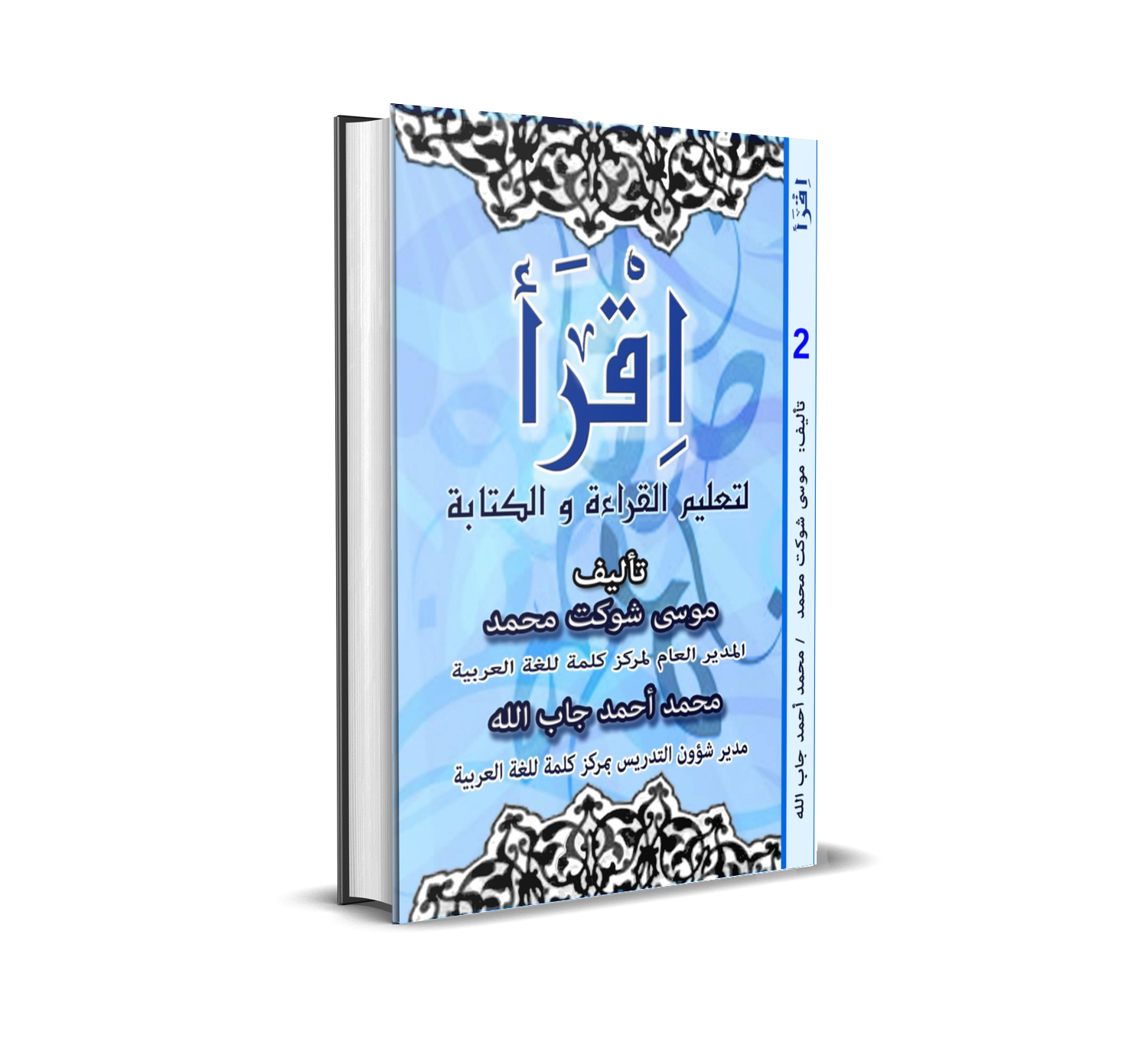
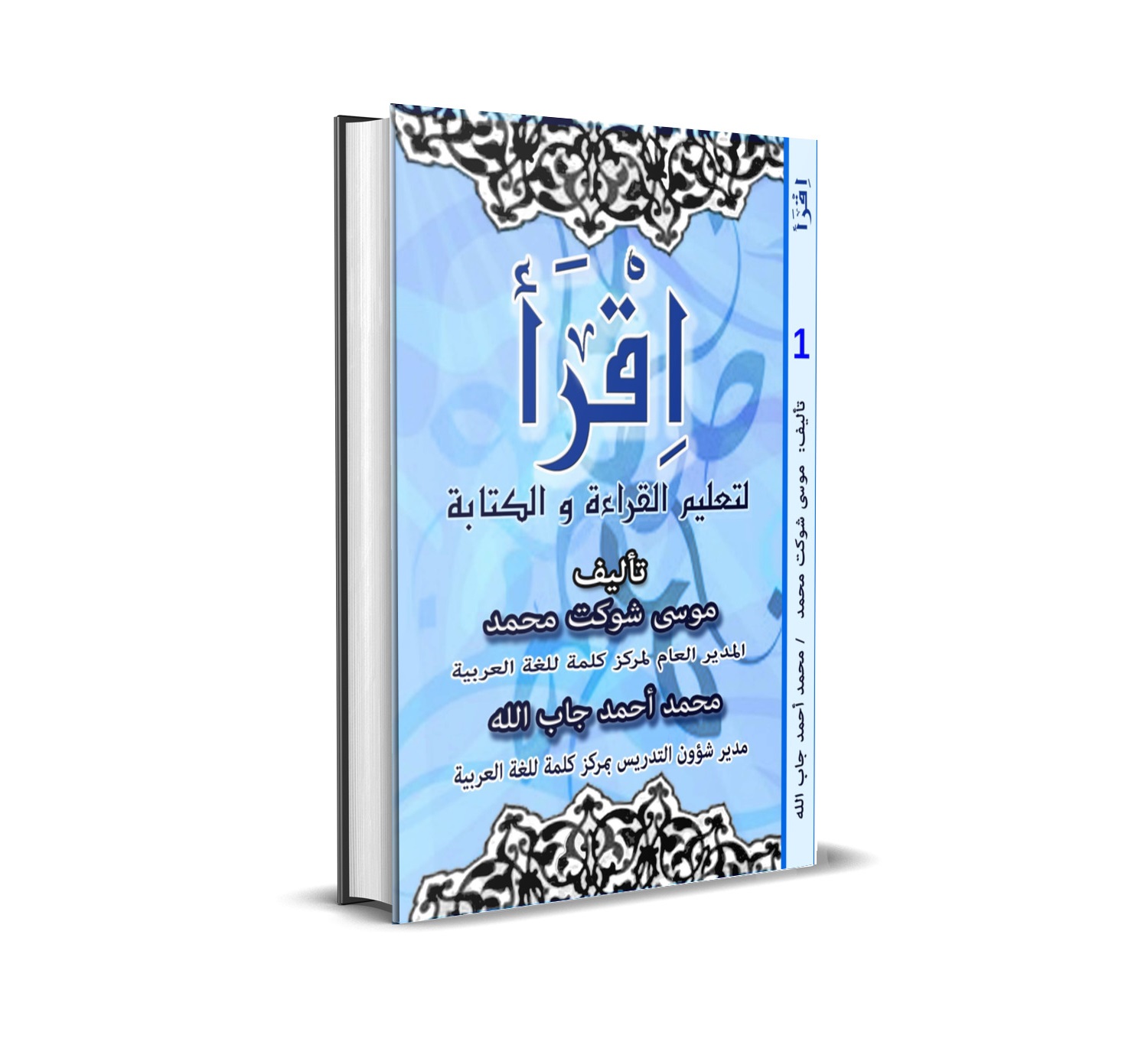
In the Beginner Level of our Azhari-Based Arabic language course, we start from the very beginning, the alphabet. We use our special book, “Iqraa” (اقرأ) which was developed by Kalimah Center teachers. It is a very good book for learning the 28 letters, how they are written, and how they sound.
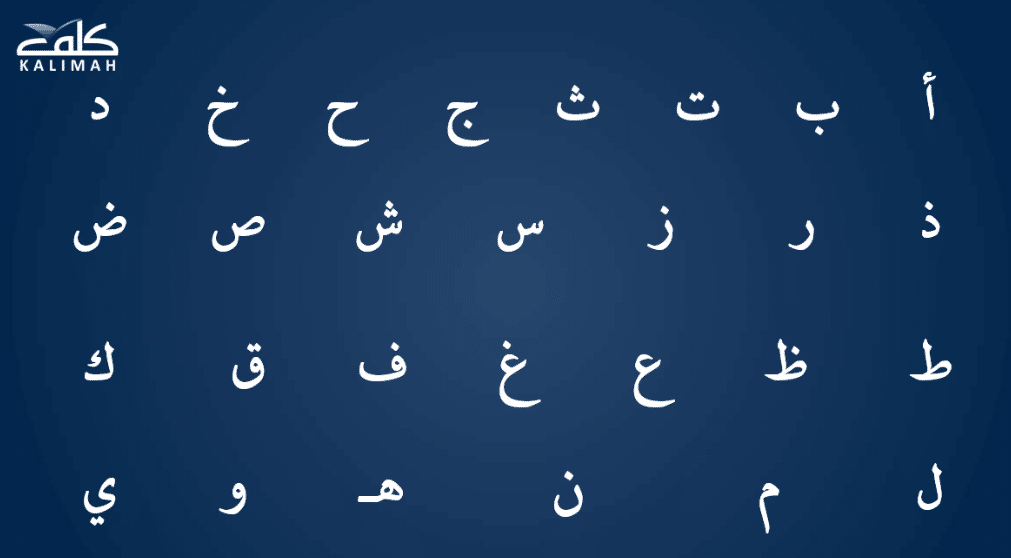
You will learn to recognize each letter in its different forms (isolated, initial, medial, final) and how to pronounce it correctly. For example, the letter “س” (seen) changes its shape when it comes at the beginning, middle, or end of a word, you will see it as:
- “س” at the beginning: “سَيّارة” (sayyaara) – car.
- “س” in the middle: “مَساء” (masa’) – evening.
- “س” at the end: “دَرْس” (dars) – lesson.
You will practice writing each letter many times until it becomes easy for you.
After you master the alphabet, we move to our “Al-Tamheedi” (التمهيد للعربية) book. This book, also from Kalimah Center, teaches you the basic grammar and structure of the Arabic language. You will learn about:
- Nouns and Pronouns: “كِتاب” (kitab – book), “هُوَ” (huwa – he), “هِيَ” (hiya – she).
- Simple Verbs: “يَكْتُبُ” (yaktubu – he writes), “تَقْرَأُ” (taqra’u – she reads).
- Prepositions: “في” (fi – in), “عَلى” (ala – on), “مِنْ” (min – from).
We will practice making simple sentences like:
- “هَذا وَلَدٌ.” (Hadha waladun.) – This is a boy.
- “القَلَمُ عَلى المَكْتَبِ” (Al-qalamu ala al-maktabi.) – The pen is on the desk.

Your teacher, who is a native Arabic speaker and trained in Al Azhar method, will work with you one-on-one to make sure you understand everything clearly.
Skills Covered in this level:
- Reading: Mastering the alphabet, recognizing and pronouncing all letters and sounds, reading simple words and sentences, basic reading comprehension.
- Writing: Correct letter formation, writing simple words and sentences, basic dictation.
- Speaking: Basic greetings and introductions, simple conversations about everyday topics (family, food, home), basic pronunciation practice.
- Listening: Understanding simple instructions, identifying familiar words and phrases, basic listening comprehension exercises.
Experience Kalimah Center Classes
Watch real excerpts from our live sessions at Kalimah Center and see how we bring learning to life. These clips highlight our interactive, student-centered teaching approach across all our courses—designed to keep learners engaged, motivated, and actively involved every step of the way.
2. The Intermediate Level in Our Azhari-Based Arabic Course
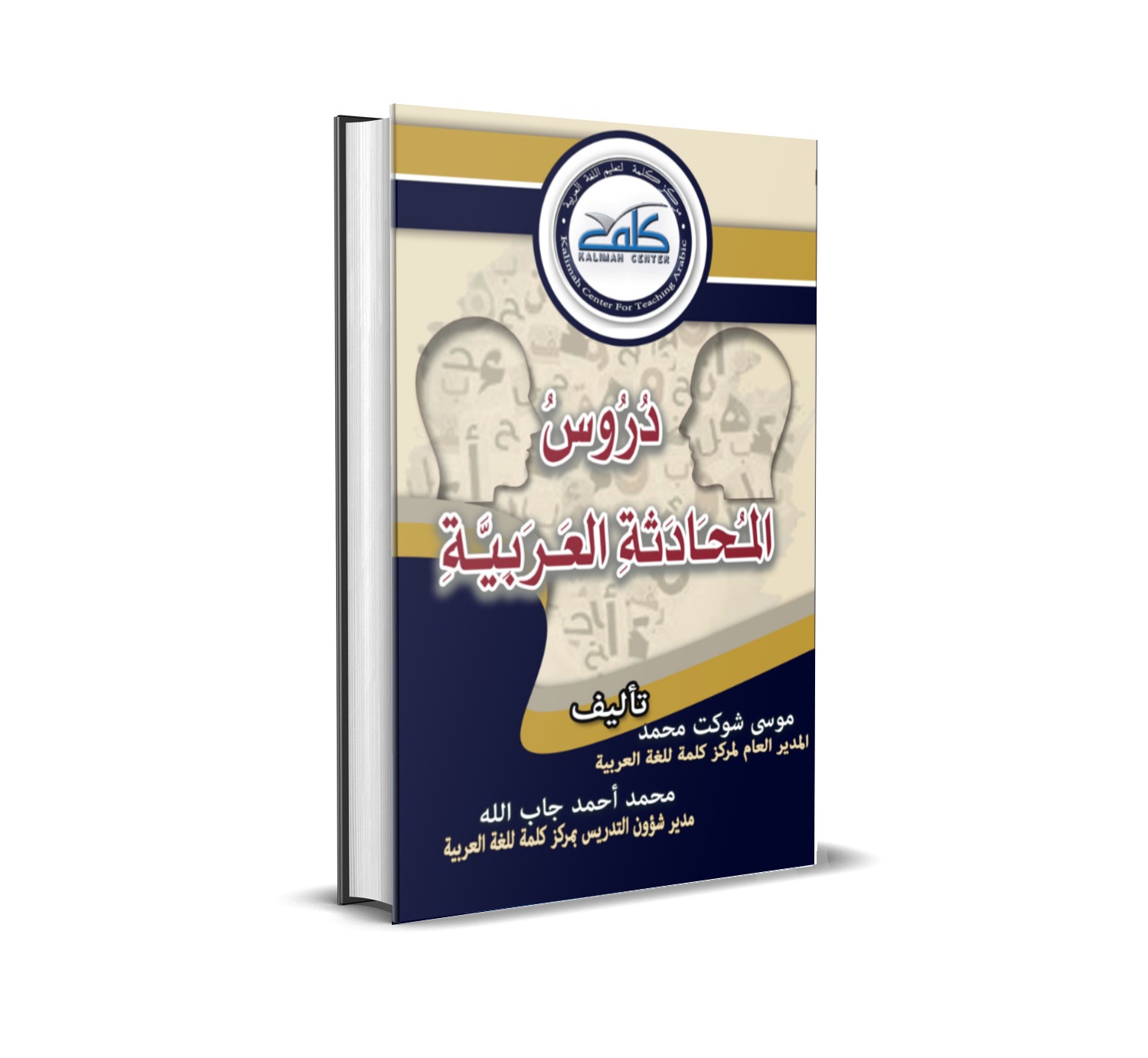
In the Intermediate Level of our in our Azhari-based Arabic language course, we build on the foundation you learned in the Beginner Level. We use the famous book “Al-Arabiyya Bayna Yadayka”.
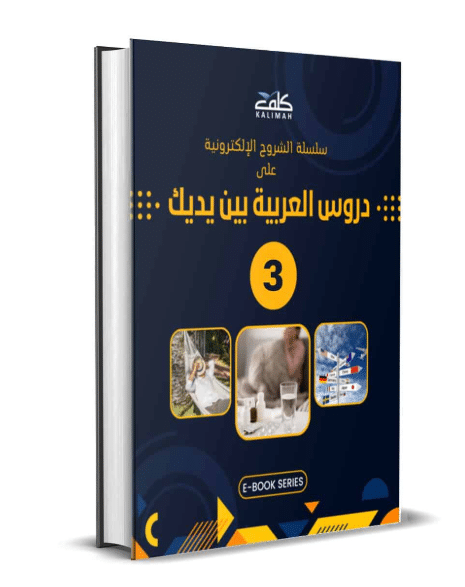
This book teaches you how to talk about everyday things like:
- “البَيْت” (al-bayt) – The house
- “العَمَل” (al-‘amal) – Work
- “التَّسَوُّق” (at-tasawwuq) – Shopping
- “العائِلَة” (al-‘a’ila) – The family
We will read dialogues together, and your teacher will explain all the new words and grammar. We use PowerPoint presentations with pictures and examples to make it easy to understand.
In our classes, we don’t just teach isolated words or phrases. Instead, we guide you through dialogues like this one, where a family introduces each member:

Translation:
Ali: Peace be upon you.
Uthman: And peace be upon you, too.
Ali: This is a picture of my family.
Uthman: Masha’Allah! Who is this?
Ali: This is my father, Adnan. He is an engineer.
Uthman: And who is this?
Ali: This is my mother, Saeeda. She is a doctor.
This is just one example of the many dialogues you will practice in our Arabic course. Each conversation is designed to help you master important vocabulary, understand sentence structure, and improve your ability to hold natural conversations in Arabic.
You will also learn more about Arabic grammar, like:
- “المُثَنّى” (al-muthanna) – The dual form (for two things)
- “جَمْعُ المُذَكَّرِ السّالِم” (jam’u al-mudhakkar as-salim) – The regular masculine plural
- “جَمْعُ المُؤَنَّثِ السّالِم” (jam’u al-mu’annath as-salim) – The regular feminine plural
For example, you will learn how to say:
- “كِتابانِ” (kitaban) – Two books
- “مُعَلِّمونَ” (mu’allimuna) – Male teachers
- “مُعَلِّمات” (mu’allimat) – Female teachers
We will also start to read simple stories and articles so you can practice your reading skills.
Skills Covered in This Level:
- Reading: Reading longer and more complex texts, improving reading speed and comprehension, analyzing text structure.
- Writing: Writing paragraphs and short essays, using more complex sentence structures, advanced dictation.
- Speaking: Engaging in longer conversations on a wider range of topics, expressing opinions and ideas, improved pronunciation and fluency.
- Listening: Understanding longer and more complex audio materials, identifying main ideas and supporting details, taking notes while listening.
3. The Advanced Level in Our Azhari-Based Arabic Course
The Advanced Level of our our Azhari-based Arabic language course is for students who want to reach a high level of proficiency in Arabic.
You will read and discuss more complex topics, like:
- “العَوْلَمَة” (al-‘awlama) – Globalization
- “البيئَة” (al-bi’a) – The environment
- “التَّقَدُّم العِلْمي” (at-taqaddum al-‘ilmi) – Scientific progress
And we will cover more advanced grammar points, like:
- “المَمْنوع مِن الصَّرْف” (al-mamnu’ min as-sarf) – Diptotes (nouns that don’t take tanween)
- “أسْلوب الشَّرْط” (uslub ash-shart) – Conditional sentences
- “كانَ وأخَواتُها” (kana wa akhawatuha) – Kana and its sisters
- “إنَّ وأخَواتُها” (inna wa akhawatuha) – Inna and its sisters
For example:
- “إبْراهيمُ” (Ibrahimu) instead of “إبْراهيمٌ” (Ibrahimun) because it is a diptote noun.
- “إنْ تَدْرُسْ تَنْجَحْ” (In tadrus tanjah.) – If you study, you will succeed.
And we will start to read selections from classical Arabic texts, like the Quran, Hadith, and poetry.
Your teacher will continue to work with you one-on-one, giving you personalized attention and feedback.
Skills Covered in This Level:
- Reading: Reading and analyzing complex literary and academic texts, understanding different styles of writing, critical reading.
- Writing: Writing essays, research papers, and creative pieces, using advanced vocabulary and complex sentence structures, mastering different writing styles.
- Speaking: Engaging in sophisticated discussions on a wide range of topics, delivering presentations, debating, near-native pronunciation and fluency.
- Listening: Understanding authentic Arabic media (news, TV shows, movies), following complex arguments and discussions.
What to Look for in an Azhari-Based Arabic Course: Key Features
You might be thinking, “There are many places to learn Arabic online. Why should I choose Kalimah Center?” Here’s why our Azhari-Based Arabic Language Course is the best choice for you:
1. Our Curriculum Directly Aligned with Al-Azhar
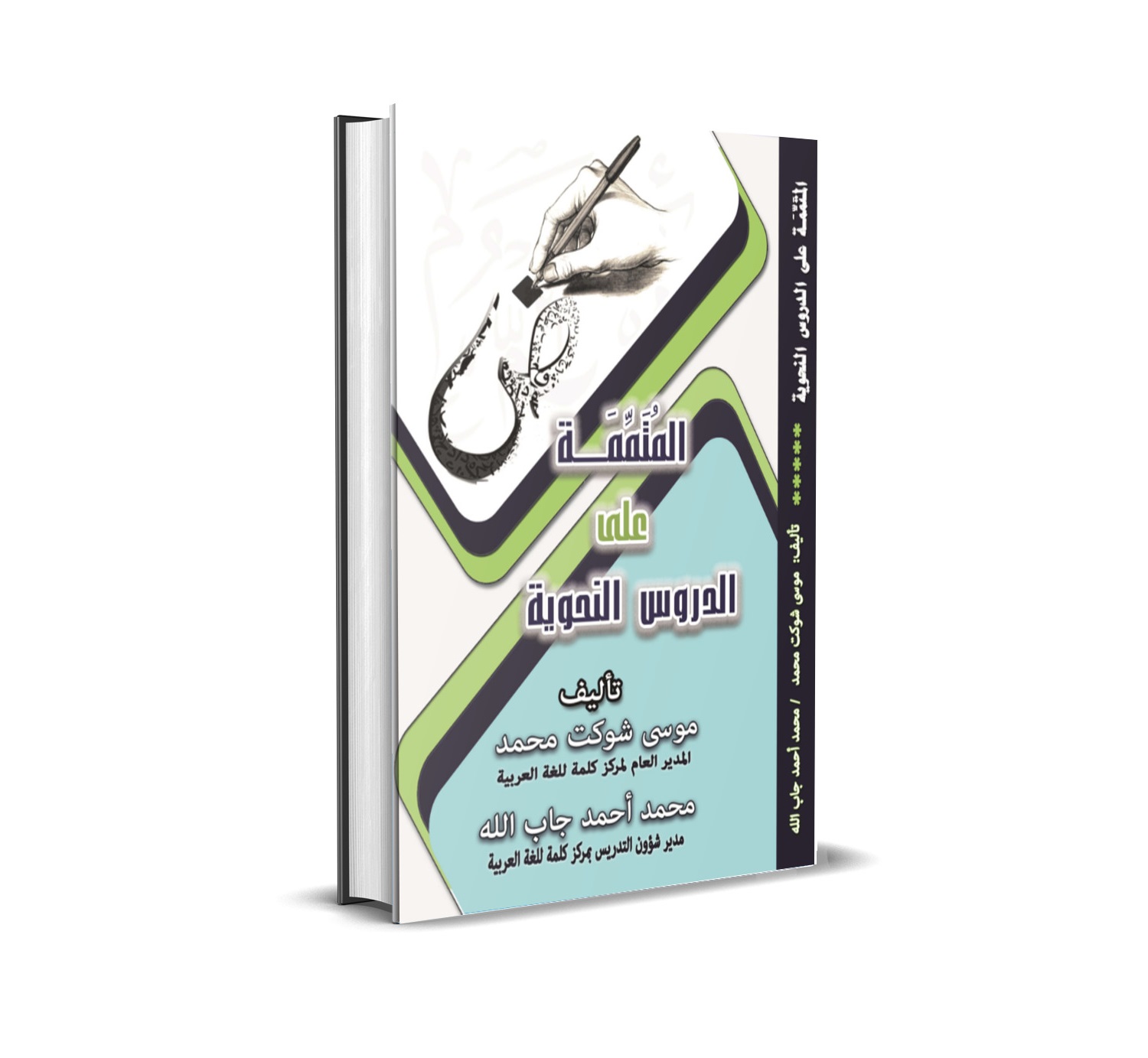
Our “Azhari-Based Arabic Language Course” isn’t just inspired by Al-Azhar; it’s built upon the same core texts and methodologies. We use materials like the revered “Al-Ajurrumiyyah” (الآجرومية) for grammar (Nahw), ensuring a genuine Azhari foundation. We even have a book that we authored at Kalimah Center “Droos nahwiyah mena Al Moqaddemah Al AAjourromiyah” is derived from an explanation of Al-Aajurroomiyyah.
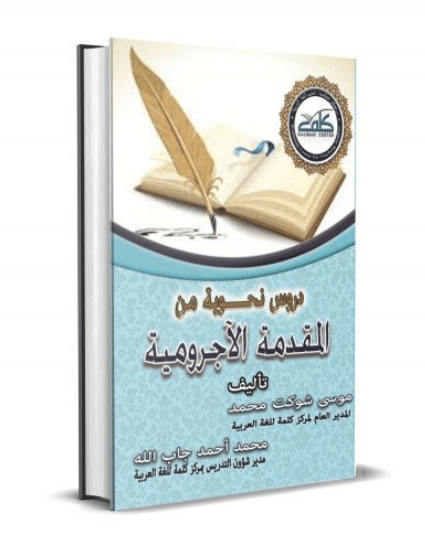
2. Our Instructors Are Native Egyptian, Azhari-Graduates
Our teachers are not just native Arabic speakers, they’re Egyptian natives, graduates of Al-Azhar or equivalent institutions. This brings invaluable cultural and linguistic nuances to your learning. They understand the Azhari system because they lived it. They can explain the subtelities of i’rab (إِعْرَاب – grammatical parsing).
3. Deep Focus on Fusha — Classical Arabic for Quranic and Scholarly Understanding
The most significant difference between an Azhari-based course and a standard “conversational Arabic” program is the emphasis on الفصحى (Al-Fusha) — the formal, classical Arabic that has remained unchanged in its essential grammar for over 1,400 years.
What Fusha enables you to do:
- Read the Quran with grammatical understanding, not just phonetic recitation
- Understand classical Hadith texts, tafsir (Quranic commentary), and Fiqh (Islamic jurisprudence) in their original form
- Access the full depth of Arabic poetry, literature, and scholarship from any era
- Communicate formally with educated Arabs across all 22 Arabic-speaking countries
Most conversational Arabic courses teach MSA for media and travel — valuable, but limited. The Azhari approach adds the classical grammatical layer that unlocks the full heritage of Arabic learning.
The grammar backbone: I’rab (الإعراب)
Central to the Azhari method is I’rab — the science of grammatical parsing. Students learn to identify the grammatical function of every word in a sentence: subject (مرفوع), object (منصوب), possessive (مجرور). This analytical skill transforms students from passive readers into active, accurate Arabic users.
Read Also: Arabic Level Test And Exam
4. Small Class size and Personalized Attention
Our Azhari method of teaching Arabic needs personal interaction and feedback, that is why we keep our class sizes small, allowing instructors to cater to individual learning needs.
Here’s why our Arabic group classes is good:
- More lessons, less money! Group classes are four times cheaper than private lessons. You get more learning for your money, very smart.
- Learn better with others! When you learn with other students, you learn faster. You can help each other and practice speaking. Studies show this is a very good way to learn.
Master Arabic with Kalimah Center
Join our expert-led online classes and start your journey toward Arabic fluency today.
Book Your Free TrialWhat Students Say About Kalimah’s Al-Azhar Arabic Course
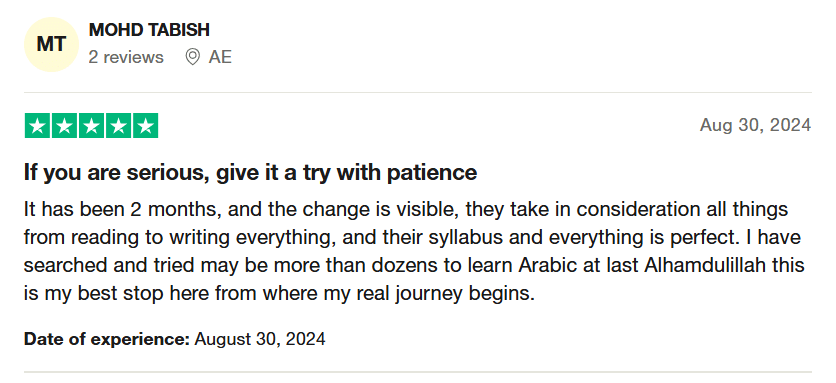
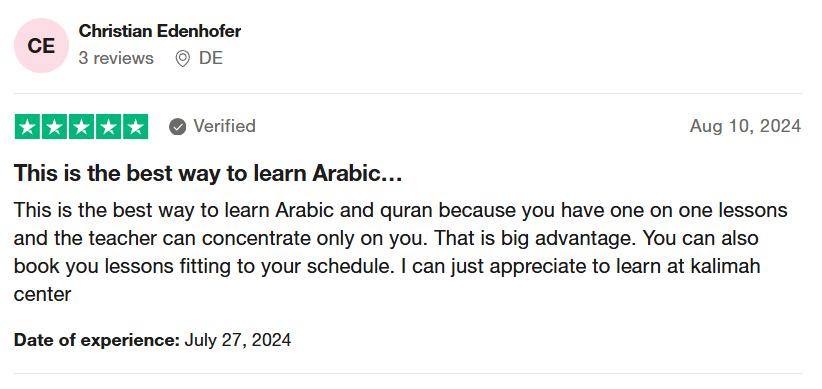
These testimonials offer a genuine preview of what it’s like to be part of the Kalimah experience.

Inside Kalimah Center: Moments from Our Courses
Get a glimpse into the vibrant learning experience at Kalimah Center. These snapshots capture real moments from our live classes—where students engage deeply, connect with passionate instructors, and grow in a welcoming, supportive environment.
How to Start Your Al-Azhar Arabic Course: Free Trial and Placement
At Kalimah Center, we are committed to helping you achieve your language goals. Our Azhari-Based Arabic Language Course is the perfect way to learn this beautiful and important language.
Here’s what you can do now:
- Sign up for a free trial one-on-one lesson: Experience our teaching style and see if it’s right for you. You can meet one of our teachers and get a feel for our online classroom.
- Take our placement test: This will help us determine your current level of Arabic and place you in the right class.
📚 Explore Our Courses:
Online Arabic Course: Tailored to your level, our comprehensive Arabic program includes 16 teaching levels and 400+ hours of personalized sessions.
Online Quran With Tajweed Course: Perfect for non-Arabic speakers, our course spans 13 levels and equips you with Tajweed mastery from beginner to advanced.
Online Arabic Course For Kids: Nurture your child’s love for Arabic with our engaging and structured program, available in 24 levels for primary, intermediate, and secondary stages.
🚀 Start Your Free Trial Today! 🚀
Don’t miss out on this life-changing opportunity to deepen your faith and knowledge. Sign up now for your free trial and take the first step towards becoming a better practicing Muslim with Kalimah Center!

Conclusion:
The Al-Azhar Arabic Course at Kalimah Center is rooted in the time-honored methodology of Al-Azhar, Egypt’s prestigious institution of Islamic learning. This program is tailored to online learners, providing a structured journey through beginner, intermediate, and advanced levels. Starting with foundational skills like mastering the alphabet and basic grammar, the course progresses to conversational fluency, real-world vocabulary, and advanced linguistic concepts, such as conditional sentences and classical Arabic.
With engaging materials like “Iqraa” and “Al-Arabiyya Bayna Yadayka,” students build proficiency in reading, writing, speaking, and listening, supported by personalized feedback from native Egyptian instructors.
What sets Kalimah Center apart is its dedication to authentic Azhari teaching methods combined with modern tools and small class sizes. The curriculum emphasizes both Modern Standard Arabic (MSA) and Fusha, the classical Arabic of Islamic texts, making it ideal for students seeking depth and fluency.
Led by Azhari graduates, the program ensures cultural and linguistic authenticity while fostering an interactive, collaborative learning environment. With affordable group classes and one-on-one trial lessons, Kalimah offers an accessible and enriching path to mastering Arabic.
FAQs about Al-Azhar Arabic Course
Q1: Is this an official Al-Azhar University course?
Kalimah Center’s Azhari-based Arabic course is not an official course of Al-Azhar University — it is an independently offered program that follows Al-Azhar’s teaching methodology and uses classical Azhari texts and curriculum frameworks. The instructors are Al-Azhar graduates who were trained in the Azhari system. If you are looking for Al-Azhar University’s own official online programs, visit Al-Azhar’s official portal at azhar.edu.eg or the Riwaq Al-Azhar platform.
Q2: What makes the Al-Azhar teaching method different from other Arabic courses?
The Azhari method distinguishes itself through four key principles: (1) grammar-first learning using classical texts like Al-Ajurrumiyyah — students understand why Arabic works the way it does, not just how to memorize phrases; (2) Fusha (Classical Arabic) focus — the formal, literary Arabic used in the Quran, Hadith, and scholarly works; (3) I’rab (grammatical parsing) — students learn to analyze sentence structure deeply; (4) classical text immersion — even beginners eventually work toward reading authentic Arabic texts. This produces learners with strong foundational literacy, not just conversational ability.
Q3: Does Al-Azhar University offer free online Arabic courses?
Yes. Al-Azhar University offers free Islamic and Arabic learning resources through Riwaq Al-Azhar (رواق الأزهر) — an official e-learning platform at learn.azhar.eg. These courses cover Quranic Arabic, Islamic sciences, and foundational Arabic for beginners. For learners who want live instruction, personalized feedback, and a structured curriculum with an Al-Azhar-trained teacher, programs like Kalimah Center’s Azhari-based course provide what self-paced platforms cannot.
Q4: What Arabic texts are used in an Al-Azhar Arabic course?
An authentic Azhari-based Arabic curriculum uses several classical and modern texts: Al-Ajurrumiyyah (الآجرومية) — a 13th-century foundational grammar text; Al-Arabiyya Bayna Yadayk — a widely used modern MSA series; Iqraa (اقرأ) — for alphabet and foundational reading; Al-Tamheedi — for basic grammar structure; and selections from the Quran, Hadith, and classical poetry at advanced levels. Kalimah Center has also authored its own text “Duroos Nahwiyya mena Al-Muqaddemah Al-Ajurrumiyyah” — a modern explanation of Al-Ajurrumiyyah for non-native learners.
Q5: How long does it take to complete an Al-Azhar Arabic course?
The timeline depends on your starting level and study intensity. Kalimah Center’s Azhari-based curriculum spans three levels: Beginner (2–4 months), Intermediate (4–8 months), and Advanced (6–12+ months). Students who study 3–5 hours per week typically progress from zero Arabic to intermediate conversational ability in 6–12 months. Reaching advanced classical Arabic proficiency — sufficient for reading Azhari texts independently — typically requires 2–3 years of consistent study.