The Arabic language boasts an alphabet full of beautiful and uniquely shaped letters. One of the letters is the Arabic letter ra, which is in the tenth position in the Arabic alphabet. It carries its shape and sound and therefore is essential in the Arabic alphabet.
In this article, we will discuss the Arabic letter “ر”. We will research its meaning, pronunciation, variations in writing, and its importance in the Arabic language.
Arabic Letter “ر” Raa
The Arabic letter “ر” (Raa) is the tenth in the Arabic alphabet, characterized by its elegantly simple shape—a smooth curve without dots or additional marks. Its versatility lies in maintaining its form regardless of position within a word, making it easily recognizable in written Arabic.
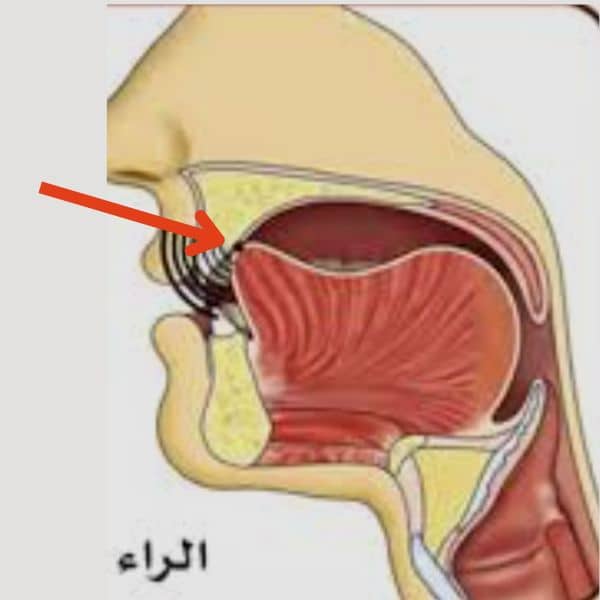
Pronounced as a soft, rolling “R,” similar to the Spanish “r” in carro, it requires a light tap of the tongue against the roof of the mouth. This articulation sets it apart from the harder English “R” sound.
Learning the letter “ر” involves practicing its different forms: isolated “ر,” medial “ـرـ,” and final “ـر.” Words such as “رجال” (men), “فراشة” (butterfly), and “مطر” (rain) showcase its varied positions.
Learning To Identify The Letter “ر” ra in arabic
The letter “ر” is not hard to recognize; it has an independent shape among Arabic letters, as it was designed simply compared to other letters.

- Shape: The general body of the letter “ر” consists of one single curved line, and there is no dot or extra stroke above or below it; it is one of the simplest letters in the Arabic alphabet.
- Position in Alphabet: “ر” is the tenth letter, coming after “ذ” and before “ز”.
- Letter Forms: As most letters in Arabic, “ر” has different shapes depending on whether it is at the beginning of a word, or completely on its own.
How To Pronounce “ر” (Raa)
Pronouncing “ر” is rather easy, but getting the exact articulation involves careful attention to how the letter must be articulated. It is basically the voiced alveolar flap sound, rather like “r” in English but lighter and quicker in roll.
Pronunciation: “ر” is pronounced like a rolled version of “r”, almost like the “r” in the Spanish word “carro” (which means “car”).
Sound Comparison: While the English “r” is deep within the oral cavity, in producing it, one would lightly tap their tongue against the alveolar ridge. As such, this Arabic letter sounds much softer and more liquidly.
Master Arabic with Kalimah Center
Join our expert-led online classes and start your journey toward Arabic fluency today.
Book Your Free TrialDifferent Forms Of “ر” (Raa)
Like other Arabic letters, “ر” takes different forms according to its position in the word. Here is how it might appear in different contexts:

- Isolated Form: At times when written alone, “ر” takes the form of a simple curve: “ر.”
- Initial Form: At the beginning of a word, “ر” connects with the letter next to it but keeps its basic form with a small hook: “ر” like in “رمان” (pomegranate).
- Medial Form: Within a word, “ر” retains its curving shape, yet connects eloquently from before and afterward: “ـرـ” in “درج” – (staircase).
- Final Form: At a word’s end, “ر” does not have a continuation mark after itself: “ـر” in “عصفور” (bird).
Common Words And Sentences Using “ر” (Raa)
To better understand the usage of “ر,” here are examples of how it appears in different positions within words:

Initial Form:
- “راديو” (radio)
- “رجال” (men)
- “رمل” (sand)
Medial Form:
- “فراشة” (butterfly)
- “شجرة” (tree)
- “سبورة” (blackboard)
Final Form:
- “أحمر” (red)
- “مطر” (rain)
- “سكر” (sugar)
Example Sentences Featuring “ر” (Raa)
In order to truly grasp the letter “ر” in context, let’s look at some sentences that showcase its versatility:
- “اختار الرفيق قبل الطريق” (Choose a companion before the road)
- “سوف يأتي بعد كل عسر يسر” (After every hardship comes ease)
- “رامي قرأ رواية حقيقية” (Rami read a real novel)
Tips For Mastering The Letter “ر” (Raa)
While learning Arabic, here are a few tips to help you get comfortable with the letter “ر”:

Practice the Pronunciation: Listen to native speakers and mimic them as they make their rolling “r”s, feeling how quickly their tongue moves against the top of their mouth.
Writing Practice: Practice writing the letter in its various forms. Pay attention to the smooth, flowing shape of the letter in different positions.
Calligraphy and Handwriting: Use Arabic calligraphy resources or worksheets to practice how “ر” connects with other letters in real words.
Read more about: Arabic Letter “د” (Daal) With Its Forms, Pronunciation, And Examples
Master Arabic with Kalimah Center
Join our expert-led online classes and start your journey toward Arabic fluency today.
Book Your Free TrialInside Kalimah Center: Moments from Our Courses
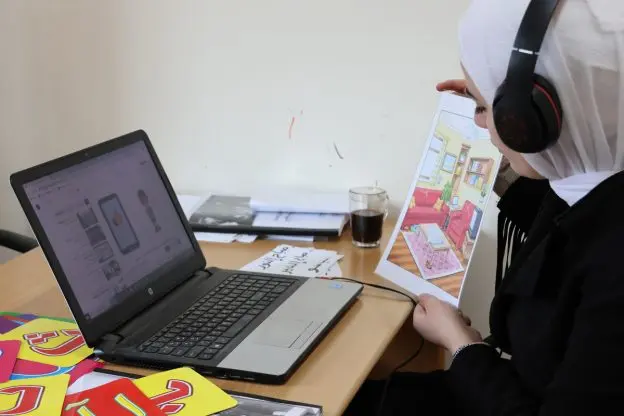
Get a glimpse into the vibrant learning experience at Kalimah Center. These snapshots capture real moments from our live classes—where students engage deeply, connect with passionate instructors, and grow in a welcoming, supportive environment.
Here Are The Reviews On Our Courses:
Our students frequently commend the excellence of our courses and the commitment shown by our instructors. You can read their complete reviews on Trustpilot.

Common Challenges With The Letter “ر” (Raa)
Although the letter “ر” is fairly simple, learners sometimes make the following mistakes:
Mispronunciation: In particular, the pronunciation of “ر” may be too hard, like the English “r.” Remember, the Arabic “ر” is soft and rolled, not harsh.
Mixing It Up with Other Letters: Learners often mistake “ر” for letters such as “ز” (Zay) or “ذ” (Thaal), as it might appear somewhat similar in shape. Just remember, “ر” is one smooth curve and never carries dots.
Unlock Your Potential in Arabic and Quran with Kalimah Center!
Ready to deepen your connection with the Quran and enhance your understanding of Arabic? Join Kalimah Center today and embark on a transformative journey of learning and growth! Our professional, handpicked Online Arabic and Quran Tutors are dedicated to helping you master these essential skills with ease and expertise.
📚 Explore Our Courses:
Online Arabic Course: Tailored to your level, our comprehensive Arabic program includes 16 teaching levels and 400+ hours of personalized sessions.
Online Quran With Tajweed Course: Perfect for non-Arabic speakers, our course spans 13 levels and equips you with Tajweed mastery from beginner to advanced.
Online Arabic Course For Kids: Nurture your child’s love for Arabic with our engaging and structured program, available in 24 levels for primary, intermediate, and secondary stages.
🚀 Start Your Free Trial Today! 🚀
Don’t miss out on this life-changing opportunity to deepen your faith and knowledge. Sign up now for your free trial and take the first step towards becoming a better practicing Muslim with Kalimah Center!
Conclusion
The letter “ر” is an essential constituent of the Arabic alphabet. The simple structure, combined with a specific pronunciation, makes “ر” one of the most usable letters within Arabic. Practice in different forms and fine-tuning of pronunciation will increase your fluency and grasp of the language to take you a step closer to mastering Arabic.
FAQs about Arabic Letter “ر” Raa
How do you pronounce the Arabic letter Raa (ر)?
The Arabic letter Raa (ر) is pronounced as a voiced alveolar flap, which is a soft, rolling “R” sound. Unlike the deep English “R,” it is produced by quickly and lightly tapping the tip of the tongue against the roof of the mouth (the alveolar ridge), similar to the rolled “r” in the Spanish word carro.
What are the different forms of the Arabic letter Raa (ر)?
The letter Raa (ر) has three contextual forms depending on its position in a word: Initial (ر), Medial (ـرـ), and Final (ـر). Because it is a non-connecting letter from the left side, it retains its basic curved shape across all positions but connects to preceding letters.
What is an example of the letter Raa (ر) in an Arabic word?
Common examples of the letter Raa (ر) include “رجال” (رجال – men) in the initial position, “فراشة” (butterfly) in the medial position, and “مطر” (rain) or “أحمر” (red) in the final position.
How do you distinguish the letter Raa (ر) from Zay (ز) and Thaal (ذ)?
The Arabic letter Raa (ر) is distinguished by its elegantly simple, single curved body with no dots or additional diacritical marks. In contrast, Zay (ز) features a single dot above, and Thaal (ذ) has a fundamentally different angular shape with a dot above.
Why is the letter Raa (ر) important for Arabic learners?
As the tenth letter of the Arabic alphabet, Raa (ر) is exceptionally common in daily vocabulary and Quranic texts. Mastering its distinct rolled pronunciation and visual forms is essential for achieving proper fluency and accurate Tajweed pronunciation.