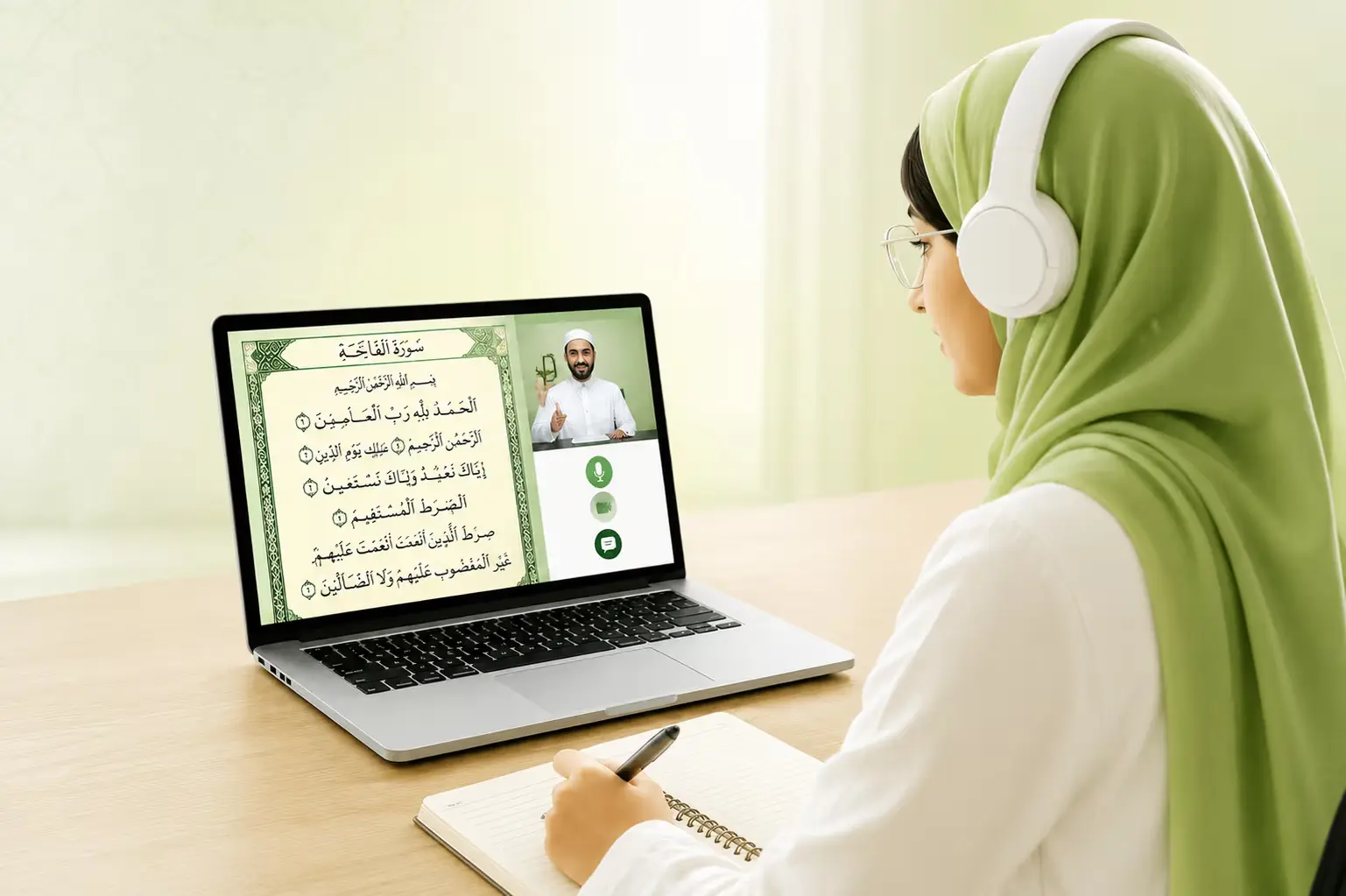
Online Arabic classes for high schoolers are structured language programs designed for students aged 14–18, delivered via live video sessions with native-speaking instructors. Effective programs cover all four skills — reading, writing, speaking, and listening — using age-appropriate pacing, typically following CEFR levels A1 through C1.
The best courses offer flexible scheduling around school hours, personalized progress tracking, and a curriculum that balances Modern Standard Arabic (MSA) with cultural literacy and real-world communication.
Key Takeaway Table:
| Factor | What to Look For |
|---|---|
| Age group | Programs specifically designed for ages 14–18 |
| Skills covered | Reading, writing, speaking, and listening (all four) |
| Instructor type | Native Arabic speakers experienced with non-Arab teens |
| Format | Live 1-on-1 or small group via Zoom/similar platform |
| Levels | Beginner (A1) through Advanced (C1), with placement test |
| Scheduling | Flexible sessions that fit around school timetables |
| Progress tracking | Regular reports to parents, level assessments |
| Typical cost range | $8–$25/hour for group; $15–$45/hour for private |
If you’re a parent researching Arabic classes for your teenager — or a high schooler exploring the language yourself — this guide covers what you actually need to know. We’ll break down what students learn at each level (beginner through advanced), how online Arabic classes are structured for teens, what to look for in a quality program, and how long it realistically takes to build conversational ability.
Whether your goal is Quran comprehension, academic credit, heritage language connection, or future career skills, the right online Arabic program can make a measurable difference.
What Are Online Arabic Classes for High Schoolers?
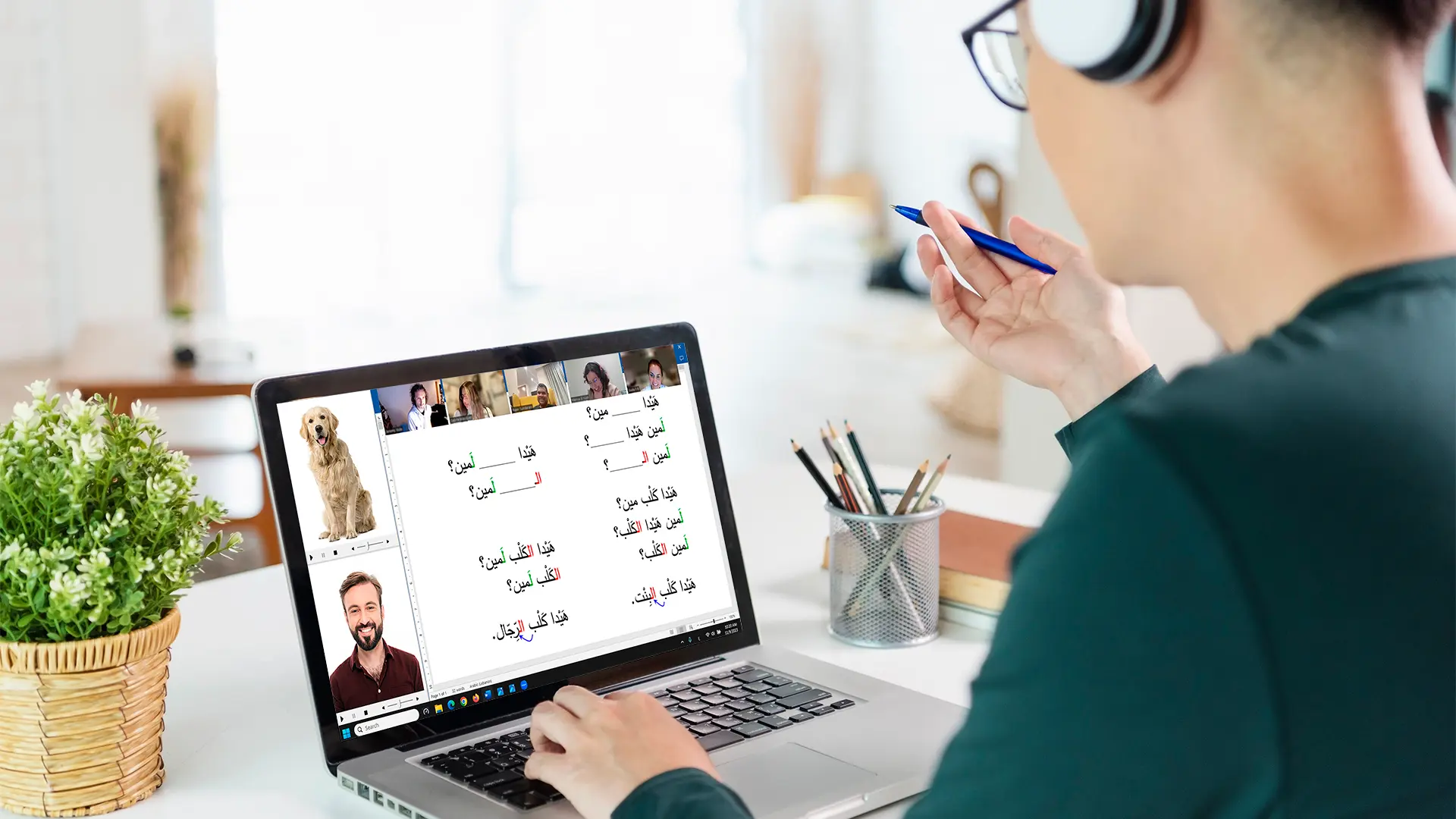
Online Arabic classes for high schoolers are live, instructor-led language programs delivered over video platforms like Zoom, designed specifically for students aged 14–18. Unlike children’s Arabic programs (which rely heavily on songs and games) or adult courses (which assume professional motivation), teen-focused programs balance academic rigor with engaging delivery — moving at a pace that respects a high schooler’s cognitive ability without overwhelming their schedule.
A well-structured program covers all four language skills:
| Skill | What It Involves | Why It Matters for Teens |
|---|---|---|
| Reading | Decoding Arabic script, comprehension of texts | Foundation for academic Arabic and Quran study |
| Writing | Letter formation, sentence construction, essays | Builds grammar understanding and formal expression |
| Speaking | Pronunciation, conversation, presentations | The skill teens are most motivated to develop |
| Listening | Understanding spoken Arabic in various contexts | Essential for real-world communication |
Most programs offer two formats: private lessons (1-on-1 with an instructor, fully customizable schedule and pace) and group classes (3–8 students, fixed schedule, lower cost, peer interaction). The best programs include both options.
How to Choose the Right Online Arabic Class for Your High Schooler
Not all online Arabic programs are equal, and the wrong choice can waste months of your teen’s time. Here’s a decision framework based on the most common parent and student priorities:
Step 1: Define the Goal
Why is your high schooler learning Arabic? The answer determines which program fits:
| Goal | What to Prioritize |
|---|---|
| Quran comprehension | Programs that teach Quranic vocabulary and grammar alongside MSA |
| Heritage language connection | Programs that include dialect exposure alongside MSA |
| Academic credit or college prep | Programs aligned to CEFR levels with assessable outcomes |
| Career preparation (diplomacy, translation, business) | Programs emphasizing formal MSA, writing, and professional communication |
| General interest or travel | Programs with strong conversational focus and cultural content |
Step 2: Verify Instructor Credentials
Ask three questions: Is the instructor a native Arabic speaker? Do they have formal teaching qualifications (not just fluency)? Have they specifically taught non-Arab teenagers? A great Arabic speaker is not automatically a great Arabic teacher for teens.
Step 3: Check Curriculum Structure
Request a curriculum outline before enrolling. A quality program should clearly show: what is taught at each level, how levels map to CEFR standards, how long each level typically takes, and what assessment is used to advance to the next level.
Step 4: Take a Free Trial
Every reputable program offers one. During the trial, observe: Does the instructor engage your teen or just lecture? Is the session interactive? Does the platform work smoothly? Does your teen feel comfortable?
Step 5: Evaluate Ongoing Communication
Ask how the program communicates progress. Monthly reports? Parent-teacher meetings? Dashboard access? If a program can’t tell you how your child is progressing, they likely aren’t tracking it.
How Long Does It Take for a High Schooler to Learn Arabic?
Timelines depend on three variables: hours per week, consistency, and prior exposure. Here are realistic benchmarks based on a schedule of 3–4 hours of instruction per week plus independent practice:
| Level | Milestone | Typical Timeline |
|---|---|---|
| A1 → A2 | Read simple texts, basic conversation, write short sentences | 3–5 months |
| A2 → B1 | Understand main ideas of familiar topics, write paragraphs, hold everyday conversations | 5–8 months |
| B1 → B2 | Read articles, write essays, debate familiar topics with native speakers | 8–14 months |
| B2 → C1 | Understand lectures, write reports, speak fluently on complex topics | 12–18 months |
Total time from zero to upper-intermediate (B2): approximately 18–30 months with consistent study.
High schoolers who start at age 14–15 with a structured program can realistically reach B2 proficiency before graduating — a level sufficient for university study in Arabic or strong performance on proficiency exams.
Factors that accelerate progress:
- Prior exposure to Arabic at home or through Quran study
- Immersive practices like Arabic media consumption alongside lessons
- Consistent daily practice (even 15 minutes) between sessions
- Having a clear, motivating goal (college application, travel, faith)
Kalimah Center’s Methodology and Curriculum for High Schoolers Learning Arabic
At Kalimah Center, our online Arabic classes for high school students are built on a solid foundation of pedagogical expertise and a deep understanding of how teenagers learn best.
We have developed a comprehensive Arabic curriculum that takes high schoolers from beginner to advanced proficiency, mastering all four key language skills: reading, writing, speaking, and listening.
Here’s a closer look at our methodology, divided into three levels:
Beginner Level: What High Schoolers Learn First
For high schoolers at the beginner level in Arabic we start with the very basics, assuming no prior knowledge of Arabic. We focus on building a strong foundation in the fundamentals of the Arabic language.
1. Introducing Arabic Alphabet in an Engaging Way for Beginner High Schoolers
We introduce the Arabic alphabet in a way that is engaging and easy to understand for high schoolers. We do not just teach them to memorize the letters. We help them understand the sounds they represent, how they connect to form words, and how their shapes change depending on their position in a word.

Example: We might start with group 4: From ل (Lam) to ي (Yaa), and use interactive exercises and games to help them learn to distinguish between similar-looking and similar-sounding letters.
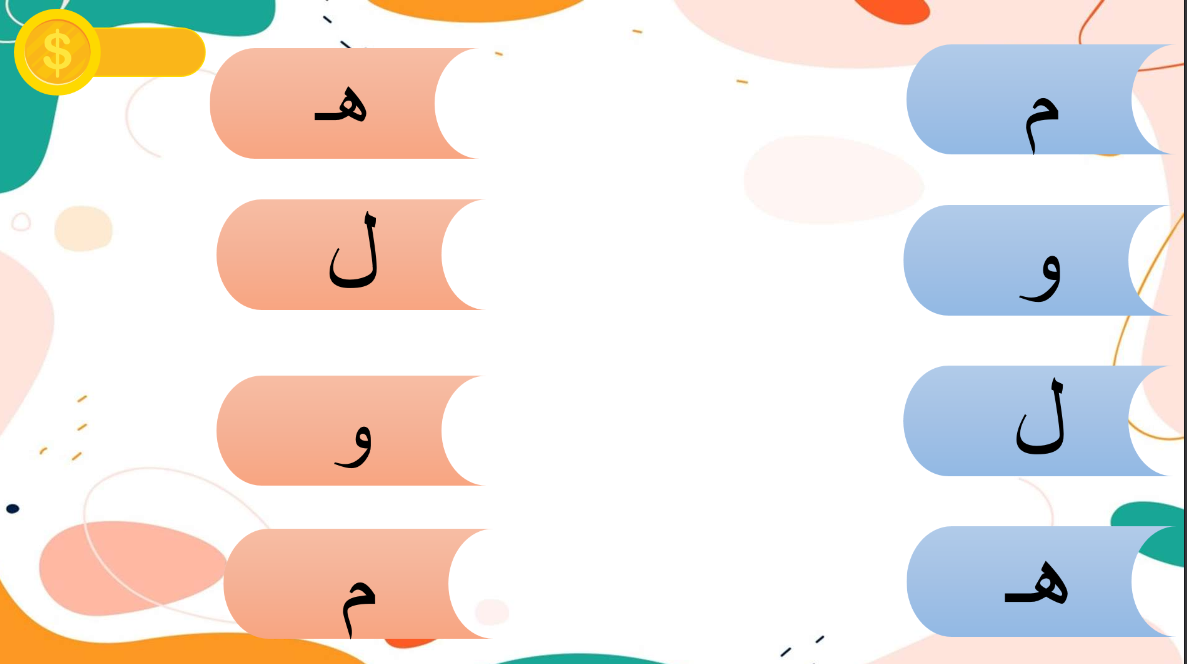
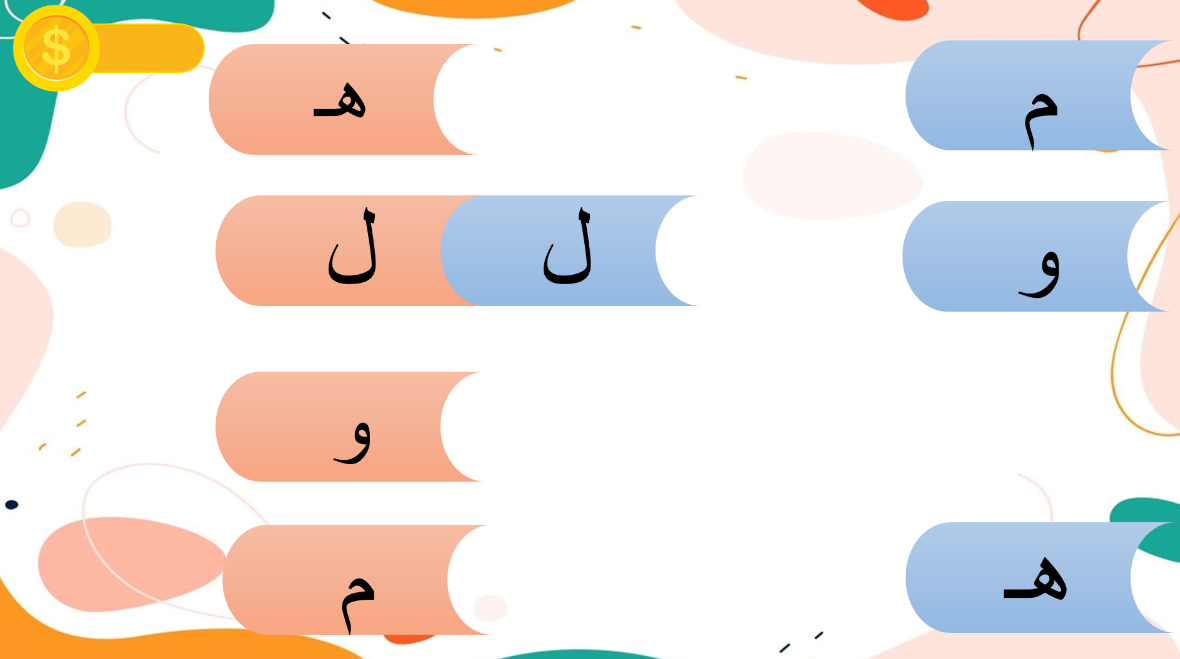
We may play more games we designed to enhance practice similar-looking letters:
2. Traning Beginner High Schoolers to Read Arabic with Confidence
We gradually introduce reading, starting with simple words and moving on to short sentences. We teach the basic vowels – Fatha (فتحة), Kasra (كسرة), Damma (ضمة) – and other important elements like Sukoon (سكون), Shadda (شدة), and Tanween (تنوين).
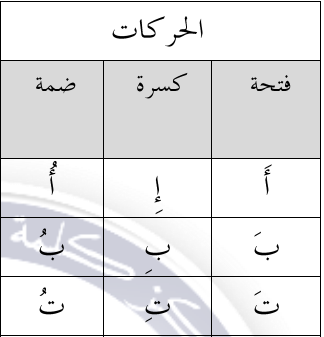
For example, we will practice reading words like “word” (كلمة – Kalimah), breaking it down into its individual sounds and then blending them together.
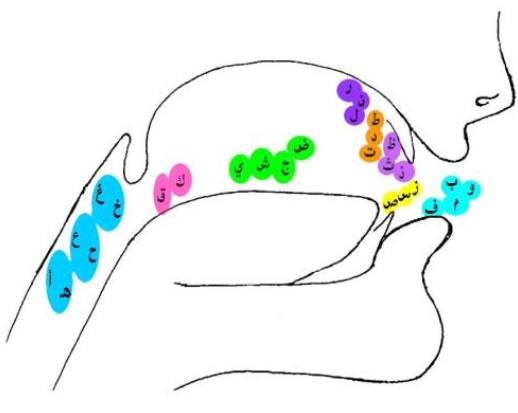
To help high schoolers master Arabic pronunciation and points of articulation we use these techniques:
- Interactive Arabic Pronunciation Practice: Engage the high schooler in interactive activities where they can practice pronouncing each Arabic letter in its various forms within words.
- Focus on Arabic Points of Articulation: Demonstrate how the mouth and tongue move to produce each Arabic sound, and encourage the high schooler to mimic these movements.
- Reading Arabic Aloud: Encourage the high schooler to read simple words and sentences aloud, providing feedback on their pronunciation and articulation.
Then we might ask the high schooler to read the following sentences aloud. Can he pronounce it correctly?
1. الطَّبِيبُ فِي الْمُسْتَشْفَى – al-ṭabību fī al-mustashfā – The doctor is in the hospital.
2. الطَّالِبُ فِي الْمَدْرَسَةِ – al-ṭālibu fī al-madrasati – The student is in the school.
3. هُنَا وَرْدَةٌ جَمِيلَةٌ – hunā wardatun jamīlatun – Here is a beautiful rose.
4. هَلْ أَنْتَ طَالِبٌ جَدِيدٌ؟ – hal anta ṭālibun jadīdun? – Are you a new student?
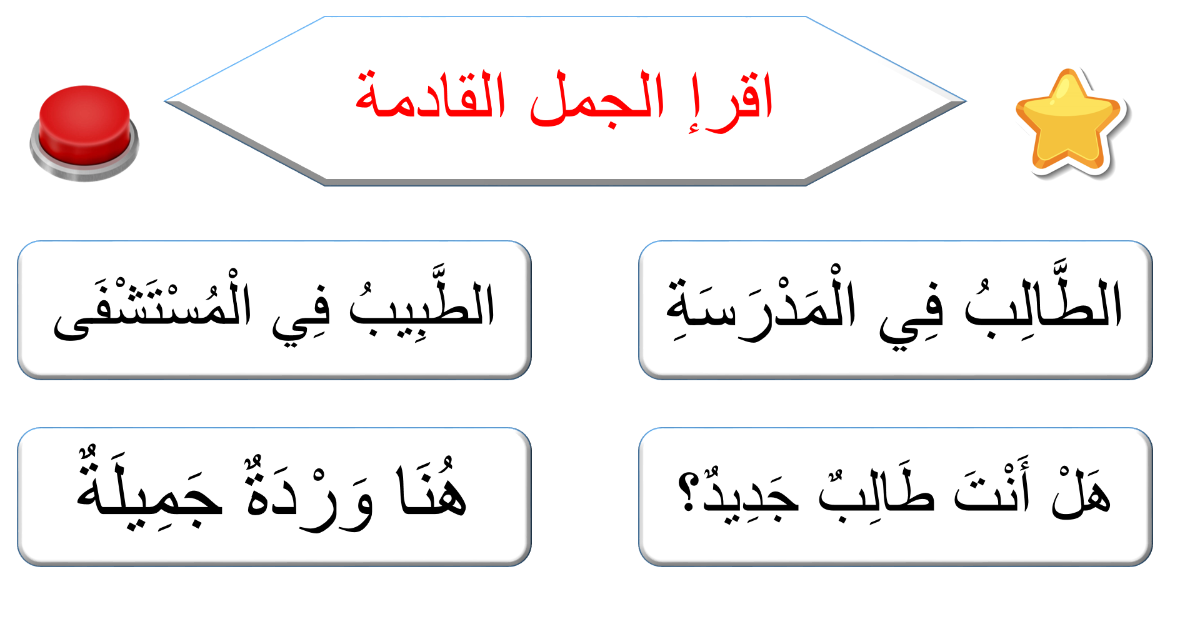
*From Kalimah’s Arabic Course curriculum.
3. Encouraging Beginner High Schoolers to Speak from Day One
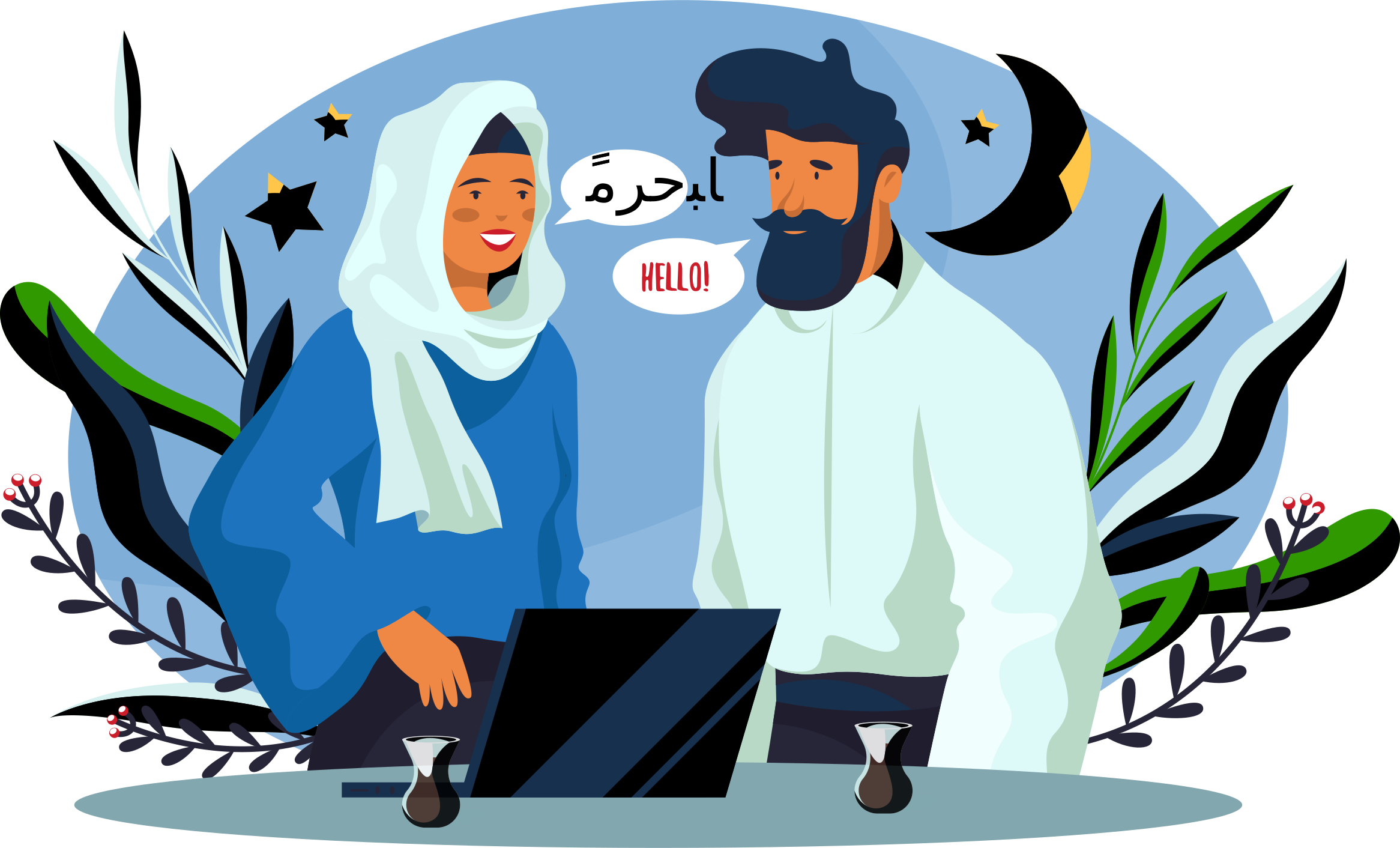
We encourage high schoolers to start speaking Arabic from the very first lesson. We begin with simple greetings like “Hello” (مرحبا – marhaba).
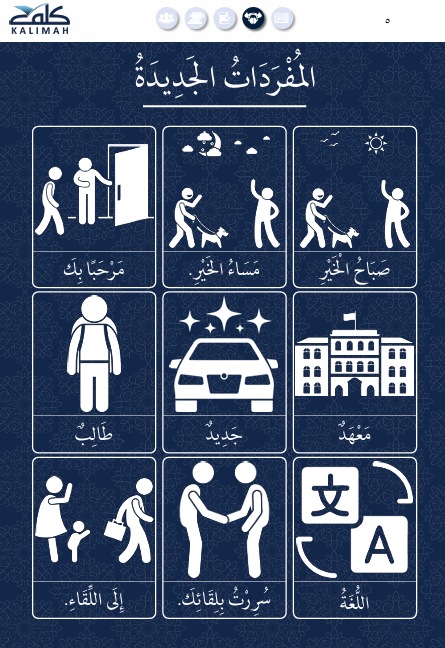
We then move on to basic conversational phrases, such as introducing themselves.
For example: “Good evening, my name is Amy, I’m from New York. I’m a new Muslim, and I’m studying Arabic at Kalima Center to understand the Quran and Sunnah. I’m in the first level.”
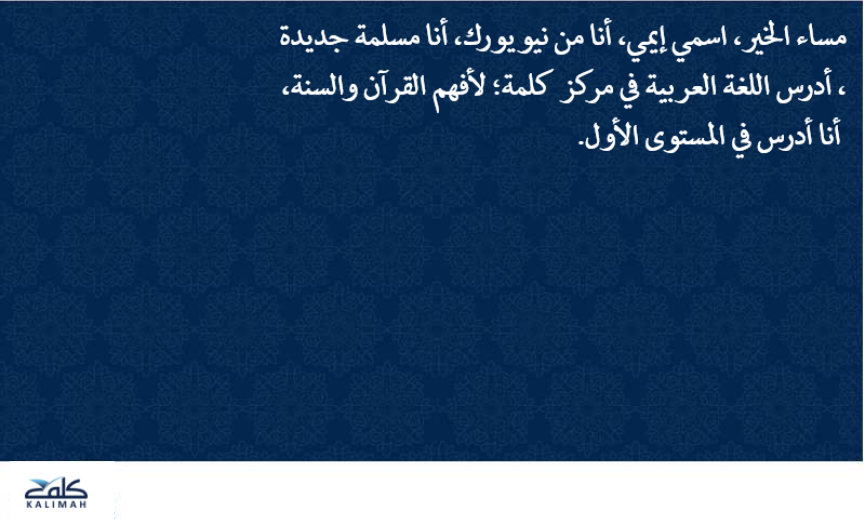
We also use role-playing and real-life scenarios to make it engaging.
For instance, we might have them act out a scene where they are meeting a new friend or asking for directions.
Read more about: Online Arabic Classes for Middle Schoolers
4. Teaching Beginner High Schoolers to Write Arabic
We teach writing alongside reading and speaking. High school students start by practicing writing individual letters.
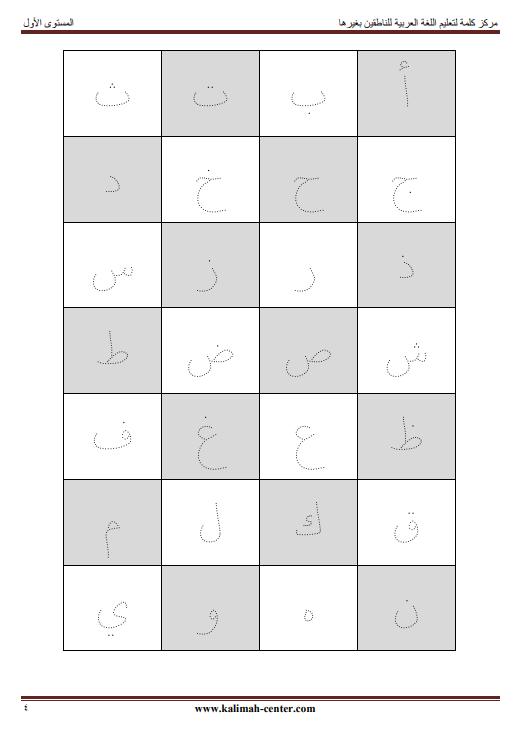
We emphasize correct letter formation and connections.

Then we move on to forming words and simple sentences.
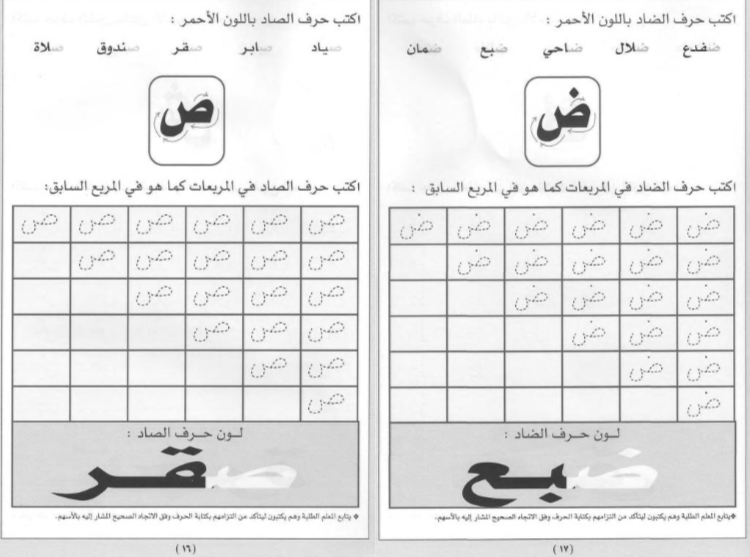
5. Introducing Arabic Grammar to Beginner High Schoolers
We introduce basic grammatical concepts to beginner high schoolers learning Arabic in a way that is easy to understand and relevant to their communication needs.
We start with simple concepts like masculine and feminine nouns and adjectives.
For instance we encourage high schoolers to create their own sentences using nouns and adjectives, and provide plenty of opportunities for practice.
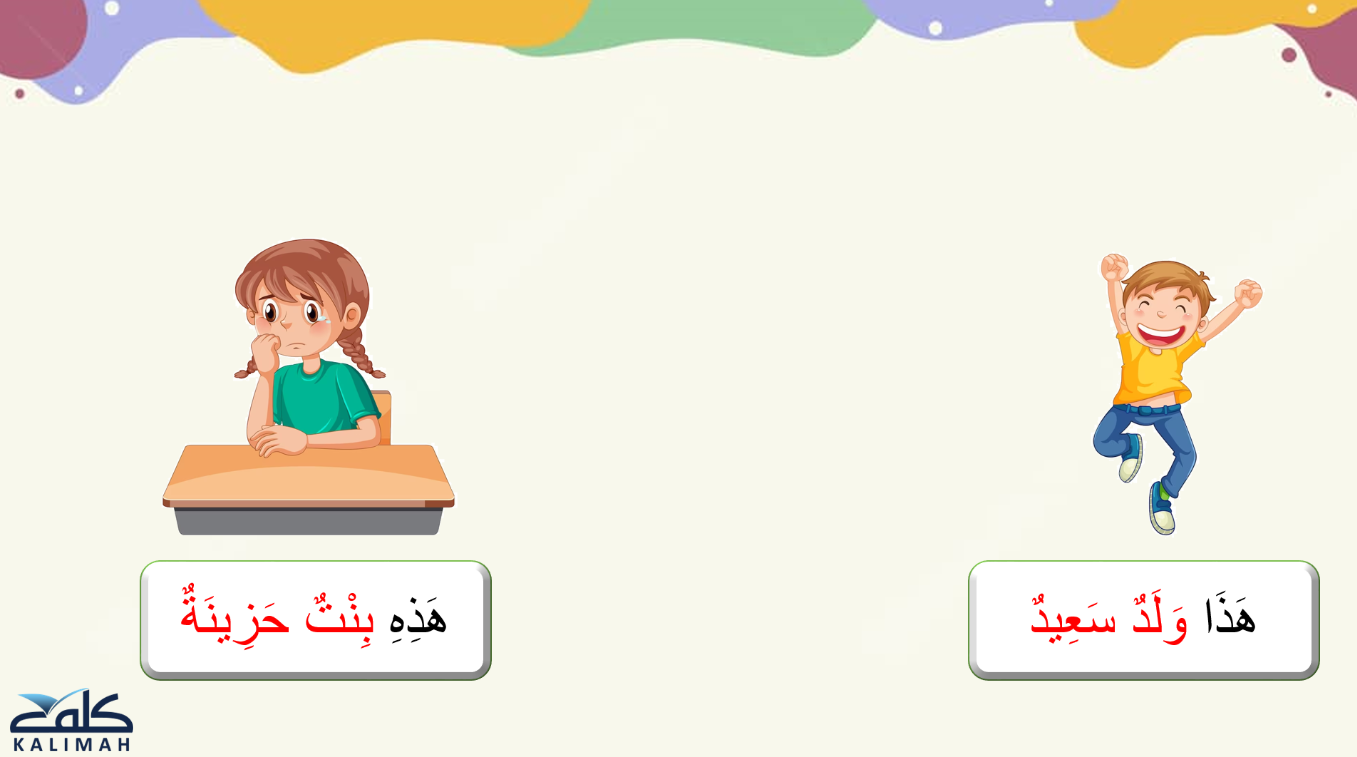
Intermediate Level: Building Fluency and Comprehension
For high schoolers at at the intermediate level, we build upon the foundation laid in the beginner level, expanding students’ vocabulary, grammar knowledge, and conversational skills.
1. High Schoolers Develope Arabic Reading Comprehension Skills
We introduce more complex Arabic texts, including short stories and news articles. We focus on developing reading comprehension skills, teaching students how to identify the main idea, understand supporting details, and infer meaning from context.
For instance, we may ask the high schooler to read a short paragraph like the one in the picture. Then, have them answer the following questions for each paragraph:
- Where does Ahmed work?
- How does Ahmed go to the hospital?
- How many days a week does Ahmed work?
This exercise focuses on practicing reading comprehension and identifying key details in a text. It also reinforces vocabulary related to jobs, transportation, and time.
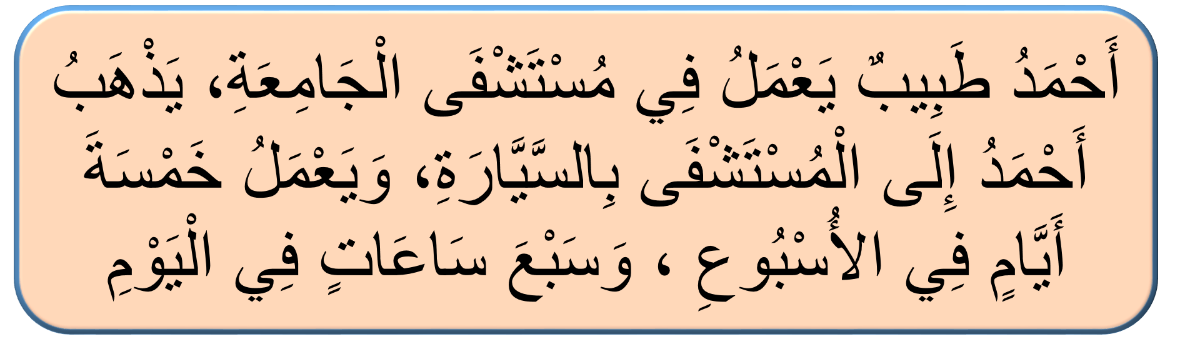
*From Kalimah’s Arabic Course curriculum.
2. High Schoolers Practice Arabic Speaking with More Fluency
We provide ample opportunities for students to practice speaking Arabic in a variety of contexts. We engage them in discussions on topics relevant to their interests, such as sports, and current events.
We also use debates to enhance their fluency and confidence.
For example, the following picture is a part of our curriculum, where the student is required to verbally express information about water sources, including rain, wells, rivers, and seas.
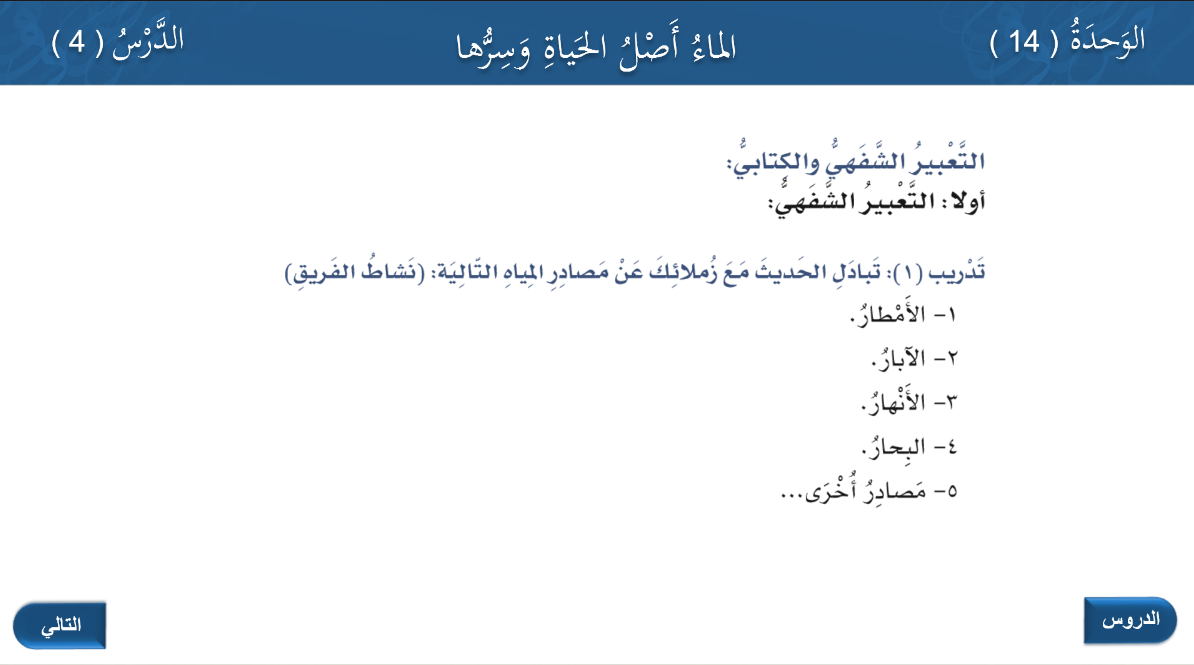
*From Kalimah’s Arabic Course curriculum.
3. High Schoolers Practice Writing More Complex Arabic Texts
We guide high schoolers through the process of writing more complex texts, such as essays, reports, and creative pieces.
We focus on developing their ability to express their ideas clearly and effectively, using appropriate vocabulary, grammar, and style.
For instance, the following picture is a part of our curriculum, where the student is required to express themselves in writing by composing a story titled “A Dutiful Child to Their Parents” of no less than 200 words, using the elements found in the list in the image.
Then, we provide feedback on their writing, helping them improve their sentence structure, grammar, and overall coherence.
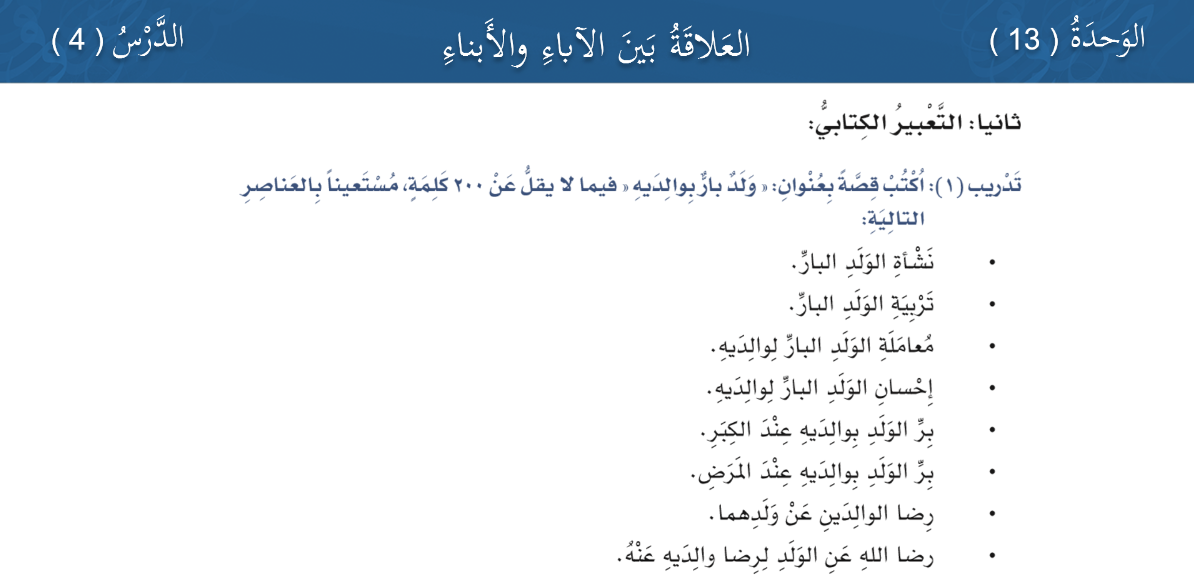
*From Kalimah’s Arabic Course curriculum.
4. High Schoolers Study Arabic Grammar in Depth
We delve deeper into Arabic grammar. We use interactive exercises, quizzes, and games to reinforce their understanding of these concepts.
We also introduce them to the concept of I’rab (إعراب), the system of grammatical case endings, which is crucial for understanding the nuances of Arabic sentence structure.
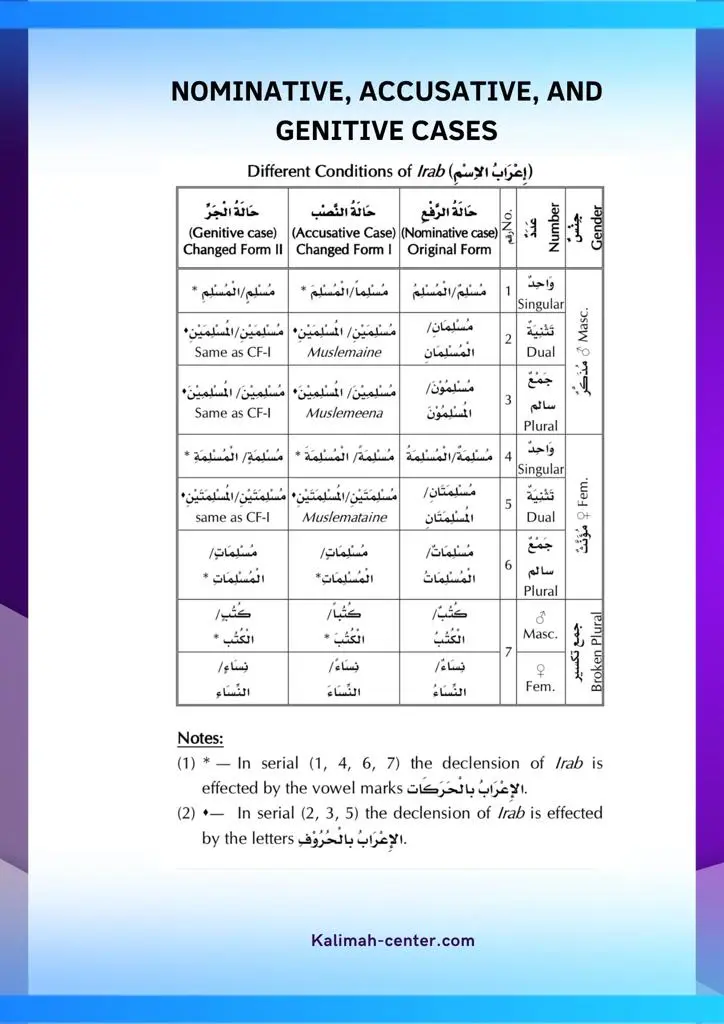
5. High Schoolers Explore Arabic Culture in More Depth
We continue to explore the rich culture and history of the Arab world, introducing students to different aspects of Arab society, traditions, and customs.
For instance, we might discuss the importance of family in Arab culture, and the significance of Islamic holidays.
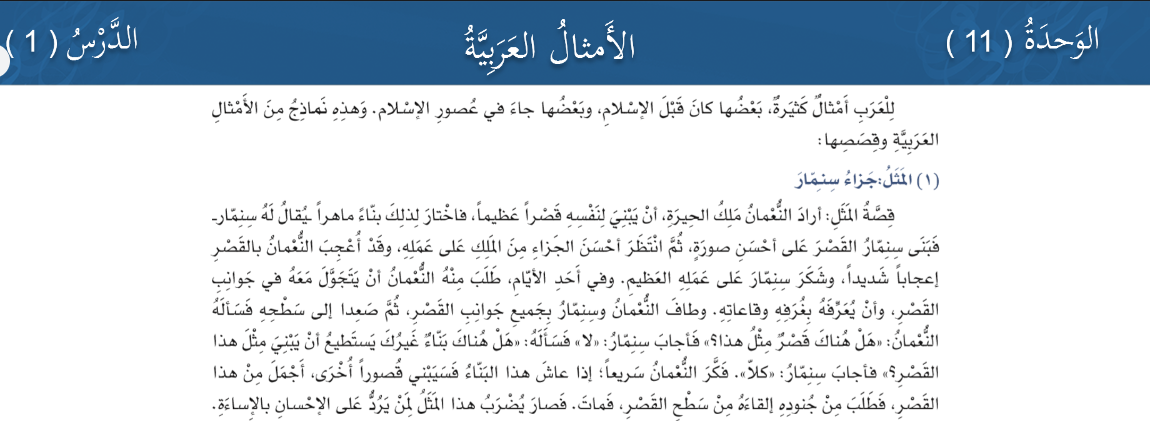
This is part of our curriculum, in which we explain Arabic proverbs to the student.
Advanced Level: Reaching Near-Native Proficiency
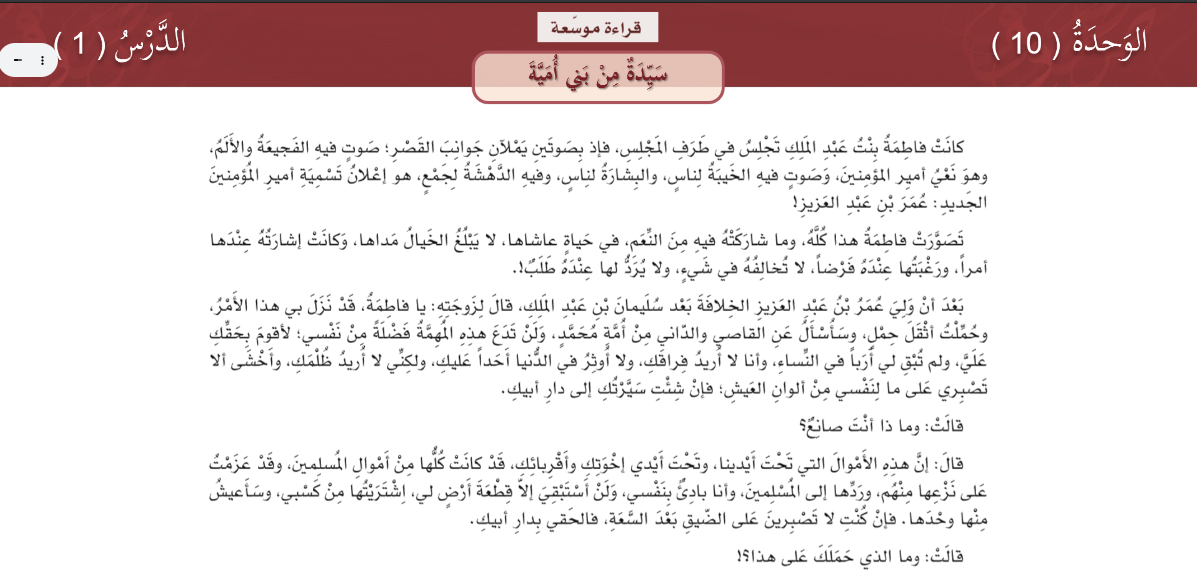
At the advanced level, high schoolers work with authentic Arabic materials — newspaper editorials, literary excerpts, academic papers, and historical texts. The focus shifts from learning the language to using the language as a tool for critical thinking, analysis, and expression.
1. Reading at Advanced Level:
Students analyze full-length articles and literary passages, identifying rhetorical devices, authorial intent, and cultural context. Texts cover topics like scientific discoveries, geopolitical analysis, and Islamic intellectual history.
2. Writing at Advanced Level:
Students produce structured essays (500+ words), formal letters, and analytical reports. Emphasis is on argumentation, coherent paragraph structure, and appropriate register (formal vs. informal Arabic).
3. Speaking at Advanced Level:
Students participate in moderated debates, deliver presentations on complex topics, and engage in spontaneous discussion without preparation. The goal is near-native fluency with natural rhythm and appropriate idiomatic expression.
4. Grammar at Advanced Level:
I’rab (إعراب) is studied in full depth, including complex sentence analysis, conditional structures, and the nuances of verb forms (أوزان الفعل). Students learn to self-correct grammatical errors in real-time speech.
A high schooler who completes the advanced level can typically read Arabic news independently, write formal correspondence, hold substantive conversations with native speakers, and score B2–C1 on standardized Arabic proficiency tests.
MSA vs. Dialect: Which Should High Schoolers Learn First?
This is one of the most common questions parents ask, and the answer is straightforward: start with Modern Standard Arabic (MSA).
MSA (الفصحى — al-fuṣḥā) is the formal, standardized version of Arabic used in:
- All written media (books, news, academic papers)
- Formal speeches and presentations
- The Quran and Islamic texts
- Standardized proficiency exams (ALPT, ACTFL)
- Communication across all 22 Arab countries
Dialects (العامية — al-ʿāmmiyya) are spoken, informal varieties that differ significantly by region. Egyptian Arabic sounds very different from Moroccan Arabic, for example. While dialects are essential for casual conversation with native speakers, they are not written, not tested, and not mutually intelligible across regions.
The recommended path for high schoolers:
- Build a solid MSA foundation (A1–B1) — typically 6–12 months
- Once MSA grammar and vocabulary are established, add dialect exposure if relevant to the student’s goals
- A student who knows MSA can adapt to any dialect relatively quickly; the reverse is much harder
At Kalimah Center, the curriculum is built on MSA, with cultural context woven throughout so students understand how Arabic functions in both formal and everyday settings.
What Makes an Online Arabic Program Effective for Teens
When evaluating any online Arabic class for your high schooler — whether at Kalimah Center or elsewhere — these are the factors that matter most:
1. Teen-Appropriate Pacing
A good program recognizes that a 15-year-old learns differently than an 8-year-old or a 30-year-old. At Kalimah Center, for example, the curriculum covers foundational concepts like the Arabic alphabet in days rather than weeks because high schoolers grasp phonetic patterns faster than younger children. Look for programs that adapt pace to cognitive maturity.
2. Native-Speaking Instructors with Teen Teaching Experience
Native fluency alone isn’t enough — the instructor needs experience working with non-Arab teenagers specifically. This means understanding common pronunciation difficulties for English speakers (like ع and ح), knowing how to maintain engagement during a 45-minute online session, and being able to explain grammar concepts without resorting to linguistics jargon.
3. All Four Skills, Every Level
Some programs focus heavily on reading and grammar while neglecting speaking. Others emphasize conversation but skip writing. Effective programs integrate all four skills at every level. At Kalimah Center, even beginner lessons include speaking practice alongside reading and writing.
4. Progress Visibility for Parents
Unlike in-person classes where you can observe, online learning requires deliberate transparency. Look for programs that provide regular progress reports, level assessments, and direct communication channels between instructors and parents.
5. Free Trial Before Commitment
Any reputable program offers a free trial lesson. Use it to evaluate the instructor’s teaching style, the platform’s reliability, and your teen’s comfort level before enrolling.
Read more about: Online Arabic Classes for Adults
Master Arabic with Kalimah Center
Join our expert-led online classes and start your journey toward Arabic fluency today.
Book Your Free TrialInside Kalimah Center: Moments from Our Courses
Get a glimpse into the vibrant learning experience at Kalimah Center. These snapshots capture real moments from our live classes—where students engage deeply, connect with passionate instructors, and grow in a welcoming, supportive environment.
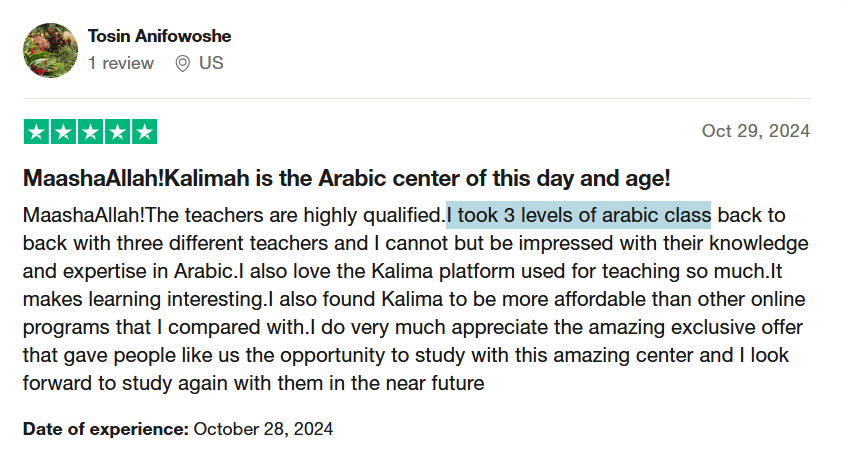
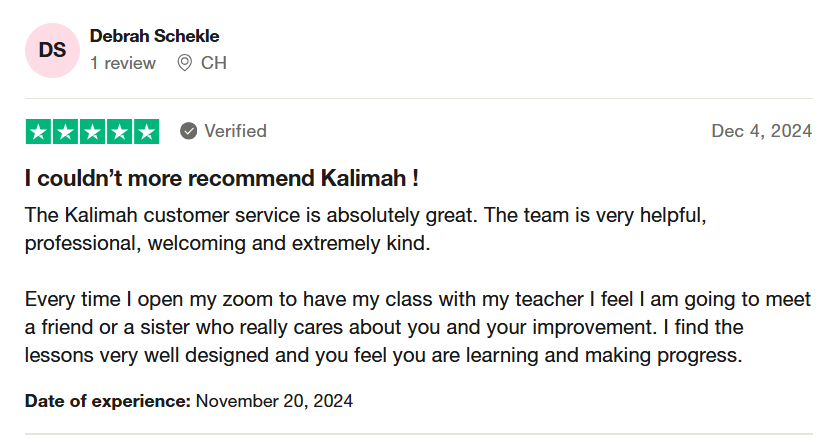
Hear From Kalimah Students Themselves
On our page at Trustpilot these testimonials reveal the real impact of the Kalimah experience.
Join Kalimah Center TODAY!
At Kalimah Center, we are committed to helping high school students achieve their full potential in Arabic.
We are passionate about the language and culture, and we are dedicated to providing the highest quality online Arabic education.

And if you are looking for a more affordable way to learn Arabic grammar? Our group classes let you:
- Talk with other students from around the world.
- Practice more in small groups.
- They’re 4 times cheaper than private lessons!
Pick a class time that fits your life.
Conclusion:
Kalimah Center’s online Arabic classes for high schoolers provide an engaging, structured approach to mastering the Arabic language. Tailored for teens aged 14 to 18, the courses focus on enhancing reading, writing, speaking, and listening skills through interactive lessons, role-playing, and real-life scenarios.
Beginners start with the Arabic alphabet, progressing to sentence formation, grammar, and basic conversations, while intermediate students expand their vocabulary and comprehension. The advanced level refines skills with in-depth grammar, fluent speaking, and a deep dive into Arabic culture and Islamic history.
The curriculum is designed with high schoolers in mind, incorporating gamified learning and personalized progress tracking. Kalimah Center’s native Arabic-speaking instructors specialize in teaching non-Arab high school students, ensuring proper pronunciation and tackling common challenges like difficult sounds.
With a focus on real-world application, students practice writing essays, engaging in debates, and mastering complex texts. Regular progress reports keep parents informed, and the flexible pace allows teens to learn at their own speed while ensuring steady advancement.
FAQs about Online Arabic Classes for High Schoolers
Q1: What age is best to start online Arabic classes for high schoolers?
Any age between 14 and 18 works well. High schoolers have the cognitive maturity to grasp Arabic grammar concepts like I’rab (grammatical case endings) and the discipline for consistent practice. Starting at 14–15 gives students enough time to reach intermediate proficiency (B1–B2) before college applications, which can be an advantage for international studies or scholarships.
Q2: How long does it take for a high schooler to become conversational in Arabic?
With consistent study of 3–4 hours per week, most high schoolers reach basic conversational ability (A2 level) in 4–6 months and functional intermediate conversation (B1) in 12–18 months. Students with prior exposure to Arabic at home or through Quran study often progress faster because they have existing phonetic familiarity.
Q3: Should my high schooler learn Modern Standard Arabic (MSA) or a dialect?
Start with Modern Standard Arabic (MSA). It is the foundation of all written Arabic, is understood across all Arab countries, and is what standardized exams test. Once your teen reaches B1 level in MSA, adding a dialect like Egyptian or Levantine Arabic becomes much easier. Most quality online programs teach MSA first.
Q4: Can online Arabic classes fit around a high schooler’s school schedule?
Yes. Most online Arabic programs offer flexible scheduling, including evenings and weekends. Private lessons allow full scheduling control, while group classes typically run in fixed time slots. Look for programs that offer session rescheduling and recorded materials for missed classes.
Q5: How do I know if an online Arabic class is good quality?
Look for five indicators: native Arabic-speaking instructors with teaching credentials, a structured curriculum mapped to CEFR levels, coverage of all four skills (not just reading), regular progress assessments with parent reporting, and a free trial lesson so you can evaluate before committing.