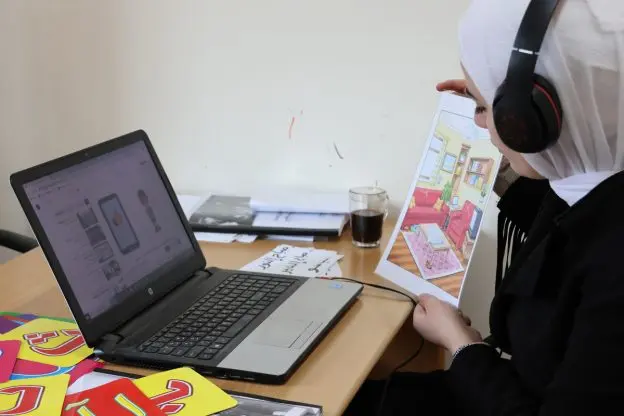
Arabic learning games fall into two categories: hands-on physical games (matching cards, charades, treasure hunts) and online digital games (apps, browser-based games, interactive platforms). For children aged 5–12, hands-on games build vocabulary through physical association, while online games reinforce reading and word recognition through repetition and reward systems.
For adults, effective Arabic games include Quizlet flashcard sets, Arabic Wordle variants, language exchange apps with gamified elements, and competitive vocabulary games like Kahoot. The most effective approach combines both types — hands-on games for active engagement and online games for daily repetitive practice.
Quick Reference Table:
| Game Type | Ages | Skill Developed | Time Needed | Cost |
|---|---|---|---|---|
| Matching cards | 4–12 | Vocabulary, word-image association | 10–20 min | Free (DIY) |
| Word race | 7–adult | Vocabulary recall, spelling | 5–10 min | Free (pen + paper) |
| Treasure hunt | 5–12 | Reading comprehension, practical use | 20–40 min | Free (DIY) |
| Guessing game | 8–adult | Speaking, question formation | 10–20 min | Free |
| Colors game | 3–8 | Basic vocabulary (colors) | 5–10 min | Free (household objects) |
| Alphabet puzzles | 4–8 | Letter recognition, fine motor | 15–30 min | $5–$20 (puzzle sets) |
| Charades | 6–adult | Verbs, nouns, speaking confidence | 15–30 min | Free |
| Duolingo | 10–adult | Vocabulary, grammar, reading | 5–15 min/day | Free |
| Quizlet | 10–adult | Vocabulary memorization | 10–20 min | Free |
| Arabic Wordle | Adult | Spelling, vocabulary | 5–10 min/day | Free (browser) |
| HelloTalk | 16–adult | Conversation, cultural exchange | 15–30 min | Free |
Why Arabic Learning Games Work: The Psychology Behind Play-Based Learning
Children (and adults) learn language most effectively when new information is attached to an emotion, action, or sensory experience. This is the neurological basis for game-based learning — when a child triumphantly matches “تفاحة” with a picture of an apple, the emotion of winning creates a stronger memory trace than reading the word from a list.
Ustadha Angham explains the mechanism: “Games help children associate Arabic with positive feelings, which can significantly boost their motivation and retention of new words and phrases. The key is to choose games that are not only fun but also targeted at the specific language skills we want to develop.”
Research supports this: Studies in second language acquisition consistently show that:
- Vocabulary learned through games is retained 40–60% longer than vocabulary from rote memorization lists
- Speaking confidence doubles in learners who practice through games vs. drilling
- Motivation stays consistent in game-based learning; it drops significantly in drill-based approaches after the first few weeks
The key principle: The game must be the vehicle for the language skill — not just a reward after the lesson. When the Arabic word is the tool you need to WIN the game, the brain treats it as important information worth retaining.
For non-native Arabic speakers specifically, games remove the anxiety barrier. A child who hesitates to say “أحمر” (red) in a formal exercise will shout it confidently when racing to find something red before their sibling does.
Hands-on Games to Learn Arabic for Kids
When I asked Ustadha Angham how to choose the right games for teaching Arabic, she shared some valuable advice. She emphasized the importance of selecting games that are not only fun but also culturally relevant and linguistically appropriate. Here are some of the types of games she recommended:
Game 1: Matching Game
One of the first games Ustadha Angham recommended was the classic matching game, known as لعبة المطابقة (lu‘bat al-mutabaqa). She explained how this game can be adapted to teach Arabic vocabulary:
How to Play:
- Materials Needed: Flashcards with Arabic words for kids on one set and pictures representing those words on another.
- Instructions: Lay all the cards face down on a table. The child flips over two cards at a time, trying to find a matching pair (a word and its corresponding picture).
- Learning Objective: This game helps children associate Arabic words with their meanings, reinforcing vocabulary retention.
Example:
- Word: “تفاحة” (tuffaha) – Translation: “Apple”
- The child needs to match the card with the word تفاحة with a picture of an apple.
Tip: With younger kids, we can start with simple words and pictures, then gradually introduce more complex vocabulary as they progress.
Game 2: Word Race
Next, Ustadha Angham introduced me to سباق الكلمات (sabaq al-kalimat), a fast-paced game that’s perfect for kids who have already learned some basic Arabic words.
How to Play:
- Materials Needed: A list of words the child has learned, paper, and a pencil.
- Instructions: Set a timer for one minute. The child must write down as many Arabic words as they can remember during that time. Afterward, go through the list together, discussing the meanings and proper pronunciation of each word.
- Learning Objective: This game encourages quick recall of vocabulary and helps reinforce spelling and word recognition.
Example:
If the child writes “بيت” (bayt) – Translation: “House,” you can discuss the word, its meaning, and maybe even create a sentence together: “أنا في البيت.” (ana fi al-bayt) – Translation: “I am in the house.”
This game can be made more competitive by playing it with siblings or friends, seeing who can write the most words correctly.
Game 3: Treasure Hunt
One of the more interactive games is البحث عن الكنز (al-bahth ‘an al-kanz), or a treasure hunt, which Ustadha Angham assured me is a favorite among younger children.
How to Play:
- Materials Needed: A set of clues written in simple Arabic, leading to a “treasure” (this could be anything fun, like a small toy or treat).
- Instructions: Hide the treasure somewhere in the house or classroom. The child follows the clues to find it, with each clue requiring them to read and understand Arabic.
- Learning Objective: This game improves reading comprehension and builds excitement around using the language in a practical, hands-on way.
Example Clue:
“ابحث تحت الطاولة.” (ibhas taht al-tawila) – Translation: “Look under the table.”
Not only does this game make learning Arabic exciting, but it also helps children see the practical use of the language in everyday life.
Game 4: Guessing Game
Another great game that Professor Angham shared is لعبة التخمين (lu‘bat al-takhmin), or the guessing game, which helps children practice speaking and listening in Arabic.
How to Play:
- Materials Needed: A list of Arabic words or phrases.
- Instructions: One player thinks of a word or phrase in Arabic, and the other player has to guess what it is by asking yes/no questions in Arabic.
- Learning Objective: This game encourages children to think in Arabic and practice forming questions and sentences.
Example:
If the word is “كلب” (kalb) – Translation: “Dog,” the child might ask, “هل هو حيوان؟” (hal huwa hayawan?) – Translation: “Is it an animal?”
This game is particularly useful for older kids who are ready to start forming more complex sentences and questions
Game 5: The Colors Game
Finally, we discussed a game designed to help children learn and practice colors in Arabic: لعبة الألوان (lu‘bat al-alwan).
How to Play:
- Materials Needed: A variety of colored objects.
- Instructions: Call out the name of a color in Arabic, and the child has to find an object of that color as quickly as possible.
- Learning Objective: This game reinforces the names of colors in Arabic and helps with quick recall.
Example:
If you say “أحمر” (ahmar) – Translation: “Red,” the child should find something red, like a toy or a piece of clothing.
“This simple game is great for younger kids who are just starting to learn basic vocabulary,” Professor Angham said with a smile.
Game 6: Arabic Alphabet Puzzles
This is a foundational activity that focuses on letter recognition and fine motor skills.
How to Play:
You can use commercially bought Arabic alphabet puzzles (often interlocking pieces where each piece is a letter), or a simple printable version where the child cuts out and reassembles a single sheet with the alphabet. For a more interactive version, have a simple shape puzzle where the image is a familiar object (like a sun or apple) and the letter that begins the word (e.g., Shams for sun) is written on the piece. The child physically manipulates the letter shape, which aids in memorization.
Example:
The child is given a foam or wooden puzzle. They pick up the piece shaped like the letter ب (bā’) and are asked to say the name of the letter and a word that starts with it, like بَاب (bāb – door). They then find the correct slot to place the piece, physically connecting the shape and sound.
Game 7: Arabic Charades (Acting Out Words)
A highly engaging, physical game that builds verb and noun vocabulary and speaking confidence.
How to Play:
Prepare a list of Arabic nouns (e.g., قِطَّة – qiṭṭah / cat) and verbs (e.g., يَأْكُل – ya’kul / he eats) on small pieces of paper. Players take turns drawing a card and must act out the word or phrase without speaking. The other players guess the word in Arabic.
Example:
A child draws the card يَرْكُض (yarkuḍ – he runs). They start running in place and exaggerating the motion. The other players shout out their guesses in Arabic until someone correctly shouts يَرْكُض or يَجْرِي (yajrī – he runs). This makes the child connect the Arabic sound directly to the physical action.
Arabic Games for Adults: Games That Actually Work for Grown-Up Learners
Adult learners have different needs than children: they respond to competition, intellectual challenge, and immediate practical application rather than visual reward systems and physical activity. These games are specifically suited to adult Arabic learners:
Online Arabic Games for Adults
1. Arabic Wordle (موضوع)
Wordle-style games have Arabic variants that challenge players to guess a 5-letter Arabic word in 6 attempts. Each guess reveals which letters are correct and in the right position. This builds spelling awareness, letter recognition, and vocabulary without feeling like study.
- Arabic Wordle: Search “Arabic Wordle” or “موضوع Wordle” — several browser-based versions exist
- Skill built: Arabic spelling, letter recognition, vocabulary
- Level: Intermediate (A2+) — requires alphabet familiarity
- Time: 5–10 minutes daily
2. Quizlet Arabic — Competitive Modes
Quizlet’s “Match” mode (drag correct pairs as fast as possible) and “Test” mode create competitive, timed vocabulary challenges. Thousands of user-created Arabic vocabulary sets cover everything from basic greetings to advanced grammar.
- Best sets: Search “MSA vocabulary,” “Arabic beginner,” “Madinah Arabic Book 1,” “Quran vocabulary”
- Skill built: Vocabulary retention, rapid recall
- Level: All levels (choose your set)
- Time: 10–20 minutes/session
3. Kahoot Arabic Quizzes
Play existing Arabic language Kahoot quizzes or have your tutor create custom ones. The competitive real-time format creates urgency that forces rapid Arabic word recall.
- Find Arabic quizzes: kahoot.com → search “Arabic language,” “Arabic vocabulary,” “learn Arabic”
- Skill built: Vocabulary, grammar rules, rapid recall under pressure
- Level: All levels
- Time: 15–30 minutes/session
4. Language Exchange Apps with Gamified Elements (HelloTalk, Tandem)
These apps connect you with native Arabic speakers for text and voice exchange. Both apps have built-in correction tools (tap to correct any message), streaks, and achievement systems that gamify daily Arabic conversation practice.
- Best for: Speaking and writing in natural Arabic contexts
- Level: A2+ (need basic conversation ability)
- Unique feature: Your “game” is a real conversation — the most authentic practice available
5. Arabic Crossword Puzzles (كلمات متقاطعة)
Arabic newspapers like Al-Ahram and Al-Hayat publish crossword puzzles that challenge vocabulary, spelling, and knowledge of classical Arabic terms. Several Arabic crossword apps are available on iOS and Android.
- Search: “كلمات متقاطعة عربية” on the App Store or Google Play
- Skill built: Advanced vocabulary, spelling, classical Arabic terms
- Level: Intermediate to advanced (B1+)
Hands-On Arabic Games Adults Can Play
6. Arabic Taboo (لعبة التابو)
Like the English party game — describe an Arabic word without using the forbidden words on the card. Create your own cards: write an Arabic word at the top and 4 related words that are “forbidden.” Partners must describe the word using only Arabic.
- Example: Word = مطبخ (kitchen). Forbidden: بيت (house), طبخ (cook), أكل (food), غرفة (room). You must describe kitchen using other Arabic words.
- Skill built: Vocabulary, circumlocution (describing when you don’t know the word — a critical real-world skill), speaking fluency
7. Competitive Word Building (بناء الكلمات)
Adults write an Arabic root (e.g., ك-ت-ب) and compete to list as many derived words as possible in 2 minutes (كتاب، كاتب، مكتبة، مكتوب، كتابة، مكتب…). This leverages Arabic’s root system — the single most powerful vocabulary-building mechanism in the language.
- Skill built: Root system understanding, vocabulary expansion, spelling
- Level: Elementary to intermediate (A2–B2)
8. Arabic 20 Questions (Game for Language Exchange Partners)
One player thinks of an Arabic word (person, place, thing, concept). The other asks up to 20 yes/no questions in Arabic to guess it. Forces creative question formation and rapid recall of question vocabulary (هل، ما، أين، متى، كيف).
- Skill built: Question formation, listening comprehension, vocabulary
- Level: A2+ (need basic question vocabulary)
Free Online Arabic Games and Platforms
These are freely accessible online Arabic games that children and adults can use immediately, without enrollment in any program:
| Platform | Game Type | Ages | Arabic Focus | Cost | Link |
|---|---|---|---|---|---|
| Duolingo Arabic | Gamified lessons (matching, listening, translation) | 10+ | Vocabulary, alphabet, basic phrases | Free / $7/mo (Plus) | duolingo.com |
| Quizlet Arabic | Flashcard sets, matching games, spelling tests | 8+ | Vocabulary (thousands of user-created Arabic sets) | Free / $7/mo (Teacher) | quizlet.com |
| Kahoot Arabic | Competitive quiz games (teacher-created) | 6+ | Vocabulary, grammar — requires teacher to create quiz | Free | kahoot.com |
| BBC Arabic interactive | Interactive vocabulary and listening games | 8–14 | MSA vocabulary, listening comprehension | Free | bbclearningenglish.com/arabic |
| Memrise Arabic | Spaced repetition flashcard games | 12+ | Vocabulary with video clips of native speakers | Free / $9/mo | memrise.com |
| Arabic Alphabet Song/Games (YouTube) | Visual + audio letter recognition | 3–7 | Arabic alphabet, letter sounds | Free | YouTube search “Arabic alphabet for kids” |
| Starfall Arabic | Interactive phonics-style activities | 4–8 | Alphabet, basic sounds | Free | Limited Arabic content — search for equivalents |
| Lingokids Arabic | Game-based language learning for young children | 2–8 | Basic vocabulary, songs, letter games | Free trial / $9.99/mo | lingokids.com |
Experience Kalimah Center Classes
Watch real excerpts from our live sessions at Kalimah Center and see how we bring learning to life. These clips highlight our interactive, student-centered teaching approach across all our courses—designed to keep learners engaged, motivated, and actively involved every step of the way.
Master Arabic with Kalimah Center
Join our expert-led online classes and start your journey toward Arabic fluency today.
Book Your Free TrialOnline Arabic Games for Kids
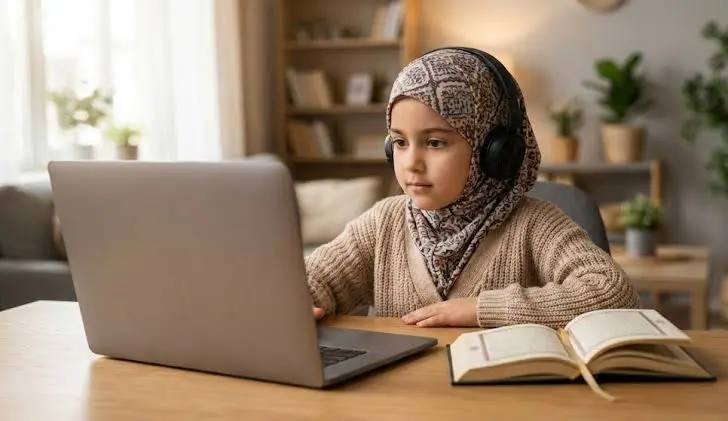
In addition to the hands-on games we discussed, Ustadha Angham Abdul Halim and the Arabic children’s department at Kalimah Center have developed a range of online educational games. These games are designed to enrich the learning experience for children enrolled in our Arabic course for kids, making the process of mastering Arabic both fun and interactive.
For students enrolled in Kalimah Center’s Arabic course for kids, the following interactive games are built directly into the curriculum:
1. Match Up Game
The first game in the collection is لعبة المطابقة (lu‘bat al-mutabaqa), or the Match Up Game. In this game, children are presented with a list of keywords and their corresponding definitions. The objective is to drag and drop each keyword next to its correct definition.
2. Crossword Game
Next, we have لعبة الكلمات المتقاطعة (lu‘bat al-kalimat al-mutaqatia), or the Crossword Game. This game challenges children to solve a crossword puzzle. They tap on a word and type in the answer, practicing both their spelling and vocabulary.
3. Word Search Game
The third game, البحث عن الكلمات (al-bahth ‘an al-kalimat), or the Word Search Game, focuses on adjectives. Words are hidden in a letter grid, and children must find them as quickly as possible.
How It Works:
- Fast-Paced Learning: This game sharpens quick thinking and attention to detail.
- Vocabulary Expansion: It helps kids familiarize themselves with Arabic adjectives and recognize them in different contexts.
4. Matching Pairs Game
Another engaging game is لعبة الأزواج المطابقة (lu‘bat al-azwaj al-mutabaqa), or the Matching Pairs Game. In this activity, children flip tiles to reveal hidden adjectives, aiming to find pairs that match.
How It Works:
- Memory-Based Learning: This game enhances memory by encouraging children to remember the location of words.
- Concept Reinforcement: It’s particularly useful for reinforcing the understanding of adjectives in Arabic.
5. Open the Box Game
Finally, there’s لعبة فتح الصندوق (lu‘bat fath al-sunduq), or the Open the Box Game, which is themed around places. Children tap each box to open it and reveal the item inside, learning the names of different places in Arabic.
How to Motivate Your Kid to Play Arabic Learning Games?
Motivating kids to play and learn Arabic games is all about making the process feel like play, not school.
- Be a Partner: Play with them! Your engagement makes the activity fun, not a chore.
- Keep it Short & Fun: Use short, frequent sessions (5-10 minutes) to prevent burnout. End on a high note before they lose interest.
- Reward Effort, Not Just Perfection: Use simple incentives like stickers, praise, or extra playtime for trying, not just getting the answer right.
- Link to Daily Life: Encourage them to use new words from the game (e.g., counting, colors) during real-life activities like cooking or tidying up.
- Let Them Choose: Allow the child to choose the game or activity to give them a sense of control and ownership over their learning.
Arabic Games by Vocabulary Category
Organize your game sessions around a vocabulary category for maximum learning efficiency. Here are the most common Arabic vocabulary categories and which games work best for each:
| Vocabulary Category | Arabic | Best Games | Sample Words |
|---|---|---|---|
| Colors | الألوان | Colors Game, Matching Game, Charades | أحمر (red), أزرق (blue), أخضر (green) |
| Numbers 1–20 | الأرقام | Word Race, Guessing Game (how many?) | واحد، اثنان، ثلاثة |
| Family members | أفراد العائلة | Matching Game, 20 Questions | أبي، أمي، أخي، أختي |
| Food and drink | الطعام والشراب | Treasure Hunt, Matching Game, Charades | خبز، ماء، تفاحة، قهوة |
| Body parts | أجزاء الجسم | Charades (touch the body part), Simon Says | رأس، يد، عين، أنف |
| Animals | الحيوانات | Guessing Game, Charades, Matching | قطة، كلب، أسد، طائر |
| Daily verbs | أفعال يومية | Charades (act out the verb), Word Race | يأكل، يشرب، ينام، يجري |
| Home and furniture | المنزل والأثاث | Treasure Hunt (hide items in house), Matching | باب، نافذة، مطبخ، سرير |
| Weather and nature | الطقس والطبيعة | Matching Game, Word Race | شمس، مطر، ريح، سحاب |
| School and work | المدرسة والعمل | Crossword, Word Search, Matching | مدرسة، كتاب، قلم، مكتب |
Which Games Work for Which Age? A Parent’s Guide
| Age Group | Attention Span | Best Game Types | Specific Games from This Article | Online Options |
|---|---|---|---|---|
| 3–5 years | 5–10 minutes | Color-based, physical movement, repetition | Colors Game, Alphabet Puzzles | Arabic alphabet YouTube videos, Lingokids |
| 5–7 years | 10–15 minutes | Matching, physical activity, simple competition | Matching Game, Treasure Hunt (simple clues), Colors Game | Lingokids, Arabic alphabet apps |
| 7–10 years | 15–25 minutes | Rule-based games, mild competition, creative play | Word Race, Guessing Game, Charades, Treasure Hunt | Duolingo, Quizlet (basic sets), Kahoot |
| 10–13 years | 20–30 minutes | Competitive games, social games, challenge-based | Word Race, Guessing Game, Charades | Duolingo, Quizlet competitive modes, Kahoot |
| 13–17 years | 30+ minutes | Digital games, competitive, self-directed | All games + adult games below | Arabic Wordle, Quizlet, Kahoot, HelloTalk |
| Adults | 20–45 minutes | Intellectual challenge, competition, real application | Arabic Taboo, Word Building, 20 Questions | Arabic Wordle, Quizlet, Kahoot, HelloTalk, Tandem |
The golden rule: The game should feel effortless and fun, not like disguised homework. If a child or adult starts watching the clock, the session is too long or the game is too difficult. Step down one level or switch games.
Inside Kalimah Center: Moments from Our Courses
Get a glimpse into the vibrant learning experience at Kalimah Center. These snapshots capture real moments from our live classes—where students engage deeply, connect with passionate instructors, and grow in a welcoming, supportive environment.
Here Are The Reviews On Our Courses:
Our students frequently commend the excellence of our courses and the commitment shown by our instructors. You can read their complete reviews on Trustpilot.

Looking for Exciting Ways to Make Arabic Learning FUN for Your Kids?
You have found games for your kids, but Kalimah Center makes learning Arabic even MORE exciting! We combine the power of play with expert teaching to make Arabic an adventure your kids will love.
Kalimah Center’s Online Arabic Course for Kids – Where Learning and Fun Go Hand-in-Hand!
- We understand kids: Our native Arab teachers are trained to make learning Arabic fun and exciting for young minds.
- We use games: Our online classes are packed with interactive activities and games designed by our own Arabic teaching experts.
- We start from the basics: We build a strong foundation by teaching the Arabic alphabet, pronunciation, reading, and writing – all the essentials for unlocking a world of language and culture.
- We keep it challenging and rewarding: Our level-based system helps your child progress at the right pace, from simple words and phrases to confident conversations.
Let Kalimah Center turn Arabic learning into an unforgettable experience!
Sign up for a FREE trial today and discover how our online games, engaging teachers, and specially designed curriculum can make learning Arabic as enjoyable as playtime for your child.
Master Arabic with Kalimah Center
Join our expert-led online classes and start your journey toward Arabic fluency today.
Book Your Free TrialConclusion:
The advice from Ustadha Angham confirms a crucial truth: the most effective way to teach a child is to make the learning indistinguishable from play. By intentionally integrating interactive methods like the Matching Game, Word Race, and Treasure Hunt, educators and parents can successfully use games to teach kids Arabic. These activities move beyond rote memorization, building core skills—from quick vocabulary recall and reading comprehension to confident speaking—all while maintaining the child’s natural enthusiasm for the process. This approach ensures that children develop a strong, positive association with the Arabic language, which is essential for long-term retention and motivation.
The variety of hands-on and online resources, including the specialized games developed by the Kalimah Center, demonstrates the power of a gamified curriculum. Ultimately, integrating games to teach kids Arabic is not just about making lessons easier; it’s about providing a stimulating environment where language acquisition is organic and rewarding. This playful framework lays the foundation for confident communication, turning the complex challenge of mastering Arabic into an exciting adventure that children will genuinely look forward to every single day.
FAQs Games to Learn Arabic for Kids And Adults
Q1: What are the best Arabic learning games for kids?
The most effective Arabic games for children combine physical interaction with vocabulary reinforcement. For ages 4–7: Arabic alphabet puzzles and the colors game build foundational letter recognition and basic vocabulary through play. For ages 7–12: the matching game, word race, and treasure hunt build reading comprehension and vocabulary recall. Online, games like Quizlet Arabic flashcard sets and the BBC Arabic interactive activities provide digital reinforcement. The key principle: games that involve movement, color, or competition produce stronger memory retention than passive screen-based activities.
Q2: Are there Arabic games for adults?
Yes. Adults benefit from different game types than children. Effective Arabic games for adults include: Arabic Wordle (browser-based spelling game using Arabic words), Quizlet Arabic vocabulary sets (spaced repetition with competitive modes), Kahoot Arabic quizzes (competitive team-based vocabulary testing), language exchange apps like HelloTalk and Tandem (gamified conversation practice), and Arabic crossword puzzles (available in Arabic newspapers and apps). Competitive games with immediate feedback work best for adults — they replicate the accountability structure of a classroom without the formality.
Q3: How long should kids play Arabic learning games each day?
Research on language learning and children’s attention spans suggests 10–20 minutes of focused game-based Arabic practice is optimal for ages 5–8, and 20–30 minutes for ages 9–12. Short, frequent sessions (daily 15 minutes) outperform long occasional sessions (1 hour on weekends) for vocabulary retention. End each session before the child shows signs of fatigue — stopping while they’re still engaged makes them eager to return. Aim for 5–6 sessions per week for meaningful language progress.
Q4: Can games alone teach a child Arabic?
Games are excellent for vocabulary retention and building positive associations with Arabic, but they cannot replace structured instruction for grammar, pronunciation, and reading comprehension. Think of games as the reinforcement layer of learning — they help children retain and recall what they’ve been taught in lessons. A child who learns Arabic vocabulary words in a lesson and then plays a matching game with those words the same evening retains approximately 80% more than a child who only reads the words once. Best practice: use games as supplements to structured instruction, not as the primary teaching method.
Q5: What Arabic games can I play with my child at home with no materials?
Several effective Arabic games require zero preparation or materials. Arabic Charades (act out Arabic verbs — يأكل/eat, يجري/run, ينام/sleep) needs no materials and builds verb vocabulary. The Colors Game requires only household objects. “I Spy” in Arabic (أنا أرى شيئاً — I spy something…) works anywhere. Arabic 20 Questions (ask yes/no questions in Arabic to guess an object) builds question formation. The Word Race can be played verbally — who can name the most items in the kitchen in Arabic in 60 seconds?