Picture this: you walk into a shop in Cairo or a café in Amman at 9 a.m. Before anyone asks what you want, someone says “sabah al-khayr.” That’s good morning in Arabic, and saying it back the right way can turn a stranger into a friendly face in two seconds.
Most guides give you the phrase and leave it there. Then you’re stuck the moment someone answers, or when you need to greet a woman instead of a man, or when an Egyptian says it with a sound you’ve never heard before.
So let’s go further. Below you’ll find the Arabic script, easy English spelling, the reply people expect, and simple tips for the sounds English doesn’t have.
What You Will Learn In This Article
- How to say good morning in Arabic and what it really means.
- The reply every Arabic speaker expects.
- How to say each hard sound the right way.
- How to greet a man, a woman, or a group.
- How to write it in a text and how it sounds in each dialect.
Saying Good Morning In Arabic
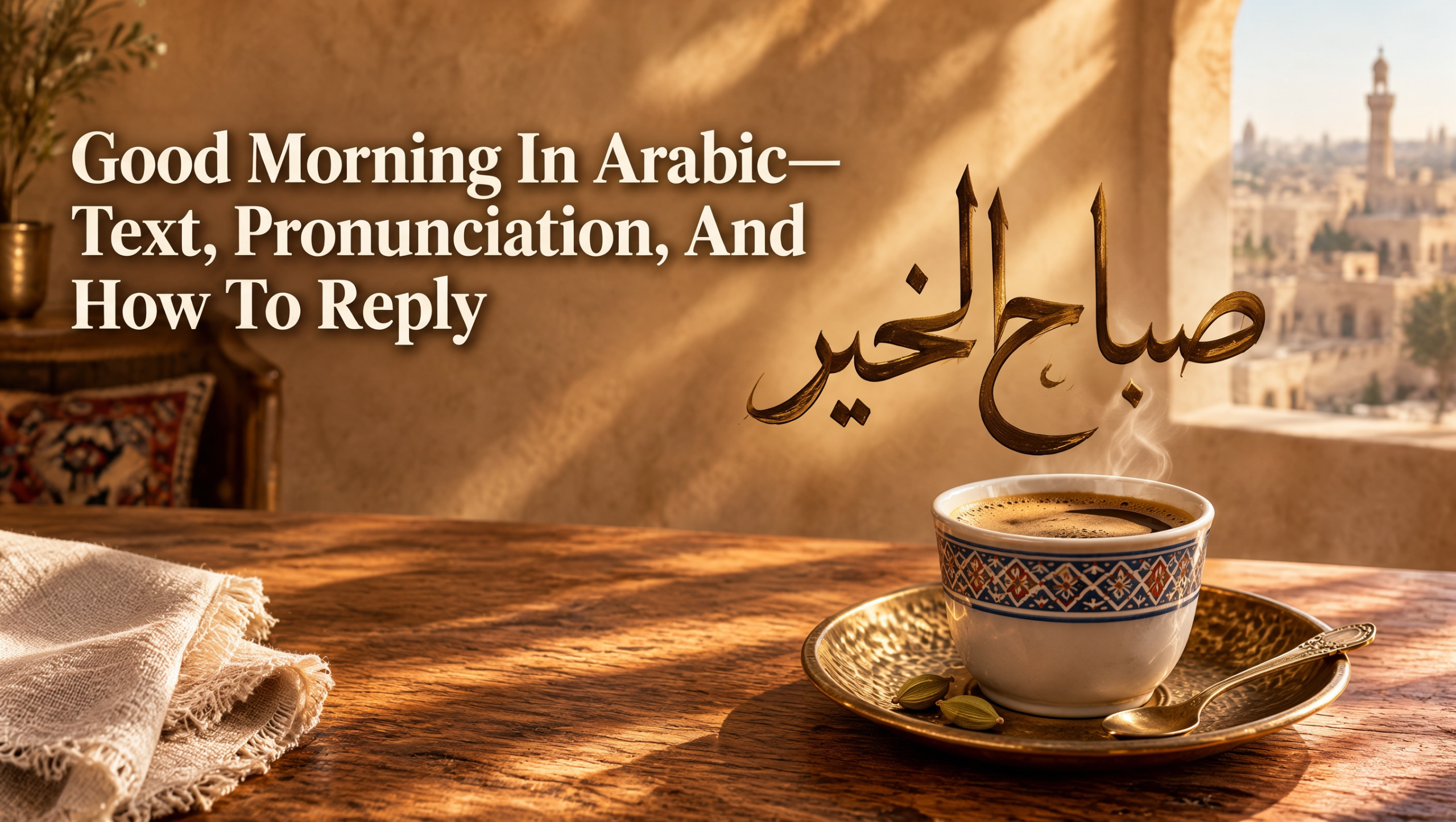
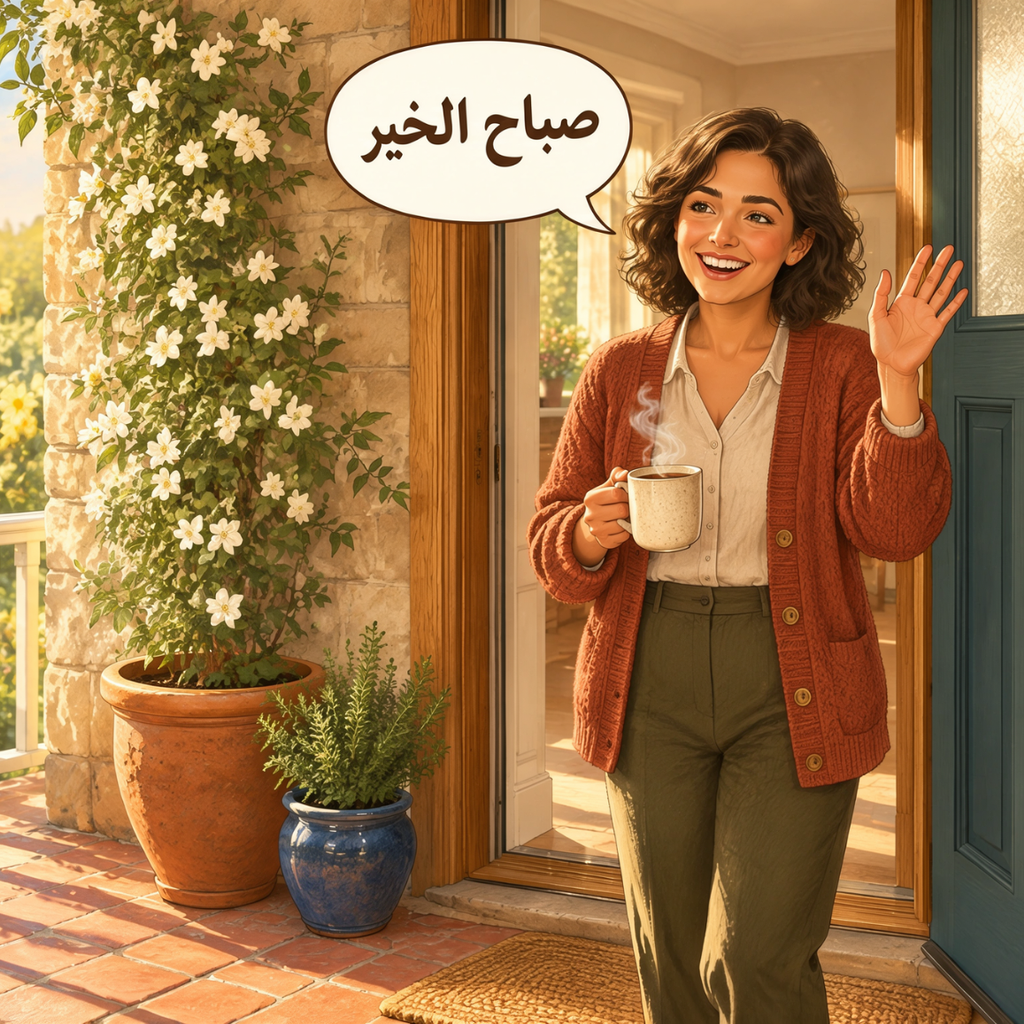
Good morning in Arabic is صباح الخير (sabah al-khayr). People use it in every Arab country, at home, at school, and at work.
What Does Sabah Al-Khayr Mean Word By Word?
Sabah al-khayr means “morning of goodness.” It has two words. The first word, صباح (sabah), means “morning.” The second word, الخير (al-khayr), means “the goodness.”
So when you say it, you are not just saying what time it is. You are wishing the other person a good day. The Arabic dictionary Almaany explains it as a greeting at the start of the day that hopes the day will be easy and pleasant.
The word sabah comes from three root letters: ص ب ح (s-b-h). Many Arabic words about morning grow from this root. You can even find it in the Quran, where the dawn is described as it begins to breathe in Surah At-Takwir (81:18).
Mornings also hold a special place in Muslim life. The Prophet Muhammad ﷺ asked God to bless his people in their early mornings. This is reported in Sunan Abi Dawud (Hadith 2606) and in Jami’ at-Tirmidhi (Hadith 1212). It is one reason a kind morning greeting matters so much in Arab homes.
How Do You Reply To Good Morning In Arabic?
The standard reply is صباح النور (sabah an-noor). It means “morning of light.” Think of the two phrases as a pair. One person gives goodness, and the other answers with light.
You can say sabah al-khayr back, and people will understand you. But it sounds a little flat. Sabah an-noor is what native speakers expect, and it shows you know how the greeting works. You can see more greeting and reply pairs in this Arabic greetings chart.
Friends often turn the reply into a small game. Each person tries to answer with a sweeter phrase than the last one. Here are some favorites:
- صباح الورد (sabah al-ward): morning of roses
- صباح الفل (sabah al-full): morning of jasmine, very common in Egypt
- صباح العسل (sabah al-‘asal): morning of honey
This game is playful and warm. Use it with friends and family, not in a job interview.
When Can You Say Good Morning In Arabic?
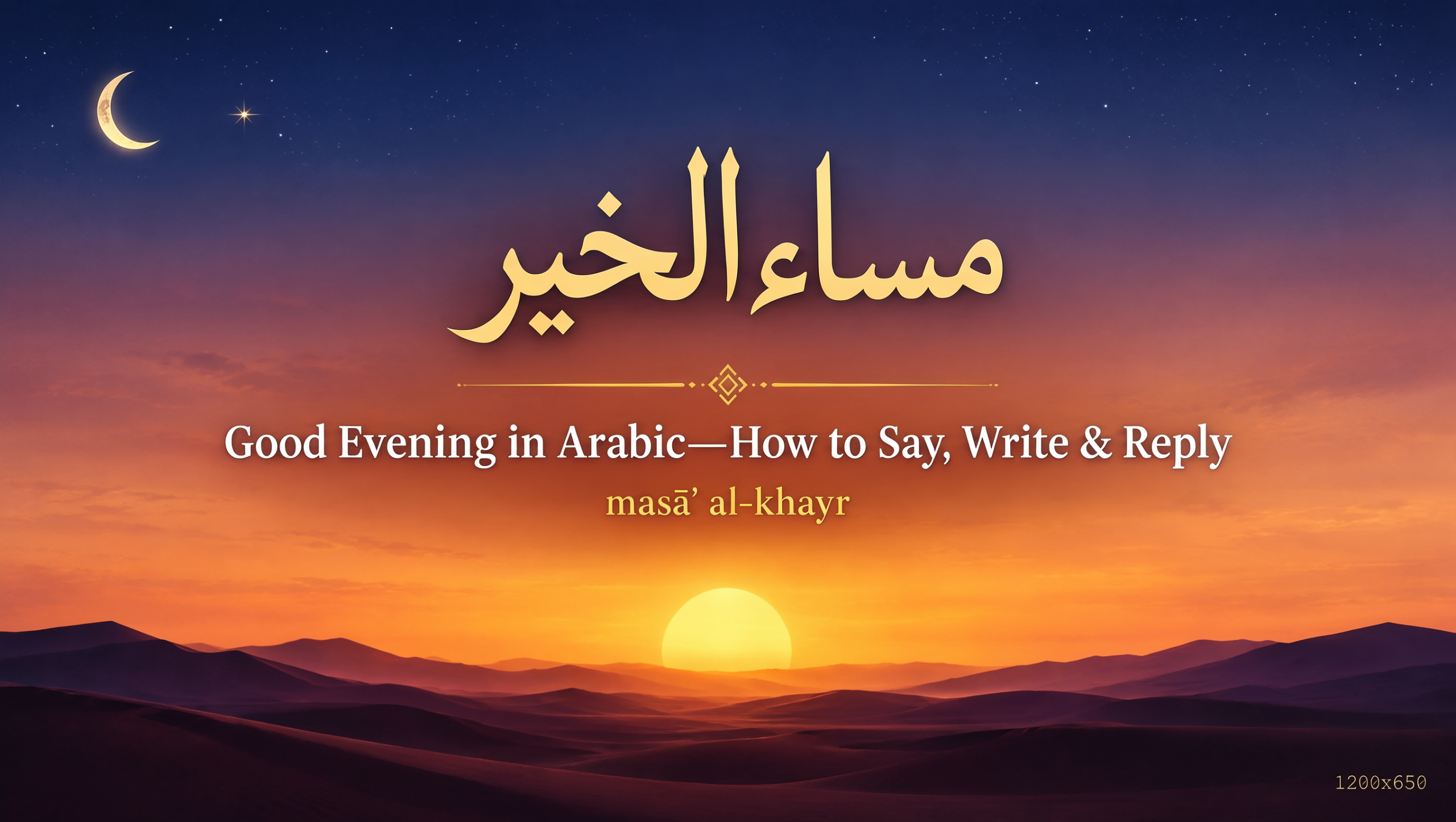
You can say sabah al-khayr from the time you wake up until about noon. After that, people switch to مساء الخير (masa’ al-khayr). It means “good afternoon” or “good evening.” The reply is masa’ an-noor.
The cut-off time is not strict. A nurse who works at night may say sabah al-khayr at 2 a.m., because that is when her day starts. A student who wakes up late may still hear it at 1 p.m. What matters is the start of the person’s day, not the clock.
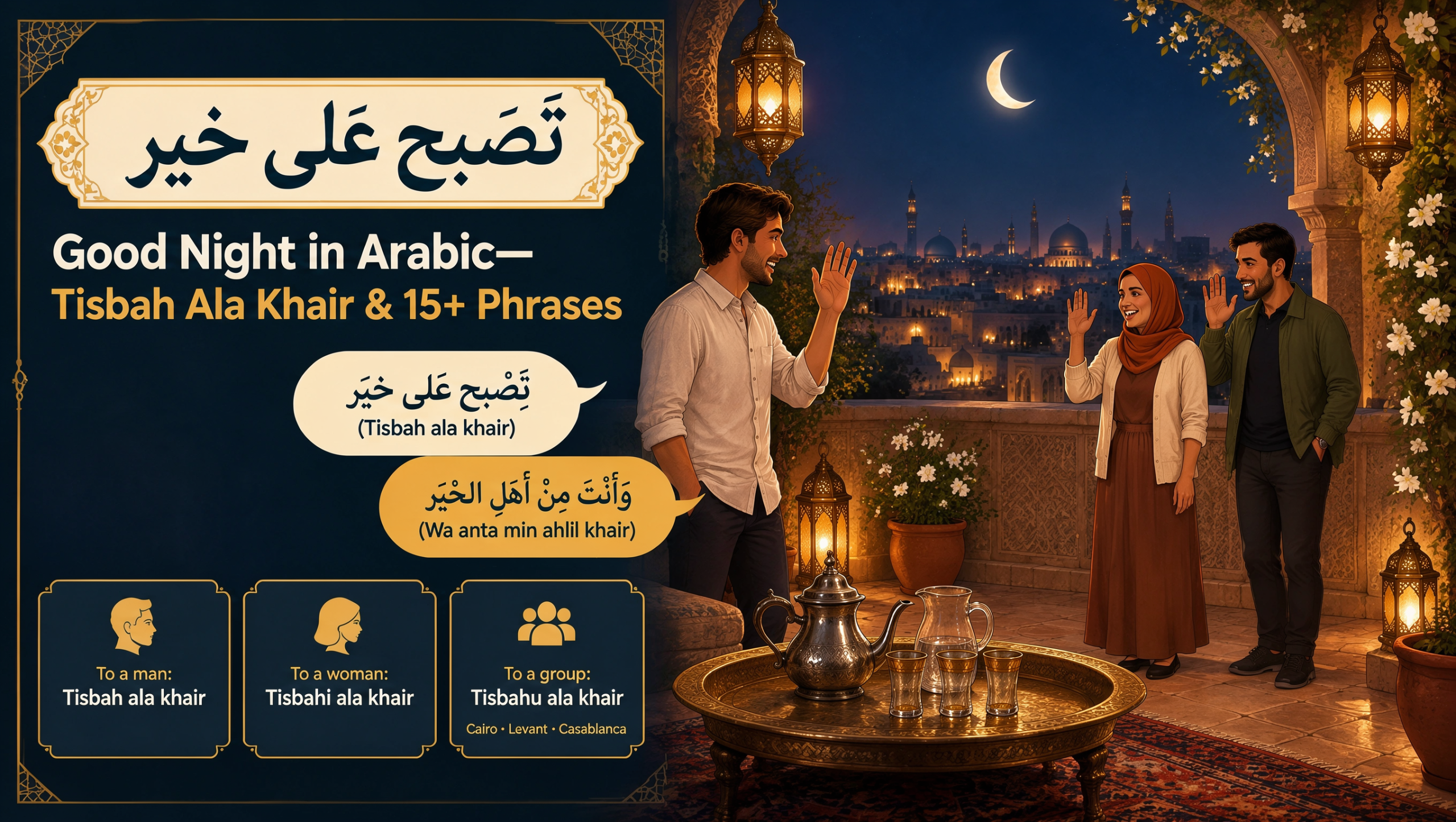
There is one phrase that confuses many learners. تصبح على خير (tisbah ‘ala khayr) uses the same root as sabah. But it means “good night.” You say it before going to sleep. It is a wish that the person wakes up to a good morning.
The reply to it is وأنت من أهله (wa inta min ahlo). It means “and you deserve it too.” Saying this at breakfast would sound very strange, so keep the two phrases apart in your mind.
Experience Kalimah Center Classes
Watch real excerpts from our live sessions at Kalimah Center and see how we bring learning to life. These clips highlight our interactive, student-centered teaching approach across all our courses—designed to keep learners engaged, motivated, and actively involved every step of the way.
Master Arabic with Kalimah Center
Join our expert-led online classes and start your journey toward Arabic fluency today.
Book Your Free TrialHow To Pronounce Good Morning In Arabic
Sabah al-khayr sounds like “sah-BAAH al-KHAIR.” Put the stress on the long “aa” in sabah. It sounds like the “a” in “father,” held just a little longer.
The tricky part is that four sounds in this phrase don’t exist in English. Follow the steps below, and you’ll say it the way native speakers do.
- Start with the heavy “s” (ص). Say a normal “s,” then drop the back of your tongue low. The “a” after it will sound deeper, almost like “sah.”
- Stretch the long “aa.” Hold it a moment, like you’re saying “ahh” for a doctor. This is where the stress goes: sa-BAAH.
- End sabah with a breathy “h” (ح). Tighten your throat a bit and push the air out hard. It should sound sharper than the “h” in “hello.”
- Say “al” clearly. Don’t drop the “l” here. Khayr starts with a moon letter, so the “l” stays.
- Make the rough “kh” (خ). Say “k,” but don’t let your tongue touch the roof of your mouth. Let the air scrape through, like the “ch” in “Bach.”
- Finish with a tapped “r” (ر). Flick your tongue once, like the “r” in the Spanish word “pero.”
- Put it all together. Say “sa,” “baah,” “al,” “khayr” slowly. Once each part feels easy, join them and speed up.
Don’t worry if it feels strange at first. Most learners get it after a few days of saying it out loud each morning.
Why Do People Say “An-Noor” And Not “Al-Noor”?
The reply is written صباح النور, with the letters for “al.” But people say “sabah an-noor.” This comes from a simple rule about sun letters and moon letters.
In Arabic, “al” means “the.” When “al” comes before a sun letter, the “l” goes silent. The next letter is said twice instead. The letter ن (n) is a sun letter. So “al” plus “noor” turns into “an-noor.”
The letter خ (kh) is a moon letter. With moon letters, you say the “l” clearly. That is why we say “al-khayr.” The names of the rule come from two words. الشمس (the sun) is said “ash-shams,” so its first letter is a sun letter. القمر (the moon) is said “al-qamar,” so its first letter is a moon letter.
Arabic has 14 sun letters and 14 moon letters. Once you learn this rule, you will say “the” correctly in hundreds of everyday words, like as-salam (the peace) and al-bab (the door).
What Pronunciation Mistakes Should You Avoid?
The most common mistake is saying ح like a soft English “h.” When this happens, sabah loses its sharp ending. People will still understand you, but they will hear an accent right away.
The second mistake is saying “k” instead of خ. Then khayr comes out as “kayr.” This one matters more, because the “k” sound belongs to a different Arabic letter.
The third mistake is rushing the long vowel. If you say “sa-bah” too fast, it sounds cut off. Hold the “aa” for a moment, like you are saying “ahh” for a doctor.
A good way to check yourself is to record your voice on your phone. Then play a native speaker saying the same phrase. Listen to both, one after the other. You will hear the gaps fast, and they get smaller each time you try.
Some sounds are hard to fix alone, because you need someone to listen and tell you what to change. In Kalimah Center’s online Arabic course, native tutors correct your sounds live in every one-on-one class, so small mistakes never turn into habits.

Good Morning In Arabic To A Man, A Woman, Or A Group
In Arabic, many words change based on who you are talking to. The basic phrase sabah al-khayr never changes. But longer greetings that include the word “your” do change.
The ending of the word tells the listener who you mean. Use -ak for one man, -ik for one woman, and -kum for a group. The sections below show each one in action.
Saying Good Morning In Arabic To A Man
To greet a man, use the -ak ending. Here are the most common choices:
- صباحك خير (sabahak khayr): may your morning be good
- أسعد الله صباحك (as’ad Allahu sabahak): may God make your morning happy
- صبّحك الله بالخير (sabbahak Allah bil-khayr): may God give you a good morning
If you are speaking to a teacher, a boss, or an older man, add يا أستاذ (ya ustaz) at the end. It means “sir” and shows respect. You will hear it all day in offices and shops, especially in Egypt.
With close friends, you can be warmer. Say صباح الخير يا صديق العمر (sabah al-khayr ya sadeeq al-‘umr). It means “good morning, friend of a lifetime.”
Men in Egypt also call each other يا حبيبي (ya habibi), which means “my dear.” Between male friends, it is just friendly. It does not sound romantic at all.
Saying Good Morning In Arabic To A Girl Or A Woman
To greet a woman or a girl, use the -ik ending. The same greetings now sound like this:
- صباحك خير (sabahik khayr): may your morning be good
- أسعد الله صباحك (as’ad Allahu sabahik)
- يسعد صباحك (yis’ed sabahik): may your morning be happy, very common in Syria, Lebanon, and Jordan
Look closely at the Arabic letters. صباحك looks the same for a man and a woman. Only the short vowel at the end changes when you speak. So in a text with no vowel marks, the reader cannot tell who it is for. When you say it out loud, they can.
If you want to send a sweet message to a girl you are close to, try صباح الورد يا قمر (sabah al-ward ya amar). It means “morning of roses, my moon.” Another option is صباح الخير يا شمسي (sabah al-khayr ya shamsi), which means “good morning, my sun.”
Keep these for close relationships, like a wife or fiancée. With a coworker or a classmate, they would sound too personal.
Saying Good Morning In Arabic To A Group
When you greet two or more people, use the -kum ending. You can say صباحكم خير (sabahkum khayr) or أسعد الله صباحكم (as’ad Allahu sabahakum). Both work well in a classroom, an office, or a family chat.
Some regions have their own group forms. In Lebanon, people often say يسعد صباحكن (yis’ed sabahkon). You will also hear the plain phrase sabah al-khayr used with groups, since it has no ending to change.
A teacher walking into class might say: صباح الخير يا طلاب (sabah al-khayr ya tullab), “Good morning, students.” The class answers together: صباح النور يا أستاذ (sabah an-noor ya ustaz).
The table below puts every form side by side. Keep it close until the endings feel natural to you.
| Who You Greet | Arabic | How To Say It | Meaning |
| Anyone | صباح الخير | sabah al-khayr | Morning of goodness |
| One man | صباحكَ خير | sabahak khayr | May your morning be good |
| One woman | صباحكِ خير | sabahik khayr | May your morning be good |
| A group | صباحكم خير | sabahkum khayr | May your morning be good |
| Reply to anyone | صباح النور | sabah an-noor | Morning of light |
Read also: Assalamualaikum in Arabic & Walaikum Assalam in Arabic
Writing Good Morning In Arabic Text
Good morning in Arabic text is written صباح الخير. Arabic is read from right to left. With full vowel marks, it looks like this: صَبَاحُ الْخَيْرِ.
Example Sentences With Good Morning In Arabic
Seeing a phrase in real sentences helps you remember it. In Arabic, you often put يا (ya) before a name. It works like “hey” when you speak to someone directly. Here are some simple examples:
- صباح الخير يا مريم (sabah al-khayr ya Maryam): Good morning, Maryam.
- صباح الخير يا أمي (sabah al-khayr ya ummi): Good morning, Mom.
- صباح الخير يا جدي (sabah al-khayr ya jaddi): Good morning, Grandpa.
- صباح الخير، كيف حالك؟ (sabah al-khayr, kayfa haluk?): Good morning, how are you?
Here is a short talk between two coworkers:
Ahmad: صباح الخير يا سارة. (sabah al-khayr ya Sara.) Good morning, Sara.
Sara: صباح النور! كيف حالك؟ (sabah an-noor! kayfa haluk?) Good morning! How are you?
Ahmad: الحمد لله. (al-hamdu lillah.) I’m well, thank God.
Notice that the talk does not end with the greeting. Arabs almost always follow it with a question about how you are. Our guide to basic Arabic conversation for beginners shows what to say next.
Short Good Morning Messages You Can Send
Arabs love to send kind messages in the morning. Family group chats fill up with them before breakfast. Here are some short ones you can copy:
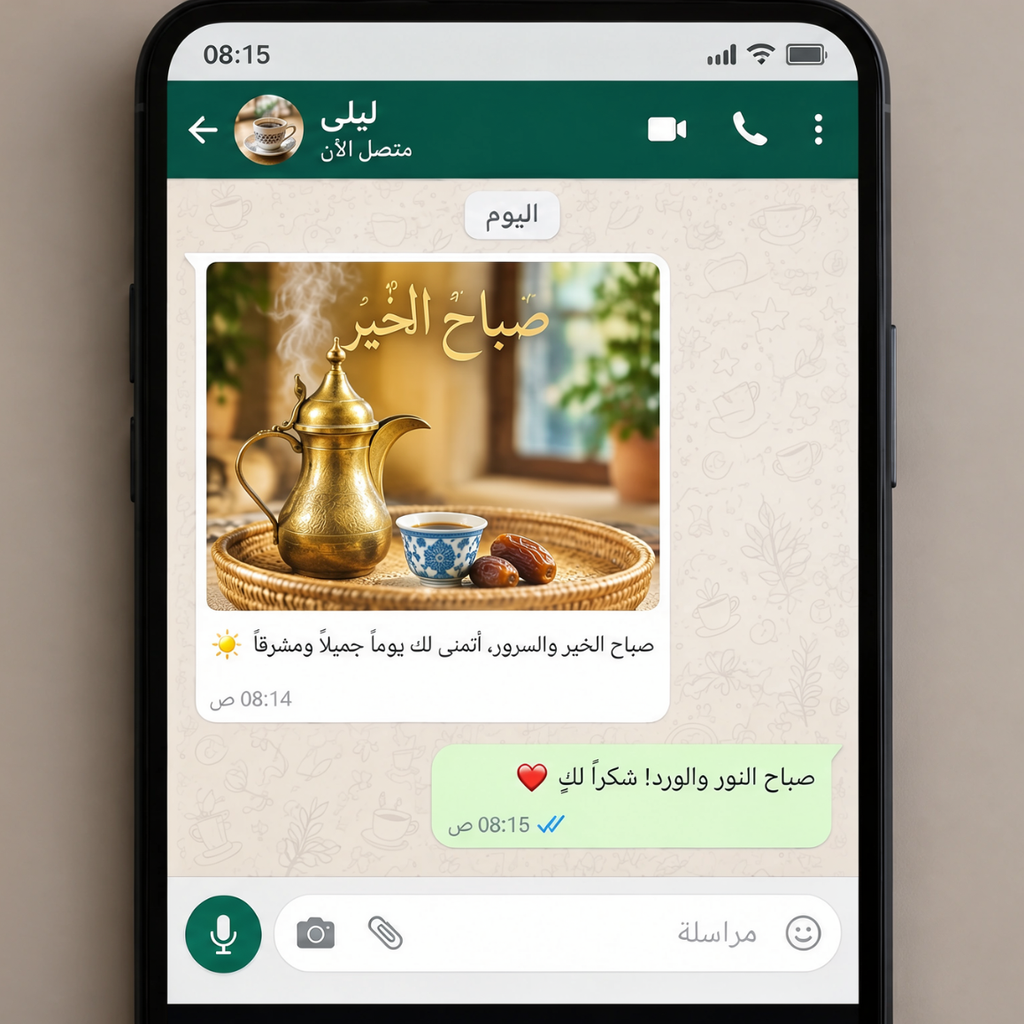
- صباح النور والسرور (sabah an-noor wa as-suroor): morning of light and joy
- صبحك الله براحة البال والرضا (sabbahak Allah bi-rahat al-bal war-rida): may God give you a calm and happy morning
- صباح الورد والياسمين (sabah al-ward wal-yasmeen): morning of roses and jasmine
- صباح الخير، أتمنى لك يوماً جميلاً (sabah al-khayr, atamanna laka yawman jameelan): good morning, I wish you a lovely day
Many families also send short prayers. A common one is اللهم اجعل صباحنا خيراً (Allahumma ij’al sabahana khayran). It means “O God, make our morning good.”
Choose the message that fits the person. A prayer suits parents and grandparents. A flower message suits friends.
How Arabs Type Good Morning In Chats (Arabizi)
Many young Arabs type Arabic with English letters and numbers. This style is called Arabizi. They use numbers for sounds that English letters cannot show.
Here are the most common ones:
- 7 stands for ح (the strong “h”)
- 5 stands for خ (the rough “kh”)
- 3 stands for ع (a deep sound from the throat)
So on WhatsApp, you may see “saba7 el5eer” or “sba7 el 5er.” Both mean good morning. The 7 is the ح at the end of sabah, and the 5 is the خ at the start of khayr.
Google Translate often cannot read Arabizi. That is why knowing these codes helps you follow real chats. As a learner, it is fine to read it. But try to write in Arabic letters. It trains your eyes for books, signs, and menus.
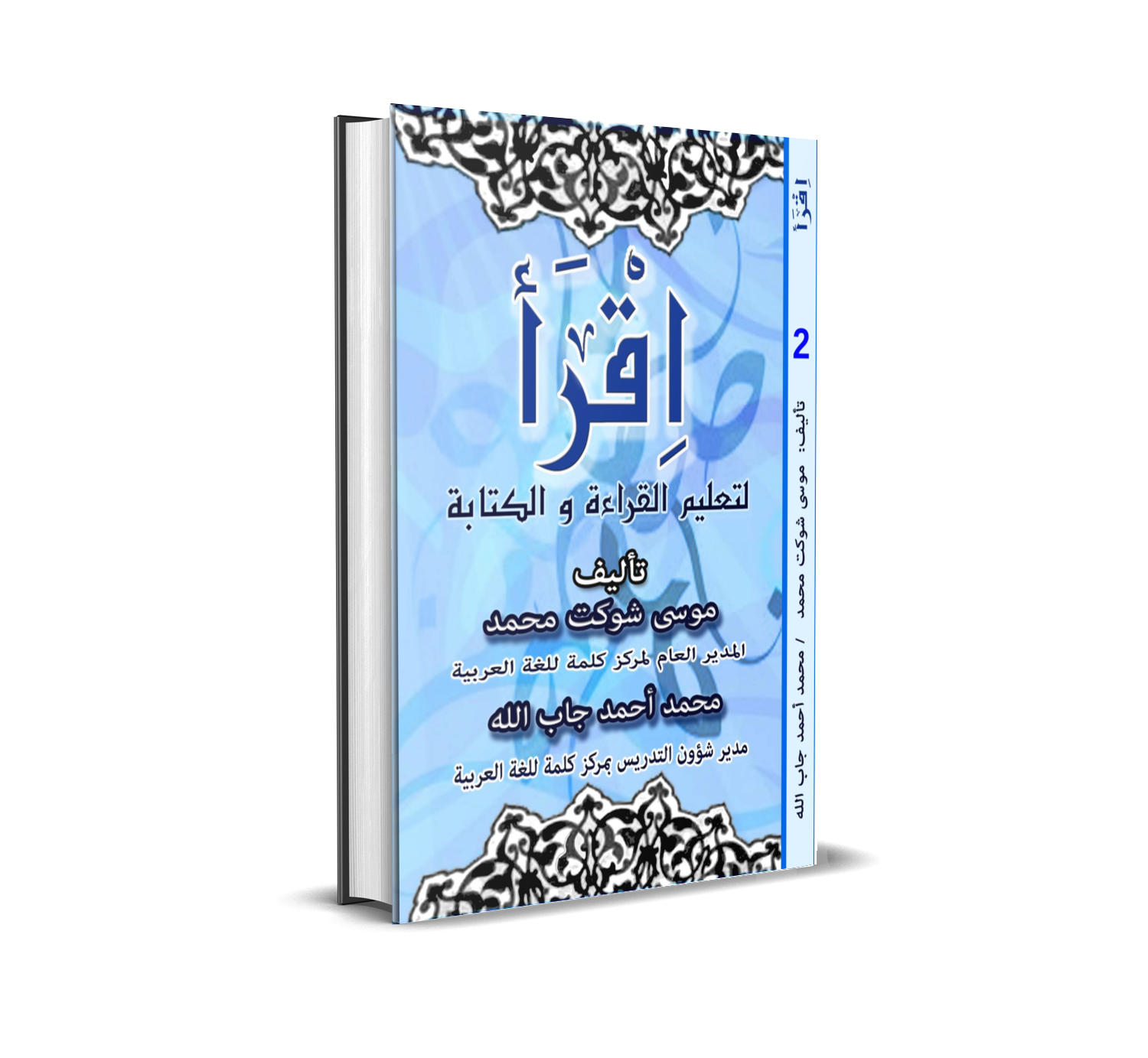
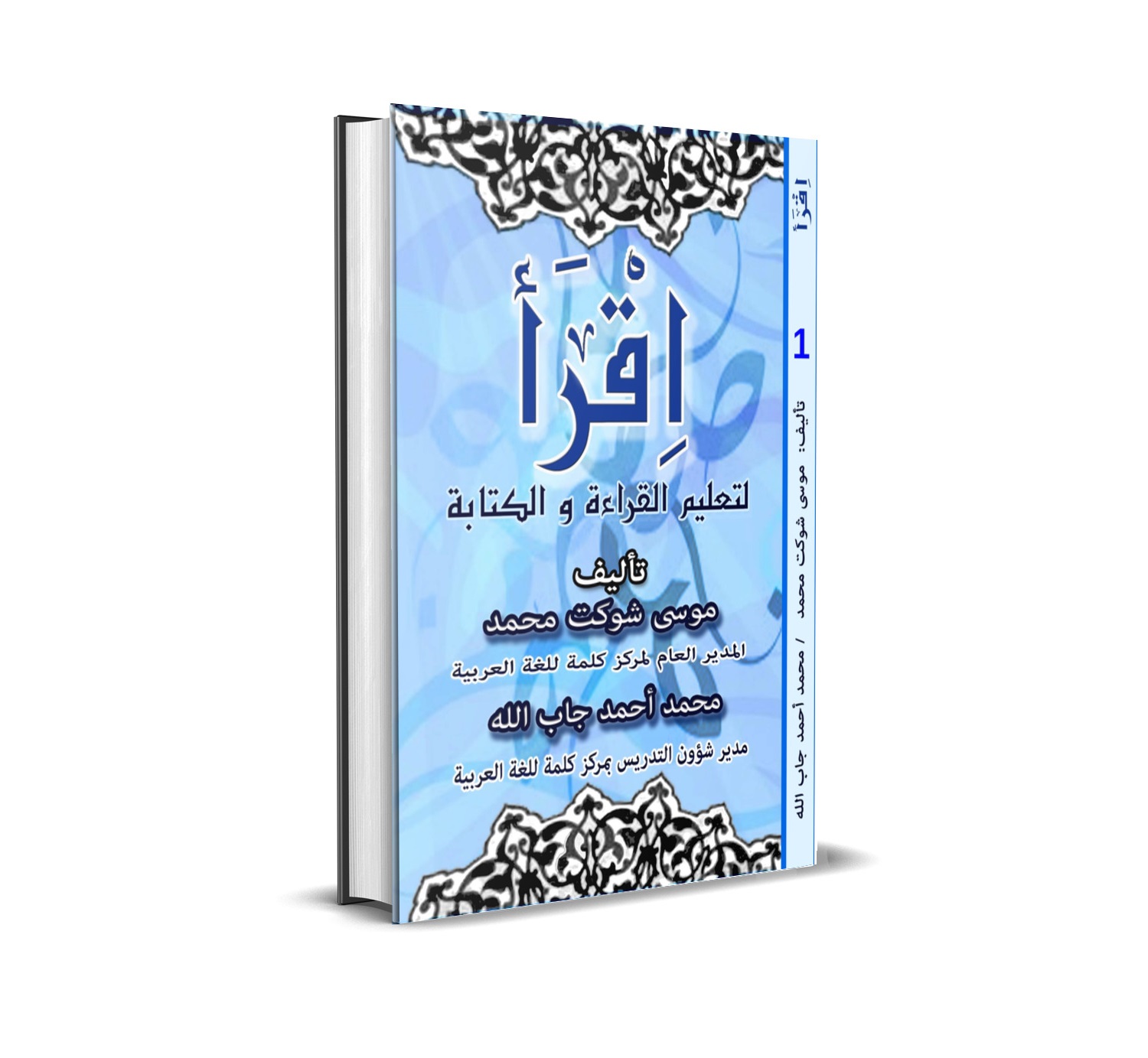
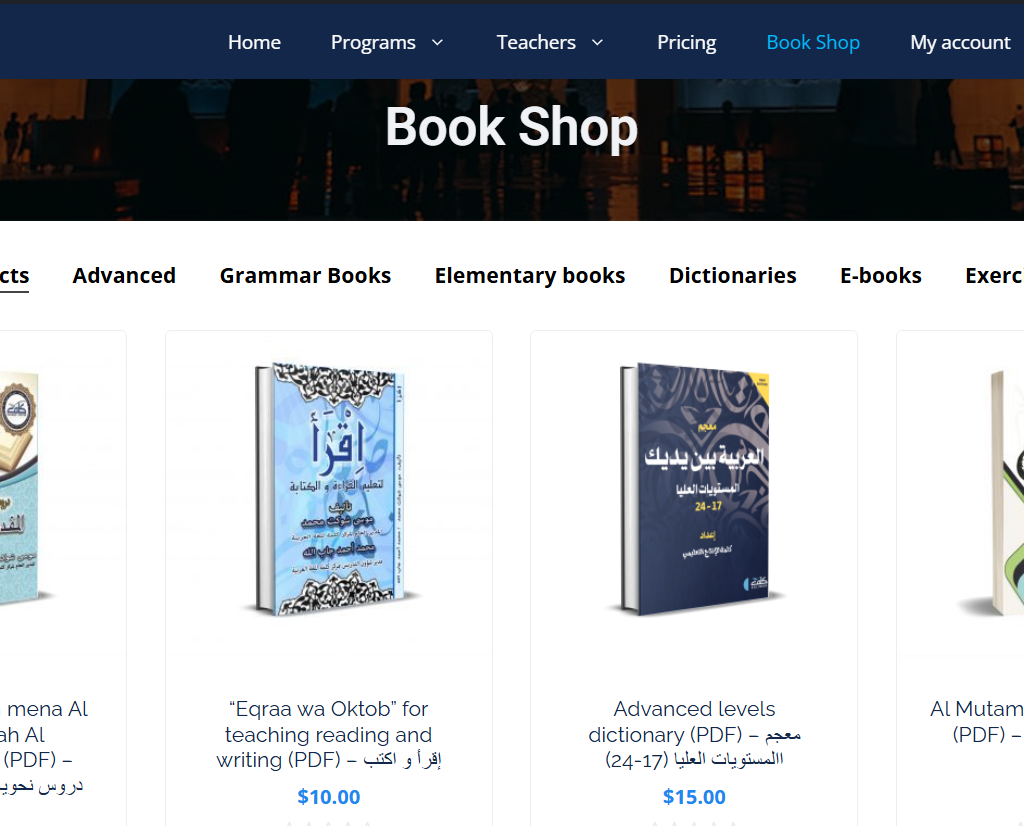
To start writing in Arabic script, try Kalimah Center’s Eqraa wa Oktob (إقرأ واكتب), a PDF book made for teaching reading and writing.
It’s written by Kalimah’s own teaching team, so you can practice at home, at your own pace, before or after class. When you’re ready for more, the Kalimah Center book shop has level-by-level ebooks, exercise books, and dictionaries that match each stage of the course.
Good Morning In Arabic Dialects
Every Arab understands sabah al-khayr. But each country says it in its own way. The written words stay the same, while the sound changes.
How Does Each Dialect Say Sabah Al-Khayr?
Dialects change the phrase in three main ways. They change the vowels, they make words shorter, and they swap “al” for “el” or just “l.” Here is how it sounds in each region:
- Formal Arabic: ṣabāḥ al-khayr. The “ay” sound is clear.
- Egyptian: ṣabāḥ el-kheir. The “ay” turns into “ei,” like in “they.”
- Levantine (Syria, Lebanon, Jordan, Palestine): ṣabāḥ el-khair. Close to formal Arabic, but with “el.”
- Moroccan: ṣbaḥ lkhir. The first vowel almost drops out, and “al” becomes just “l.”
- Tunisian: sbakhir. The two words join into one when people talk fast.
So you read one phrase, but you may hear five. If a Moroccan friend’s version sounds very different, don’t worry. It is the same greeting with a local accent.
Listening is the best way to get used to these sounds. Omniglot lists common Arabic phrases and has separate pages for Egyptian, Lebanese, and Moroccan Arabic.
What Other Morning Greetings Do Arab Countries Use?
Each region also has its own favorite morning phrases. Using one shows people that you care about their culture. Here are some you will hear:
- Egypt: صباح الفل (sabah el-full) and صباح الجمال (sabah el-gamal), “morning of beauty”
- Gulf countries: صبحكم الله بالخير (sabbahakum Allah bil-khayr), “may God give you a good morning”
- Syria and Jordan: صباح الخيرات (sabah el-khayrat), “morning of good things”
- Lebanon: صباح الجوري (sabah el-joori), named after a sweet-smelling red rose
There is also a very old greeting: عِمْ صباحاً (‘im sabahan). You will find it in old Arabic poems, not in daily talk. It is still fun to spot when you read older texts.
For more ways to greet people across the Arab world, see our guide on how to say hi in Arabic.
The Greeting Fit Check: How To Pick The Right Phrase
With so many choices, how do you pick the right one? Use a simple three-step check. We call it the Greeting Fit Check.
- Who are you greeting? Pick the right ending for one man, one woman, or a group.
- Where are you? At work or in a formal place, keep it plain. In a certain country, try the local version.
- How close are you? With a coworker, keep it simple. With a friend, add warmth. With a loved one, be sweet.
Here is how the check works in real life. You meet your female teacher in Cairo: say “sabah el-kheir ya ustaza.” You text a close friend in Beirut: send “yis’ed sabahak!” You walk into a meeting in Riyadh: say “sabbahakum Allah bil-khayr.”
If you are ever unsure at any step, just say sabah al-khayr. It is never wrong, for any person, in any place.
Once mornings feel easy, add more daily phrases. Our list of Arabic and Islamic greeting words is a great next step.
Inside Kalimah Center: Moments from Our Courses
Get a glimpse into the vibrant learning experience at Kalimah Center. These snapshots capture real moments from our live classes—where students engage deeply, connect with passionate instructors, and grow in a welcoming, supportive environment.
Master Arabic with Kalimah Center
Join our expert-led online classes and start your journey toward Arabic fluency today.
Book Your Free TrialBook Your Free Arabic Lesson With Kalimah Center Today
Knowing how to say good morning is a great start. But real Arabic comes from real talks with real people. That is what Kalimah Center gives you from your very first class.
Here is what you get when you learn with Kalimah Center:
- Native Arabic tutors: Learn from qualified native teachers, including graduates of Al-Azhar.
- One-on-one or group classes: Get your teacher’s full attention, or learn with others.
- Male and female teachers: Pick the teacher who makes you feel most at ease.
- A clear path to fluency: 16 levels and more than 400 hours of lessons in the Arabic course.
- Kalimah’s own lesson plan: Built and tested over 14+ years of teaching non-Arabic speakers.
- All four skills: Speaking, listening, reading, and writing in every class.
- Learn on your time: Choose your schedule and open your study material 24/7.
- A certificate for each level: See your progress and stay motivated.
You don’t have to decide today. Try a free lesson first and see how it feels.

Explore Our Courses:
Kalimah Center offers live online classes for every goal, from the Arabic course and group classes to the Quran course and Arabic classes for kids. Pick the one that fits you, book a free trial lesson, and start learning with a native tutor this week.
- Online Arabic Course: Tailored to your level, our comprehensive Arabic program includes 16 teaching levels and 400+ hours of personalized sessions.
- Online Quran With Tajweed Course: Perfect for non-Arabic speakers, our course spans 13 levels and equips you with Tajweed mastery from beginner to advanced.
- Online Arabic Course For Kids: Nurture your child’s love for Arabic with our engaging and structured program, available in 24 levels for primary, intermediate, and secondary stages.
Conclusion
Saying good morning in Arabic starts with one simple phrase: صباح الخير (sabah al-khayr). It means “morning of goodness,” and you can use it with anyone in the Arab world. When someone says it to you, answer with صباح النور (sabah an-noor), “morning of light.”
The small details are what make you sound natural. The right ending shows the listener you are speaking to them, not just reciting a phrase. The sun letter rule makes your “an-noor” sound right. And the heavy ص, the breathy ح, and the rough خ turn a learner’s greeting into a fluent one.
Dialects are part of the fun too. Once you know that “el-kheir,” “el-khair,” and “lkhir” are the same phrase, you will catch it in songs, films, and street talk everywhere. Each new version you hear is a small window into a different Arab culture.
The best part is that you can start tomorrow morning. Greet a neighbor, a coworker, or a friend in Arabic. Watch their face light up. Each time you do it, your confidence grows, and good morning in Arabic will soon feel as easy as it does in your own language.
FAQs
Learners often ask the same few questions about this greeting. Here are short, clear answers to the most common ones.
What Is Good Morning In Arabic?
Good morning in Arabic is صباح الخير (sabah al-khayr). It means “morning of goodness” and is used in every Arab country.
What Is The Reply To Good Morning In Arabic?
The reply to good morning in Arabic is صباح النور (sabah an-noor). It means “morning of light.”
How Do You Say Good Morning In Arabic To A Man?
To say good morning in Arabic to a man, say صباحك خير (sabahak khayr). Add “ya ustaz” if he is older or your teacher.
How Do You Say Good Morning In Arabic To A Girl?
To say good morning in Arabic to a girl, say صباحك خير (sabahik khayr). In the Levant, you can also say yis’ed sabahik.
How Do You Pronounce Good Morning In Arabic?
You pronounce good morning in Arabic as “sah-BAAH al-KHAIR.” Hold the long “aa,” and say “kh” from the back of your throat.
How Do You Write Good Morning In Arabic Text?
Good morning in Arabic text is written صباح الخير, from right to left. In online chats, some people type it as “saba7 el5eer.”
Is Sabah Al-Khayr Formal Or Informal?
Sabah al-khayr is both formal and informal. You can say it to your boss, your teacher, or your best friend.
Is Sabah Al-Khayr An Islamic Greeting?
Sabah al-khayr is an Arabic greeting, not a religious one, so Arabs of all faiths use it. The Islamic greeting is السلام عليكم (as-salamu alaykum), and many Muslims say both together.