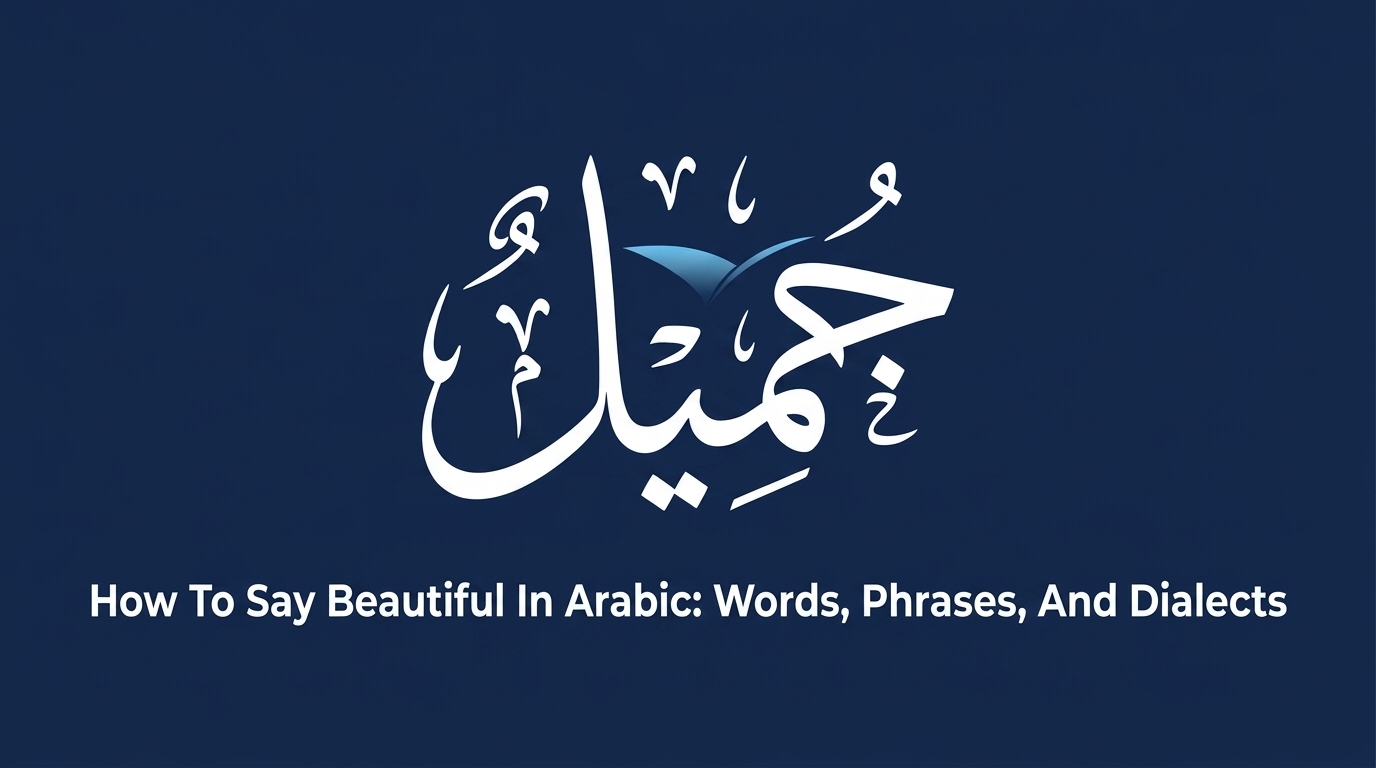
Have you ever wanted to tell someone they look lovely in Arabic? Maybe a friend showed you her wedding photos, or you stood in front of a sunset in Cairo and wanted the right word. Knowing how to say beautiful in Arabic lets you share that moment in a way that feels warm and real.
The main word is jamīl (جميل) for a man and jamīlah (جميلة) for a woman. It sounds simple, and in many ways it is. But Arabic has a few small rules that change the word, and most phrasebooks skip them.
The word shifts with the person, the number of people, and even the country you are in. Say it one way in Egypt and another way in Morocco. Say it one way to a close friend and another way to someone you just met.
The good news is that you only need five easy steps to get it right. Follow them below, and you will praise people, places, and things with confidence every time.
Step 1: Choose The Right Gender For Beautiful In Arabic
Say jamīl (جميل) for a man or a male thing. Say jamīlah (جميلة) for a woman or a female thing. The only change is the letter ة at the end.
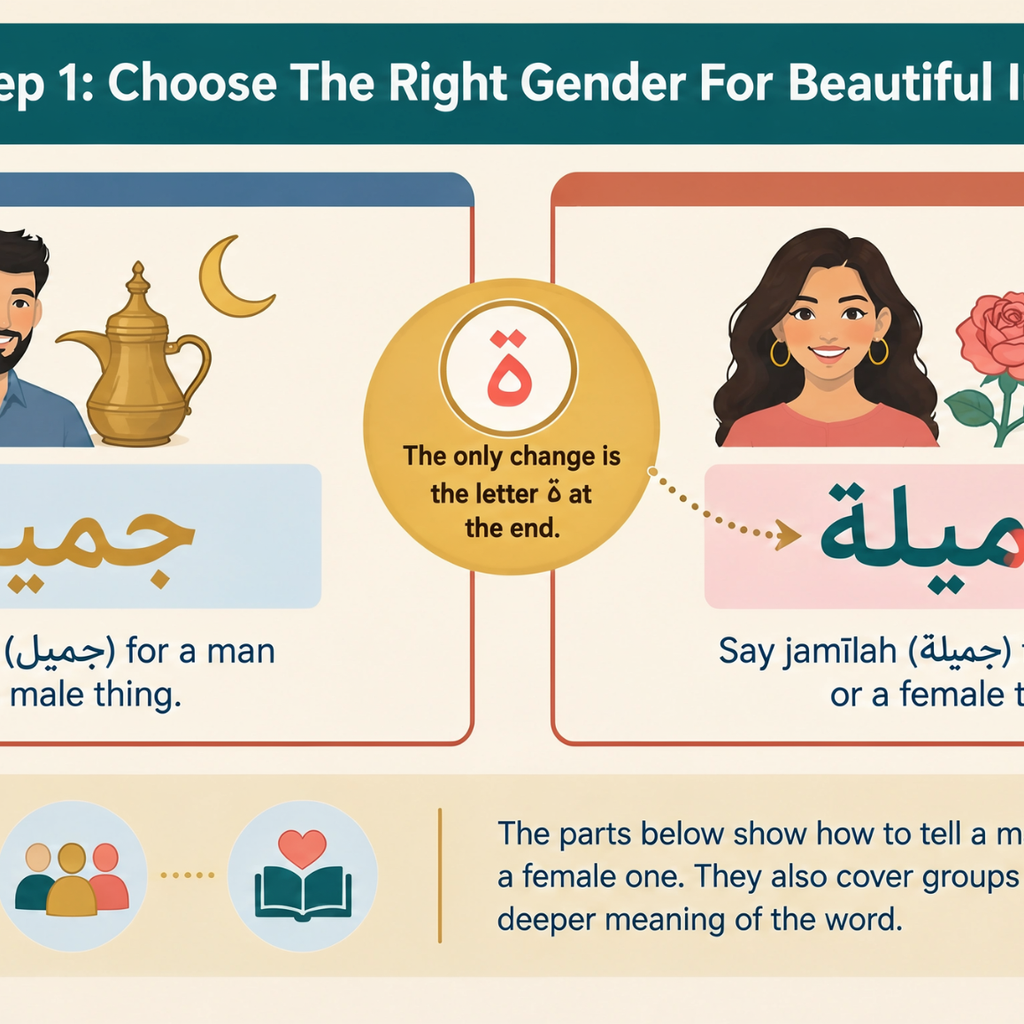
Knowing If A Noun Is Male Or Female
Every Arabic noun is either male or female. Your first job is to find out which one it is. Then you pick jamīl or jamīlah to match. Most words that end in ة are female. So madīnah (مدينة), a city, becomes madīnah jamīlah. Most words without ة are male. So yawm (يوم), a day, becomes yawm jamīl.
Some female words do not end in ة. Here are a few you will use often:
- shams (شمس): sun
- arḍ (أرض): earth or land
- nār (نار): fire
- ʿayn (عين): eye
- yad (يد): hand
Many body parts that come in pairs are female, like eyes, hands, and ears. So you say ʿayn jamīlah, a beautiful eye, and yad jamīlah, a beautiful hand.
When you learn a new noun, learn its gender at the same time. Write it down as “city, female” or “day, male.” After a few weeks, you will not need to stop and think.
Plural Forms Of Beautiful In Arabic
Arabic has a special form for two of something, plus forms for groups. The table below shows each one. Look closely at the last row, because it surprises most learners.
| Who or what you describe | Arabic | English spelling | Example |
| One man or male thing | جميل | jamīl | a beautiful day |
| One woman or female thing | جميلة | jamīlah | a beautiful flower |
| Two men or male things | جميلان | jamīlān | two beautiful days |
| Two women or female things | جميلتان | jamīlatān | two beautiful flowers |
| A group of men | جميلون / جُملاء | jamīlūn / jumalāʾ | beautiful men |
| A group of women | جميلات | jamīlāt | beautiful women |
| Many things or animals | جميلة | jamīlah | beautiful flowers |
The last row follows its own rule. When you describe three or more things, you use the female single form. So “beautiful flowers” is zuhūr jamīlah (زهور جميلة), not zuhūr jamīlāt. The same rule works for houses, books, and cats. “Beautiful houses” is buyūt jamīlah, and “beautiful books” is kutub jamīlah.
In daily speech, people often skip the forms for two. They also say jamīlīn for a group of people. Jumalāʾ sounds formal, so you will see it in books more than in talk.
What Jamīl Means Beyond Looks
In Arabic, jamīl is not only about a pretty face. It can praise good manners, a kind act, or a fine piece of work. An Arab may call a good deed jamīl, just like a lovely garden.
The word also works as a noun. Arabic dictionaries list al-jamīl (الجميل) as a favor or a kindness. A person who forgets a favor is called nākir al-jamīl (ناكر الجميل), which means “ungrateful.”
The Quran uses the word for good qualities, too. It speaks of ṣabr jamīl (صبر جميل), “beautiful patience,” in Surah Yusuf, verse 12:18. It also speaks of al-ṣafḥ al-jamīl (الصفح الجميل), “kind forgiveness,” in Surah Al-Hijr, verse 15:85.
Al-Jamīl is also one of the names of God in Islam. A well-known hadith says that God is beautiful and loves beauty. You can read it in Sahih Muslim, hadith 91. So when an Arab calls something jamīl, the word can carry a lot of warmth. It often praises the heart as much as the face.
Experience Kalimah Center Classes
Watch real excerpts from our live sessions at Kalimah Center and see how we bring learning to life. These clips highlight our interactive, student-centered teaching approach across all our courses—designed to keep learners engaged, motivated, and actively involved every step of the way.
Step 2: Say Jamīl With The Long “Ee” Sound
Pronounce jamīl as “ja-MEEL” and jamīlah as “ja-MEE-lah.” Hold the “ee” sound a little longer than you would in English.
How The Letter ج Changes From Country To Country
The first letter of jamīl is ج, called jīm. Its sound depends on where you are. All of the sounds below are correct in their own region.
- Standard Arabic and the Gulf: a “j,” like in “jam”
- Egypt: a hard “g,” like in “go”
- Parts of Syria and Lebanon: a soft “zh,” like the “s” in “measure”
So in Cairo, you will hear gamīl and gamīlah. Many Egyptians use this hard “g,” and it is a big part of how their Arabic sounds. In Beirut, you may hear something closer to “zha-MEEL.”
This is why you see so many English spellings. Jamila, jameela, gamila, and jameelah all point to the same Arabic word. No single English spelling is the “right” one.
If you are learning for one country, copy the sound people use there. If you are not sure, use the “j” sound. People in every Arab country will understand it.
Practicing The Sound At Home
A few short habits will help you sound natural fast. You only need a phone and a few minutes a day.
- First, say the word slowly: “ja,” then “meel.” Stretch the “ee” for a full second. Then say it at normal speed and keep the stress on “MEEL.”
- Next, record yourself and listen. Compare your voice with a native speaker in a video or audio clip. Most learners find that their “ee” is too short at first.
There is one more sound to know. The ة at the end of jamīlah sounds like “ah” when the word ends your sentence. But when another word comes right after it, the ة sounds like “at.”
You hear this in the phrase jamīlat al-wajh (جميلة الوجه), which means “beautiful of face.” Here, you say “ja-MEE-lat al-wajh.” Practicing this small change will make your Arabic sound smooth and correct.
Step 3: Put Beautiful After The Noun
Say bayt jamīl (بيت جميل) for “a beautiful house.” In Arabic, the word for beautiful comes after the thing it describes, not before it. The parts below show how “the” changes your meaning. They also show how to add more than one describing word.
How “Al” Changes The Meaning
The little word al (ال) means “the.” Where you put it can turn a phrase into a full sentence. Look at these three forms:
- manẓar jamīl (منظر جميل): a beautiful view
- al-manẓar al-jamīl (المنظر الجميل): the beautiful view
- al-manẓar jamīl (المنظر جميل): the view is beautiful
In the second form, both words have “al.” This keeps it as one phrase, “the beautiful view.” In the last form, only the noun has “al.” Now it is a full sentence that means “the view is beautiful.”
Arabic does not need the word “is” in this kind of sentence. The missing “al” does the job for you. The same works for a flower. Al-zahrah jamīlah (الزهرة جميلة) means “the flower is beautiful.”
This one rule causes many mistakes for new learners. Say both forms out loud a few times. Soon, you will hear the difference without thinking about it.
Describing A Noun With More Than One Word
Sometimes you want to say more than “beautiful.” You might want “a big, beautiful house.” In Arabic, you put each describing word after the noun, one after another.
So “a big, beautiful house” is bayt kabīr jamīl (بيت كبير جميل). Each describing word must match the noun. A female noun takes female forms for all of them: madīnah kabīrah jamīlah, a big, beautiful city.
You can also add “my” or “your.” In Arabic, these attach to the end of the noun. “My house” is baytī (بيتي). Since “my house” already counts as “the,” the describing word takes “al.” So “my beautiful house” is baytī al-jamīl (بيتي الجميل).
The word “this” works the same way. Hādhā al-bayt al-jamīl means “this beautiful house.” But hādhā al-bayt jamīl means “this house is beautiful.”
Rules like these are easier with a teacher who checks your sentences. The online Arabic course at Kalimah Center builds grammar through real speaking practice. Its native tutors fix your pronunciation live in every lesson.
Master Arabic with Kalimah Center
Join our expert-led online classes and start your journey toward Arabic fluency today.
Book Your Free TrialStep 4: Add “You” Or “Very” To Make A Full Compliment
Say anti jamīlah for “you are beautiful” to a woman. Add jiddan (جداً) at the end for “very beautiful.”
Very Beautiful In Standard Arabic
Jiddan is the “very” word of standard Arabic. It comes right after the describing word:
- jamīl jiddan (جميل جداً): very beautiful, for a man or male thing
- jamīlah jiddan (جميلة جداً): very beautiful, for a woman or female thing
Notice that jiddan never changes. It stays the same for men, women, and groups. Only jamīl changes to match the noun. You can also say jamīl lil-ghāyah (جميل للغاية). This means “extremely beautiful.” It sounds a bit formal, so you will hear it in speeches, news, and writing.
Want something even stronger? Some speakers say jamīl jiddan jiddan. Saying jiddan twice is like “very, very beautiful” in English. It is casual, but you will hear it often.
Standard Arabic is the form you will find in books and on TV. Learning jiddan first gives you a strong base. After that, you can add the “very” word of any dialect you like.
Very Beautiful In Arabic Dialects
In daily talk, most people do not say jiddan. They use the “very” word from their own region. Here is what you will hear:
- Egypt: gamīl awi (جميل أوي) or ḥelw awi (حلو أوي)
- Syria and Lebanon: ktīr ḥelo (كتير حلو)
- The Gulf: wāyed ḥelw (وايد حلو)
- Morocco: zwīn bezzāf (زوين بزاف)
Look at the word order. In Egypt and Morocco, “very” comes after the word. In Syria, Lebanon, and the Gulf, it comes before. These small words make you sound like a local. If you say gamīl awi in Cairo, people will smile. It shows you have spent time with real speakers, not only with a textbook.
Pick the “very” word used by the people you talk to most. Use it in small moments, like praising food or a new shirt. Before long, it will come out of your mouth on its own.
You Are Beautiful To A Man, A Woman, Or A Group
Arabic has a different word for “you” for each kind of listener. Pick the right one, then add the matching form of beautiful:
- To a man: anta jamīl (أنتَ جميل)
- To a woman: anti jamīlah (أنتِ جميلة)
- To a group of women: antunna jamīlāt (أنتنّ جميلات)
- To men or a mixed group: antum jamīlūn (أنتم جميلون)
In everyday talk, most people say inta and inti instead of anta and anti. So on the street, you will often hear inti jamīlah. Arabic does not use the word “are” here. “Anti jamīlah” is a full sentence by itself. This makes the phrase short and easy to remember.
You can also add al-yawm (اليوم), “today,” at the end. Anti jamīlah al-yawm means “you are beautiful today.” This works well when someone has a new haircut or a special outfit.
Saying You Are The Most Beautiful
To say “the most beautiful,” use the word ajmal (أجمل). Ajmal does not change for men or women. It stays the same for both. Put ajmal before the noun. Here are some examples:
- ajmal yawm (أجمل يوم): the most beautiful day
- ajmal hadiyyah (أجمل هدية): the most beautiful gift
- anti ajmal fatāh raʾaytuhā (أنتِ أجمل فتاة رأيتُها): you are the most beautiful girl I have seen
Ajmal also means “more beautiful.” Just add min (من), which means “than.” So al-baḥr ajmal min al-madīnah (البحر أجمل من المدينة) means “the sea is more beautiful than the city.” This one word gives you two tools. You can compare two things, or you can praise one thing above all others.
Arabs also use ajmal for happy moments. When good news comes, they may say ajmal khabar (أجمل خبر), “the best news.” So the word works for joy, not only for looks.
Step 5: Match The Word To The Person And The Country
Choose words based on how close you are and where the person is from. A friend in Cairo and a stranger in Dubai may need different words.
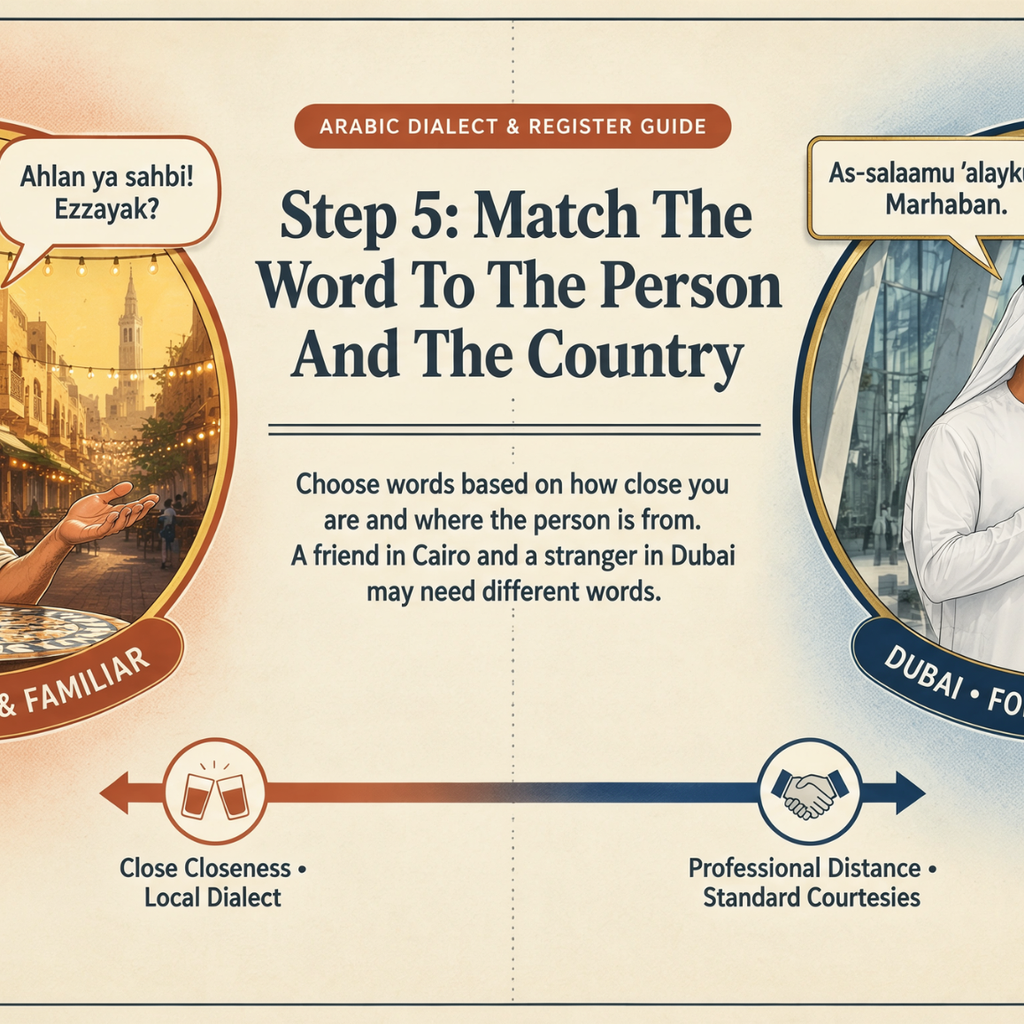
Polite And Close Compliments For A Girl
The safest word for a girl is jamīlah. Other words depend on how well you know her. Here they are, from polite to very close:
- Polite: jamīlah (جميلة), or ḥelwa (حلوة) in daily talk
- Strong praise: fātinah (فاتنة), which means charming
- Sweet and warm: zayy il-ʿasal (زي العسل), “like honey,” in Egypt
- Very close: yā qamar (يا قمر), which means “oh moon”
In Egypt and Syria, people say yā qamar as “ya amar.” They drop the “q” sound. It is a loving word, so save it for a wife, a partner, or close family, like a daughter or sister. Zayy il-ʿasal is softer. People use it for sweet kids, kind friends, and even tasty food. It works well when “beautiful” feels too strong.
Fātinah is powerful. It can sound romantic, so use it only when that is what you mean. A good rule is simple: the closer you are, the warmer the word can be.
Cultural Rules For Complimenting Women
In many Arab homes, praising the looks of a woman you do not know well can feel too personal. This is true at work, in a mosque, or at a formal event. A kind word can still come across the wrong way.
A safer choice is to praise something she chose. You might say fustānik jamīl (فستانك جميل), which means “your dress is beautiful.” Or you might say baytik jamīl (بيتك جميل), “your home is beautiful.”
Many speakers also add mā shāʾ Allāh (ما شاء الله) to their praise. It means “what God has willed.” People say it to show that the beauty comes from God and to guard against envy.
This phrase is very common when people praise children, homes, and new things. Saying it shows respect for the culture. Arabs will notice that you know their customs, and they will often reply with a smile and a kind word of their own.
Beautiful In Arabic Dialects By Country
Each Arab country has its own daily word for beautiful. The table below lists the most common dialect words for men and women.
| Country or region | For a man | For a woman |
| Egypt | gamīl (جميل), ḥelw (حلو) | gamīlah (جميلة), ḥelwa (حلوة) |
| Syria, Lebanon, Jordan, Palestine | ḥelo (حلو), jamīl | ḥelweh (حلوة), jamīlah |
| The Gulf | mazyūn (مزيون), zēn (زين) | mazyūnah (مزيونة), zēnah (زينة) |
| Iraq | ḥelu (حلو) | ḥelwa (حلوة) |
| Morocco | zwīn (زوين) | zwīnah (زوينة) |
| Tunisia and Libya | bāhi (باهي) | bāhya (باهية) |
| Algeria | mlīḥ (مليح) | mlīḥa (مليحة) |
Ḥelw is the word that travels the most. You will hear it in Egypt, the Levant, Iraq, and the Gulf. It also means “sweet,” so people use it for food, too.
If you do not know where the person is from, say jamīl or jamīlah. Everyone understands the standard word. If you are learning Arabic for one country, pick that country’s word and use it often.
Choosing between standard Arabic and a dialect is a big first step. You can check the Kalimah Center prices and plans to find a lesson plan that fits your goal and budget.

Other Arabic Words For Beautiful
Arabic has many words for beauty. Each one fits a different kind of beauty. Picking the right one shows you really know the language. The parts below split these words into two groups. One group is for people, and the other is for places and things.
Arabic Words For Beautiful People
These words describe a person’s looks or charm:
- wasīm (وسيم): handsome, used mostly for men
- ḥasan (حسن): good looking, for a man
- ḥasnāʾ (حسناء): fair and lovely, for a woman
- jadhdhāb (جذاب) / jadhdhābah (جذابة): attractive, for a man or a woman
Wasīm is the most natural word for a good-looking man. You will hear it in films, songs, and daily talk. Jamīl works for men, too, but wasīm points more clearly at looks.
Ḥasan has a second meaning. It also means “good.” So khuluq ḥasan (خلق حسن) means “good manners.” Ḥasnāʾ, its female form, sounds old and poetic. You will find it in stories and poems more than on the street.
Jadhdhāb can describe ideas as well as people. Fikrah jadhdhābah (فكرة جذابة) means “an attractive idea.” This makes it useful at work and in school. These words show how Arabic links beauty with good character. A person can be ḥasan in looks and in heart at the same time.
Arabic Words For Beautiful Places And Things
Some words fit nature, places, and objects best:
- khallāb (خلّاب) / khallābah (خلّابة): stunning, often for nature and views
- rāʾiʿ (رائع) / rāʾiʿah (رائعة): wonderful or amazing
- bahī (بهيّ): bright and glowing, often in poems
- zāhī (زاهي) / zāhiyah (زاهية): bright, mostly for colors
Use khallāb for a view that takes your breath away. Manẓar khallāb (منظر خلّاب) means “a stunning view.” You will see it a lot in travel writing and on postcards. Rāʾiʿ is great for events and trips. Riḥlah rāʾiʿah (رحلة رائعة) means “a wonderful trip.” People also say rāʾiʿ when they like an idea or a meal.
Zāhī is for bright colors, like lawn zāhī (لون زاهي), “a bright color.” Bahī often describes a face full of light, as in wajh bahī (وجه بهيّ), “a glowing face.”
These words help you describe your world with more detail. Mix them with other useful Arabic phrases and sentences to build real conversations.
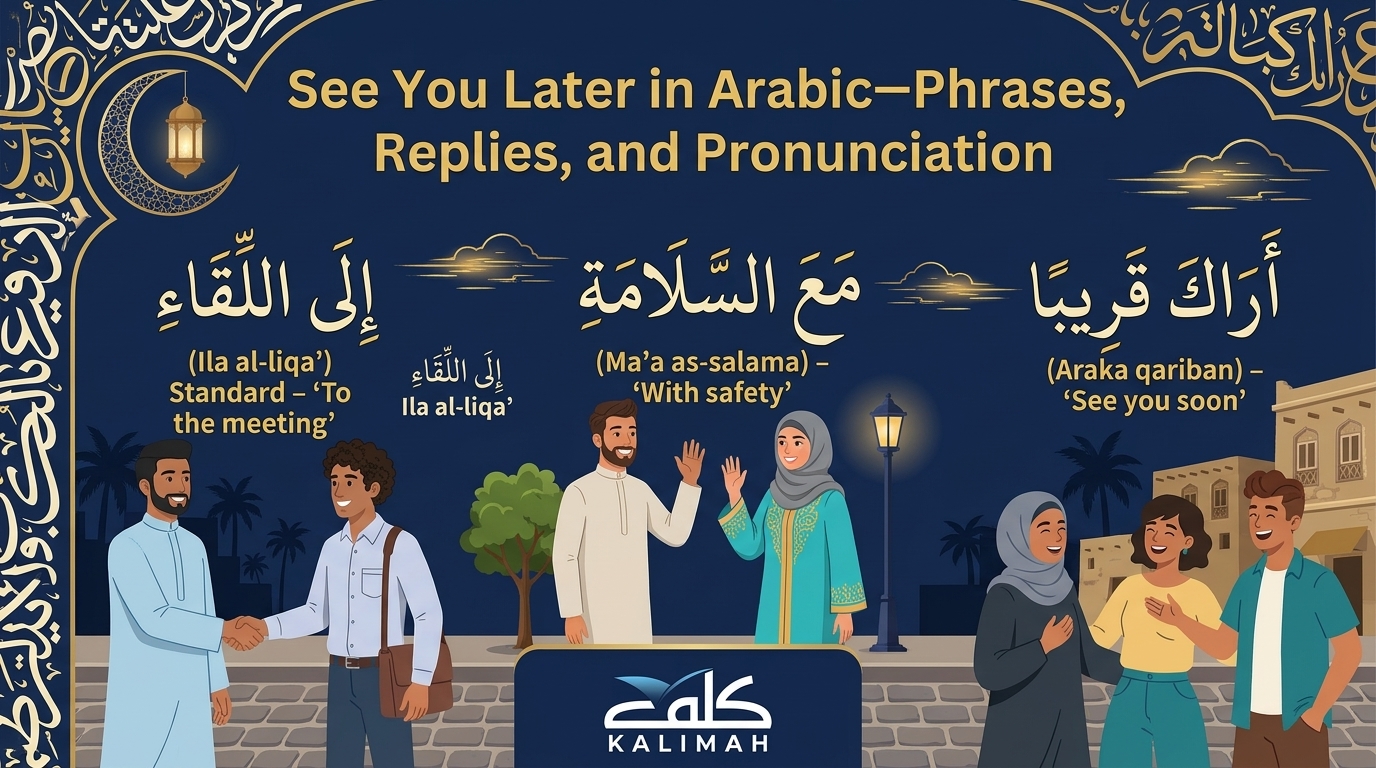
Read also: See You Later in Arabic
Common Mistakes When Saying Beautiful In Arabic
Every learner trips over a few words at the start. These two mistakes come up more than any others, so it helps to know them before you say your first compliment.
Mixing Up Jamāl And Jamal
Here is one that catches almost everyone. Jamāl (جمال) means “beauty,” and it has a long “aa” in the middle. Jamal (جَمَل) has a short “a,” and it means “camel.” So if you rush the vowel, you might praise someone’s camel instead of their beauty.
The two words sound close because they share the same root letters. That is what makes this slip so easy. One short sound is all it takes to change the meaning.
There is another trap hiding here. The plural of camel is jimāl (جِمال), and without vowel marks, it looks almost the same as jamāl. Some learners even use jimāl as the plural of “beautiful.” It is wrong, and it can get a laugh you did not plan for.
The fix is simple. Stretch the “aa” every time you mean beauty, and add vowel marks when you write. It also helps that Jamāl is a common boy’s name in the Arab world. The more you hear it, the more that long sound will stick.
Translating English Compliments Word By Word
It feels natural to take an English compliment and swap in Arabic words. But Arabic does not always work that way. In English, you say “you look beautiful.” In Arabic, you do not need “look” at all. You just say anti jamīlah.
If you really want to praise how someone looks today, Arabic has its own way to say it. In Egypt, people say shaklik ḥelw al-naharda (شكلك حلو النهارده). It means “your look is nice today,” and it sounds friendly and normal.
Some English words just do not travel well. “Hot” and “gorgeous” have no direct Arabic match. If you try to force them, you may sound strange or even rude without meaning to.
The best habit is to learn whole phrases instead of single words. Everyday phrases are a great place to start, like how to introduce yourself in Arabic and how to say goodbye in Arabic. They show you how Arabic speakers really put their words together.
Inside Kalimah Center: Moments from Our Courses
Get a glimpse into the vibrant learning experience at Kalimah Center. These snapshots capture real moments from our live classes—where students engage deeply, connect with passionate instructors, and grow in a welcoming, supportive environment.
Master Arabic with Kalimah Center
Join our expert-led online classes and start your journey toward Arabic fluency today.
Book Your Free TrialStart Learning Arabic With Kalimah Center Today
Saying one word well is a great start. Speaking Arabic with ease takes practice with a real teacher. That is what Kalimah Center gives you. Here is why learners choose Kalimah Center:
- Years of experience: it opened in Egypt in 2011, taught 7,000 students by 2017, and moved online in 2018.
- Native teachers: every tutor is a native Arabic speaker with strong teaching skills.
- Male and female tutors: pick the teacher you feel most at ease with.
- Private or group classes: learn one-on-one or with a group.
- Clear levels: 16 levels show you your next step.
- The right start: a short test places you at your level first.
- Its own books: Kalimah Center writes its own lesson books.
- Study any time: your lesson material is open day and night.
- A certificate: get an official certificate when you finish.
- No risk: your first class is free, and you decide after.
Book your free class now and say your first Arabic compliment with confidence.
Explore Our Courses:
- Online Arabic Course: Tailored to your level, our comprehensive Arabic program includes 16 teaching levels and 400+ hours of personalized sessions.
- Online Quran With Tajweed Course: Perfect for non-Arabic speakers, our course spans 13 levels and equips you with Tajweed mastery from beginner to advanced.
- Online Arabic Course For Kids: Nurture your child’s love for Arabic with our engaging and structured program, available in 24 levels for primary, intermediate, and secondary stages.
Conclusion
Learning how to say beautiful in Arabic starts with one word, jamīl, and its female form, jamīlah. Use jamīl for a man or a male thing. Use jamīlah for a woman, a female thing, or many things at once.
Say the word with a long “ee,” as “ja-MEEL” and “ja-MEE-lah.” The first letter may sound like a “j,” a hard “g,” or a soft “zh,” depending on the country. Then put the word after the noun, and watch where “al” goes, since it can turn a phrase into a full sentence.
To make your praise stronger, add jiddan, or use your dialect’s “very” word, like awi in Egypt. Say anta jamīl to a man and anti jamīlah to a woman. Use ajmal when you want to call something the most beautiful.
When you praise a girl, let your closeness guide your words. Jamīlah is always polite, while yā qamar is only for someone very dear. With people you do not know well, praise their dress or home, and add mā shāʾ Allāh.
Each country also has its own word, like ḥelwa in Egypt, mazyūnah in the Gulf, and zwīnah in Morocco. Words like wasīm, khallāb, and rāʾiʿ help you describe people and places with more detail. Keep these rules in mind, avoid mixing up jamāl and jamal, and your Arabic praise will sound kind, correct, and natural.
FAQs
Learners often ask how to use this word in everyday moments. Here are short, clear answers to the questions we hear most.
How Do You Write Beautiful In Arabic Letters?
You write beautiful in Arabic as جميل, using the letters ج م ي ل from right to left. For the female form, add ة at the end to make جميلة.
How Do You Say Beautiful Eyes In Arabic?
You say beautiful eyes as ʿuyūn jamīlah (عيون جميلة). In Egyptian Arabic, people say ʿuyūnik ḥelwa (عيونك حلوة), which means “your eyes are beautiful.”
How Do You Say Beautiful Smile In Arabic?
You say beautiful smile as ibtisāmah jamīlah (ابتسامة جميلة). Smile is a female word, so it takes jamīlah.
How Do You Say Beautiful Voice In Arabic?
You say beautiful voice as ṣawt jamīl (صوت جميل). Voice is a male word in Arabic, so it takes jamīl.
How Do You Say Beautiful Weather In Arabic?
You say beautiful weather as ṭaqs jamīl (طقس جميل) in standard Arabic. In Egypt and the Levant, people say il-gaww ḥelw (الجو حلو).
How Do You Reply When Someone Calls You Beautiful In Arabic?
You can reply with shukran (شكراً), which means “thank you.” To return the kindness, say “shukran, wa anta aydan” to a man or “wa anti aydan” to a woman, meaning “you too.”
Is Jamīlah Also An Arabic Name?
Yes, Jamīlah is a common Arabic name for girls. Jamīl is the boy’s name, and both mean “beautiful” or “kind.”
How Do You Say Have A Beautiful Day In Arabic?
You say have a beautiful day as yawman jamīlan (يوماً جميلاً). Many people also say yawman saʿīdan (يوماً سعيداً), which means “have a happy day.”