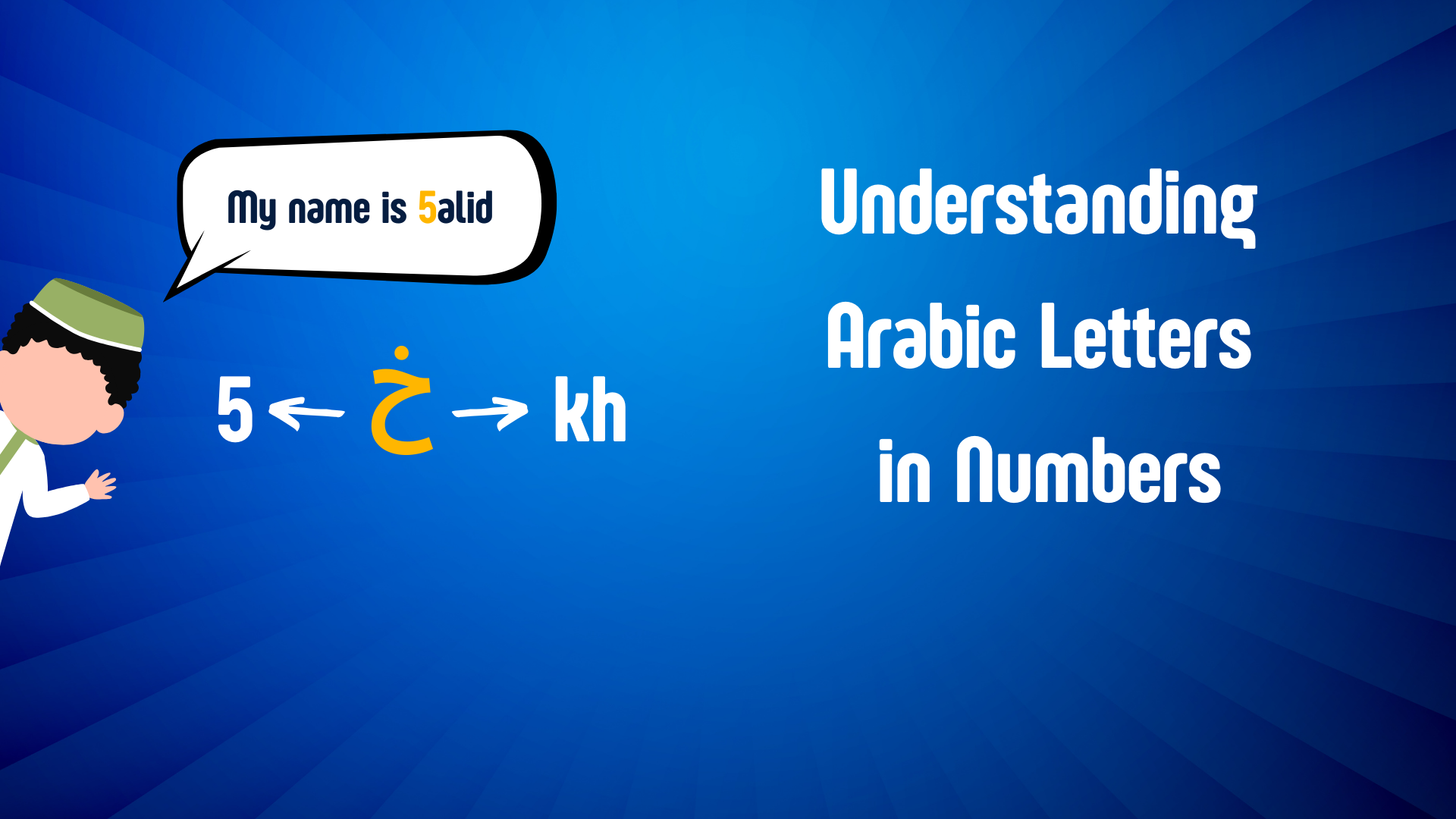
Arabizi (also called Franco Arabic or Franko) is a writing system that uses English letters and numbers to represent Arabic sounds. Numbers substitute for Arabic letters that have no English equivalent: 2=ء, 3=ع, 5=خ, 6=ط, 7=ح, 8=ق, 9=ص. It emerged in the 1990s when digital devices didn’t support Arabic script and remains popular today for informal texting and social media across the Arab world.
Key Takeaway Table:
| Number/Letter | Arabic Letter | Sound | Example Word | Meaning |
|---|---|---|---|---|
| 2 | ء (Hamza) | Glottal stop | 2amal (أمل) | Hope |
| 3 | ع (Ayn) | Guttural voiced pharyngeal | 3ain (عين) | Eye |
| 3′ / gh | غ (Ghain) | Voiced uvular fricative | 3’eem / gheem (غيم) | Cloud |
| 4 | ظ or variation | Emphatic sound (varies by dialect) | Regional | Varies |
| 5 | خ (Kha) | Voiceless velar fricative | 5aled (خالد) | Khalid |
| 6 | ط (Ta) | Emphatic T | 6areeg (طريق) | Road |
| 6′ | ظ (Dha) | Emphatic Z/Dh | 6’alim (ظالم) | Unjust |
| 7 | ح (Ha) | Voiceless pharyngeal fricative | 7abeeb (حبيب) | Beloved |
| 8 | ق (Qaf) | Uvular stop | 8alb (قلب) | Heart |
| 9 | ص (Sad) | Emphatic S | 9aba7 (صباح) | Morning |
| 9′ | ض (Dad) | Emphatic D | 9’aw2 (ضوء) | Light |
Mar7aba! (Welcome) If you’re here, you’re probably curious about how to learn Arabic, or maybe you’ve come across a strange writing style where Arabic is written with English letters and numbers.
This style is called Arabizi. This writing system emerged in the 1990s, born out of necessity when computers and mobile phones were becoming popular, but they didn’t support the Arabic script.
So, how do you communicate in Arabic when your keyboard only has English letters? Enter Arabizi. But is it the best way to learn Arabic? Let’s dive into this topic and explore it together.
What is Franco Arabic (Franko)? Origin and How It Works
Franco Arabic is a modern way to write Arabic using English letters and numbers. It’s like a secret code that young people use to communicate online and through text messages.
This form of writing became popular because Arabic keyboards were not always available, and typing Arabic with Latin characters was easier for many.
Okay, let me tell you a story. Imagine a young Arab who moves to an English-speaking country. At school, all the subjects are in English, but at home, the family speaks Arabic. This young person might feel stuck between two languages, trying to blend them. This is where Franco Arabic comes in.
For example, to represent the Arabic letter “ع” (ʕ), the number 3 is used because it visually resembles the shape of the letter. Similarly, “ح” (ḥ) is represented by 7. This method was convenient and quickly became popular, especially in online chatrooms, text messages, and social media.
Here’s an example from the Laventine dialect:
- شو عمتعمل؟ (ʃuː ʕam ˈtaʕmɪl?) – “What are you doing?”
- In Arabizi: chou 3am ta3mil?
Imagine you want to say “hello” in Arabic. In Franco Arabic, you might write it as “Mar7aba.” Here, the number “7” replaces the Arabic letter “ح” (ḥā). This method allows people to type Arabic sounds without needing an Arabic keyboard.
Arabizi vs. Franco Arabic: What’s the Difference?
Arabizi and Franco Arabic (Franko) refer to the same writing system — Arabic expressed through Latin letters and numbers — but the terms come from different communities:
| Term | Who Uses It | Etymology |
|---|---|---|
| Arabizi | Researchers, Gulf Arab users, social media globally | From “Arabi” (Arabic) + “Inglizi” (English) |
| Franco Arabic / Franko | Egyptian and Levantine Arabic speakers | From “French” — reflecting French colonial influence on Arabic-speaking countries |
| Chat Arabic | Academic term | Describes the digital texting context |
| Arabish | Some diaspora communities | Alternative blend term |
Regardless of which term you use, the system is the same: specific Arabic sounds that don’t exist in English are represented by numbers that visually resemble the Arabic letters.
Origin: Arabizi emerged in the 1990s when computers and early mobile phones could not render Arabic script. Young Arabs needed a way to communicate digitally in their native language using keyboards that only had Latin characters. The number-substitution system developed organically — spreading through chatrooms, SMS, and later WhatsApp and social media.
Master Arabic with Kalimah Center
Join our expert-led online classes and start your journey toward Arabic fluency today.
Book Your Free TrialArabic Letters in Numbers: Complete Arabizi Number Reference
Now, let’s talk about the numbers used in Arabizi “franko letters”. Each number stands for a specific Arabic letter sound that doesn’t have a direct match in the English alphabet.
Here’s a guide to the Arabic letters in numbers, along with examples to help you understand how it works.
The Numbers and Their Corresponding Letters
| Arabic Letter | In Arabizi | Meaning | Example (Arabic) | Transliteration |
|---|---|---|---|---|
| ء (Hamza) | 2 | Glottal Stop | أمل | 2amal |
| ع (Ayn) | 3 | Guttural Stop | عين | 3ain |
| غ (Ghain) | 3′ or gh | Voiced Uvular Fricative | غيم | gheem |
| خ (Khaa’) | 5 or kh | Voiceless Velar Fricative (Loch) | خالد | 5aled |
| ط (Taa’) | 6 or T | Emphatic ‘T’ | طريق | 6areeq |
| ظ (Zhaa’) | 6′ or Z | Emphatic ‘Z’ | ظالم | 6’alem |
| ح (Haa’) | 7 | Voiceless Pharyngeal Fricative (Strong H) | حبيب | 7abeeb |
| ق (Qaaf) | 8 or q | Uvular Stop (Deep ‘K’) | قلب | 8alb |
| ص (Saad) | 9 or S | Emphatic ‘S’ | صباح | 9abah |
| ض (Dhad) | 9′ or D | Emphatic ‘D’ | ضوء | 9o2 |
4 in Franco Arabic — The Contested Number
Unlike 7, 3, or 8 — which have clear, consistent letter assignments — the number 4 does not have a universally agreed letter in Franco Arabic. Its usage varies by region and individual convention:
| Regional Use | Arabic Letter | Sound | Example |
|---|---|---|---|
| Some Egyptian users | ظ (Dhāʾ) | Emphatic Dh/Z sound | Used when 6′ is avoided |
| Some Levantine users | No standard assignment | — | 4 rarely used in Levantine Franko |
| Occasional use | Visual approximation for certain letters | Varies | Context-dependent |
Why does 4 exist in Franco if it’s not standardized? You may see 4 used in older chatroom texts or by individual users as their personal convention. The key Franco numbers that are standardized across all regions are: 2, 3, 5, 6, 7, 8, and 9. The number 4 is the exception — if you see it in a Franco text, context will usually clarify its meaning.
What Does 7 Mean in Arabic Texting? (ح)
7 = ح (Ḥāʾ) — the voiceless pharyngeal fricative, a deep “H” sound produced in the throat. No equivalent exists in English.
How to pronounce it: Breathe out from deep in your throat while slightly constricting your airway — stronger and more breathy than the English “H.”
| Franco | Arabic | Meaning |
|---|---|---|
| 7abeeb | حبيب | Beloved / Darling |
| 7elo | حلو | Sweet / Beautiful |
| 7amdella | الحمد لله | Praise be to God |
| Mar7aba | مرحبا | Hello/Welcome |
| 7atta | حتى | Until / Even |
Why the number 7? The number 7 was chosen because its shape visually resembles the open form of the Arabic letter ح when viewed from certain angles.
What Does 3 Mean in Arabic Texting? (ع)
3 = ع (ʿAyn) — a voiced pharyngeal fricative unique to Arabic and Semitic languages. Often described as a “squeezed” vowel sound from deep in the throat.
How to pronounce it: Tighten your throat as if you’re about to gag slightly — the sound comes from the pharynx, not the mouth.
| Franco | Arabic | Meaning |
|---|---|---|
| 3arabi | عربي | Arabic |
| 3ain | عين | Eye |
| 3ala | على | On / Upon |
| 3amal | عمل | Work |
| Ana 3arif | أنا أعرف | I know |
Related: 3′ or gh = غ (Ghain) — the voiced uvular fricative, like a gargling “R” in French. Example: 3’eem / gheem (غيم) = cloud.
What Does 8 Mean in Franco Arabic? (ق)
8 = ق (Qāf) — a uvular stop, like a “K” sound but produced far back in the throat. In many dialects, Qāf is pronounced differently: as a glottal stop (ʾ) in Egyptian Arabic, as a hard “G” in some Gulf dialects, and as a full uvular Qāf in Classical and MSA pronunciation.
| Franco | Arabic | Meaning |
|---|---|---|
| 8alb | قلب | Heart |
| 8alam | قلم | Pen |
| 8ahwa | قهوة | Coffee |
| 8amar | قمر | Moon |
| 8ol | قول | Say (imperative) |
Alternative: Some Franco Arabic users write “q” instead of 8 for ق — both are understood. In Egyptian dialect contexts, ق is often rendered as 2 (glottal stop) rather than 8 in spoken representation.
What Does 9 Mean in Franco Arabic? (ص)
9 = ص (Ṣād) — an emphatic “S” sound, produced with the tongue pressed against the roof of the mouth and the throat slightly tightened. It has a heavier, more resonant quality than the regular س (Sīn).
| Franco | Arabic | Meaning |
|---|---|---|
| 9aba7 | صباح | Morning |
| 9aba7 el 5air | صباح الخير | Good morning |
| 9adeek | صديق | Friend |
| 9oot | صوت | Sound/Voice |
| 9a3b | صعب | Difficult |
Related: 9′ = ض (Ḍād) — the emphatic “D” sound. Arabic is historically called “لغة الضاد” (the language of Ḍād) because this sound is unique to Arabic. Example: 9’aw2 (ضوء) = light.
What Does 6 Mean in Franco Arabic? (ط)
6 = ط (Ṭāʾ) — an emphatic “T” sound, heavier and more resonant than the regular ت (Tāʾ). The back of the tongue presses down while the tip touches the upper teeth.
| Franco | Arabic | Meaning |
|---|---|---|
| 6areeq | طريق | Road/Path |
| 6aweel | طويل | Tall/Long |
| 6ab | طب | Medicine |
| 6ayeb | طيب | Good/Kind |
| 6alab | طلب | Request |
Related: 6′ = ظ (Dhāʾ) — the emphatic “Dh” or “Z” sound. Example: 6’alim (ظالم) = unjust/oppressor.
What Does 5 Mean in Franco Arabic? (خ)
5 = خ (Khāʾ) — a voiceless velar fricative, similar to the “ch” in Scottish “loch” or German “Bach.” It’s a raspy sound produced at the back of the mouth.
| Franco | Arabic | Meaning |
|---|---|---|
| 5aled | خالد | Khalid (name) |
| 5ubz | خبز | Bread |
| 5air | خير | Good/Goodness |
| 5ooya | خويا | My brother (dialect) |
| 5oof | خوف | Fear |
Note on خ in numbers: GSC shows “خ in english numbers” has 702 impressions and “خ in franco” has 333 impressions — confirming خ (represented by 5) is the most searched individual letter-to-number query. The answer is: خ = 5 in Franco Arabic, or “kh” as a letter combination.
What Does 2 Mean in Franco Arabic? (ء)
2 = ء (Hamza) — the glottal stop, the brief closure of the vocal cords you hear between the syllables of “uh-oh” in English. In Arabic, this sound is a full consonant letter.
| Franco | Arabic | Meaning |
|---|---|---|
| 2amal | أمل | Hope |
| 2ana | أنا | I/Me |
| 2ahlan | أهلاً | Welcome |
| 2al | قال (in Egyptian) | He said |
| 2alb | قلب (Egyptian dialect) | Heart |
Important regional note: In Egyptian Arabic, ق (Qāf) is commonly pronounced as a glottal stop — so 2 can represent both ء (Hamza) AND ق (Egyptian pronunciation) in Egyptian Franco. Context determines which is meant. This is why you may see 8alb (Levantine Franco for قلب = heart) and 2alb (Egyptian Franco for the same word).
Common Franco Arabic Words and Phrases: Arabizi in Real Use
Here are the most commonly used Franco Arabic words and phrases you’ll encounter in Arabic texting and social media:
Everyday Greetings in Franco Arabic
| Franco | Arabic | Meaning |
|---|---|---|
| Mar7aba / Mar7abo | مرحبا | Hello/Welcome |
| Ahlan / Ahlen | أهلاً | Hi/Welcome |
| Salam / Salamo | سلام | Peace (informal hello) |
| Kif 7alek? | كيف حالك؟ | How are you? (Levantine) |
| Izzayak? | إزيّك؟ | How are you? (Egyptian) |
| Mni7 / Mabsoo6 | منيح / مبسوط | Good / Happy |
| Ma3 el salame | مع السلامة | Goodbye |
| Yalla | يلا | Come on / Let’s go |
| Inshallah | إن شاء الله | God willing |
| 7amdella | الحمد لله | Praise God / Thank God |
Common Franco Arabic Expressions
| Franco | Arabic | Meaning |
|---|---|---|
| 7abeeb / 7abibti | حبيب / حبيبتي | My darling (m/f) |
| 3umri | عمري | My life (term of endearment) |
| Wallah | والله | I swear to God / Really |
| Ma fi | ما في | There is no / There isn’t |
| Bas | بس | Just / Only / Stop |
| Taman | تمام | Perfect / OK |
| Mish 3arif | مش عارف | I don’t know |
| 9a7? | صح؟ | Right? / Correct? |
| La2 / La | لأ / لا | No |
| 2aywa / Aywa | أيوا / أيه | Yes (Egyptian) |
How to Write Common Arabic Names in Franco
| Name | Arabic | Franco Arabic |
|---|---|---|
| Muhammad | محمد | Mu7ammad / Mo7ammad |
| Ahmad | أحمد | A7mad |
| Khalid | خالد | 5aled |
| Aisha | عائشة | 3aysha |
| Fatima | فاطمة | Fa6ema |
Arabizi Examples in Sentences
Now that you know the basics, let’s see how these numbers work in actual sentences.
- “Ana 7abbak” (أنا أحبك) – I love you.
- Transliteration: ʾanā ʾuḥibbuka (for a male) / ʾanā ʾuḥibbuki (for a female)
- “3arabiyyat al6ariq” (عربيات الطريق) – The cars on the road.
- Transliteration: ʿarabiyyāt al-ṭarīq
- “9adiq la yukhaf” (صديق لا يخاف) – A friend who is not afraid.
- Transliteration: ṣadīq lā yukhāf
Franco Arabic by Region: Egyptian Franko vs. Levantine Arabizi
While the core number system is shared, Franco Arabic varies by region. Here are the key differences between Egyptian and Levantine Franco:
| Feature | Egyptian Franko | Levantine Arabizi |
|---|---|---|
| ق (Qaf) representation | 2 (glottal stop pronunciation) | 8 (uvular pronunciation) |
| Word for “What” | Eh / Eeh | Shu / Shoo |
| Greeting | Ahlan / Izzayak | Mar7aba / Kif 7alek |
| “No” | La2 | La |
| “Yes” | Aywa / Ah | 2ee / Na3am |
| Term for “brother” | Akhoya / A5oya | Khooya / 5ooya |
| “I don’t know” | Mesh 3arif | Mish 3arif |
Example sentence — “What are you doing?”
- Egyptian Franko: Bte3mel eh? (بتعمل إيه؟)
- Levantine Arabizi: Chou 3am ta3mil? (شو عم تعمل؟)
The Egyptian variant is more widely understood across the Arab world due to Egypt’s dominant media influence — Egyptian films, music, and television reach all Arab countries, making Egyptian Franco the most recognized form internationally.
Can You Write Arabic in English Letters or Numbers?
Writing Arabic in English letters (Arabizi) is possible and even popular in casual settings like social media or texting. However, it’s important to understand that Arabizi is not a replacement for learning the Arabic alphabet.
Using Arabizi might make communication easier in certain contexts, but it won’t give you the full experience of the Arabic language. It’s like learning to play a musical instrument with only half the keys; you might get the tune, but you’ll miss the richness of the melody.
Experience Kalimah Center Classes
Watch real excerpts from our live sessions at Kalimah Center and see how we bring learning to life. These clips highlight our interactive, student-centered teaching approach across all our courses—designed to keep learners engaged, motivated, and actively involved every step of the way.
Is It Better to Learn the Arabic Alphabet or Arabizi?
If you’re serious about taking steps to learn Arabic, starting with the Arabic alphabet is the way to go.
Arabizi is a helpful tool for informal communication, but it’s not a substitute for the real deal.
The Arabic alphabet is integral to understanding the language in its purest form. It connects you to the culture, history, and beauty of Arabic in a way that Arabizi simply cannot.
Imagine trying to learn English but only using phonetic spellings instead of the actual alphabet. You might get by, but you’d miss out on the nuances and depth of the language. The same goes for Arabic. Learning the Arabic alphabet opens doors to a deeper understanding of the language, including its poetic and literary traditions.
So, Arabizi is not a substitute for learning the Arabic alphabet. Here’s why:
- Cultural Connection: The Arabic alphabet is a deep part of Arabic culture and history. Learning it allows you to connect with Arabic literature, the Quran, and traditional texts. Arabizi, on the other hand, is a modern invention and doesn’t carry the same cultural weight.
- Accuracy: Arabizi is informal and lacks standardization. Different people might use different numbers or letters for the same sounds, leading to confusion. Learning the Arabic alphabet provides you with a clear and consistent way to read and write Arabic.
- Language Mastery: To truly master Arabic, especially if you’re interested in the cultural and religious aspects, learning the alphabet is essential. It’s the foundation of the language. Arabizi is more like a shortcut, and while it’s useful, it’s not enough if you want to become fluent.
How to Read and Write Franco Arabic: Tips for Beginners
To effectively read and write in the Franco-Arabic (Arabizi) script, you need to recalibrate your phonetic understanding and recognize its connection to spoken dialects.
1. Read Phonetically, Not as English:
The biggest mistake is trying to pronounce Franco-Arabic words using English or French phonetic rules. 7 is not seven; it is Haa’. 3 is not three; it is Ayn.
2. Vowels are Flexible:
Arabic omits short vowels in written text, and this flexibility carries over to Arabizi. A word like “friend” (صديق) might be written as sadeeq, sadiq, or 9adeeq.
3. Use Dialect Knowledge:
Arabizi reflects spoken dialects, not Modern Standard Arabic (MSA). For instance, in many dialects, the letter ق (Qaaf) is pronounced like a hard ‘G’ (as in Game), so the word “moon” (قمر) might be written as gamar instead of 8amar.
4. Capitalization for Emphasis:
Sometimes, capitalized Latin letters are used to indicate the emphatic (heavier) versions of sounds, even when the number is also used (e.g., using T for ṭāʾ instead of just t).
Read Also: Arabic Numbers From 1 to 1000 With Word and Sentence Examples
Master Arabic with Kalimah Center
Join our expert-led online classes and start your journey toward Arabic fluency today.
Book Your Free TrialInside Kalimah Center: Moments from Our Courses
Get a glimpse into the vibrant learning experience at Kalimah Center. These snapshots capture real moments from our live classes—where students engage deeply, connect with passionate instructors, and grow in a welcoming, supportive environment.
Here Are The Reviews On Our Courses:
Our students frequently commend the excellence of our courses and the commitment shown by our instructors. You can read their complete reviews on Trustpilot.

Should You Learn Arabizi or the Arabic Alphabet? An Honest Answer
If you’ve read this far, you’re clearly interested in Arabic — and that’s the most important thing. Arabizi is a legitimate tool for informal communication, and understanding it helps you read texts from Arabic-speaking friends and social media. But it cannot replace the Arabic alphabet if your goal is true fluency.
Think of Arabizi as a map drawn by hand — useful for getting around, but not as precise or reliable as a professionally printed map. The Arabic alphabet is the professionally printed map: consistent, universal, and the key to everything Arabic has to offer — literature, the Quran, news, formal communication, and cultural depth.
At Kalimah Center, we teach the Arabic alphabet in a way that makes it feel accessible rather than intimidating. Most of our students are surprised by how quickly they can read Arabic once they have a structured approach
At Kalimah Center, we make learning the Arabic alphabet fun and easy!
- Expert teachers: Our experienced native teachers know how to make learning the alphabet exciting, not boring.
- Interactive lessons: We use games and activities to help you remember the letters and sounds.
- Strong foundation: Learning the alphabet is the first step to reading, writing, and speaking Arabic fluently.
- Personalized support: We’ll be there every step of the way to answer your questions and guide you.
📚 Explore Our Courses:
Online Arabic Course: Tailored to your level, our comprehensive Arabic program includes 16 teaching levels and 400+ hours of personalized sessions.
Online Quran With Tajweed Course: Perfect for non-Arabic speakers, our course spans 13 levels and equips you with Tajweed mastery from beginner to advanced.
Online Arabic Course For Kids: Nurture your child’s love for Arabic with our engaging and structured program, available in 24 levels for primary, intermediate, and secondary stages.
🚀 Start Your Free Trial Today! 🚀
Don’t miss out on this life-changing opportunity to deepen your faith and knowledge. Sign up now for your free trial and take the first step towards becoming a better practicing Muslim with Kalimah Center!
Start your journey with our “Learn The Whole Arabic Alphabet Online With Illustration” course. You’ll be reading and writing Arabic in no time!
Don’t waste time with shortcuts. Learn Arabic the right way with Kalimah Center!

Conclusion
Arabizi, or Franco Arabic, is a modern way of writing Arabic using English letters and numbers, developed when Arabic script wasn’t supported on early computers and mobile phones. It became popular for informal communication, especially among young people, allowing them to blend Arabic sounds with English characters.
However, while Arabizi is flexible and convenient, it lacks the cultural depth and precision of the Arabic alphabet. For serious learners, mastering the Arabic script is essential to fully appreciate the language’s beauty, cultural significance, and accuracy in communication.
FAQs about Arabic Letters In Numbers
Q1: What does 7 mean in Arabic texting (Arabizi)?
In Arabizi (Franco Arabic), 7 represents the Arabic letter ح (Ḥāʾ) — a voiceless pharyngeal fricative sound that does not exist in English. The number 7 was chosen because its shape visually resembles the Arabic letter ح. Example: 7abeeb (حبيب) = beloved/darling. This is one of the most commonly used number substitutions in Arabizi and appears across all Arabic dialects.
Q2: What does 3 mean in Arabic texting?
In Arabizi, 3 represents the Arabic letter ع (ʿAyn) — a voiced pharyngeal fricative unique to Arabic and several Semitic languages. The number 3 was selected because its shape mirrors the open form of ع. Example: 3arabi (عربي) = Arabic. You may also see 3′ or gh used for the related letter غ (Ghain).
Q3: What is the difference between Arabizi and Franco Arabic?
Arabizi and Franco Arabic (also spelled Franko) refer to the same writing system — Arabic expressed using Latin letters and numbers. “Arabizi” is a term used more commonly by researchers and in academic contexts, while “Franco Arabic” or “Franko” is the term used colloquially, especially in Egypt and the Levant. Regional variations exist: Egyptian users say “Franko,” Levantine users often say “Arabizi,” and Gulf users may use different conventions entirely.
Q4: What does 8 mean in Franco Arabic?
In Franco Arabic (Arabizi), 8 represents the Arabic letter ق (Qāf) — a uvular stop sound produced deep in the throat, similar to a ‘K’ but further back. The number 8 visually resembles ق when rotated. Example: 8alb (قلب) = heart. Some users prefer “q” instead of “8” for this letter — both are understood in the Franco system.
Q5: What does 9 mean in Franco Arabic?
In Franco Arabic, 9 represents the Arabic letter ص (Ṣād) — an emphatic “S” sound with no English equivalent. The number 9 was chosen for its visual resemblance to ص. Example: 9aba7 (صباح) = morning. You may also see 9′ used for the related emphatic letter ض (Ḍād). Common Arabizi phrase: 9aba7 el 5air (صباح الخير) = Good morning.