Yes — you can achieve basic Arabic proficiency (FSI Level 1) in 3 months with 2–3 hours of daily focused study. This means: reading the Arabic alphabet fluently, using essential greetings and 300–500 vocabulary words, asking and answering simple questions, and navigating everyday situations in Arabic.
It does not mean fluency — the US Foreign Service Institute estimates 2,200 hours for professional Arabic proficiency. Three months of intensive daily study produces approximately 180–270 hours. This guide explains exactly what FSI Level 1 means, what you will be able to do by Month 3, and provides a structured weekly plan.
Quick Reference: What 3 Months Gets You
| Skill | Realistic 3-Month Outcome |
|---|---|
| Alphabet | ✅ Read and write all 28 letters fluently |
| Vocabulary | ✅ 300–500 active words |
| Greetings | ✅ All standard greetings, introductions |
| Questions | ✅ Form and answer simple questions |
| Reading | ✅ Read simple vowelled texts |
| Grammar | ✅ Basic sentence structure, gender, definite article |
| Conversation | ✅ 5–10 minute guided conversation on familiar topics |
| Fluency | ❌ Not achievable in 3 months |
| Native-level | ❌ Requires years of study |
Can I Learn Arabic in 3 Months?
The idea of learning Arabic in just 3 months is certainly a challenging one, but it is possible to achieve a basic understanding with the right approach and dedication. While fluency may be difficult to attain in this time frame, setting realistic goals can help you make considerable progress.
A focused, structured plan that dedicates at least 2-3 hours per day to study can yield significant results. This includes not just textbook learning, but also immersive techniques such as listening to Arabic music, watching films, or engaging in conversation with native speakers. Utilizing language learning apps and online resources can also enhance your vocabulary and comprehension skills.
Integrating Arabic into your daily life, even in small ways like labeling household items with their Arabic names, can reinforce your learning. While mastering Arabic in three months may be ambitious, a focused approach can help you make meaningful progress in understanding and conversing in the language.
What Is FSI Level 1 Arabic? What You Will Actually Be Able to Do
The article’s goal — FSI Level 1 — sounds technical. Here is what it means in practice:
FSI Level 1 Arabic means you can:
✅ Greet people and respond to greetings correctly
You will say السلام عليكم and respond وعليكم السلام automatically. You will use صباح الخير (good morning), مساء الخير (good evening), and كيف حالك؟ (how are you?) without thinking.
✅ Introduce yourself and understand basic introductions
Name, where you are from, what you do — in Arabic. Understand when someone does the same.
✅ Handle basic shopping, ordering food, and asking for directions
“How much is this?” (بكم هذا؟), “I want…” (أريد…), “Where is the bathroom?” (أين الحمام؟) — automatic retrieval without translation.
✅ Ask and answer simple questions
Who, what, where, when, how — you will form these questions and understand the answers at slow, clear speaking speed.
✅ Read simple Arabic text with vowel marks (harakat)
Children’s books, signage, simple menus — you will read these correctly. Unvowelled text (newspapers) will still require significant guessing from context.
FSI Level 1 Arabic means you cannot:
❌ Follow native speakers at normal speed
Native conversations are too fast, too colloquial, and contain too many unknown words.
❌ Watch Arabic TV without subtitles
You will catch familiar words but not full comprehension.
❌ Read Arabic newspapers fluently
Unvowelled text requires vocabulary knowledge you won’t have at 3 months.
❌ Discuss complex or abstract topics
Work, politics, religion in depth — not yet accessible at Level 1.
Is FSI Level 1 worth 3 months of effort?
Absolutely. Level 1 Arabic is enough to: pray and understand your prayers, read simple Quranic verses with harakat, communicate during travel in Arabic-speaking countries, connect with Arabic-speaking family or community members at a basic level, and establish the foundation that all further Arabic learning is built on.
How Can I Learn Arabic in 3 Months?
Learning Arabic in just three months may seem daunting, but with a structured approach and dedication, it is achievable. Here’s a detailed guide that outlines the essential steps to follow each month, breaking your learning journey into clear phases to maximize your understanding and fluency.
Month 1: Arabic Foundation Building Phase
The first month is all about laying a solid foundation. Start by immersing yourself in the Arabic alphabet and fundamental pronunciation. Understanding the structure of the language will significantly ease your learning process.
What to Study in the first month:
Studying Arabic begins with a foundational understanding of its alphabet and basic phrases. Here are some key areas to focus on:
1. The Arabic Alphabet and Pronunciation
Letters and Sounds:
Familiarize yourself with the unique shapes and sounds of the 28 Arabic letters. Arabic letters have distinct forms depending on their position in a word (initial, medial, final). Focus on pronunciation, especially for sounds that may not exist in English, such as the guttural “ح” (ḥā’).
Learn Arabic Alphabet pronunciation through this helpful YouTube video.
Vowels and Diphthongs:
The short vowels (fatḥa, ḍamma, and kasra) and long vowels are crucial for correct pronunciation and word meaning. Understand how vowels affect word formation.
Basic Grammar Rules:
Grasp fundamental grammar rules, including the concept of sukun (absence of a vowel) and shadda (doubling of consonants). These rules are essential for reading and pronunciation.
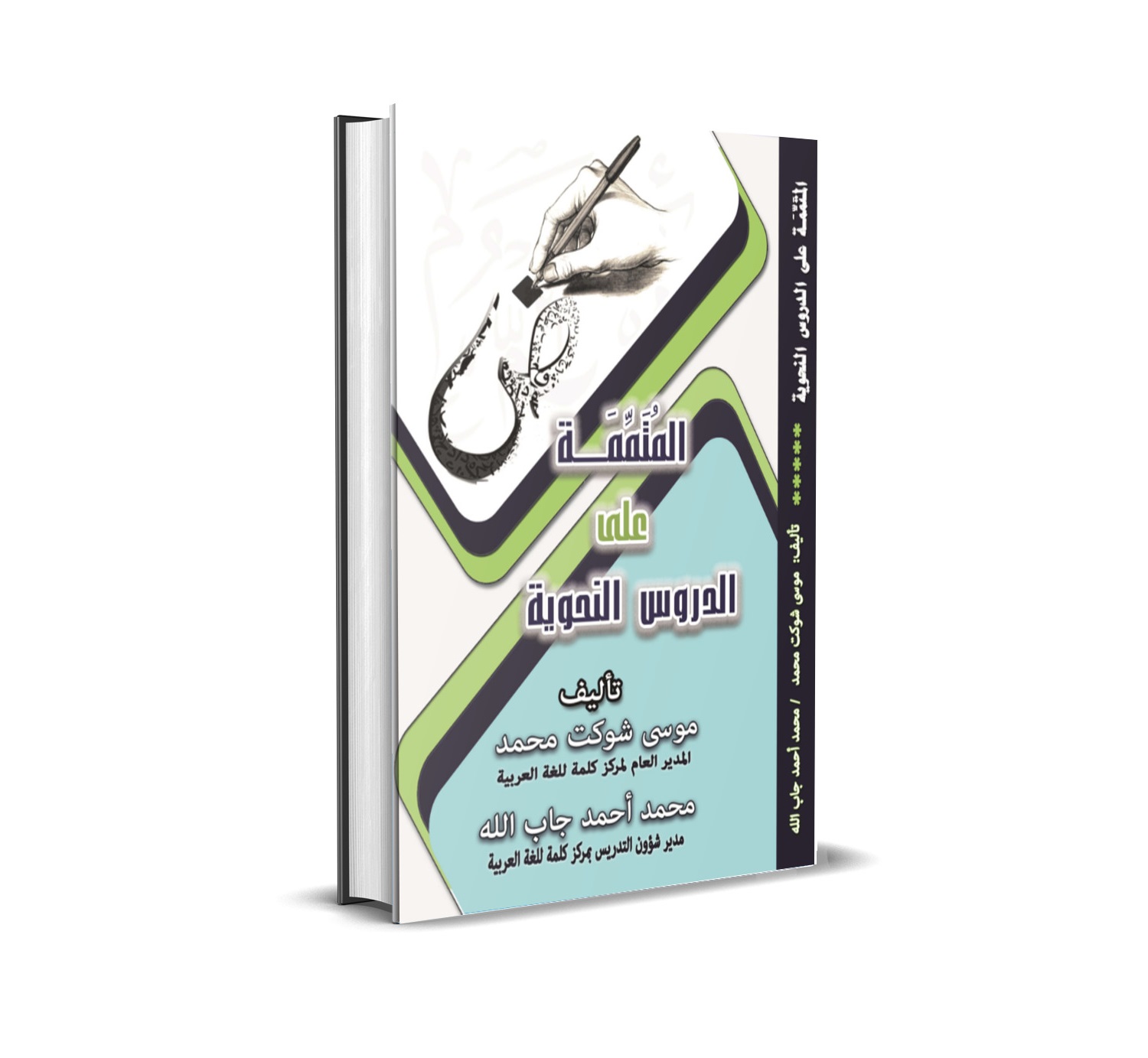
Kalimah Center provides a wide array of resources for Arabic language learners, including various books tailored to different proficiency levels. Among these is “Attamheed lelarabiyah” Arabic language basics for beginners (PDF) – التمهيد للعربية.”
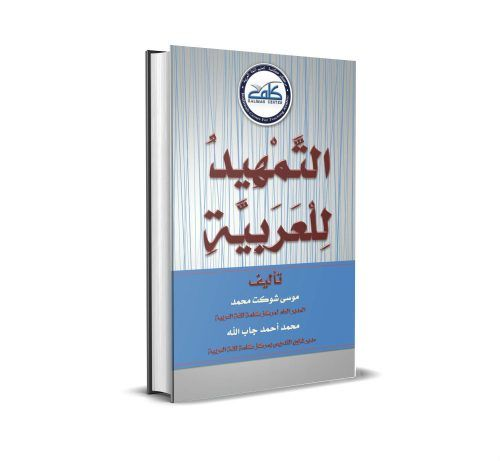
This book serves as an excellent resource for beginners who have just finished learning the Arabic alphabet. It allows students to gradually ease into the language by focusing on vocabulary and simple grammatical compositions in a communicative way.
2. Simple Greetings and Expressions
Start practicing basic phrases and greetings such as “السلام عليكم” (As-salāmu ʿalaykum – Peace be upon you) and “شكرا” (Shukran – Thank you). These phrases will serve as your first steps in conversational practice.
Practice Activities During the first month:
- Write and pronounce the Arabic letters daily.
- Engage in listening exercises by repeating phrases after native speakers.
- Read simple Arabic texts aloud, focusing on correct pronunciation.
Month 2: Arabic Conversational Development Phase
In the second month, shift your focus to building your vocabulary and understanding simple sentence structures. This phase is crucial for engaging in basic conversations.
What to Study During the Second month:
Building your Arabic language skills requires a focus on vocabulary development and understanding sentence structure. Here are key areas to concentrate on:
1. Vocabulary Development
- Everyday Words: Focus on learning everyday vocabulary related to common themes such as food, family, and daily activities. Use flashcards and word lists to enhance your retention.
- Question Words: Master question words such as “مَن” (man – who), “ماذا” (mādhā – what), and “أين” (ayn – where). Construct simple questions to enhance your conversational skills.
- Nouns, Pronouns, and adjectives: Learn to identify and use nouns, pronouns, and adjectives to describe these nouns. For instance, practice forming sentences like “هذا كتاب” (Hādhā kitāb – This is a book).
2. Verb Conjugation and Sentence Structure
- Present Tense: Start learning how to conjugate verbs in the present tense. Practice with sentences such as “أنا أدرس” (I study) to express your actions.
- Basic Conversations: Try to engage in simple conversations with native speakers or through language exchange platforms, focusing on daily routines and introductions.
Practice Activities During the second month:
- Engage in language exchange sessions with native speakers or fellow learners.
- Write daily journal entries in Arabic to reinforce your vocabulary.
- Watch Arabic-language shows or listen to podcasts, aiming to pick out familiar words and phrases.
Month 3: Practical Application and Cultural Immersion
The final month is about refining your skills and applying what you’ve learned in practical contexts. Immerse yourself in Arabic-speaking environments and cultural experiences.
What to Study in the third month?
Immersing yourself in diverse resources and consistently engaging in conversations with native speakers will enhance your fluency and confidence.
Here are some practical activities to enhance your learning:
1. Engage with Arabic Media
- Listening and Watching: Immerse yourself in Arabic through podcasts, TV shows, and videos. Use subtitles to aid comprehension and pick up on colloquial expressions.
- Reading Practice: Start reading short stories or articles to enhance vocabulary and comprehension skills.
2. Advanced Grammar Concepts
- Morphology: Learn about the root system of Arabic, understanding how different words are derived from the same root (e.g., “كتب” (k-t-b) relates to writing).
- Complex Sentences: Explore more advanced grammatical structures, including conditional sentences and relative clauses, to express more complex ideas.
3. Practical Application
- Cultural Context: Incorporate cultural learning into your studies. Understanding cultural norms and idiomatic expressions will enrich your language experience.
- Regular Practice: Consistently engage in conversations with native speakers. This can greatly improve your fluency and comfort level with the language.
Practice Activities during the third month:
- Keep a daily journal in Arabic to document your experiences and thoughts.
- Participate in local language meet-ups or online conversation groups.
- Watch Arabic movies or series with subtitles to improve comprehension and listening skills.
Ultimately, learning Arabic is possible in three months with a structured, immersive approach and consistent practice. Remember to stay motivated, set achievable goals, and embrace the language and culture.
At Kalimah Center, we provide expert instructors and a structured curriculum specifically designed to accelerate your Arabic learning. They’ll help you focus on the most important aspects of the language and guide you through the challenging parts.
3-Month Arabic Study Schedule — Weekly Structure
Daily time commitment: 2–3 hours
| Time Block | Daily Activity | Duration |
|---|---|---|
| Morning session | New learning (alphabet/grammar/vocabulary) | 45 min |
| Midday | Anki vocabulary review (spaced repetition) | 20 min |
| Afternoon | Listening practice (podcast/YouTube) | 30 min |
| Evening | Writing/speaking practice | 30 min |
| Before bed | Review day’s material | 15 min |
Month 1 — Weekly Targets:
| Week | Primary Focus | Vocabulary Target | Grammar Target |
|---|---|---|---|
| Week 1 | Alphabet letters 1–14 | 20 words | Right-to-left reading |
| Week 2 | Alphabet letters 15–28 + positional forms | 20 words | Isolated vs connected letters |
| Week 3 | Basic greetings + numbers 1–20 | 30 words | Definite article ال |
| Week 4 | Family vocabulary + basic verbs | 30 words | Masculine/feminine gender |
Month 2 — Weekly Targets:
| Week | Primary Focus | Vocabulary Target | Grammar Target |
|---|---|---|---|
| Week 5 | Personal pronouns + present tense verbs | 40 words | Verb conjugation — present |
| Week 6 | Question words + forming questions | 40 words | Question sentence structure |
| Week 7 | Food, shopping, and transaction vocabulary | 40 words | Numbers with nouns |
| Week 8 | Directions + travel vocabulary | 40 words | Prepositions (في، على، إلى) |
Month 3 — Weekly Targets:
| Week | Primary Focus | Vocabulary Target | Grammar Target |
|---|---|---|---|
| Week 9 | Past tense verbs + daily routines | 50 words | Past tense conjugation |
| Week 10 | Descriptive language + adjectives | 50 words | Adjective-noun agreement |
| Week 11 | Extended conversation practice | 30 words | Compound sentences |
| Week 12 | Full review + immersion | Consolidation | All Month 1–3 grammar |
3-Month Cumulative Vocabulary Target: 300–400 active words
Where Can I Learn Arabic? Options for Your 3-Month Plan
The 3-month plan works best when structured learning combines self-study with expert instruction. Here are the main options:
| Option | Best For | Cost | Time Commitment |
|---|---|---|---|
| Online 1-on-1 tutor (italki, Kalimah) | Fastest progress — personalised feedback | $10–40/hour | 2–5 sessions/week |
| Online group class (Kalimah Center) | Structured curriculum + community | Affordable | 2–3 classes/week |
| Self-study + apps (Duolingo, Anki) | Zero cost — requires discipline | Free | Daily 1–2 hrs |
| Language exchange (HelloTalk) | Speaking practice supplement | Free | 2–3x/week |
| Local Arabic classes | In-person interaction | Varies | Weekly |
For the 3-month intensive plan, our recommendation:
Combine daily self-study (using the schedule above) with at least 2 structured sessions per week with a qualified Arabic teacher. This combination produces results in 3 months that self-study alone would take 6–9 months to achieve.
Kalimah Center’s online Arabic course includes native-teacher-led instruction, structured curriculum across 16 levels, and sessions available from anywhere in the world. Your first lesson is free.
Experience Kalimah Center Classes
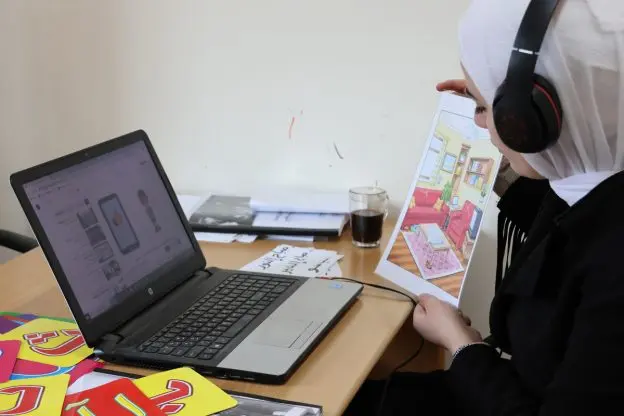
Watch real excerpts from our live sessions at Kalimah Center and see how we bring learning to life. These clips highlight our interactive, student-centered teaching approach across all our courses—designed to keep learners engaged, motivated, and actively involved every step of the way.
Master Arabic with Kalimah Center
Join our expert-led online classes and start your journey toward Arabic fluency today.
Book Your Free TrialWhat to Learn in Arabic Language During 3 Months?
In three months of focused study, you have the opportunity to reach FSI Level 1 proficiency in Arabic, which can serve as a solid foundation for your language journey. Here’s a detailed breakdown of what you should aim to learn during this period:
1. Basic Greetings and Everyday Vocabulary
Start by familiarizing yourself with essential greetings and common phrases. This includes:
- Greetings: Learn how to say hello (السلام عليكم), goodbye (مع السلامة), and good morning (صباح الخير).
- Common Expressions: Practice phrases like “How are you?” (كيف حالك؟) and “Thank you” (شكراً).
- Everyday Vocabulary: Focus on vocabulary related to daily life, including family members, colors, numbers, and basic verbs.
2. Simple Questions and Conversations
Asking and answering basic questions is crucial for initiating conversations. Focus on:
- Self-Introduction: Practice introducing yourself by stating your name, age, and where you are from.
- Personal Questions: Learn how to ask questions about someone’s name (ما اسمك؟), nationality (من أين أنت؟), and interests (ما هواياتك؟).
- Responses: Formulate simple responses to common questions to facilitate smooth exchanges.
3. Travel Needs and Practical Interactions
Navigating basic travel scenarios can enhance your confidence in real-life situations. Concentrate on:
- Directions and Transportation: Learn vocabulary for asking for directions, understanding transport options, and using basic phrases related to travel.
- Dining and Shopping: Familiarize yourself with phrases needed for ordering food, asking about prices, and making purchases.
- Essential Services: Understand how to communicate in contexts like hotels, airports, and restaurants, ensuring you can handle common travel needs.
4. Reading and Comprehending Simple Texts
Developing reading skills will enhance your overall language comprehension. Work on:
- Basic Texts: Start with simple texts, such as children’s books or beginner-level articles, focusing on familiar vocabulary and structures.
- Dictionary Skills: Use a dictionary to aid understanding, allowing you to look up unfamiliar words and expand your vocabulary effectively.
- Writing Practice: Engage in basic writing exercises, such as composing simple sentences or short paragraphs about your daily routine.
Focusing on these key areas during your three-month study period can make substantial progress in Arabic. Consistent practice and exposure to the language in various contexts will not only help you achieve FSI Level 1 proficiency but also lay the groundwork for further learning and exploration of this rich and complex language.
Read more about How To Learn Arabic In 5 Minutes A Day? Simple And Effective Tips for Beginners
Is it Easy to Learn Arabic in 3 Months?
While the goal of learning Arabic in three months is certainly appealing, it’s important to understand that such an intensive schedule can be exhausting. Committing to learning a complex language like Arabic within this timeframe may not only lead to frustration but could also result in burnout.
It is often more effective to extend your learning period to 6 months or even a year, allowing for a deeper understanding and greater retention of the language.
Engaging with a specialist at Kalimah Center can provide personalized guidance tailored to your learning pace, making your journey more manageable and enjoyable.
Can you Learn Arabic in 2 Months?
Learning Arabic in just two months is a challenging goal. Although achieving full conversational fluency within this timeframe may not be realistic, you can still make considerable progress. Arabic is a complex language characterized by its rich grammatical structure and extensive vocabulary, which makes it a challenging yet rewarding endeavor for language learners.
What to Expect in 2 Months
In two months of dedicated study and practice, you can set a foundation for your Arabic learning journey. Here are some realistic outcomes you can expect:
1. Basic Vocabulary and Phrases:
You’ll be able to learn essential greetings, everyday expressions, and common phrases. This foundational vocabulary will help you navigate simple conversations in social settings.
2. Simple Questions and Answers:
By practicing basic conversational patterns, you’ll be able to ask and respond to simple questions about yourself and your immediate environment, such as discussing your name, where you live, or what you like to do.
3. Navigating Travel Needs:
With focused effort, you can familiarize yourself with key phrases that are helpful for travel, such as ordering food, asking for directions, and making small talk with locals. This will enhance your confidence in Arabic-speaking environments.
4. Reading Simple Texts:
You may also be able to read and understand basic texts, such as signs or menus, especially if you utilize a dictionary. This skill is invaluable for everyday situations.
Realistic Goals Beyond 2 Months
While two months is a great start, reaching higher levels of proficiency requires more time and immersion. Here’s what you can aim for after an extended study period:
1. Conversational Fluency:
In three months, with consistent practice, you can achieve a level of conversational fluency that allows you to discuss familiar topics more comfortably.
2. Intermediate Grammar Understanding
By six months, you can dive deeper into Arabic grammar, mastering verb tenses, and sentence structures, which will enable more complex conversations.
3. Expanded Vocabulary
Over time, your vocabulary can grow, allowing for discussions on a broader range of topics, including work and hobbies.
4. Reading Comprehension
With continued practice, you can start reading and understanding more complex texts, such as articles or stories, further enhancing your language skills.
Overall, while you may not achieve full fluency, you can certainly lay a strong foundation to learn Arabic in 2 months. With consistent study, dedication, and practical application, you will make meaningful progress.
Inside Kalimah Center: Moments from Our Courses
Get a glimpse into the vibrant learning experience at Kalimah Center. These snapshots capture real moments from our live classes—where students engage deeply, connect with passionate instructors, and grow in a welcoming, supportive environment.
Here Are The Reviews On Our Courses:
Our students frequently commend the excellence of our courses and the commitment shown by our instructors. You can read their complete reviews on Trustpilot.

Learn Arabic Efficiently with Kalimah Center – Master the Arabic Language in Less Time!
Are you wondering, “Can I learn Arabic in 3 months?” With Kalimah Center, you can make incredible progress in mastering the Arabic language and deepening your connection with the Quran. Our expertly crafted Online Arabic and Quran Courses are designed to suit all levels, whether you’re a beginner or looking to refine your skills.
With professional, handpicked tutors and over 400+ hours of one-on-one lessons, you’ll get personalized guidance to achieve your goals. Try a free lesson and embark on a transformative learning journey today with Kalimah Center!
📚 Explore Our Courses:
Online Arabic Course: Tailored to your level, our comprehensive Arabic program includes 16 teaching levels and 400+ hours of personalized sessions.
Online Quran With Tajweed Course: Perfect for non-Arabic speakers, our course spans 13 levels and equips you with Tajweed mastery from beginner to advanced.
Online Arabic Course For Kids: Nurture your child’s love for Arabic with our engaging and structured program, available in 24 levels for primary, intermediate, and secondary stages.
🚀 Start Your Free Trial Today! 🚀
Don’t miss out on this life-changing opportunity to deepen your faith and knowledge. Sign up now for your free trial and take the first step towards becoming a better practicing Muslim with Kalimah Center!
Master Arabic with Kalimah Center
Join our expert-led online classes and start your journey toward Arabic fluency today.
Book Your Free TrialConclusion: 3 Months Is Enough to Start. It Is Not Enough to Stop.
Learning Arabic in 3 months is not a shortcut — it is a commitment. Two to three hours daily, every day, for 90 days, following a structured plan. The result is FSI Level 1 Arabic: real, functional, useful Arabic that lets you greet, communicate, read, and navigate.
It is not fluency. Fluency takes years. But it is the foundation that makes fluency achievable — and without a foundation, fluency remains permanently theoretical.
Use the month-by-month plan in this article. Follow the weekly schedule. Study daily. And at the end of Month 3, you will have Arabic that you did not have before — and a clear path to everything that comes after.
Your 3-month milestone summary:
| Month | What You Built |
|---|---|
| Month 1 | Alphabet, pronunciation, 100 words, basic greetings |
| Month 2 | 250 words, simple sentences, question formation |
| Month 3 | 400 words, basic conversations, reading simple texts |
That is FSI Level 1. That is the beginning.
FAQs about Learn Arabic in 3 Months
Q1: Can I really learn Arabic in 3 months?
Yes — to FSI Level 1 proficiency, with 2–3 hours of daily focused study. This means basic greetings, 300–500 vocabulary words, simple question formation, basic reading of vowelled texts, and the ability to navigate everyday situations in Arabic. Fluency requires years. But Level 1 Arabic — enough to connect, communicate at a basic level, and establish a foundation for continued learning — is genuinely achievable in 3 months with the structured approach in this article.
Q2: What exactly is FSI Level 1 Arabic?
FSI Level 1 means you can handle basic survival situations in Arabic: greet people, introduce yourself, ask simple questions, order food, ask for directions, and navigate everyday interactions. You understand slow, clear speech on familiar topics. You cannot follow native conversations at natural speed, read unvowelled text fluently, or discuss complex topics. It is the foundation that makes all further Arabic learning faster and more manageable.
Q3: How many hours per day do I need to study Arabic for 3 months?
The structured plan in this article requires 2–3 hours of daily focused study — spread across a morning learning session (45 min), midday Anki review (20 min), afternoon listening practice (30 min), evening speaking/writing practice (30 min), and a brief before-bed review (15 min). This totals approximately 2 hours daily minimum, 3 hours on full study days. Over 90 days, this produces 180–270 hours of Arabic study — enough for FSI Level 1.
Q4: Should I learn MSA, a dialect, or Quranic Arabic in 3 months?
For a 3-month foundational plan, Modern Standard Arabic (MSA) is the recommended starting point. It provides the grammatical structure that transfers directly to Quranic Arabic and any spoken dialect. Learners who start with a specific dialect gain conversational phrases but miss the grammar foundation that makes intermediate Arabic learnable. After Month 3, branch into your target variety (Egyptian Arabic, Quranic Arabic, Gulf Arabic) based on your goals. See our full comparison: Quranic Arabic vs MSA.
Q5: What resources do I need for the 3-month plan?
The 3-month plan requires: Anki (free — vocabulary spaced repetition), Language Transfer Introduction to Arabic (free — grammar audio course), ArabicPod101 YouTube (free — structured video lessons), HelloTalk (free — speaking practice with native speakers), and a qualified Arabic teacher for at least 2 sessions per week (the single most impactful investment). Kalimah Center offers a free first lesson for learners starting this plan.