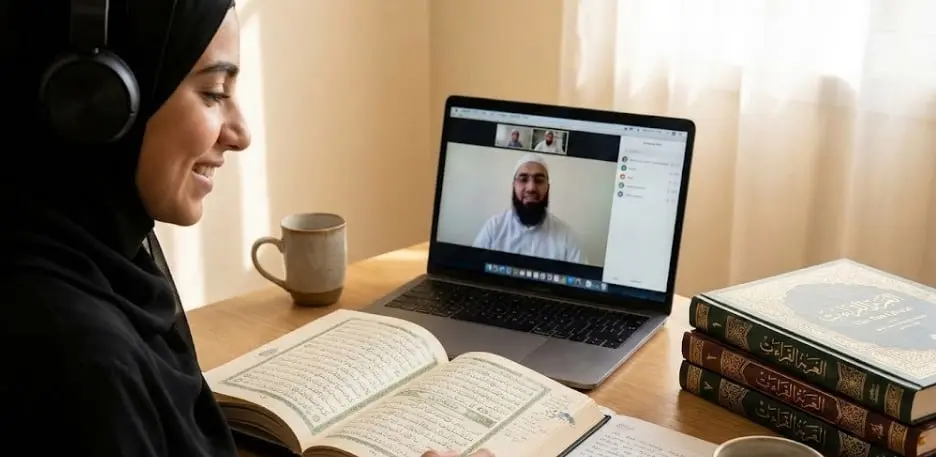
Yes — you can achieve FSI Level 1–2 Arabic proficiency in 6 months with 2 hours of daily focused study. This means: basic conversational fluency on familiar topics, ability to read simple Arabic texts, and the foundation for continued intermediate study.
Six months of structured Arabic study produces approximately 360 hours — enough to move from zero to genuine basic communication ability. The 3-phase plan below breaks this into Month 1 (foundation), Months 2–3 (everyday communication), and Months 4–6 (fluency and cultural immersion), with concrete weekly targets throughout.
✅ 6-Month Outcomes Table:
| Milestone | Realistic by Month 6 |
|---|---|
| Alphabet | ✅ All 28 letters + positional forms — automatic |
| Vocabulary | ✅ 500–800 active words |
| Reading | ✅ Simple vowelled texts fluently; beginning unvowelled |
| Grammar | ✅ Present + past tense, question formation, adjective agreement |
| Speaking | ✅ 10–15 minute conversation on familiar topics |
| Listening | ✅ Slow, clear Arabic with ~60% comprehension |
| FSI Level | ✅ Level 1–2 (Limited Working Proficiency approaching) |
Can You Learn Arabic In Six Months?
Yes, you can reach a commendable level of Arabic in six months. However, be prepared to put in the effort. Aim for a minimum of two hours of dedicated study every day.
It’s not just about the time you invest, though. You need the right resources and a well-crafted plan. A skilled teacher or a comprehensive course can be your guiding light, helping you prioritize essential aspects and navigate the complexities of the language. And don’t underestimate the power of practicing with native speakers whenever you get the chance!
Think juggling a full-time job and learning Arabic in six months is impossible? Dr. Anas, a student at Kalimah Center, proved otherwise. He achieved fluency in just one year, showcasing that rapid progress is attainable with the right guidance and unwavering commitment.
“I’ve been amazed by my experience with Kalimah. I wholeheartedly recommend them to anyone serious about mastering Arabic.” – Dr. Anas
What Arabic Level Will You Reach in 6 Months?
Six months of structured daily study (2 hours/day) produces approximately 360 hours of Arabic study. According to the US Foreign Service Institute scale:
| FSI Level | Description | Hours Required | 6-Month Status |
|---|---|---|---|
| Level 0 | No proficiency | 0 | Start |
| Level 1 | Elementary — basic survival situations | 240 hrs | ✅ Achieved by Month 4 |
| Level 1+ | Working toward limited working | 360 hrs | ✅ Achieved by Month 6 |
| Level 2 | Limited working proficiency | 600+ hrs | Month 10–12 |
| Level 3 | Professional proficiency | 2,200 hrs | 3–5 years |
What Level 1+ Arabic looks like in practice:
By the end of Month 6, you will be able to:
- Greet people and hold small talk conversations automatically
- Introduce yourself, your family, and your daily routine
- Ask and understand answers to questions about familiar topics
- Order food, shop, and navigate travel situations in Arabic
- Read simple Arabic texts — news headlines, children’s stories — with occasional dictionary use
- Follow slow, clear Arabic audio on familiar topics with approximately 60% comprehension
- Write short paragraphs and simple emails in Arabic
You will not be able to:
- Follow native speakers at natural conversation speed on all topics
- Read unvowelled Arabic text fluently without vocabulary knowledge
- Discuss abstract or complex topics with confidence
- Understand all Arabic media without subtitles
Master Arabic with Kalimah Center
Join our expert-led online classes and start your journey toward Arabic fluency today.
Book Your Free TrialRead also: Arabic language levels
How to Learn Arabic in Six Months: A Phased Approach
Your language acquisition journey will be divided into three strategic phases, each building upon the previous one to progressively enhance your skills:
Phase 1: Foundation (Month 1) — Alphabet, Pronunciation, Basic Grammar
In the first month, master the Arabic alphabet’s unique sounds and shapes, including emphatic consonants and vowels. Practice reading simple texts aloud, focusing on shadda, sukun, tanwin, and the definite article to perfect pronunciation.
Delve into the World of Arabic Letters and Sounds
Begin your journey by immersing yourself in the Arabic alphabet, and discovering the unique shapes and sounds of each letter. Pay close attention to the emphatic consonants, like “ض” (ḍād), that don’t have equivalents in English. Practice writing and pronouncing them to perfection.
Master the Art of Vowels
Understand the difference between short vowels (like “َ” – fatḥah) and their long counterparts (like “ا” – ālif). Learn how these subtle differences can significantly alter the pronunciation of words.
Uncover the Secrets of Shadda and Sukun
Explore the concept of shadda, which indicates the gemination or doubling of a consonant, and sukun, the absence of a vowel sound. These concepts are essential for accurate reading and pronunciation.
Navigate Tanwin and the Definite Article
Discover the fascinating world of tanwīn (nunation), which adds a final “n” sound to words in specific grammatical contexts. Also, learn the special rules that apply when the definite article “ال” (al-) precedes a word.
Practice Makes Perfect
To solidify your newfound knowledge, begin reading simple Arabic texts aloud. Focus on applying the grammatical rules you’ve learned and perfecting your pronunciation. This consistent practice will pave the way for fluent reading and comprehension in the future.
Phase 2: Everyday Communication (Months 2–3) — Vocabulary and Sentences
Over the next two months, you’ll start building the foundation for every day Arabic conversations.
Words that Describe (Nouns and Adjectives):
Learn words for everyday objects and descriptions to express yourself.
- Example: Instead of just saying “car,” you can say “سيارة حمراء” (sayyarah hamra’a) for “red car.”
Words that Point (Pronouns)
Discover the words that replace names, making your sentences flow smoother.
- Example: Use “هو” (huwa – he) and “هي” (hiya – she) instead of repeating names.
Asking with Confidence (Question Words)
Get curious and explore Arabic with question words.
- Example: Ask “أين المقهى؟” (ayna al-maqha? – where is the cafe?) to find your caffeine fix.
Verbs in Action (Conjugation)
Learn how verbs change to talk about the past, present, and future.
- Example: Instead of just saying “eat,” you can say “أنا أكلت” (ana akalt – I ate) to talk about your delicious meal.
Read more about How To Learn Arabic In 10 Days?
Phase 3: Fluency and Immersion (Months 4–6) — Advanced Grammar and Culture
Engage in confident conversations about daily life, grasp dialogues and short texts, and express yourself effectively across various subjects.
Arabic Word Formation
Unlock the secrets of Arabic morphology. Discover how the root “ك-ت-ب” (k-t-b), meaning “write,” transforms into words like “مكتوب” (maktūb – written), “يكتب” (yaktub – he writes), and “كاتبة” (kātibah – female writer). Similarly, the root “ع-ل-م” (related to knowledge) forms words like “علم” (‘ilm – knowledge/science), “يعلم” (yu’allim – he teaches), and “معلم” (mu’allim – teacher).
Vocabulary Enrichment
Expand your vocabulary in areas like traditions, weather, and technology.
Grammar Refinement
Explore more advanced sentence structures and grammatical concepts. Learn how to use conditional sentences, relative clauses, and other tools to express complex ideas. Master the use of different verb tenses and aspects to talk about the past, present, and future.
Practice
Immerse yourself in the language through diverse activities. Watch Arabic movies and TV shows with subtitles, listen to Arabic music and podcasts, and read short stories or articles. Challenge yourself to journal in Arabic to document your daily life and reflections. Engage with native speakers through language exchange platforms or conversation partners to practice Arabic speaking and listening in real-life contexts.
Arabic Dialects
If you have a particular interest in a region, explore the local dialect alongside Modern Standard Arabic (MSA). This will open doors to deeper cultural understanding and connection with Arabic speakers from different backgrounds. Learning a dialect like Egyptian Arabic or Levantine Arabic will enhance your ability to communicate with people from those regions and appreciate the diversity of Arabic language and culture.
By following this structured plan and dedicating yourself to consistent practice, you’ll be amazed at how quickly you can progress in your Arabic language journey. Remember, with the right mindset and resources, you can absolutely master Arabic in just six months. So, go forth, embrace the challenge, and unlock the beauty of Arabic language!
6-Month Arabic Study Schedule — Weekly Targets and Milestones
Daily Commitment: 2 hours minimum
| Time Block | Activity | Duration |
|---|---|---|
| Morning | New learning (grammar/vocabulary/reading) | 45 min |
| Midday | Anki spaced repetition review | 20 min |
| Afternoon | Listening practice | 30 min |
| Evening | Speaking or writing practice | 25 min |
PHASE 1 — Monthly Targets (Month 1)
| Week | Primary Focus | Vocabulary Target | Grammar Milestone |
|---|---|---|---|
| Week 1 | Alphabet letters 1–14, pronunciation | 20 words | Right-to-left reading |
| Week 2 | Alphabet letters 15–28, positional forms | 20 words | Isolated vs connected letters |
| Week 3 | Short vowels (harakat), Fatha/Kasra/Damma | 30 words | Definite article ال |
| Week 4 | Shadda, Sukoon, Tanwin + basic greetings | 30 words | Gender — masculine/feminine |
Month 1 cumulative: 100 words + complete alphabet + basic pronunciation
PHASE 2 — Monthly Targets (Months 2–3)
| Week | Primary Focus | Vocabulary Target | Grammar Milestone |
|---|---|---|---|
| Week 5 | Personal pronouns + family vocabulary | 40 words | Pronoun usage in sentences |
| Week 6 | Present tense verb conjugation | 40 words | Verb conjugation — present |
| Week 7 | Question words + forming questions | 40 words | Question sentence structure |
| Week 8 | Food + shopping vocabulary | 40 words | Numbers in context |
| Week 9 | Directions + travel phrases | 40 words | Prepositions |
| Week 10 | Daily routines + time expressions | 40 words | Past tense introduction |
| Week 11 | Adjectives + noun-adjective agreement | 40 words | Adjective agreement rules |
| Week 12 | Review + first extended conversation | Consolidation | All Phase 2 grammar |
Months 2–3 cumulative: 380 total words + conversational basics
PHASE 3 — Monthly Targets (Months 4–6)
| Week | Primary Focus | Vocabulary Target | Grammar Milestone |
|---|---|---|---|
| Week 13 | Arabic root system — 5 core roots | 50 words | Root-pattern morphology |
| Week 14 | Past tense mastery + storytelling | 50 words | Past tense all persons |
| Week 15 | Weather, seasons, environment | 50 words | Conditional sentences intro |
| Week 16 | Technology + modern life vocabulary | 50 words | Relative clauses intro |
| Week 17 | Culture + traditions vocabulary | 50 words | Complex sentence structures |
| Week 18 | News and current events vocabulary | 50 words | Passive voice intro |
| Week 19 | Dialect introduction (chosen variety) | 50 words | Dialect vs MSA comparison |
| Week 20 | Extended immersion + conversation | Consolidation | All Phase 3 grammar |
| Week 21 | Reading practice — news articles | Consolidation | Reading comprehension |
| Week 22 | Writing practice — essays, emails | Consolidation | Writing composition |
| Week 23 | Full conversation practice | Consolidation | Fluency consolidation |
| Week 24 | Final assessment + Month 7 planning | Final review | All 6-month grammar |
Month 6 cumulative: 700–800 active words + FSI Level 1–2 proficiency
Master Arabic with Kalimah Center
Join our expert-led online classes and start your journey toward Arabic fluency today.
Book Your Free TrialInside Kalimah Center: Moments from Our Courses
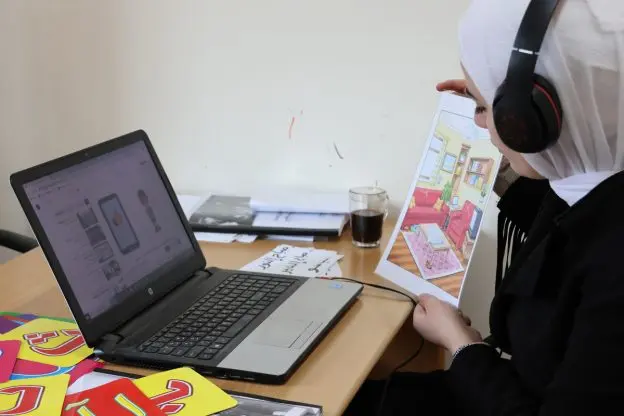
Get a glimpse into the vibrant learning experience at Kalimah Center. These snapshots capture real moments from our live classes—where students engage deeply, connect with passionate instructors, and grow in a welcoming, supportive environment.
Here Are The Reviews On Our Courses:
Our students frequently commend the excellence of our courses and the commitment shown by our instructors. You can read their complete reviews on Trustpilot.
Read more reviews on Trustpilot

Ready to Learn Arabic in Just 6 months?
So, you’ve got the phased schedule from the article, but where’s the expert guidance and proven Arabic Language curriculum to make it a reality?
Kalimah Center is your one-stop shop for a transformative Arabic learning journey, tailored to your schedule and learning style.
Take a placement test to decide your starting level
With Kalimah, your six-month plan becomes a reality:
- Phase 1: Build a Strong Foundation: Master the Arabic alphabet and essential grammar in our beginner courses.
- Phase 2: Everyday Conversations: Confidently communicate about daily life topics and start expressing yourself in Arabic.
- Phase 3: Advanced Communication: Engage in conversations about complex societal topics and deepen your understanding of Arabic grammar.
- Phase 4: Mastery and Beyond: Explore specialized programs and courses to refine your skills and achieve fluency.
Start your journey with a FREE TRIAL at Kalimah Center. We’re excited to help you achieve your goals.
Conclusion: 6 Months Is Enough to Build Something Real
Six months of consistent, structured Arabic study — 2 hours daily, following the 3-phase plan above — produces real Arabic: 700–800 vocabulary words, conversational ability on familiar topics, reading fluency in vowelled texts, and the grammatical foundation that intermediate study builds on.
It is not fluency. Fluency is a longer journey. But six months of genuine effort produces Arabic that you can use — in prayers, in travel, in conversations with Arabic-speaking family, in reading the Quran aloud.
Your 6-month milestone summary:
| Phase | Months | What You Built |
|---|---|---|
| Foundation | 1 | Alphabet, 100 words, pronunciation, basic grammar |
| Communication | 2–3 | 400 words, simple conversations, questions |
| Fluency | 4–6 | 800 words, root system, extended conversations, cultural context |
Begin Phase 1 today. Six months from now, you will have Arabic.
FAQs about Learn Arabic in 6 Months
Q1: Can you learn Arabic in 6 months?
Yes — to FSI Level 1–2 proficiency with 2 hours of daily study. By Month 6, you will have approximately 700–800 active Arabic words, the ability to hold 10–15 minute conversations on familiar topics, reading fluency in vowelled Arabic texts, and the complete grammatical foundation needed for intermediate study. Fluency requires years — but 6 months of structured daily study produces genuinely useful, real-world Arabic.
Q2: How many hours per day should I study Arabic for the 6-month plan?
The 6-month plan in this article requires 2 hours of daily focused study — structured as 45 minutes of new learning in the morning, 20 minutes of Anki vocabulary review, 30 minutes of afternoon listening practice, and 25 minutes of evening speaking or writing. This produces approximately 360 study hours over 6 months. More daily time compresses the timeline proportionally — 3 hours/day would reach similar milestones by Month 4.
Q3: Is 6 months enough to read the Quran?
Six months of structured Arabic study will allow you to read vowelled Quranic text aloud correctly — the Quran is fully vowelled (harakat are present throughout), so you can pronounce every word if you know the letters and vowel marks. However, understanding what you read requires significantly more vocabulary than 6 months produces. Quranic comprehension — not just reading — typically requires 12–24 months of focused Quranic Arabic study alongside modern Arabic foundations.
Q4: What is the difference between learning Arabic in 3 months vs 6 months?
Three months produces FSI Level 1 (elementary survival Arabic — basic greetings, simple questions, everyday situations). Six months adds the root system, verb tense mastery, more complex grammar, extended conversation ability, and the beginnings of reading authentic Arabic. The 6-month plan also introduces dialect exposure (Month 6), which connects your Modern Standard Arabic foundation to real-world spoken Arabic. Six months is approximately twice the Arabic competency of 3 months.
Q5: Should I learn MSA, a dialect, or Quranic Arabic in 6 months?
Start with Modern Standard Arabic (MSA) for Months 1–5 — it provides the grammatical foundation for everything else. In Month 6, introduce your target dialect (Egyptian, Levantine, Gulf) or begin Quranic-specific vocabulary if that is your goal. Six months is long enough to establish the MSA foundation and begin dialect exposure — which is why Phase 3 of this plan includes a “Dialect Introduction” week (Week 19). Do not start with a dialect before building MSA fundamentals.