Learning Arabic in 10 days will not make you fluent. Anyone who tells you otherwise is selling something.
What 10 focused days can do is give you something genuinely valuable: the Arabic alphabet fully in your memory, 150–200 essential words at your fingertips, a basic grasp of how Arabic sentences work, and — perhaps most importantly — the momentum and confidence to keep going.
Arabic is one of the world’s great languages. It is the language of the Quran, of over 400 million speakers, of a literary tradition spanning more than 1,500 years. It rewards effort in ways that few languages do. This plan is not about shortcuts. It is about making your first 10 days count.
Here is exactly how to do it.
You cannot become fluent in Arabic in 10 days — but you can build a genuine foundation. In 10 focused days, a motivated beginner can master the Arabic alphabet, learn 150–200 essential words, understand basic sentence structure, and hold a simple introductory conversation. This guide provides a realistic, hour-by-hour plan for each day, with specific resources and measurable outcomes.
Key Takeaway Table:
| Day | Focus Area | Realistic Outcome by End of Day |
|---|---|---|
| 1 | Arabic Alphabet + Pronunciation | Can read and write all 28 letters in isolated form |
| 2 | Basic Phrases + Greetings | Can introduce yourself and exchange pleasantries |
| 3 | Numbers + Days of the Week | Can count to 100, name all days, tell basic time |
| 4 | Essential Grammar | Can construct subject-verb-object sentences |
| 5 | Core Vocabulary (150 words) | Can name common objects, family members, food |
| 6 | Listening Practice | Can follow slow, clear Arabic audio with ~50% comprehension |
| 7 | Speaking Practice | Can participate in a 2–3 minute guided conversation |
| 8 | Reading Practice | Can read short, vowelled Arabic texts slowly |
| 9 | Writing Practice | Can write a short paragraph about yourself |
| 10 | Review + Simulation | Can demonstrate all skills in a short mock conversation |
Total Time Investment Summary Table
| Day | Focus | Daily Time | Cumulative Total |
|---|---|---|---|
| Day 1 | Arabic Alphabet | 2.5–3 hrs | 2.5–3 hrs |
| Day 2 | Basic Phrases | 2–2.5 hrs | 4.5–5.5 hrs |
| Day 3 | Numbers + Days | 1.5–2 hrs | 6–7.5 hrs |
| Day 4 | Grammar | 3–3.5 hrs | 9–11 hrs |
| Day 5 | Vocabulary | 2.5–3 hrs | 11.5–14 hrs |
| Day 6 | Listening | 2–3 hrs | 13.5–17 hrs |
| Day 7 | Speaking | 2.5–3 hrs | 16–20 hrs |
| Day 8 | Reading | 2–2.5 hrs | 18–22.5 hrs |
| Day 9 | Writing | 2–2.5 hrs | 20–25 hrs |
| Day 10 | Full Review | 3–4 hrs | 23–29 hrs |
| Total | 23–29 hours |
Your 10-Day Arabic Learning Plan: What to Focus on Each Day
Learning Arabic in just 10 days is a challenging goal, but you can build a solid foundation by focusing on key essentials. Start by mastering the Arabic alphabet, learning common phrases, and understanding basic grammar to form simple sentences.
As the days progress, practice listening, speaking, reading, and writing to enhance your language skills. Daily activities such as learning numbers, days of the week, and useful vocabulary will prepare you for simple conversations.
Though fluency in 10 days is unrealistic, this approach helps you gain confidence and a taste for the language. Consistent practice and engaging with native speakers, tutors, or group classes will greatly improve your progress.
Involving yourself in Arabic media and using language-learning tools will accelerate your development, making this initial learning phase a stepping stone toward long-term fluency.
Here’s a detailed plan to maximize your Arabic learning in 10 days:
Day 1: Master the Arabic Alphabet (28 Letters, 2–3 Hours)
⏱️ Recommended daily time: 2.5–3 hours
(Including: 15 min warm-up review | 2 hrs alphabet study | 30 min pronunciation practice)
Embark on your Arabic learning journey by starting with the essentials: learn the Arabic alphabet to unlock reading and writing, master key phrases for everyday conversations, and grasp basic grammar to construct simple sentences.
This foundational knowledge will make your exploration of Arabic smoother and more engaging, paving the way for deeper understanding and effective communication.
Learn The Arabic Alphabet:
Arabic script is fundamental. Spend time learning how to read and write the Arabic alphabet.

Techniques:
Practice writing each letter and learn the different forms (initial, medial, final, and isolated). and listen to native speakers and mimic their pronunciation. Focus on unique sounds like ع (ayn) and ق (qaf)
Exercise:
Write out the alphabet repeatedly and practice pronouncing each letter.
Arabic Basic Pronunciation:
Familiarize yourself with the sounds of Arabic. Use resources like YouTube videos or language apps to hear native pronunciation.
Day 2: Essential Arabic Phrases for Real Conversations
⏱️ Recommended daily time: 2–2.5 hours
(Including: 15 min Day 1 review | 1.5 hrs phrase study | 30 min speaking practice)
Start your Arabic journey by mastering essential phrases. Learn greetings, polite expressions, and common questions to navigate daily conversations and make a great first impression.
These basic phrases will help you connect with others and build confidence in using Arabic.
Arabic Greetings And Introductions:
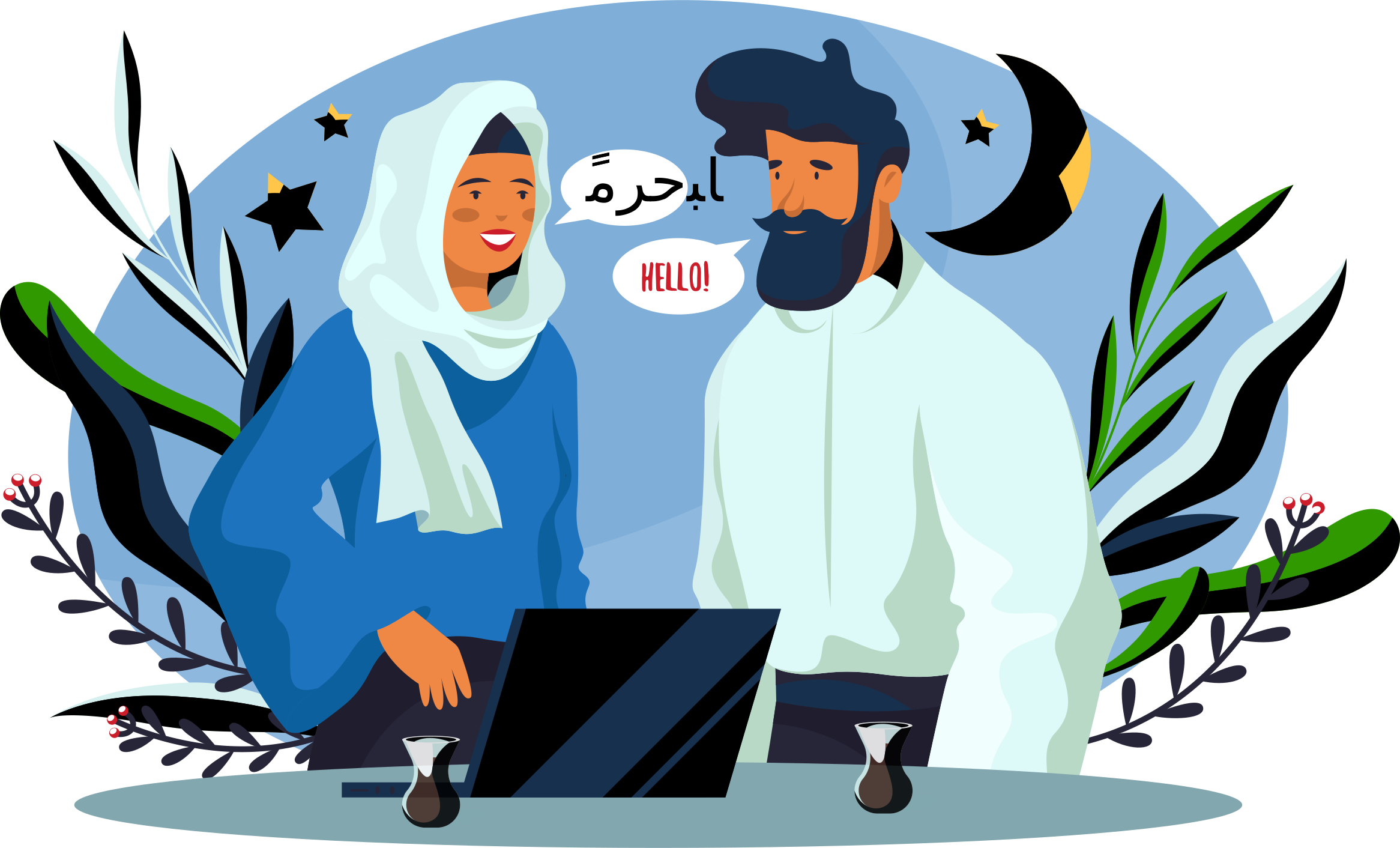
Learn common phrases like “Hello” (مرحبا), “Thank you” (شكرا), “Please” (من فضلك), and “Goodbye” وداعا (Wadaa’an) Yes: نعم (Na’am), No: لا (La), and basic questions.

Techniques:
Practice speaking these phrases out loud and use them in simple dialogues or online tutors to practice these phrases.
Day 3: Learn Arabic Numbers And Days Of The Week
⏱️ Recommended daily time: 1.5–2 hours
(Including: 15 min Day 2 review | 1 hr numbers + days | 30 min practical exercises)
Get started with Arabic by learning numbers and days of the week. These basics will help you manage everyday tasks and schedule events, making your language practice more practical and relevant.
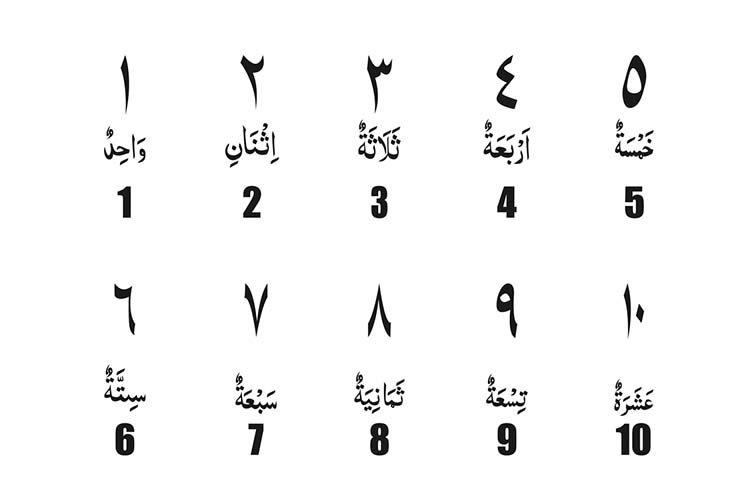
Numbers 1–10:
Learn to count and use numbers in simple contexts.
1 – واحد (Wahid)
2 – اثنان (Ithnan)
3 – ثلاثة (Thalatha)
4 – أربعة (Arba’a)
5 – خمسة (Khamsa)
6 – ستة (Sitta)
7 – سبعة (Sab’a)
8 – ثمانية (Thamaniya)
9 – تسعة (Tisa’a)
10 – عشرة (Ashara)
Arabic Days Of The Week:
Learn the days of the week and basic time-telling phrases.
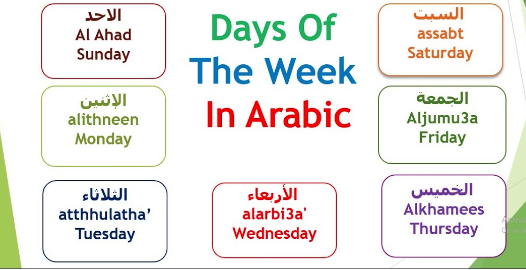
Sunday – الأحد (Al-Ahad)
Monday – الإثنين (Al-Ithnayn)
Tuesday – الثلاثاء (Al-Thulatha)
Wednesday – الأربعاء (Al-Arba’a)
Thursday – الخميس (Al-Khamis)
Friday – الجمعة (Al-Jum’a)
Saturday – السبت (As-Sabt)
Experience Kalimah Center Classes
Watch real excerpts from our live sessions at Kalimah Center and see how we bring learning to life. These clips highlight our interactive, student-centered teaching approach across all our courses—designed to keep learners engaged, motivated, and actively involved every step of the way.
Master Arabic with Kalimah Center
Join our expert-led online classes and start your journey toward Arabic fluency today.
Book Your Free TrialDay 4: Arabic Grammar Fundamentals — Pronouns, Verbs, and Sentence Structure
⏱️ Recommended daily time: 3–3.5 hours
(Including: 15 min Day 3 review | 2 hrs grammar study | 45 min sentence construction practice)
Arabic grammar has a reputation for being difficult — and in its full classical form, it is. But the foundational layer you need for basic communication is surprisingly manageable. Today focuses on three building blocks: pronouns, basic verbs, and sentence structure.
Arabic Pronouns:
| Arabic | Transliteration | Meaning |
|---|---|---|
| أنا | Ana | I |
| أنتَ / أنتِ | Anta / Anti | You (masculine / feminine) |
| هو | Huwa | He |
| هي | Hiya | She |
| نحن | Nahnu | We |
| أنتم | Antum | You (plural) |
| هم | Hum | They |
Two Essential Verbs to Start:
- ذَهَبَ (Dhahaba) — He went / to go
- أَكَلَ (Akala) — He ate / to eat
- كَانَ (Kana) — He was / to be
Arabic Sentence Structure:
Arabic can follow either Verb-Subject-Object (VSO) or Subject-Verb-Object (SVO) order — both are grammatically correct, with VSO being more classical. For beginners, SVO is easier to start with because it mirrors English structure.
Practice sentences:
- أنا طالب (Ana Talib) — I am a student
- هو دكتور (Huwa Duktur) — He is a doctor
- هي تذهب إلى المدرسة (Hiya tadhabu ila al-madrasa) — She goes to school
Today’s exercise: Write 10 original sentences using different pronoun + verb combinations. Then speak them aloud, recording yourself to check pronunciation.
Read also: Read Arabic in 21 days
Day 5: Build Your First 150 Arabic Words
⏱️ Recommended daily time: 2.5–3 hours
(Including: 15 min Day 4 review | 2 hrs vocabulary building | 30 min flashcard drilling)
Expand your Arabic skills by focusing on key vocabulary related to daily life. Building a solid word bank will enhance your ability to understand and participate in conversations.

Arabic Daily Life Vocabulary:
Focus on vocabulary related to everyday activities like: Food: خبز (Khobz – bread), ماء (Ma’ – water).
Family: أم (Umm – mother), أب (Ab – father).
Techniques:
Label items around your home with their Arabic names.
Flashcards:
Create or use pre-made flashcards to memorize words and phrases.
Day 6: Arabic Listening Practice — Training Your Ear
⏱️ Recommended daily time: 2–3 hours
(Including: 15 min Day 5 review | 1–1.5 hrs active listening | 1 hr passive listening during other tasks)
Your ear needs to adjust to Arabic before your brain can process it efficiently. Arabic has sounds that do not exist in English — the guttural ع (ayn), the emphatic ص (sad), the deep ق (qaf). Today is about exposure and ear training, not memorization.
Active Listening (60–90 minutes):
- ArabicPod101 on YouTube — search “Arabic for Absolute Beginners” — structured, slow, and clear
- Ahlan Simsim (the Arabic version of Sesame Street) — genuinely effective for adult beginners because the vocabulary is simple, the speech is slow, and the visual context helps comprehension
- News in Slow Arabic (podcast) — if you want something more adult in tone
Technique: Do not try to understand everything. Listen for words you already know (from Days 2–5). Every time you recognize a word in natural speech, your brain reinforces that word’s retention. This is why listening to content slightly above your level — where you catch perhaps 20–30% — is more valuable than listening to content you fully understand.
Passive Listening (1–2 hours, while doing other tasks):
Play Arabic news, music, or podcasts in the background while cooking, exercising, or commuting. Your brain will begin to absorb Arabic prosody — its rhythm, stress patterns, and sound combinations — without conscious effort.
Day 7: Arabic Speaking Practice
⏱️ Recommended daily time: 2.5–3 hours
(Including: 15 min Day 6 review | 1 hr conversation preparation | 1–1.5 hrs live speaking practice)
Boost your Arabic fluency by engaging in regular speaking practice.
This helps build confidence, improve pronunciation, and enhance conversational skills.

Language Exchange:
Spend time speaking with a native speaker or practice Arabic speaking with language exchange partners.
Practice Common Situations:
Practice dialogues such as ordering food in a restaurant or asking for directions.
Techniques:
Engage in short conversations, focusing on correct pronunciation and use of new vocabulary.
Day 8: Arabic Reading Practice — From Letters to Simple Texts
⏱️ Recommended daily time: 2–2.5 hours
(Including: 15 min Day 7 review | 1.5 hrs reading practice | 30 min vocabulary extraction from texts)
Enhance your Arabic skills by reading simple texts. This practice improves your understanding of sentence structure and vocabulary while boosting overall comprehension.

Simple Texts:
Read children’s books, or beginner-level texts available online, simple articles or short stories in Arabic.
Techniques:
Read aloud and highlight unfamiliar words. Use context clues to understand meaning.
Identify Patterns:
Focus on sentence patterns and repetitive structures.
and use graded readers for beginners.
Day 9: Arabic Writing Practice — Putting It All Together
⏱️ Recommended daily time: 2–2.5 hours
(Including: 15 min Day 8 review | 1.5 hrs writing exercises | 30 min correction and review)
Strengthen your Arabic by writing simple sentences and paragraphs. This practice helps reinforce grammar, expand vocabulary, and improve your overall language skills.

Write Simple Sentences:
Practice writing basic sentences about yourself, your day, or your interests.
Correct Mistakes:
Use language tools or ask a tutor to review and correct your writing or language exchange partners and use online grammar check tools if available.
Day 10: Full Review and Real Conversation Simulation
⏱️ Recommended daily time: 3–4 hours
(Including: 1 hr comprehensive review of Days 1–9 | 1 hr mock conversation or written essay | 1–2 hrs gap filling on weakest areas)
Consolidate your Arabic learning by reviewing key concepts and practicing regularly. This helps solidify your knowledge and build confidence in using the language.

Review What You’ve Learned:
Go over vocabulary, grammar, and phrases from the previous days.
Simulate Real Conversations:
Try to engage in a longer conversation or write a short essay about your experience learning Arabic.
Read more about How To Learn Arabic In 5 Minutes A Day? Simple And Effective Tips for Beginners
What Happens After Day 10? Your Arabic Learning Roadmap
The 10-day plan is a foundation, not a finish line. Here is what the path forward looks like for learners who continue:
Days 11–30: Consolidation Phase
Focus on expanding vocabulary to 300–500 words using spaced repetition (Anki). Continue daily listening for 30 minutes minimum. Begin working through a structured beginner curriculum — Madinah Arabic Book 1 is free online and widely considered the best structured entry point for MSA.
Months 2–3: Basic Conversation Competency
With consistent daily practice of 45–60 minutes, most learners reach the point where they can hold a basic conversation on familiar topics, read simple Arabic texts slowly, and understand the gist of clear, slow speech. This is where a structured course with a qualified teacher makes the most significant difference — because errors that go uncorrected at this stage become fossilized habits.
Months 4–6: Functional Literacy
At this stage, learners with consistent practice can read unvowelled Arabic text (the standard form of all Arabic outside the Quran and children’s books), participate in conversations on a range of everyday topics, and begin engaging with Quranic Arabic or a specific dialect depending on their goal.
The single most important thing you can do after Day 10:
Do not stop. The biggest predictor of Arabic learning failure is the gap — the days or weeks between intensive periods where nothing is practiced and previous learning decays. Even 20 minutes of daily review is exponentially more valuable than a 3-hour session once a week.
Honest Expectations: What You Will and Won’t Achieve in 10 Days
Before starting the plan, it is worth being precise about what 10 days of focused Arabic study can and cannot produce — because the right expectations are what keep learners going past Day 10 instead of feeling like they failed.
What you will realistically achieve:
- ✅ Full recognition and production of the Arabic alphabet (28 letters in all forms)
- ✅ 150–200 words of active vocabulary (words you can use, not just recognise)
- ✅ Ability to introduce yourself, ask basic questions, and understand simple responses
- ✅ A working understanding of Arabic sentence structure
- ✅ Familiarity with the sound system of Arabic — your ear will have begun to adjust
- ✅ A sustainable daily study habit established and tested
What you will not achieve:
- ❌ Fluency of any kind — conversational, reading, or otherwise
- ❌ The ability to watch Arabic films or read Arabic news without significant difficulty
- ❌ Grammar knowledge beyond the most elementary structures
- ❌ Automatic, effortless recall of vocabulary — this takes months of repetition
This is not discouraging. A surgeon does not apologise for telling a patient what a procedure can and cannot do. Knowing your realistic outcome at Day 10 lets you measure success accurately — and success at Day 10 is the fuel that takes you to Day 100.
Master Arabic with Kalimah Center
Join our expert-led online classes and start your journey toward Arabic fluency today.
Book Your Free Trial3 Principles That Determine Whether Your 10 Days Actually Work
After working with Arabic learners at various levels, three factors consistently separate those who make real progress in a short intensive period from those who don’t.
1. Depth Over Width — Don’t Chase New Content Every Day
The most common mistake in intensive language learning is moving to new material before the previous day’s content is consolidated. On Day 4, before you start grammar, spend 15 minutes reviewing Day 3’s numbers and days. On Day 7, review your Day 2 phrases. Spaced repetition is not a nice-to-have — it is the mechanism by which short-term exposure becomes long-term memory.
Practical application: End every day with a 15-minute review of the previous day’s material using flashcards (Anki is free and effective for this).
2. Speaking From Day 1 — Not Day 7
This plan places Speaking Practice on Day 7, but that is a structure for the primary focus of each day — not permission to stay silent for six days. From Day 1, say every letter aloud as you write it. From Day 2, say every phrase before reading its translation. The Arabic speaking apparatus — the muscles, the breath, the coordination of sounds like ع (ayn) and غ (ghayn) — needs time to develop. Give it that time by starting immediately.
3. Use a Human Being, Not Just an App
Apps are useful for vocabulary and alphabet drilling. They are poor substitutes for a real conversation partner. Even one 30-minute session with a native Arabic speaker on italki or a similar platform — during which you use only what you have learned — will consolidate more than three hours of app-based practice. Schedule at least one live session during your 10 days. It will be the most valuable hour you spend.
Master Arabic with Kalimah Center
Join our expert-led online classes and start your journey toward Arabic fluency today.
Book Your Free TrialInside Kalimah Center: Moments from Our Courses
Get a glimpse into the vibrant learning experience at Kalimah Center. These snapshots capture real moments from our live classes—where students engage deeply, connect with passionate instructors, and grow in a welcoming, supportive environment.
Here Are The Reviews On Our Courses:
Our students frequently commend the excellence of our courses and the commitment shown by our instructors. You can read their complete reviews on Trustpilot.

Continue Your Arabic Journey With Structured Courses
Kalimah Center provides dynamic and engaging Arabic language courses designed for all ages and proficiency levels. Our expert instructors use innovative methods to help you master Arabic quickly and confidently. From interactive lessons to cultural insights, we make learning Arabic enjoyable and effective.
Join our vibrant community and start your journey towards fluency today. Explore our offerings at Kalimah Center and transform your Arabic learning experience!
Get Started with a Free Arabic Lesson—No Obligation, Just Insight!
📚 Explore Our Courses:
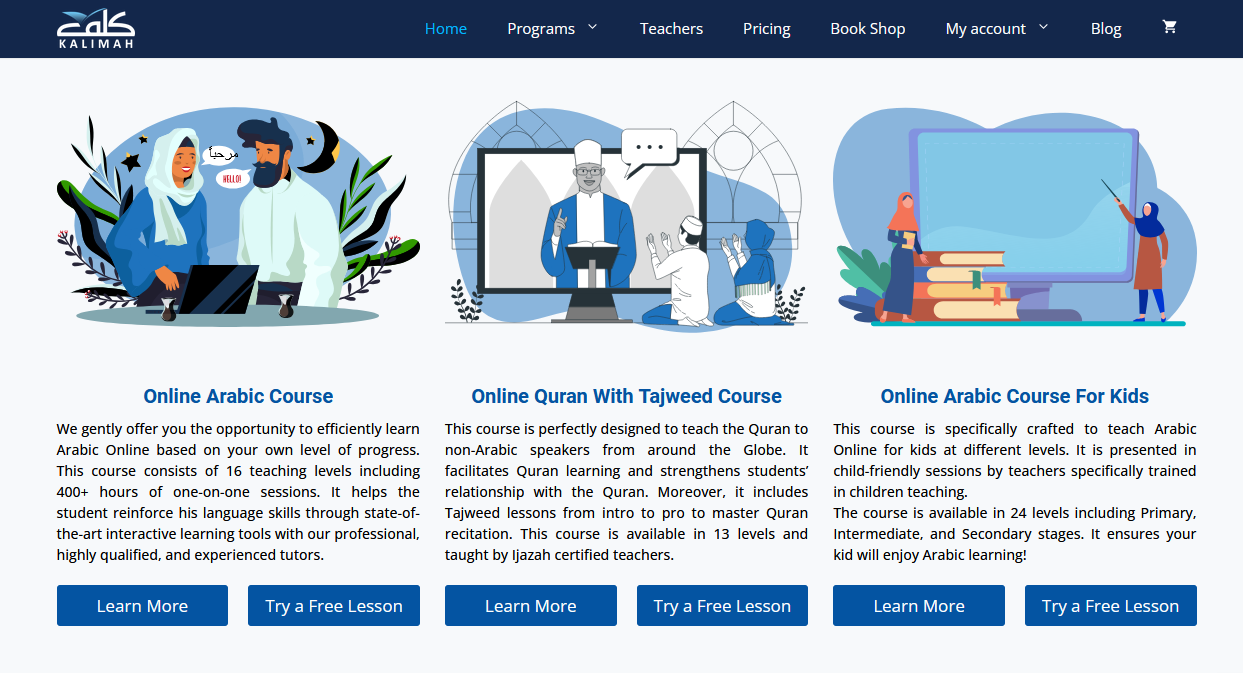
Online Arabic Course: Tailored to your level, our comprehensive Arabic program includes 16 teaching levels and 400+ hours of personalized sessions.
Online Quran With Tajweed Course: Perfect for non-Arabic speakers, our course spans 13 levels and equips you with Tajweed mastery from beginner to advanced.
Online Arabic Course For Kids: Nurture your child’s love for Arabic with our engaging and structured program, available in 24 levels for primary, intermediate, and secondary stages.
🚀 Start Your Free Trial Today! 🚀
Don’t miss out on this life-changing opportunity to deepen your faith and knowledge. Sign up now for your free trial and take the first step towards becoming a better practicing Muslim with Kalimah Center!
Conclusion: Day 10 Is Not the End — It Is the Beginning
Ten days of focused Arabic study will not make you fluent. But if you follow this plan with genuine commitment — 2–4 hours daily, speaking from Day 1, reviewing consistently, and engaging with at least one native speaker — you will arrive at Day 10 with something real: a functioning alphabet, a working vocabulary, basic grammatical intuition, and proof to yourself that Arabic is learnable.
That last part matters more than people expect. The greatest barrier to Arabic learning is not difficulty — it is the belief that the language is impossibly hard. Ten days of honest, structured effort dismantles that belief permanently.
What you do on Day 11 determines everything that follows. Keep the daily habit alive. Add structure through a levelled course. Find a conversation partner. The foundation you have built in 10 days will support everything you build on top of it — but only if you keep building.
FAQs about How To Learn Arabic In 10 Days?
Q1: Can you actually learn Arabic in 10 days?
Not to fluency — but you can make meaningful progress. In 10 focused days, a beginner can realistically master the Arabic alphabet, learn 150–200 high-frequency words, understand basic grammatical patterns, and hold a simple conversation. Think of it as building the foundation that the rest of your learning will stand on, not as reaching the destination.
Q2: How many hours a day do I need to study to follow this 10-day plan?
For meaningful results, aim for 2–4 hours of focused study per day, broken into sessions of 25–30 minutes with short breaks (the Pomodoro technique works well for language learning). Passive immersion — listening to Arabic while commuting, watching Arabic content in the background — can add another 1–2 hours without significant effort.
Q3: Which Arabic should I learn first — MSA, a dialect, or Quranic Arabic?
For a 10-day plan focused on building a foundation, Modern Standard Arabic (MSA) is the correct starting point. It provides the grammatical structure that transfers to both Quranic Arabic and most dialects. If your specific goal is the Quran, MSA remains the best entry point — its grammar is nearly identical to Quranic Arabic, with vocabulary differences addressable in later study.
Q4: What are the best free resources for learning Arabic in 10 days?
The most effective free resources for a 10-day intensive include:
– Duolingo Arabic — for alphabet and basic vocabulary (gamified, low friction)
– ArabicPod101 on YouTube — structured lessons by level
– Madinah Arabic (free online) — the most widely used structured Arabic curriculum
– Forvo.com — native speaker pronunciation for any Arabic word
– italki — for finding affordable conversation partners or tutors
Q5: What should I do after the 10 days are finished?
The 10-day plan is a launchpad, not a destination. After completing it, the most effective next step is structured enrollment in a levelled Arabic course that builds on the foundation you have laid. Focus specifically on: expanding vocabulary to 500+ words, learning the root-based system of Arabic (which unlocks word families rapidly), and beginning regular conversation practice with a native speaker at least twice per week.