The Arabic letter ص (Saad) is an emphatic consonant pronounced like a deep, heavy “s” sound. It is the 14th letter of the Arabic alphabet and differs from س (Seen) in its deeper, resonant pronunciation. ص connects to surrounding letters and appears in four different written forms.
Quick Reference Table
| Feature | Details |
|---|---|
| Letter Name | ص — Saad (صاد) |
| Position in Alphabet | 14th letter (after ش, before ض) |
| Pronunciation | Emphatic “s” — deep, heavy sound |
| Similar Letters | س (Seen) — lighter “s” sound |
| Connects? | Yes — to both sides |
| Written Forms | 4 forms (isolated, initial, medial, final) |
| Common in | Quranic words, daily vocabulary |
| IPA Symbol | /sˤ/ (pharyngealized s) |
If you’ve ever seen the Arabic letter ص (Saad) and wondered how to pronounce it, you’re not alone. This emphatic letter is one of the most distinctive sounds in Arabic — similar to the English “s” but much deeper and heavier, almost resonating from the chest.
ص is often confused with س (Seen), which looks similar but sounds completely different. While س is a soft “s” sound (like “sea”), ص carries weight and depth — a hallmark of Classical Arabic pronunciation.
In this guide, you’ll learn:
- How to pronounce ص correctly (with step-by-step guidance)
- The 4 different written forms of ص
- How ص differs from similar letters
- Common words and Quranic examples using ص
What Is ص (Saad)? The Emphatic Arabic Letter Explained
The letter “ص” is very distinctive because of the rich, emphatic sound that bears its weight in Arabic. It somewhat resembles the “س” letter, but it carries with it a heavier and deeper resonance when pronounced. Its function will be determined in an effort to get closer to mastery over Arabic phonetics.
What Does ص Mean in English?
The letter ص (Saad) itself has no standalone meaning in English — it is simply the 14th letter of the Arabic alphabet, similar to how the letter “S” in English has no meaning by itself.
However, ص plays important roles in Arabic:
1. As a Letter
ص is used to build thousands of Arabic words, including:
- صباح (morning)
- صلاة (prayer)
- صقر (falcon)
2. In the Quran
Surah Saad (سورة ص) is the 38th chapter of the Quran and begins with the standalone letter ص. This is one of the mysterious letters (حروف مقطعة) that appear at the beginning of certain Surahs. Their full meaning is known only to Allah.
3. Phonetically
In linguistic terms, ص represents an emphatic pharyngealized “s” sound (/sˤ/ in IPA notation) — a deep, heavy “s” that doesn’t exist in English.
The Bottom Line:
ص is a letter, not a word. Its significance lies in pronunciation, Quranic recitation, and word formation.
How to Recognize and Write ص (Saad)
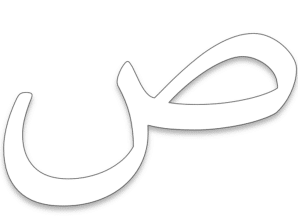
The letter “ص” (Saad) has a distinct shape in the Arabic script, characterized by a vertical line with a slight curve and a dot above it. Recognizing this form is crucial for distinguishing it from similar letters, like “س” (Seen), in both writing and pronunciation.
- Shape: “ص” is a vertical line with a slight curve and has a dot above its head.
- Place in the Alphabet: “ص” is the fourteenth letter of the Arabic alphabet; it comes after “ش” (Sheen) and before “ض” (Dhaad).
- Forms of the Letter: As with other Arabic letters, “ص” assumes different forms when occurring in a word, either isolated, at the start, in the middle, or at the end.
Master Arabic with Kalimah Center
Join our expert-led online classes and start your journey toward Arabic fluency today.
Book Your Free TrialHow to Pronounce ص (Saad) Correctly
The letter ص (Saad) is an emphatic consonant — one of the unique “heavy” sounds in Arabic that doesn’t exist in English.
Step-by-Step Pronunciation:
1- Add emphasis
The sound should feel “heavy” and resonant, not light and airy.
2- Start with a regular “s” sound
Say “sea” or “sun” in English — that’s the light “s” you’re familiar with.
3- Lower the back of your tongue
Pull the back of your tongue down slightly toward your throat while keeping the tip near your teeth.
4- Engage your vocal cords
Make the sound feel deeper — almost like it’s vibrating from your chest, not just your mouth.

Audio Guide:
Listen to native speakers pronounce these words:
- صباح (sabah) — morning
- صلاة (salah) — prayer
- صقر (saqr) — falcon
IPA Phonetic Notation:
/sˤ/ — pharyngealized “s”
Mouth Position Diagram:
- Tongue position (back lowered, tip forward)
- Vocal cord engagement
- Airflow direction
Common Pronunciation Mistakes:
| Mistake | Why It’s Wrong | Correct Approach |
|---|---|---|
| Pronouncing it like English “s” | Too light and soft | Add depth and emphasis |
| Confusing it with س (Seen) | Different phonemes entirely | س is light; ص is heavy |
| Pronouncing it like “z” | Wrong sound entirely | Keep the “s” sound but make it emphatic |
ص vs س: What’s the Difference? (Comparison Guide)
One of the most common challenges for Arabic learners is distinguishing between ص (Saad) and س (Seen). They look similar in shape, but their pronunciation and usage are completely different.
Visual Comparison:
| Feature | ص (Saad) | س (Seen) |
|---|---|---|
| Shape | Vertical line with curve + dot above | Three connected “teeth” |
| Pronunciation | Deep, emphatic “s” | Light, soft “s” |
| Tongue Position | Back lowered, emphasis in throat | Tip of tongue forward, light |
| Similar English Sound | No exact equivalent (emphatic s) | “s” in “sea” |
| IPA | /sˤ/ | /s/ |
Example Word Pairs:
| ص Word | Meaning | س Word | Meaning |
|---|---|---|---|
| صباح (sabah) | Morning | سباح (sabbah) | Swimmer |
| صف (saff) | Row, class | سف (saff) | To weave |
| صار (sara) | He became | سار (sara) | He walked |
The Bottom Line:
If you confuse ص and س, you change the meaning entirely. Mastering the emphatic ص sound is essential for accurate Arabic communication.
Forms Of The Letter “ص” (Saad)
“ص” assumes different forms when it occurs in a word:

- Independent Form: Alone, “ص” is written as: “ص.”
- Initial Form: When at the start of a word, “ص” connects only to the letter following it: “صـ.” Example: “صباح” (morning).
- Medial Form: It connects to the preceding and the following letter at the middle: “ـصـ.” Example: “مصر” (Egypt).
- Final Form: When appearing at the end of a word, it will connect only to the previous one: “ـص.” Example: “شخص” (person).
How do you write ص in different positions?
| Position | Form | Example Word | English |
|---|---|---|---|
| Isolated | ص | ص | (letter alone) |
| Initial | صـ | صباح | Morning |
| Medial | ـصـ | مصر | Egypt |
| Final | ـص | شخص | Person |
Common Words Featuring “ص” (Saad)
Here are examples of words using “ص” in different forms:

Initial Position (صـ):
| Arabic | Transliteration | English |
|---|---|---|
| صباح | sabah | Morning |
| صلاة | salah | Prayer |
| صقر | saqr | Falcon |
| صديق | sadeeq | Friend |
| صوت | sawt | Voice |
| صورة | surah | Picture |
| صف | saff | Class/row |
| صحيح | saheeh | Correct |
Medial Position (ـصـ):
| Arabic | Transliteration | English |
|---|---|---|
| مصر | misr | Egypt |
| قصة | qissa | Story |
| عصفور | asfour | Bird |
| بصل | basal | Onion |
| فصل | fasl | Season/chapter |
| نصر | nasr | Victory |
Final Position (ـص):
| Arabic | Transliteration | English |
|---|---|---|
| شخص | shakhs | Person |
| خاص | khas | Private/special |
| نص | nass | Text |
| قص | qass | Cut |
| لص | liss | Thief |
| فرص | furas | Opportunities |
Example Sentences Using “ص” (Saad)
Here are some sample sentences to help you understand how “ص” is used in context:
- صباح الخير يا صالح – *Sabah al-khayr ya Salih* – “Good morning Saleh”
- أنا اصلي صلاة العصر – *Ana osaly salat Al asr* – “I pray Al asr prayer”
- يصوم المسلمون شهر رمضان – *Yasoum Almouslimon shahro Ramadan* – “Muslims fast the month of Ramadan”
ص in Quranic Arabic: Tajweed Rules and Examples
The letter ص appears frequently in the Quran and follows specific Tajweed (recitation) rules to ensure proper pronunciation.
Tajweed Rule for ص:
ص is one of the letters of emphasis (حروف الاستعلاء), meaning it must be pronounced with Tafkheem (heaviness/fullness). This gives Quranic recitation its characteristic depth and beauty.
Quranic Examples Using ص:
| Ayah | Arabic | Transliteration | English |
|---|---|---|---|
| Al-Baqarah 2:43 | وَأَقِيمُوا الصَّلَاةَ | Wa aqeemus-salah | And establish the prayer |
| Al-Asr 103:1 | وَالْعَصْرِ | Wal-‘asr | By time |
| Ash-Shams 91:1 | وَالشَّمْسِ وَضُحَاهَا | Wash-shamsi wa duhaha | By the sun and its brightness |
Surah Saad (سورة ص):
The 38th chapter of the Quran is named after this letter. It begins with the standalone letter ص — one of the “mysterious letters” (حروف مقطعة) whose full meaning is known only to Allah.
Why ص Matters in Tajweed:
Proper pronunciation of ص distinguishes:
- Correct vs incorrect recitation
- Native vs non-native speakers
- Respectful vs careless handling of sacred text
How to Master ص (Saad): Practice Tips and Techniques
Here are a few practical tips that will get you comfortable with the letter “ص”:

- Pay Extra Attention to the Pronunciation: Practice words like “صباح” (morning) and “صادق” (truthful) in order to get your deep emphatic “ص” sound perfected. It’s highly recommended for you to listen to native speakers to refine your pronunciation.
- Writing Practice: To master the forms, practice writing “ص” in all its positions. Repetition will help you make smooth connections between letters.
- Use Calligraphy: If you’re interested in improving your Arabic handwriting, practicing with calligraphy tools can help you form correctly and elegantly.
Read also: Arabic letter zah
Common Mistakes With The Letter “ص” Saad
Here are some common mistakes learners make when using and how to avoid them:

1. Confusing “ص” with “س” (Seen)
The letter “ص” is sometimes confused with “س” because of their similar shapes, but the pronunciation of “ص” is much deeper and heavier.
2. Wrong Pronunciation
The wrong pronunciation of “ص” with “س” or “ز” (Zay), both of which are lighter sounds. Make sure to pronounce the emphatic “ص” harder.
3. Letter Connection Issues
“ص” might not connect properly with some letters in certain word positions, especially if you’re unfamiliar with the flow of the Arabic script.
Read more about: The Arabic Letter “ض” (Dhaad): Writing, Pronunciation, And Common Mistakes
Master Arabic with Kalimah Center
Join our expert-led online classes and start your journey toward Arabic fluency today.
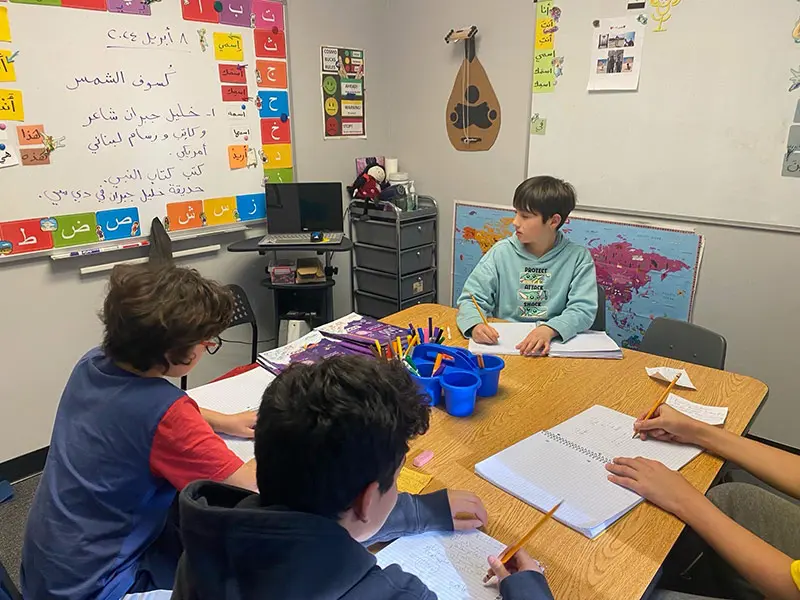
Book Your Free TrialInside Kalimah Center: Moments from Our Courses
Get a glimpse into the vibrant learning experience at Kalimah Center. These snapshots capture real moments from our live classes—where students engage deeply, connect with passionate instructors, and grow in a welcoming, supportive environment.
Here Are The Reviews On Our Courses:
Our students frequently commend the excellence of our courses and the commitment shown by our instructors. You can read their complete reviews on Trustpilot.

Unlock Your Potential in Arabic and Quran with Kalimah Center!
Ready to deepen your connection with the Quran and enhance your understanding of Arabic? Join Kalimah Center today and embark on a transformative journey of learning and growth! Our professional, handpicked Online Arabic and Quran Tutors are dedicated to helping you master these essential skills with ease and expertise.
📚 Explore Our Courses:
Online Arabic Course: Tailored to your level, our comprehensive Arabic program includes 16 teaching levels and 400+ hours of personalized sessions.
Online Quran With Tajweed Course: Perfect for non-Arabic speakers, our course spans 13 levels and equips you with Tajweed mastery from beginner to advanced.
Online Arabic Course For Kids: Nurture your child’s love for Arabic with our engaging and structured program, available in 24 levels for primary, intermediate, and secondary stages.
🚀 Start Your Free Trial Today! 🚀
Don’t miss out on this life-changing opportunity to deepen your faith and knowledge. Sign up now for your free trial and take the first step towards becoming a better practicing Muslim with Kalimah Center!
Conclusion
The letter “ص” is an essential component of the Arabic alphabet. It adds a one-of-a-kind, emphatic sound to this language. When you learn the pronunciation of the letter, forms, and ways of usage, you will start using it freely in your Arabic vocabulary.
This will improve your pronunciation and writing of the letter “ص” with constant practice. You will master the usage of the letter “ص” by avoiding the common mistakes that many students make, especially in pronunciation and connection of letters. You will realize in your further studies how important this letter “ص” is in giving meaning and beautifying Arabic.
FAQs about The Arabic Letter “ص” (Saad)
Q1: How do you pronounce ص (Saad) in Arabic?
ص (Saad) is pronounced like a deep, emphatic “s” sound. Unlike the lighter س (Seen), ص requires you to:
1- Press the middle of your tongue toward the roof of your mouth
2- Engage your vocal cords to create a heavier, resonant sound
3- Almost feel the sound vibrating from your chest
IPA notation: /sˤ/ (pharyngealized s)
Audio tip: Listen to native speakers pronounce words like صباح (morning) or صلاة (prayer).
Q2: What does ص mean in English?
The letter ص itself has no standalone meaning — it is simply a letter of the Arabic alphabet. However, in the Quran, Surah Saad (سورة ص) begins with this letter, and it is one of the “mysterious letters” whose full meaning is known only to Allah.
Q3: How is ص pronounced in Quranic Arabic?
In Quranic recitation, ص must be pronounced with full emphasis and Tafkheem (heaviness). The Tajweed rule requires the sound to be deep and resonant, ensuring clarity and correctness in recitation.
Example from Quran:
الصلاة (as-salah) — the prayer (Al-Baqarah 2:43)