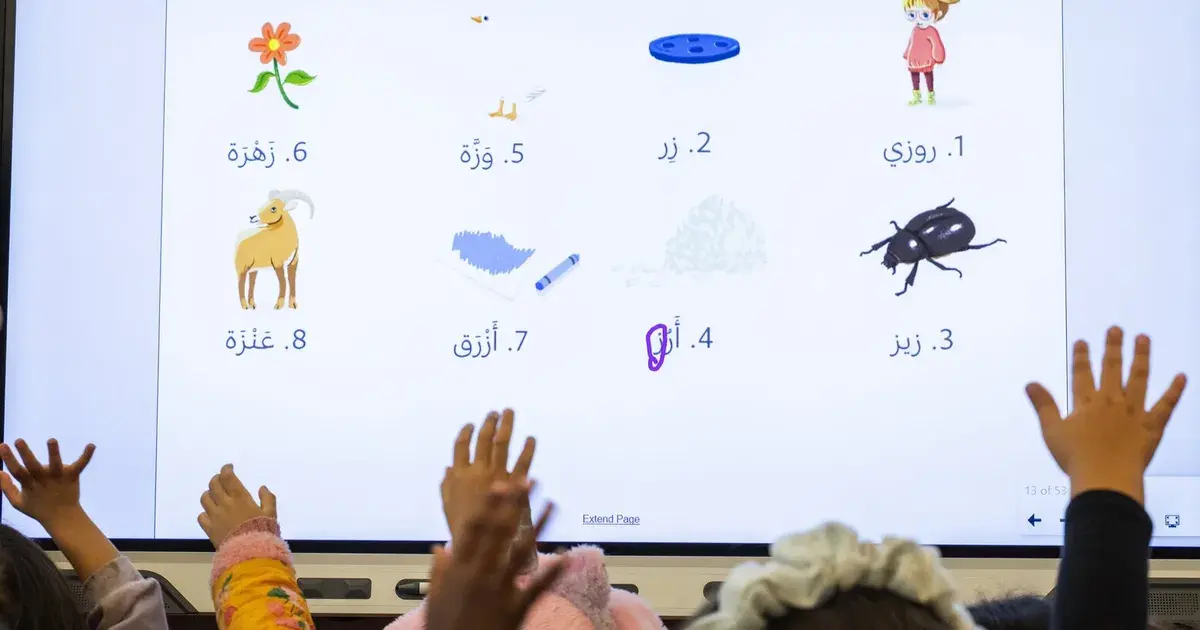
In a nutshell: The Arabic past tense (“الماضي”) expresses completed actions, with verb endings like “شَرِبْتُ” (I drank). To negate, we use “ما” for a direct negation, e.g., “ما ذهبتُ” (I did not go), or “لم” to shift the verb to present, like “لم تذهب” (she did not go).
In a previous article, I explored the various Arabic tenses collectively. Now, I aim to delve into each tense individually, beginning with the Arabic past tense, or “الماضي” (al-maadi), in this piece. This detailed examination aims to enhance your understanding and provide a more thorough grasp of past tense in Arabic.
Let’s explore how to use the Arabic past tense, negate it, and form it correctly.
How Many Tenses Does Arabic have?
To recap what I said in the previous article about the Arabic tenses, let me tell you that we have three main tenses to express when does something happen? Past, now, or future, right?
So, we have these 3 tenses:
- That Arabic Past Tense (الماضي – al-madi): This is our tense here, and it is for things that already happened. Finished. Like, “I ate.” “She slept.”
- That Arabic Present Tense (المضارع – al-mudari’): This is for now. Happening now, or sometimes, just generally true. Like, “I eat.” “She sleeps.”
- That Arabic Future Tense (المستقبل – al-mustaqbal): This is for things that will happen later. Like, “I will eat.” “She will sleep.”
But here’s the thing… long ago, the scholars of Arabic, they looked at these verbs very carefully. And they said the verbs of future tense do not really have its own forms or structures. Because to make the future, you just take the present tense and add a little something to the beginning. Like, “سوف” or “س”. So, they saw the future was like a part of the present, not a whole separate tense.
- Present tense: yadrusu (يدرس) – he studies
- Future Tense: sayadrusu / sawfa yadrusu (سيدرس / سوف يدرس) – he will study
And there’s one more!
- Command Form (الأمر – al-amr): This is when you tell someone to do something. Like, “Eat!” or “Sleep!” It’s an order, or maybe a request. Our Arab grammarians, they say this is a kind of tense too because its verbs have their own shape.
Now, It’s time to explore all the ins and outs of the Arabic past tense…
What is the Arabic Past Tense?
The Arabic past tense, known as “الماضي” (al-maadi), is one of the core tenses in Arabic and is usually the first tense we teach because it is stable and has clear rules.
Remember we said it is called “الماضي” (Al-Madi). This word, “Madi,” gives you a clue. It means “past” or “gone by.” So, this tense is all about actions that already happened, finished, complete!
Think of it like this: you drank some water earlier. That action is finished. In Arabic, you would say: “شربتُ ماءً” (sharibtu mā’an) – “I drank water.” See? “Sharibtu” – this is past tense!
Therefore, know that the most prominent markers of a past-tense verb are:
- a. It can have a feminine ‘taa’ attached at its end, such as in ‘شربتْ’ (she drank).
- b. It can have a subject ‘taa’ attached at its end, such as in ‘شربتُ’ (I drank).

* Excerpted from Kalimah’s Droos nahwiyah mena Al Moqaddemah Al AAjourromiyah, which is used in our online Arabic course.
And unlike English, Arabic verbs in the past tense carry within them who performed the action. This means that in Arabic, you don’t need separate pronouns to show who did the action; instead, the verb endings change to show the subject.
Past Tense in Arabic Examples
Now, let’s look at some more examples from our beautiful Arabic culture and explore the past tense features within them:
“شَرَحَ خالد زمن الماضي في اللغة العربية”
(sharha Khalid zaman al-madi fi al-lughah al-‘Arabiyah)
“Khalid explained the past tense in the Arabic language.”
The verb “sharha” (he explained) is in the past tense, indicating a completed action. Notice the Fatha (َ) on the last letter, a common marker for the past tense. This tells us Khalid finished explaining.
“نَجَحَ أحمد في امتحان مركز كلمة”
(najaha Ahmad fi imtihan Markaz Kalimah)
“Ahmed succeeded in the Kalimah Center exam.”
Here, “najaha” (he succeeded) is our past tense verb. Again, we see the Fatḥa (َ), confirming the action is complete. Ahmed already passed the exam!
“بَلَغَ عدد طلاب مركز كلمة 8000 طالب”
(balagha ‘adad tullab Markaz Kalimah 8000 talib)
“The number of Kalimah Center students reached 8000 students.”
“Balagha” (it reached) is our past tense verb here. This one is interesting because it’s describing a state that was achieved in the past. The number reached 8000 and that was the state of affairs at that past moment, and even you can use the past tense in Arabic to convey the sense of the present perfect tense in English.

Experience Kalimah Center Classes
Watch real excerpts from our live sessions at Kalimah Center and see how we bring learning to life. These clips highlight our interactive, student-centered teaching approach across all our courses—designed to keep learners engaged, motivated, and actively involved every step of the way.
Master Arabic with Kalimah Center
Join our expert-led online classes and start your journey toward Arabic fluency today.
Book Your Free TrialExample of Arabic Past Tense in Conversation
Let’s imagine a conversation to see how the past tense is used naturally:
- أحمد: أين كنتَ أمس؟
(Ahmad: ayna kunta ams?) “Where were you yesterday?” - خالد: ذهبتُ إلى السوق.
(Khalid: dhahabtu ila as-souq) – “I went to the market.” - أحمد: وماذا اشتريتَ؟
(Ahmad: wa madha ishtarayta?) – “And what did you buy?” - خالد: اشتريتُ بعض الطماطم.
(Khalid: ishtaraytu ba’d al-tamatem) – “I bought some tomatoes.”
In this dialogue, ذهبت (dhahabtu) means “I went,” and اشتريت (ishtaraytu) means “I bought.” You can see how the Arabic past tense verbs give a clear timeline to the conversation, showing completed actions.

*Excerpted from Kalimah’s online Arabic course curriculum.
Arabic Past Tense Verbs List
Here are Arabic Past Tense Verbs List With English meaning, sentence example in Arabic, and sentence translation in English:
| Arabic Verb (فعل) | English Meaning | Arabic Sentence (جملة) | English Translation (ترجمة الجملة) |
| كتب (kataba) | He wrote | كتب الولد رسالة. | The boy wrote a letter. |
| قرأ (qara’a) | He read | قرأ الطالب الكتاب. | The student read the book. |
| فعل (fa’ala) | He did | فعل المعلم الدرس. | The teacher did the lesson. |
| ذهب (dhahaba) | He went | ذهب إلى المدرسة. | He went to school. |
| جاء (jaa’a) | He came | جاء الرجل متأخراً. | The man came late. |
| أكل (akala) | He ate | أكل الولد الطعام. | The boy ate the food. |
| شرب (shariba) | He drank | شرب الرجل الماء. | The man drank the water. |
| جلس (jalasa) | He sat | جلس في الكرسي. | He sat in the chair. |
| نام (naama) | He slept | نام الطفل مبكراً. | The child slept early. |
| رأى (ra’a) | He saw | رأى السيارة الجديدة. | He saw the new car. |
| سمع (sami’a) | He heard | سمع الصوت. | He heard the sound. |
| عمل (a’mala) | He worked | عمل في المكتب طوال اليوم. | He worked at the office all day. |
| مشى (masha) | He walked | مشى في الحديقة. | He walked in the park. |
| بدأ (bada’a) | He started | بدأ الدرس في الساعة 10. | The lesson started at 10 o’clock. |
| أخذ (akhadha) | He took | أخذ الكتاب من المكتبة. | He took the book from the library. |
| وصل (wasala) | He arrived | وصل القطار في الوقت المحدد. | The train arrived on time. |
| ضحك (dahika) | He laughed | ضحك الأطفال في الحفل. | The children laughed at the party. |
| سافر (saafara) | He traveled | سافر إلى الخارج. | He traveled abroad. |
| لبس (labisa) | He wore | لبس الجاكيت في الشتاء. | He wore the jacket in the winter. |
| لعب (la’iba) | He played | لعب الأطفال في الحديقة. | The children played in the park. |
Read also: Hollow verbs in Arabic
The Arabic Past Tense Usages
Alright, let’s delve deeper into how we actually use the past tense in Arabic. It’s not just about saying what happened yesterday! The past tense in Arabic has many shades of meaning.
1. Use The Arabic Past Tense to Describe Completed Actions in the Past
The most common use of the past tense is for describing actions that happened and finished in the past.
And here we have two types: the Absolute Past (الماضي المطلق) and the Interrupted Past (الماضي المنقطع)
The absolute past form describes an action without focusing on its exact time. The action could have happened long ago or just a moment ago. It’s a simple way to state something as complete, without extra details about timing.
Take the example from the Quran:
(الْيَوْمَ أَكْمَلْتُ لَكُمْ دِينَكُمْ وَأَتْمَمْتُ عَلَيْكُمْ نِعْمَتِي)
(al-yawma akmaltu lakum deenakum wa atmamtu ‘alaykum ni’mati)
“This day I have perfected for you your religion and completed My favor upon you” (al-Ma’ida 5:3)
Here, أكملتُ (akmaltu)—” I have perfected”—indicates that the action is complete without mentioning if it happened just now or a long time ago. And you can see again that the past tense in Arabic can convey the sense of the present perfect tense in English.
Another example is:
أَزُرتَ القاهرة؟
(azurta al-qahira?)
“Did you visit Cairo?”
The question uses زرت (zurta), simply to ask if the visit happened, without focusing on when.
The interrupted past describes an action that happened only once, with no continuation or repetition. This can often be seen when people talk about experiences from their past. For example:
درستُ اللغة العربية في الثانوية.
(darastu al-lughah al-‘arabiyah fi ath-thanawiyyah)
“I studied Arabic in high school.”
Here, درستُ (darastu)—”I studied”—tells us that this was a one-time event that is now completed, not something continuous.
2. Use The Arabic Past Tense to Describe Historical Facts
When we talk about history, we use the past tense to paint a picture of bygone eras.
“فتحَ عمرو بن العاص مصر عامَ 641 ميلادي”
(fataḥa ‘Amr ibn al-‘As Misr ‘aam 641 miladi)
“`Amr ibn al-‘As conquered Egypt in the year 641 AD.”
The past tense verb “fataha” (he conquered) firmly places this event in the past, marking a significant historical moment.
3. Use The Arabic Past Tense to Express the Recent Past
When we want to show that something happened just a moment ago, Arabic uses the past verb. For example:
قد جاء زيد
(qad ja’a Zayd)
“Zayd has just arrived.”
In this sentence, جاء (ja’a)—”he arrived”—is understood to be close to the present.
4. Use The Arabic Past Tense to Show Present Meaning (دلالة على الحال)
Sometimes, past tense verbs are used to describe something that is happening now, especially in situations of official or formal statements. This happens often in Arabic when people are making announcements or official declarations, such as:
بِعتُك هذا البيت
(bi’tuka hadha al-bayt)
“I hereby sell you this house.”
Here, بعتُ (bi’tu)—”I sold”—is in the past tense, but it is actually being used as a present or immediate action, like “I hereby sell.”
5. Past Tense Used for Future Wishes (دلالة على الاستقبال)
Arabic also has a beautiful way of using the past tense to make wishes or prayers about the future. This can feel unusual at first, but it adds a sense of certainty or strong hope. For example:
رَزقَكَ الله
(razaqaka Allah)
“May Allah bless you with provision.”
In this sentence, رَزقَ (razaqa)—”blessed”—is in the past tense, but it expresses a future wish or hope. It’s almost like saying, “I hope that this has already happened,” showing how confident the speaker is in their hope for the future.
6. Past Tense Used for Possibility of Past or Future (احتمال المضي والاستقبال)
In some contexts, Arabic uses the past tense to express actions that could have happened or might still happen. This usage is common with words that suggest encouragement or advice. For example:
هلا دافعتَ عن كرامتك؟
(halla dafa’ta ‘an karamatik?)
“Why didn’t/don’t you defend your dignity?”
The context will clarify whether it’s referring to a past omission or a future exhortation..
* The Difference Between Grammatical and Morphological Time
This is an important clarification to avoid any potential confusion in the previous usages of the Arabic past tense. In Arabic, we talk about grammatical time and morphological time. Morphological time is straightforward: it’s the form of the verb. For example:
- جلس (jalasa) – “he sat,” clearly showing the past.
- يَكتب (yaktubu) – “he writes” or “he will write,” showing present or future.
But grammatical time is more flexible and depends on the context, so Arabic speakers may use a past form in the verb but mean the present or future in the overall context.
For example, if someone says:
حماك الله (hamaak Allah) – “May Allah protect you.”
This is in the past form, but the meaning is about the future, asking for ongoing or future protection.
Read also: Arabic letter alif
Past Tense Negation in Arabic
Now, let’s explore how to negate the past tense in Arabic. In Arabic, we use specific structures and words to turn a past-tense sentence into a negative one. This part of Arabic grammar is simple once you know the rules and remember two key words.
The words we use to negate the past tense is ما (maa) and لم (lamm).
Let’s go through the details of this and see examples to understand how it works.
1. Using ما (maa) to Negate Past Actions in Arabic
When we want to say something did not happen, we place ما before the past tense verb. Adding ما before the verb is enough to change the meaning from positive to negative.
The structure is:
ما + verb (in past tense)
This construction is quite flexible. It’s used for all subjects—whether you’re saying “I did not,” “He did not,” or “They did not.”
For example:
ما ذهبتُ إلى المدرسةِ أمس
(maa dhahabtu ila al-madrasah ams)
“I did not go to school yesterday.”
In this sentence:
- ذهبتُ (dhahabtu) means “I went.”
- Adding ما before it changes it to “I did not go.”
And here are a few more examples that show different contexts where we can use ما to express that something did not happen in the past.
ما قرأتُ الكتاب
(maa qara’tu al-kitaab) – “I did not read the book.”
قرأتُ (qara’tu) is “I read,” but with ما before it, it becomes “I did not read.”
ما زارَنا الضيفُ
(maa zaara-na ad-daif) – “The guest did not visit us.”
زار (zaara) means “he visited.” Adding ما changes it to “he did not visit.”
ما طبختْ أمي أمس
(maa tabakhat ummi ams) – “My mother did not cook yesterday.”
Here, طبخت (tabakhat) means “she cooked.” Adding ما turns it into “she did not cook.”
2. Using “لم” (lamm) to Negate Past Actions in Arabic
Our other friend for making past tense verbs negative is the word ” لم ” (lam). It’s a small word, but very powerful! You put it before the past tense verb, and suddenly, the meaning changes to the negative. Simple, yes?
WAIT! there is an important note about “لم” (lam)
لم” (lam) is a special word because it makes the verb after it always in the present tense form, even though we are talking about the past! This is a little tricky, but with practice, you will get it. For example:
- “She drank the juice” -> شرِبتْ العصير (sharibat al-‘asir)
- “She did not drink the juice” -> لم تشرب العصير (lam tashrab al-‘asir)
See? “تشرب” (tashrab) is the present tense form, but because we have “لم” (lam), the whole sentence means “She did not drink” in the past.
Let’s see more examples of “لم” (lamm) in action with some situations you might find in Arab culture:
لم يصلِّ الفجر هذا الصباح
(lam yusalli al-fajr hadha as-sabah)
“He didn’t pray Fajr this morning.”
Notice how “يصلِّ” (yusalli) is present tense, but the meaning is past because of “لم”.
لم تزر جدتها الأسبوع الماضي
(lam tazur jaddataha al-usbu’ al-madi)
“She didn’t visit her grandmother last week.”
Here, “تزر” (tazur) is present, but the meaning is past due to “لم”.
لم يشتروا تمراً من السوق
(lam yashtaru tamran min as-suq)
“They didn’t buy dates from the souq.”
“يشتروا” (yashtaru) is present, but the meaning is past because of “لم”.
Past Tense Negation in Arabic Quiz
Now, let’s practice a little. Try making these sentences negative:
- The student studied at Kalimat Center. (درس الطالب في مركز كلمة – darasa al-talib fi markaz kalimat)
- The student understood past tense negation in Arabic. (فهم الطالب نفي الماضي في اللغة العربية – fahima al-talib nafy al-madi fi al-lughah al-‘arabiyyah)
- The student succeeded in negating the past tense verb. (نجح الطالب في نفي الفعل الماضي – najaha al-talib fi nafy al-fi’l al-madi)
- He visited the pyramids. (زار الأهرامات – zaara al-ahraamat)
- She bought a new dress. (اشترت فستانًا جديدًا – ishtarat fustanan jadidan)
Struggling to find an affordable way to master past tense and to learn Arabic?
Our Arabic group classes offer the perfect solution! Get expert instruction, plenty of speaking practice, and a supportive learning community – all at a fraction of the cost of private tutoring. (Group classes are 4x cheaper than private lessons.)

14 Forms of Past Tense in Arabic
In Arabic, the past tense verb changes its form to match not only the subject’s gender and number but also to specify who is performing the action. Whether it’s “I,” “you,” “he,” “she,” or “they,” the verb takes on a slightly different form. This means we have 14 different forms of the past tense to learn and master.
- Singular: I – You (masc.) – You (fem.) – He or it – She or it.
- Dual: We (dual) – You two (masc. And fem.) – They (masc.) Two – They (fem.) two.
- Plural: We – you (group masc.) – you (group fem.) – they (group masc.) – they (group fem.)
We’ll take a closer look at all the forms in the next section.
Read also: Arabic irregular verbs
Past Tense Conjugation in Arabic
Now, let’s dive into the heart of the Arabic past tense: conjugation! This is where the verb changes its form to match the subject.
Remember how we talked about Arabic verbs having “person,” “gender,” and “number”? Well, all of these affect the verb in the past tense.
But don’t worry! It’s not random. There are beautiful patterns and rules to guide you. Once you understand these, conjugating verbs becomes easy insha’allah.
Read more about Past Tense Conjugation
The Comprehensive Chart of Past Tense Conjugation in Arabic
To make this clear, I have prepared a special chart for you. This chart uses the verb “ذهب” (dhahaba), which means “to go,” as our example. But the patterns you see here apply to many other verbs too!
| Pronoun | Past Tense Verb | Transliteration | Translation | Explanation | Negation with ما | Negation with لم |
| I | ذهبتُ | dhahabtu | I went | Notice the “tu” at the end. This is a common ending for past tense verbs when “I” did the action. | ما ذهبتُ | لم أذهب |
| You (masc.) | ذهبتَ | dhahabta | You (m) went | The “ta” ending shows the action was done by “you,” a masculine singular. | ما ذهبتَ | لم تذهب |
| You (fem.) | ذهبتِ | dhahabti | You (f) went | See the “ti” ending? This is for “you,” a feminine singular. | ما ذهبتِ | لم تذهبي |
| He or It | ذهبَ | dhahaba | He/It went | This is the basic form of the past tense verb. | ما ذهبَ | لم يذهب |
| She or It | ذهبتْ | dhabat | She/It went | Similar to “you (f),” the “t” with a Sukun (ْ) shows the action was done by “she” or a feminine singular noun. | ما ذهبتْ | لم تذهب |
| We (dual) | ذهبنا | dhahabna | We (two) went | The “na” ending shows the action was done by two people, including the speaker. | ما ذهبنا | لم نذهب |
| You two | ذهبتما | dhahabtuma | You two went | “tuma” is the ending for “you” when talking to two people. | ما ذهبتما | لم تذهبا |
| They (m) two | ذهبا | dhabā | They (two – m) went | For “they” when it’s two males, the verb has “a” with ‘alif (ا) at the end. | ما ذهبا | لم يذهبا |
| They (f) two | ذهبتا | dhabatā | They (two – f) went | For two females, we have “ta” with ‘alif (ا). | ما ذهبتا | لم تذهبا |
| We | ذهبنا | dhahabna | We went | Same as “we (dual),” but for more than two people. | ما ذهبنا | لم نذهب |
| You (group m) | ذهبتم | dhahabtum | You (m) went | “tum” is the ending for “you” when addressing a group of males. | ما ذهبتم | لم تذهبوا |
| You (group f) | ذهبْتُنَّ | dhahabtunna | You (f) went | For a group of females, we have “tunna”. Notice the shadda (ّ) on the “t” and the nunation ( ٌ ٍ ً ) with two nuns (ن). This is special for feminine plural! | ما ذهبْتُنَّ | لم تذهبنَّ |
| They (group m) | ذهبوا | dhahabū | They (m) went | “ū” is the ending for “they” when it’s a group of males. Remember the ḍamma (ُ) on the waw (و). | ما ذهبوا | لم يذهبوا |
| They (group f) | ذهبْنَ | dhahabna | They (f) went | For a group of females, we have “na” with a Sukun (ْ) on the preceding letter. | ما ذهبْنَ | لم تذهبنْ |
Arabic Past Tense Words
Now that we’ve explored verb conjugation, let’s expand our vocabulary with words that specifically relate to the past tense.
Think of it this way: you know how to conjugate the verb “to go” (ذهب – dhahaba) in the past tense. But to tell a complete story, you need more than just the verb. You need to specify when you went.
This is where these special past tense words come in handy. They make your Arabic more nuanced.
1. أمس (ams) – yesterday
This is a common word for the day before today.
“ذهبتُ إلى السوق أمس“
(dhahabtu ‘ila al-sūq ams)
“I went to the market yesterday.”
2. منذ (mundhu) – since/ago
This word tells you how long ago something happened.
“سافرتُ إلى مصر منذ عامين”
(sāfartu ‘ila Miṣr mundhu ‘āmayn)
“I traveled to Egypt two years ago.”
3. قبل (qabla) – before
This indicates that something happened earlier than another event.
“قرأتُ القرآن قبل صلاة المغرب”
(qara’tu al-Qur’ān qabla ṣalāt al-maghrib)
“I read the Quran before the Maghrib prayer.”
4. في الماضي (fi al-madi) – in the past
This phrase refers to a general time in the past.
“كانت الحياة بسيطة في الماضي“
(kānat al-ḥayāh basīṭah fī al-māḍī)
“Life was simple in the past.”
5. قديمًا (qadīman) – in olden times/formerly
This word describes something that happened a long time ago.
“كان الناس يسافرون على الجمال قديمًا“
(kān al-nās yusāfirūn ‘ala al-jimāl qadīman)
“People used to travel on camels in olden times.”
Comparison of Past, Present, Future, and Imperative Tenses
Dear Arabic learner, you’ve come far! You’ve explored the depths of the past tense, its conjugations, and its nuances. Now, let’s broaden our horizons and see how the past tense fits within the grand scheme of Arabic verbs.
To help you visualize this, I’ve prepared a chart comparing the four tenses in the Arabic verb family:
| Tense | Function | Example | Translation | Key Features |
| Past الماضي (Al-Madi) | Expresses completed actions. | فهمَ (fahima) | He understood | Usually has Fatḥa (َ) or Ḍamma (ُ) on the last letter. Focuses on a single, completed action in the past. |
| Present المضارع (Al-Mudari’) | Expresses actions happening now or in the future. | يفهم (yafhamu) | He understands/will understand | Usually starts with one of these letters: أ (’a), ن (n), ي (y), ت (t). Can indicate ongoing action or future intention. |
| Future المستقبل (Al-Mustaqbal) | Expresses actions that will happen in the future. | سيفهم (sayafhamu) | He will understand | Usually formed by adding “sa-“ or “sawfa” before the present tense verb. |
| Imperative الأمر (Al-‘Amr) | Expresses commands or requests. | افهم! (ifham!) | Understand! | Has a special form, often shorter than the past or present tense. Used to give direct instructions. |
Master Arabic with Kalimah Center
Join our expert-led online classes and start your journey toward Arabic fluency today.
Book Your Free TrialInside Kalimah Center: Moments from Our Courses
Get a glimpse into the vibrant learning experience at Kalimah Center. These snapshots capture real moments from our live classes—where students engage deeply, connect with passionate instructors, and grow in a welcoming, supportive environment.
Here Are The Reviews On Our Courses:
Our students frequently commend the excellence of our courses and the commitment shown by our instructors. You can read their complete reviews on Trustpilot.

Master the Arabic Past Tense with Kalimah Center
To become confident with the Arabic past tense, practice is essential. At Kalimah Center, our structured courses help you not only learn these conjugations but also put them to use.
Our online Arabic courses will teach you everything you need to know about the past tense and much more. We offer:
- Clear explanations and examples: Our native Arab teachers will make sure you understand how the past tense works.
- Plenty of practice: You’ll get lots of opportunities to use the past tense in speaking and writing.
So if you’re ready to REALLY master الماضي (al-maadi) and more, Join us for a FREE trial class.

Conclusion:
The Arabic past tense, “الماضي” (al-maadi), describes actions that have already been completed. It is straightforward and often the first tense taught in Arabic, with verb endings indicating the subject of the action, such as “شَرِبْتُ” (I drank) or “شَرِبَتْ” (she drank). Past tense verbs are typically marked by a Fatha (َ) on the last letter. Unlike English, Arabic verbs in the past tense inherently show who performed the action, without needing separate pronouns.
Negating the past tense involves using “ما” or “لم.” “ما” is placed before the verb to negate past actions, like “ما ذهبتُ” (I did not go), while “لم” also negates past actions but causes the verb to take the present tense form, such as “لم تذهب” (she did not go). This system allows for clear expression of past actions and their negations in Arabic.
FAQs about The Arabic Past Tense
What is the Arabic past tense and how is it used?
The Arabic past tense, known as الماضي (al-maadi), is a stable grammatical tense used to describe completed, finished actions. Unlike English, Arabic past tense verbs inherently include the subject (the person performing the action) within the verb structure itself by changing the verb endings, such as شَرِبْتُ (I drank) or شَرِبَتْ (she drank).
How do you negate a past tense verb in Arabic?
You can negate the Arabic past tense using two primary methods: placing ما (maa) directly before the past tense verb (e.g., ما ذهبتُ – I did not go), or using لم (lam) before the verb. Crucially, using لم requires changing the following verb into its present tense form, though the overall meaning remains in the past (e.g., لم تذهب – she did not go).
What are the 14 forms of past tense conjugation in Arabic?
Arabic past tense verbs conjugate into 14 distinct forms to precisely match the subject’s grammatical person, gender, and number. These 14 forms cover singular pronouns (I, you masculine/feminine, he, she), dual pronouns (we two, you two, they two masculine/feminine), and plural pronouns (we, you plural masculine/feminine, they plural masculine/feminine).
Can the Arabic past tense verb indicate present or future meanings?
Yes. While morphologically a past tense verb indicates completed actions, its grammatical time can shift based on context. In formal or official declarations, it can signify an immediate present action (e.g., بِعتُك – I hereby sell you). It is also frequently used to express future wishes, prayers, or hopes (e.g., رَزقَكَ الله – May Allah bless you).
What are common keywords used to indicate the past tense in Arabic?
To specify exactly when a completed past action occurred, Arabic speakers use contextual time words. The most common past tense markers include أمس (ams) meaning yesterday, منذ (mundhu) meaning since or ago, قبل (qabla) meaning before, في الماضي (fi al-madi) meaning in the past, and قديمًا (qadīman) meaning anciently or in olden times.