The best place to learn Arabic depends on your format preference, budget, and goal. For structured online courses with native instructors, platforms like Kalimah Center, Qasid Online, and Bayyinah TV offer live and self-paced options from free to $170/month.
For self-study, apps like Duolingo (free), Pimsleur ($14.95/month), and Memrise (freemium) provide flexible daily practice. For immersion abroad, Egypt (Cairo), Jordan (Amman), and Morocco (Fes) are the top destinations. For Quranic Arabic specifically, Bayyinah TV and Kalimah Center specialize in this area. Most experts recommend combining methods: a structured course for grammar and accountability + an app for daily vocabulary + a conversation partner for speaking practice.
Quick Reference Table:
| Learning Method | Best Options | Cost | Best For |
|---|---|---|---|
| Online courses (live instructor) | Kalimah Center, Qasid Online, Arabeya | $42–$200/month | Structured learning with feedback, serious progress |
| Online courses (self-paced) | Bayyinah TV, ArabicPod101, Madinah Arabic | Free–$22/month | Self-motivated learners, supplementary study |
| Apps | Duolingo, Memrise, Pimsleur, Drops | Free–$15/month | Daily practice, vocabulary building, beginners |
| Websites (free) | Madinah Arabic, Al Jazeera Learning, BBC Arabic | Free | Beginners, reading practice, news comprehension |
| Immersion abroad | Egypt, Jordan, Morocco, Lebanon, Saudi Arabia | $5,000–$25,000/year | Total immersion, fastest progress |
| Conversation partners | HelloTalk, Tandem, ConversationExchange | Free | Speaking practice, cultural exchange |
| University programs | Middlebury, SOAS, AUC, Qasid Institute | $2,000–$15,000/semester | Academic credentials, intensive study |
| Quranic Arabic | Kalimah Center, Bayyinah TV, Quranic Arabic Corpus | Free–$170/month | Muslims seeking Quran comprehension |
There are hundreds of Arabic learning resources available in 2026 — websites, apps, online courses, university programs, and immersion destinations. The challenge isn’t finding options; it’s finding the right combination for your specific goals, budget, and schedule.
This guide compares 30+ Arabic learning resources across every category, with honest evaluations, pricing, and recommendations for who each option suits best. Whether you’re a complete beginner wanting a free starting point or an intermediate learner looking for intensive immersion, you’ll find your path below.
Where to Learn Arabic: Best Websites, Apps, Online Courses & Programs Compared
Let’s start with the websites. There are many places to learn Arabic online, but I will share the ones that are really good. These websites can help you start learning Arabic from scratch or improve what you already know. You can learn anytime and anywhere.
1. Best Websites to Learn Arabic (Free & Paid)
| Website | Cost | Level | Skills Focus | Best For | Limitations |
|---|---|---|---|---|---|
| Kalimah Center | $42–$170/mo (paid) | Beginner–Advanced | All 4 skills (live instructor) | Structured learning with native teachers, Quranic Arabic, MSA | Not free; requires scheduled sessions |
| Madinah Arabic | Free | Beginner–Intermediate | Reading, grammar, vocabulary | Self-study with a structured free course (3 books), Islamic Arabic focus | No live interaction, no speaking practice |
| Al Jazeera Learning Arabic | Free | Intermediate–Advanced | Reading, listening, vocabulary | News-based learning for intermediate+ learners wanting real-world content | Not for beginners; no grammar instruction |
| Quranic Arabic Corpus | Free | All levels | Quranic vocabulary, grammar | Word-by-word Quran analysis; ideal supplement for Quranic Arabic study | Limited to Quranic text only |
| ArabicPod101 | Free (basic) / $8–$25/mo (premium) | Beginner–Advanced | Listening, vocabulary, grammar | Audio/video lessons, large content library, structured curriculum | Audio-heavy; limited writing/reading practice |
| The Arabic We Speak | Free | Intermediate | Cultural reading, listening | Cultural context, podcasts, articles for culturally curious learners | Limited structured curriculum |
| Live Lingua Project | Free | Beginner–Intermediate | Reading, listening | Access to classic textbooks (FSI, Peace Corps) and audio recordings | Materials are older; no interactive elements |
Which website should you start with?
- Complete beginner with zero Arabic: Start with Madinah Arabic (free, structured) alongside the Kalimah Center free trial (live instructor evaluation)
- Intermediate learner wanting real-world practice: Al Jazeera Learning Arabic for reading + ArabicPod101 for listening
- Muslim seeking Quran comprehension: Quranic Arabic Corpus (free reference) + Kalimah Center (structured Quranic Arabic course)
- Budget-conscious self-studier: Madinah Arabic + Live Lingua Project — both completely free
2. Best Online Arabic Courses Compared (Live Instructor)
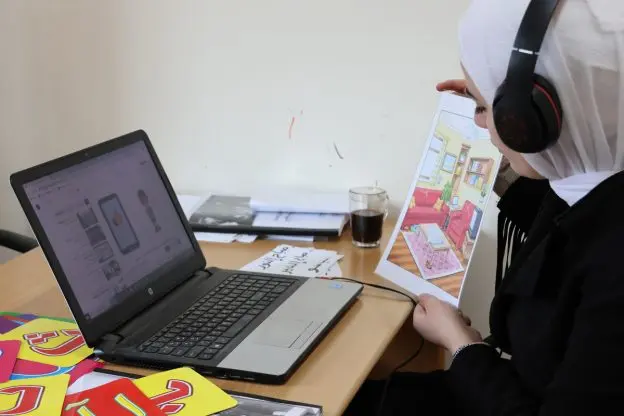
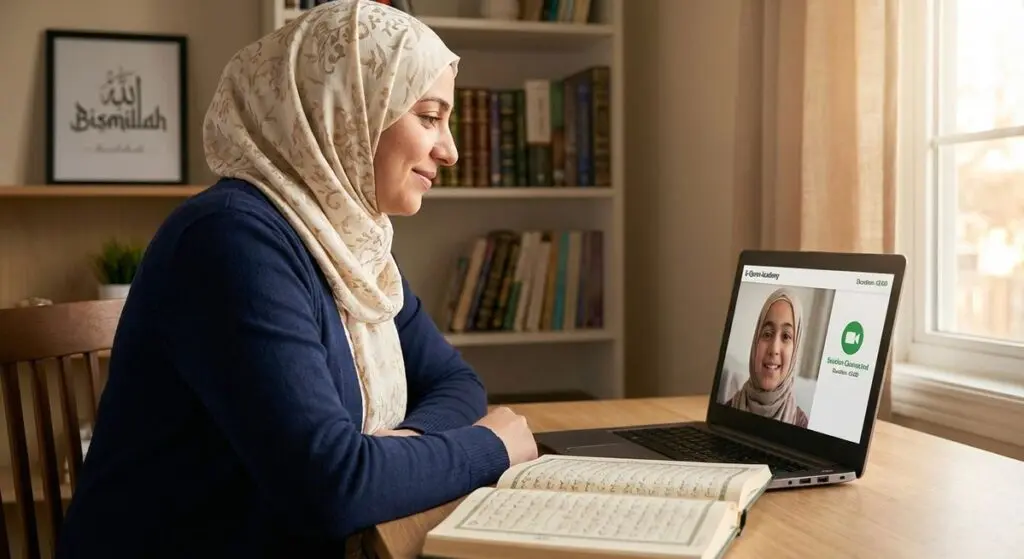
For serious progress, a live online course with a native instructor is the most effective format. Here’s how the top platforms compare:
| Platform | Type | Format | Levels | Pricing | Specialty | Free Trial |
|---|---|---|---|---|---|---|
| Kalimah Center | Private academy | Live 1-on-1 via Zoom, 60 min sessions | Beginner–Advanced (16 levels) | $42–$170/mo (monthly); $7–$10.50/session | MSA, Egyptian Arabic, Quranic Arabic, Arabic for kids | ✅ Yes |
| Qasid Online | Extension of Qasid Institute (Jordan) | Live group classes, structured semesters | Beginner–Advanced | ~$500–$1,500/semester | MSA, Levantine Arabic, academic Arabic | ✅ Yes (some programs) |
| Arabeya (Cairo) | Private school | Live 1-on-1 or small group via Zoom | Beginner–Advanced | $10–$25/hour | Egyptian Arabic, MSA, intensive programs | ✅ Yes |
| Nassra Arabic Method | Self-paced + live | Pre-recorded video course + optional live sessions | Beginner–Intermediate | $200–$400 (one-time) | Lebanese Arabic, conversational focus | ❌ No |
| Bayyinah TV | Self-paced (with some live events) | Pre-recorded video courses | Beginner–Advanced | $11–$22/mo | Quranic Arabic, Arabic grammar (Dream Program) | ✅ Limited free content |
| ArabicPod101 | Self-paced | Audio/video lessons + PDF notes | Beginner–Advanced | Free (basic) / $8–$25/mo | Listening, vocabulary, broad curriculum | ✅ Free tier available |
| iTalki / Preply (Arabic tutors) | Tutor marketplace | Live 1-on-1 with freelance tutors | All levels | $5–$50/hour (varies by tutor) | Maximum flexibility, choose any tutor | ✅ Some tutors offer |
Which online course should you choose?
| Your Situation | Best Option | Why |
|---|---|---|
| Complete beginner wanting structure | Kalimah Center or Arabeya | Structured curriculum, native instructor, personalized pace |
| Self-motivated learner on a budget | Bayyinah TV + Madinah Arabic (free) | Quality content at $11–$22/month + free textbook course |
| Quranic Arabic specifically | Kalimah Center (1-on-1) or Bayyinah TV (self-paced) | Both specialize in Quranic/Classical Arabic |
| Academic preparation / credentials | Qasid Online | Extension of one of the world’s best Arabic institutes |
| Maximum flexibility, irregular schedule | iTalki / Preply | Book sessions whenever you’re free, no commitment |
| Wants a specific dialect (Egyptian, Levantine) | Arabeya (Egyptian) or Nassra (Lebanese) | Dialect-focused curriculum |
Experience Kalimah Center Classes
Watch real excerpts from our live sessions at Kalimah Center and see how we bring learning to life. These clips highlight our interactive, student-centered teaching approach across all our courses—designed to keep learners engaged, motivated, and actively involved every step of the way.
Master Arabic with Kalimah Center
Join our expert-led online classes and start your journey toward Arabic fluency today.
Book Your Free Trial3. Best Places to Learn Arabic Abroad
If you can travel, immersion in an Arabic-speaking country accelerates learning by 2–3x compared to studying from home. The five top destinations are:
| Country | Best For | Cost (Annual) | Top Institution |
|---|---|---|---|
| 🇪🇬 Egypt | Most understood dialect + affordable living | $5,000–$10,000 | Al-Azhar, AUC, Kalimah Center (online from Cairo) |
| 🇯🇴 Jordan | Best structured MSA programs | $8,000–$15,000 | Qasid Institute |
| 🇲🇦 Morocco | Maximum immersion (minimal English) | $6,000–$12,000 | ALIF (Fes), Qalam wa Lawh |
| 🇱🇧 Lebanon | Levantine Arabic + cosmopolitan | $10,000–$18,000 | AUB, Saifi Institute |
| 🇸🇦 Saudi Arabia | Quranic Arabic + free scholarships | Free–$25,000 | Islamic Univ. of Madinah |
→ For detailed country comparisons (costs, visas, programs, dialects), see our [complete guide to the best countries for learning Arabic]
Read Also: Intensive Arabic Course Online
4. Best Arabic Learning Apps: Detailed Comparison
Sometimes, you don’t have time to sit and learn in a classroom or even open a computer. Here, apps come to the rescue! You can learn Arabic anywhere, on the bus, or even while waiting in line.
| App | Cost | Platform | Method | Skills Focus | Best For | Rating |
|---|---|---|---|---|---|---|
| Duolingo | Free (ads) / $7/mo (Plus) | iOS, Android, Web | Gamified lessons, translation exercises | Vocabulary, basic grammar, reading | Absolute beginners wanting a fun daily habit | ★★★☆☆ |
| Pimsleur | $14.95/mo (1 language) / $20.95 (all) | iOS, Android | Audio-based, listen-and-repeat | Pronunciation, conversational phrases, listening | Learners who prioritize speaking and pronunciation | ★★★★☆ |
| Memrise | Free (basic) / $9/mo (Pro) | iOS, Android, Web | Spaced repetition, video clips of native speakers | Vocabulary retention, real pronunciation examples | Visual/audio learners wanting long-term vocabulary retention | ★★★★☆ |
| Drops | Free (5 min/day) / $13/mo (Premium) | iOS, Android | Visual mnemonics, swipe-based | Vocabulary only — no grammar, no sentences | Quick daily vocabulary sessions (supplement to a main course) | ★★★☆☆ |
| HelloTalk | Free (basic) / $7/mo (VIP) | iOS, Android | Text/voice chat with native speakers | Speaking, writing, cultural exchange | Intermediate+ learners wanting free conversation practice | ★★★★☆ |
| Tandem | Free (basic) / $7/mo (Pro) | iOS, Android | Language exchange with correction tools | Speaking, writing, structured exchange | Learners wanting conversation partners with built-in correction | ★★★★☆ |
| Pimsleur Arabic | $14.95/mo | iOS, Android | Audio lessons (30 min each) | Listening, speaking, pronunciation | Commuters, audio-preferred learners, pronunciation focus | ★★★★☆ |
| Arabic Phrasebook | Free / in-app purchases | iOS, Android | Phrase lookup, audio playback | Travel phrases, pronunciation | Travelers wanting quick reference phrases | ★★☆☆☆ |
How to use apps effectively (important):
Apps alone will not make you fluent. They are best used as daily supplements (15–30 minutes) alongside a structured course or tutor. Here’s the ideal app combination:
| Time Slot | App | Purpose | Duration |
|---|---|---|---|
| Morning commute | Pimsleur | Pronunciation and listening (audio-only, no screen needed) | 30 min |
| Lunch break | Drops or Memrise | Vocabulary building (quick visual sessions) | 10–15 min |
| Evening | HelloTalk or Tandem | Conversation practice with native speakers | 15–30 min |
| Anytime (gaps) | Duolingo | Grammar review, sentence construction (gamified) | 5–10 min |
Total daily app time: 60–90 minutes — combined with 2–3 weekly live lessons, this produces measurable progress within months.
Read Also: Best 15 Learn Arabic Courses And Classes
Read Also: Learn Arabic In Morocco
5. Best Arabic Language Programs (University & Intensive)
If you are serious about learning Arabic, enrolling in a structured program can be very helpful.
a. Middlebury Language Schools (USA)
This program offers an immersive Arabic learning experience in the US. Students commit to speaking only Arabic for the duration of the course. This is intense but very effective.

b. Summer Intensive Programs
Many universities, such as the University of Texas at Austin and SOAS University of London, offer summer intensive Arabic programs that immerse you in the language for several weeks.
c. Duke in the Arab World Program
This study abroad program offers students the opportunity to learn Arabic in Amman, Jordan, while also exploring the culture and history of the Middle East.
d. Arabic Language Institute (ALI) at the American University in Cairo
One of the oldest and most reputable Arabic programs in the Middle East, offering courses in MSA, Egyptian colloquial Arabic, and media Arabic.
e. STARTALK Summer Programs
Funded by the U.S. National Security Agency, these programs offer high school and university students free Arabic courses during the summer.
f. CET Academic Programs
Offers semester-long and summer programs in Amman, Jordan, combining intensive Arabic language study with Middle Eastern studies.
Read also: Arabic language study scholarships
Free vs. Paid Arabic Learning Resources: What’s Worth Paying For?
Not all paid resources are better than free ones, and not all free resources are sufficient alone. Here’s an honest breakdown:
| Resource Type | Best Free Options | Best Paid Options | When Free Is Enough | When You Need Paid |
|---|---|---|---|---|
| Grammar textbook | Madinah Arabic Books (free PDF) | Al-Kitaab series ($50–$80) | ✅ Madinah Books are excellent and complete | Only if you prefer a Western pedagogical approach |
| Vocabulary building | Duolingo, Memrise (free tier) | Memrise Pro ($9/mo), Drops Premium ($13/mo) | ✅ Free tiers cover 80% of what you need | Premium removes ads and unlocks full content |
| Pronunciation | YouTube (Arabic with Sam, Learn Arabic with Maha) | Pimsleur ($14.95/mo) | ✅ For basic sounds and alphabet | Pimsleur’s systematic approach is better for conversation |
| Live instructor | Free trial lessons (Kalimah, Arabeya) | Kalimah ($42–$170/mo), iTalki ($5–$25/hr) | ❌ Free trials are one-time only | Essential for speaking practice and personalized correction |
| Listening practice | Al Jazeera Arabic (free), Arabic podcasts | ArabicPod101 Premium ($25/mo) | ✅ Free news and podcasts are excellent | Premium offers structured lessons with transcripts |
| Quranic Arabic | Quranic Arabic Corpus (free), 80% Quran Words app | Bayyinah TV ($11–$22/mo), Kalimah Center | ✅ For vocabulary reference and self-study | For grammar explanation and guided Quran reading |
| Speaking practice | HelloTalk, Tandem (free) | Kalimah Center, iTalki tutors | ✅ For casual conversation exchange | For structured correction and professional instruction |
The bottom line: You can start learning Arabic for $0 using free websites, apps, and YouTube. But reaching conversational ability requires at least one paid element — ideally a live course with a native instructor who corrects your pronunciation and grammar in real time. Budget recommendation: $42–$80/month for a live course + free apps for daily practice = the most effective budget combination.
Read also: Learn Arabic in Malaysia: Universities, Costs & Full Guide
Best Way to Learn Arabic: A Recommended Learning Path
If you’re starting from zero and want a clear plan, here’s what works based on how successful Arabic learners typically progress:
Phase 1: Foundation (Months 1–3)
| What | How | Time | Cost |
|---|---|---|---|
| Learn the Arabic alphabet | Madinah Arabic Book 1 (free) + Kalimah Center trial | 2–4 weeks | Free–$42/mo |
| Build basic vocabulary (200 words) | Duolingo or Memrise (daily, 15 min) | Ongoing | Free |
| Learn basic grammar + pronunciation | Structured online course (Kalimah, Arabeya, Bayyinah TV) | 2–3 sessions/week | $42–$170/mo |
| Start hearing Arabic | Arabic music, kids’ shows, simple podcasts | 15 min/day | Free |
Phase 2: Building (Months 3–12)
| What | How | Time | Cost |
|---|---|---|---|
| Continue structured course | Kalimah Center or equivalent (consistent schedule) | 2–3 sessions/week | $42–$170/mo |
| Daily vocabulary expansion | Memrise or Anki (spaced repetition) | 15 min/day | Free |
| Weekly speaking practice | HelloTalk / Tandem language exchange | 1–2 sessions/week | Free |
| Reading practice | Al Jazeera Learning Arabic, graded readers | 15–20 min/day | Free |
| Listening immersion | Arabic TV shows, podcasts, YouTube (with subtitles) | 30 min/day | Free |
Phase 3: Activating (Months 12+)
| What | How | Time | Cost |
|---|---|---|---|
| Continue advanced course or tutor | Kalimah Center or iTalki tutor | 2–3 sessions/week | $42–$200/mo |
| Immersion trip (if possible) | 2–12 weeks in Egypt, Jordan, or Morocco | As available | $1,000–$5,000 |
| Advanced reading | Arabic news, books, Islamic texts | Daily | Free |
| Community involvement | Local mosque Arabic circles, Arabic Meetup groups | Weekly | Free |
Expected outcome: Following this path consistently, most learners reach basic conversational ability (A2) by month 6 and functional intermediate (B1) by month 12–18.

Inside Kalimah Center: Moments from Our Courses
Get a glimpse into the vibrant learning experience at Kalimah Center. These snapshots capture real moments from our live classes—where students engage deeply, connect with passionate instructors, and grow in a welcoming, supportive environment.
Here Are The Reviews On Our Courses:
Our students frequently commend the excellence of our courses and the commitment shown by our instructors. You can read their complete reviews on Trustpilot.

Kalimah Center is the Perfect Place to Learn Arabic
You’ve found plenty of options, but do they offer:
- Highly experienced teachers?
- A unique and effective Arabic Language curriculum?
- Engaging and interactive classes?
- A recognized certificate to showcase your achievement?
If your answer is “no,” then Kalimah Center is the ideal destination for your Arabic language learning journey!
Our online Arabic courses are tailored to meet your needs:
- We start from the beginning: Whether you’re a complete beginner or have some basic knowledge, we have the right level for you.
- We focus on every skill: Develop your reading, writing, listening, and speaking skills simultaneously.
- We provide an interactive learning environment: Enjoy interactive presentations and fun exercises that make learning easy and enjoyable.
- We offer a recognized certificate: Upon passing the final exam, you’ll receive a certificate to validate your proficiency.
Join Our Arabic Course for FREE today.
📚 Explore Our Courses:
Online Arabic Course: Tailored to your level, our comprehensive Arabic program includes 16 teaching levels and 400+ hours of personalized sessions.
Online Quran With Tajweed Course: Perfect for non-Arabic speakers, our course spans 13 levels and equips you with Tajweed mastery from beginner to advanced.
Online Arabic Course For Kids: Nurture your child’s love for Arabic with our engaging and structured program, available in 24 levels for primary, intermediate, and secondary stages.
🚀 Start Your Free Trial Today! 🚀
Don’t miss out on this life-changing opportunity to deepen your faith and knowledge. Sign up now for your free trial and take the first step towards becoming a better practicing Muslim with Kalimah Center!
Master Arabic with Kalimah Center
Join our expert-led online classes and start your journey toward Arabic fluency today.
Book Your Free TrialConclusion:
If you want to learn Arabic, there are many great options across websites, apps, physical locations, and structured programs. Online platforms like Kalimah Center, Madinah Arabic and BBC Languages are excellent for beginners, while Al-Jazeera Learning Arabic is ideal for more advanced learners. For immersive experiences, institutes in Egypt, Jordan, and Morocco offer in-depth courses, while apps like Duolingo and Memrise are convenient for learning on the go.
For speaking practice, language exchange apps like HelloTalk or joining Arabic-speaking clubs and conversation partners can significantly enhance your conversational skills. You can also join structured programs like the Middlebury Language Schools in the U.S. or summer intensive courses offered by universities like SOAS or Duke. Whether you prefer self-paced learning or immersion, there’s a program or platform to suit every learning style.
FAQs about Where to Learn Arabic
Q1: What is the best free website to learn Arabic?
Madinah Arabic is the best completely free website — it offers a full structured course (3 books) originally designed for the Islamic University of Madinah, covering grammar, vocabulary, and reading. For news-based learning, Al Jazeera Learning Arabic provides free articles and videos at intermediate level. For Quranic Arabic specifically, the Quranic Arabic Corpus offers free word-by-word translations and grammatical analysis of the entire Quran. These free resources are excellent for self-study but lack live instructor feedback — combining them with a paid course or conversation partner significantly improves results.
Q2: Can I learn Arabic online for free?
Yes, but with limitations. Free resources (Madinah Arabic, Duolingo, YouTube channels, BBC Arabic) can teach you the alphabet, basic vocabulary, and simple grammar. However, free options rarely include speaking practice with a native speaker, personalized pronunciation correction, or structured progression through levels. For serious progress, most learners supplement free resources with at least one paid element — either a live online course ($42–$200/month) or a private tutor ($5–$25/hour).
Q3: What is the best app for learning Arabic as a beginner?
For absolute beginners, Duolingo (free) provides gamified lessons that teach basic vocabulary and sentence structure. Pimsleur ($14.95/month) is best for pronunciation and conversational ability through audio-based lessons. Drops (free/premium) excels at vocabulary building with visual mnemonics. Memrise (freemium) uses spaced repetition for long-term retention. No single app can make you fluent — apps are best used for 15–30 minutes daily alongside a structured course or tutor.
Q4: How long does it take to learn Arabic online?
With consistent online study (3–5 hours/week including a live course and daily app practice), most learners reach basic conversational ability (A2 level) in 6–9 months and functional intermediate conversation (B1) in 12–18 months. This is slower than full-time immersion abroad but realistic for working adults. The key variables are consistency (daily practice beats weekly cramming), live speaking practice (at least weekly), and choosing MSA vs. dialect (dialect is faster for conversation; MSA is needed for reading and formal contexts).
Q5: Should I learn Arabic with an app, a course, or by going abroad?
The most effective approach combines all three in phases. Phase 1 (months 1–3): Use an app (Duolingo or Memrise) for daily vocabulary + a structured online course (like Kalimah Center) for grammar and speaking, 2–3 sessions/week. Phase 2 (months 3–12): Continue the online course + add a conversation partner (HelloTalk or Tandem) for weekly speaking practice. Phase 3 (when possible): Travel to an Arabic-speaking country for 1–6 months of immersion to activate everything you’ve learned. Budget or time limitations? An online course with a native instructor can substitute for travel if supplemented with Arabic media consumption (TV, podcasts, news).