Arabic is a Semitic language spoken by over 400 million people in 22 countries, making it the 5th most spoken language in the world and one of the 6 official languages of the United Nations. It is written right to left in a connected cursive script with 28 letters, no capital letters, and three short vowel marks. Arabic influenced hundreds of English words including “algebra,” “coffee,” “alcohol,” and “safari,” and is the language of the Quran — memorized by millions of Muslims worldwide.
Key Takeaway Table:
| Fact | Details |
|---|---|
| Language family | Semitic (alongside Hebrew, Aramaic, Maltese) |
| Total speakers | 400–420 million (native + non-native) |
| Official countries | 22 Arab League member states |
| UN official language | Yes — since 1973 |
| Writing direction | Right to left |
| Alphabet letters | 28 letters (plus diacritical marks) |
| Vowel system | 3 core vowels, each with multiple forms |
| Global rank | 5th most spoken language worldwide |
| Script type | Abjad (consonant-based alphabet) |
| Quran connection | Arabic is the sacred language of the Quran |
The Arabic language, with its rich history and cultural significance, has played a pivotal role in shaping language development, art, literature, music, and culture. Arabic is one of the fastest-growing languages across the internet, and its popularity is leading to an upsurge in people jumping on board to learn how to write and speak it fluently.
It’s also one of the six official languages of the United Nations, it is the fifth most-spoken language in the world and there are more than 300 million Arabic speakers in the world.
What Is The Arabic Language Famous For?
The Arabic language possesses distinctive characteristics that contribute to its texture and appeal. As one of the most widely spoken languages globally, Arabic has developed its own unique personality.
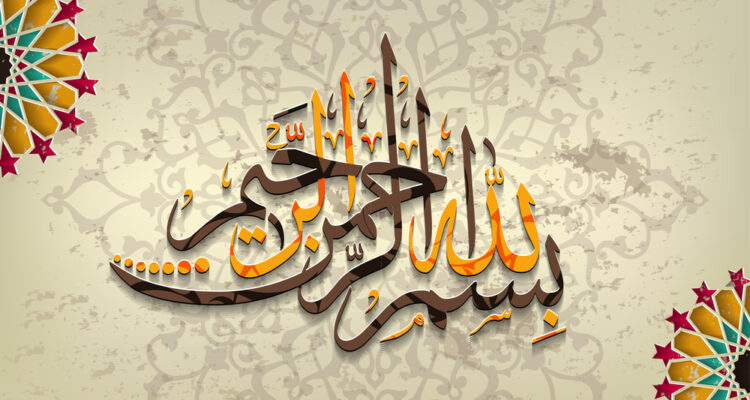
Arabic stands out for being one of the ancient Semitic languages that has been safeguarded and preserved over the centuries. This preservation has allowed it to remain a significant ancestor of modern Semitic languages. Despite its quirks. Arabic is renowned for its melodious and visually captivating qualities, making it a truly captivating language.
The Arabic language has several features that make it unique, such as its lack of capital letters, right-to-left writing style, and influence on other languages. Additionally, there are many beautiful poems and literature written in this language as well as its use in international business.
Arabic Language Characteristics: The 10 Key Features
What are the main characteristics of the Arabic language? Here are the 10 defining features that make Arabic linguistically distinctive:
1. Semitic Language Family
Arabic belongs to the Afroasiatic language family, specifically the Semitic branch — alongside Hebrew, Aramaic, Amharic (Ethiopia), Tigrinya (Eritrea), and Maltese. Semitic languages share grammatical features including trilateral roots, consonant-heavy structure, and similar pronoun systems.
2. Right-to-Left Script
Arabic is written and read from right to left — the opposite of Latin-script languages. This applies to both handwriting and digital text. Arabic books open from what Latin-script readers would consider the “back.”
3. 28-Letter Abjad Alphabet
Arabic uses an abjad — a consonant-based alphabet where the 28 letters primarily represent consonant sounds. Short vowels are written as diacritical marks (harakāt) above or below letters, not as full letters. This means a skilled reader supplies vowels from context and grammatical knowledge.
4. No Capital Letters
Arabic has no uppercase or lowercase distinction. Every letter is written in the same case regardless of its position — whether starting a sentence, a proper noun, or appearing mid-word. Word position and context fulfill the role that capitalization serves in English.
Is “Arabic” Capitalized in English?
Yes — “Arabic” is always capitalized in English when referring to the language, script, or culture. It is a proper adjective derived from the proper noun “Arabia.”
Correct usage:
- ✅ “She is learning Arabic.” (language name)
- ✅ “The Arabic alphabet has 28 letters.” (adjective)
- ✅ “Arabic numerals are used worldwide.” (adjective)
Incorrect usage:
- ❌ “She is learning arabic.”
The irony: While the English word “Arabic” requires a capital letter, Arabic script itself has no capital letters at all — every Arabic letter is written in the same form regardless of its position in a sentence. Arabic doesn’t capitalize the first word of a sentence, proper names, or titles the way English does.
5. Trilateral Root System
Most Arabic words derive from a 3-consonant (trilateral) root. Adding different vowel patterns around this root generates families of related words. The root ك-ت-ب (k-t-b) produces: kitab (book), kataba (he wrote), katib (writer), maktab (office), maktuba (letter).
6. Grammatical Gender (Masculine and Feminine)
Every Arabic noun is either masculine (مذكر — Mudhakkar) or feminine (مؤنث — Mu’annath). Adjectives, verbs, and pronouns must agree in gender with the nouns they refer to. Feminine nouns often (but not always) end in ة (ta marbuta).
7. Dual Number System
Arabic has a grammatical dual — a separate form for exactly two of anything — in addition to singular and plural. “One book” = كتاب (kitab), “Two books” = كتابان (kitaban), “Three or more books” = كتب (kutub). This three-way number distinction (singular/dual/plural) is rare among world languages.
8. Case Endings (I’rab)
Formal Arabic maintains a three-case grammatical system — nominative, accusative, and genitive — marked by vowel endings. A word’s ending changes based on its grammatical role: subject, object, or possessive. English lost its case system in the Middle Ages; Arabic preserves it in formal (Fusha) Arabic.
9. Connected Cursive Script
Arabic letters connect to each other within words, creating a flowing cursive appearance. Most letters have up to four different forms depending on whether they appear in isolation, at the start, middle, or end of a word. This connected script makes Arabic one of the world’s most visually distinctive writing systems.
10. Diglossia: Formal Fusha + Spoken Dialects
Arabic exists in a state of diglossia — educated speakers use two distinct varieties. Fusha (formal Arabic) is used in writing, media, and education across all 22 Arab countries. Ammiya (dialects) are spoken in daily conversation and vary dramatically by region. An educated Arab switches between these registers based on context.
Is Arabic the Richest Language? The Case for Arabic’s Linguistic Depth
Whether Arabic is “the richest language” depends on how richness is measured — but the case for Arabic’s exceptional depth is strong on several fronts:
1. Extraordinary vocabulary specificity
Arabic has documented hyper-specific vocabulary sets that most languages simply don’t have. For the word “camel” alone, classical Arabic dictionaries list over 100 distinct terms — each describing a different age, condition, color, gait, or use of a camel. This reflects the language of a culture where the camel was not just an animal but the foundation of desert survival.
2. Multiple words for abstract concepts
Arabic has at least 11 distinct words for love, each describing a different stage or type: Hubb (general love), Hawa (emotional attachment), Ishq (passionate love), Shaghaf (heart-consuming love), and more. English uses one word where Arabic uses eleven.
3. The trilateral root system multiplies vocabulary
Arabic’s root system means one 3-consonant root can generate 10–30 related words. With approximately 10,000 roots in Classical Arabic, the theoretical word-generation capacity is enormous — classical Arabic dictionaries list between 3 and 12 million words depending on how derived forms are counted.
4. Arabic words in other languages
Rather than borrowing from others, Arabic has been a major donor language — lending hundreds of words to Spanish, Portuguese, English, Turkish, Persian, Urdu, Swahili, and more. This directional flow reflects Arabic’s historical dominance in science, trade, and scholarship.
Master Arabic with Kalimah Center
Join our expert-led online classes and start your journey toward Arabic fluency today.
Book Your Free TrialWhat Are Some Interesting Facts About The Arabic Alphabet?
Arabic is written and read from right to left and there is no distinction between upper- and lowercase letters, though the shapes of letters usually vary depending on whether they are in an initial, medial, or final position in a word. Punctuation marks were not adopted until the twentieth century. Short vowels, represented by a set of marks below or above the letters, aid in the pronunciation of a word—these are usually only written in the Qur’an, where correct recitation is important, and in texts for novice readers.
The Arabic alphabet consists of eighteen shapes that express twenty-eight phonetic sounds with the help of diacritical marks. The same letter shape can form a “b” sound when one dot is placed below (ب), a “t” sound when two dots are placed above (ت), or a “th” sound when three dots are added above (ث). etc.
Then we come to the most important question on your mind:
What Are The Arabic Language Facts?
You might know countries where it’s spoken, or perhaps you’ll have an idea of how different written Arabic looks to the Latin alphabet. But we’re betting there’s several facts in this list that will surprise you!
Let’s find out!

Here are 24 interesting facts (12 facts in general and 12 formal and structural aspects facts) about the Arabic language if you haven’t thought of learning Arabic, may make you want to:
12 Facts About The Arabic Language In General
The Arabic language comes with many facts in general, including its nature, it is historical, and what is religious.
Below we will review the most important of them.
1. Arabic Is A Semitic Language
Just like Hebrew, Maltese, Amharic, and Tigrinya, Arabic is a Semitic language. The term ‘Semitic’ was created by members of the Göttingen School of History in the late 1700s to define languages closely related to Arabic, Hebrew, and Aramaic.
2. It’s One Of The Oldest Languages In The World
Arabic is thought to be one of the oldest languages in the world and it is most closely related to Hebrew and Aramaic, and it is believed that Arabic began to diverge from these other languages around the time of the Islamic conquests in the 7th century. Arabic has played an important role in the development of many other languages, particularly in the fields of science and religion.
On a broader scale, the Semitic languages are part of the Afroasiatic language family.
3. Official Language In 22 Countries
Arabic is the official language in at least 22 countries today, Sources vary on the exact number of Arabic-speaking countries. It often jumps that number up to 26, depending on whether they include countries where Arabic is a co-official language along with another, such as Israel.
4. Almost 420 Million Speakers And Growing Fast
Arabic including Modern Standard (sometimes called Classical) plus a range of colloquial dialects- is spoken by millions of people around the world today.
Estimates range anywhere between approximately 300 to 420 million total, including native and non-native speakers. Arabic became one of the six official languages of the United Nations (UN) in 1973.
5. The Divine Language Of The Quran
Arabic holds a sacred place in the hearts of over a billion Muslims worldwide as the language of the Quran. Revealed to the Prophet Muhammad, this holy book is considered the verbatim word of God, highlighting the language’s unmatched eloquence and profound depth.
6. Modern Standard Arabic And Local Dialects
There are two varieties of Arabic:
MSA and Local Dialects belonging to each country and region and it is studied at school, appears in literature and the media.
Many people recommend studying MSA in the first place because it will establish the basis upon which to learn local dialects.
7. The Quran preserving Arabic
The significance of the Quran in Islamic teachings ensures that Arabic remains a pivotal language for millions. This religious connection means countless individuals strive to learn and impart Arabic knowledge.
As the Qur’an said:
It is certainly We Who have revealed the Reminder, and it is certainly We Who will preserve it. (Quran 15:9)
Another remarkable aspect of Arabic preservation: the Arabic language is the only ancient Semitic language that maintained continuous unbroken literary use from antiquity to the present day. While its Semitic cousins — Akkadian, Phoenician, and Classical Hebrew (in its ancient form) — either died out or underwent dramatic transformations, Arabic’s grammatical structure from the 7th century remains recognizable and largely functional to educated speakers today.
8. There Are Different Dialects
Although Modern Standard Arabic is the official language of most countries, there are over 30 different dialects spoken in the Arab world. These dialects differ in grammar, syntax, and pronunciation between regions. Different Arabic dialects can be found throughout the Arab world.
While there are some similarities between them, each dialect has its own unique features.
9. Egyptian Arabic Is The Most Spoken Colloquial Variety Of Arabic
Egyptian Arabic, which is also known as Colloquial Egyptian or Masri, is spoken by Tens of millionspeople in Egypt.
Egyptian films and TV are widely distributed throughout the Arabic-speaking world, so it is also one of the most understood varieties of Arabic outside of the country.
10. The Arabic Alphabet Is Used To Write A Lot Of Different Languages
The Arabic alphabet is also used to write Persian, Malay (Jawi), Uyghur, Kurdish, Punjabi (Shahmukhi), Sindhi, Pashto, Urdu, and Somali, as well as a few other languages.
Until 1928, it was also used to write Turkish. Now, Turkish uses a modified version of the Latin alphabet.
11. English Borrows Words From Arabic.
Plenty of languages borrow from English, but English has also borrowed many words from Arabic. Many traveled through Greek, Latin, and other languages before reaching English. Here are some very short examples:
coffee – from Arabic قَهْوَة (qahwa), meaning ‘coffee, a brew’. Came to English through Ottoman Turkish قهوه (kahve, ‘coffee’) and Italian caffè (‘coffee’).
ghoul – from Arabic غُول (ḡūl), meaning ‘ghoul, desert demon, jinn’. Came to English via the Persian غول (ğul) and“cotton,” “algebra,” and “safari”.
12. Arabic Is Good For The Brain
According to a 2010 study, reading Arabic utilizes and activates both the right and left hemispheres in the brain simultaneously.
In turn, this makes the brain work harder and may increase cognitive and perceptive skills in other words, Arabic is good for preserving the brain healthy, especially as you age.
Read more about Is Arabic Hard to learn?
Arabic Language by the Numbers
| Statistic | Number | Context |
|---|---|---|
| Total Arabic speakers | 400–420 million | Native + non-native worldwide |
| Native Arabic speakers | ~310–330 million | Living in Arab world primarily |
| Official countries | 22 countries | All Arab League member states |
| UN official language | Since 1973 | One of 6 UN official languages |
| World ranking | 5th most spoken language | By total speaker count |
| Muslims who study Arabic | 1.8+ billion | For Quranic literacy |
| Internet growth | Top 10 fastest-growing | Significant online Arabic content growth |
Why the numbers vary: Different sources count differently — some count only native speakers, others include those who speak Arabic as a second language, and others count only those with meaningful proficiency. The 400+ million figure includes all meaningful speakers; 300 million is the commonly cited native speaker count.
Read also: English words of Arabic origin
12 Facts About The Arabic Language From Both Formal And Structural Aspects
The Arabic language is a fascinating and rich language and it has many unique characteristics.
Here are 12 amazing facts about the formal and structural aspects of Arabic language:

1. It Uses Its Own Alphabet (Abjad)
Arabic also has its own alphabet, called the abjad script and its script consists of 28 characters and is used for both writing and reading in Arabic.
2. It’s Written from Right to Left
An interesting fact about Arabic is that it’s written from right to left. This is unlike English which is written from left to right.
3. There Are No Capital Letters
Unlike English, Arabic does not have any capital letters.
Instead, the length of the word is used to distinguish between words that are written in all lowercase.
4. There Is No Verb ‘to Be’ In Arabic
When you’re saying a simple positive sentence in the present tense, then in Arabic, you wouldn’t say the verb ‘to be’.
For example, in Arabic, ‘I am the teacher’ would be ‘I the teacher’.
5. Arabic Contains Only 3 Vowel Sounds
The Arabic language only contains 3 vowels in its 28 consonant letter make-up.
Yet, it’s not actually that simple. Each of these three vowels has five variations and appears only as symbols are written either downwards or upwards and surrounded by consonant letters.
6. Arabic’s Trilateral Root System
One of Arabic’s most distinctive structural features is its trilateral root system (الجذر الثلاثي) — most Arabic words are built from a 3-consonant root that carries a core meaning. Add different vowel patterns around this root, and you get a family of related words.
Example — root ك-ت-ب (k-t-b) meaning “writing/recording”:
| Arabic Word | Pronunciation | Meaning |
|---|---|---|
| كَتَبَ | Kataba | He wrote |
| كِتَاب | Kitab | Book |
| كَاتِب | Katib | Writer |
| مَكْتَب | Maktab | Office / Desk |
| مَكْتُوب | Maktub | Written / Letter |
| مَكْتَبَة | Maktaba | Library / Bookstore |
All six words — “he wrote,” “book,” “writer,” “office,” “letter,” and “library” — share the same 3-consonant root. This system means that once you learn a root, you can often guess the meaning of related words you’ve never seen.
7. Arabic Is Written Entirely In Script
Arabic is written entirely in the script, that is, a distinct connected format that English speakers might compare to cursive.
This makes it one of the most visually distinctive written languages on the planet.
8. Arabic Has Three Grammatical Cases (I’rab — الإعراب)
Arabic maintains a full case system that English lost centuries ago. Every noun and adjective in formal Arabic (Fusha) changes its ending based on its grammatical function:
| Case | Arabic Name | Vowel Marker | Function | Example |
|---|---|---|---|---|
| Nominative | مرفوع (Marfu’) | ُ Damma | Subject of sentence | الكِتَابُ (the book — subject) |
| Accusative | منصوب (Mansub) | َ Fatha | Object of verb | قَرَأتُ الكِتَابَ (I read the book) |
| Genitive | مجرور (Majrur) | ِ Kasra | After prepositions | في الكِتَابِ (in the book) |
This system — called I’rab (الإعراب) — means the ending of a word tells you its role in the sentence. A single vowel change can completely alter a word’s grammatical function and, in some cases, its meaning.
9. Distinctive Punctuation Marks
Arabic’s unique punctuation system, with its commas and inverted question marks, offers a refreshing touch for learners familiar with the English system
10. The Story Of The Camel
As a testament to the richness of the language, Arabic contains more than 100 words that refer to just “camel,” each of which depicts a different condition or trait of the desert dweller and there are Over 24 Different Words for “Love”.
11. Geometry Meets Linguistics
Arabic showcases a fascinating blend of language and geometry.
Each letter can be traced back to a geometric shape, predominantly triangles, highlighting the culture’s emphasis on balance.
12. The Cursive Charm
Arabic, with its flowing cursive script, is a sight to behold.
Each letter changes its shape based on its position in a word, creating a harmonious blend of art and communication.
Do You Want To Learn Arabic?
Interested in learning Arabic? Whether in the USA, UK or Russia, or any place in the world in “Kalimah” we can help you.
Book Your Free Trial Lesson Now
With the International Center, which has been teaching the Arabic language for more than 13 years.
What Type Of Arabic Should You Learn?
Before deciding which Arabic language dialect you should learn first, consider your personal goals and preferences. Some students may want to be able to read and understand the Quran, while some may want to watch Arabic media and be able to converse with locals while traveling. Both of these goals would call for a different dialect of Arabic.

If you prefer a certain Arabic dialect, choosing to learn it first can help you stay motivated throughout the process. Having a passion for the language or dialect you’re learning can help you stay on track with your goals.
Our Advice To You In This Regard
Modern Standard Arabic (MSA) is the best version of Arabic for good and continuous learning and can be understood at a basic level by all Arabic speakers. Learning Modern Standard Arabic is a great place to start for everyone who wants to learn Arabic, regardless of whether their primary goal is understanding the Quran or o wanting to speak a particular dialect.
It will serve as a foundational stone to continue the journey and it will make it much easier to pick up one or several dialects. It will also allow you to understand and express yourself in different parts of the world, something that won’t happen with many dialects. Furthermore, it’s the language of television, newspapers, universities, books, store signs, etc. Even if you want to learn a particular dialect we still recommend starting learning Modern Standard Arabic and then moving on to a particular dialect.
Master Arabic with Kalimah Center
Join our expert-led online classes and start your journey toward Arabic fluency today.
Book Your Free TrialInside Kalimah Center: Moments from Our Courses
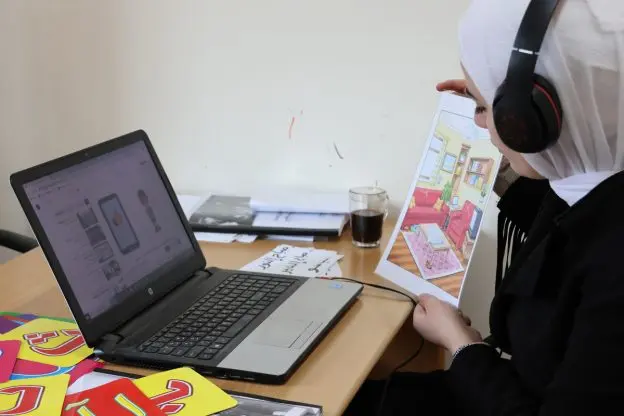
Get a glimpse into the vibrant learning experience at Kalimah Center. These snapshots capture real moments from our live classes—where students engage deeply, connect with passionate instructors, and grow in a welcoming, supportive environment.
Here Are The Reviews On Our Courses:
Our students frequently commend the excellence of our courses and the commitment shown by our instructors. You can read their complete reviews on Trustpilot.
Read more reviews on Trustpilot

Unlock Your Potential in Arabic and Quran with Kalimah Center!
Ready to deepen your connection with the Quran and enhance your understanding of Arabic? Join Kalimah Center today and embark on a transformative journey of learning and growth! Our professional, handpicked Online Arabic and Quran Tutors are dedicated to helping you master these essential skills with ease and expertise.

📚 Explore Our Courses:
Online Arabic Course: Tailored to your level, our comprehensive Arabic program includes 16 teaching levels and 400+ hours of personalized sessions.
Online Quran With Tajweed Course: Perfect for non-Arabic speakers, our course spans 13 levels and equips you with Tajweed mastery from beginner to advanced.
Online Arabic Course For Kids: Nurture your child’s love for Arabic with our engaging and structured program, available in 24 levels for primary, intermediate, and secondary stages.
🚀 Start Your Free Trial Today! 🚀
Don’t miss out on this life-changing opportunity to deepen your faith and knowledge. Sign up now for your free trial and take the first step towards becoming a better practicing Muslim with Kalimah Center!
Conclusion
The Arabic language is not just a medium of communication but a vast ocean of history, culture, and unparalleled linguistic intricacies. Whether you are seeking to understand the profound teachings of the Quran or aiming to immerse yourself in the rich tapestry of Arab culture, this language holds treasures waiting to be unveiled.
If your interest is piqued and you wish to delve deeper, we’re here to guide you on your linguistic journey.
FAQs about Arabic Language Facts
Q1: What are the main characteristics of the Arabic language?
The Arabic language has 10 defining characteristics: (1) Semitic language family — related to Hebrew and Aramaic; (2) Right-to-left script — written and read from right to left; (3) 28-letter abjad alphabet — primarily consonants with vowel marks added separately; (4) No capital letters — word position, not capitalization, distinguishes word types; (5) Trilateral root system — most words derive from 3-letter consonant roots; (6) Rich morphology — words change form extensively through prefixes, suffixes, and internal vowel changes; (7) Grammatical gender — all nouns are masculine or feminine; (8) Dual number system — separate forms for exactly “two” of anything; (9) Case endings (I’rab) — word endings change based on grammatical function; (10) Diglossia — formal Fusha Arabic coexists with numerous spoken dialects.
Q2: How many people speak Arabic in the world?
Estimates vary between 400 and 420 million speakers of Arabic worldwide, including native and non-native speakers. Arabic is the 5th most spoken language in the world by total speakers. Native Arabic speakers number approximately 310–330 million — almost exclusively in the 22 Arab League countries. Non-native speakers include Muslims worldwide who learn Arabic for religious purposes, academics, diplomats, and language learners. Arabic became one of the six official languages of the United Nations in 1973 (alongside English, French, Spanish, Russian, and Chinese).
Q3: Is Arabic capitalized in English writing?
Yes — “Arabic” is always capitalized in English when referring to the language, the people, or the script. It is a proper adjective derived from the proper noun “Arabia.” For example: “She speaks Arabic” (language), “Arabic alphabet” (script), “Arabic culture” (relating to Arab people). This is consistent with how all language names are capitalized in English — French, Spanish, Chinese, etc. Interestingly, Arabic itself has no capital letters — but the English word “Arabic” always uses one.
Q4: What English words come from Arabic?
Hundreds of English words have Arabic origins — many traveled through Spanish, Latin, or Greek before entering English. Common examples include: alcohol (from الكحول — al-kuhool), algebra (from الجبر — al-jabr), coffee (from قهوة — qahwa), safari (from سفرة — safara, meaning journey), sugar (from سكر — sukkar), cotton (from قطن — qutn), sofa (from صفة — suffa), zero (from صفر — sifr), almanac (from المناخ — al-manakh), chemistry (from الكيمياء — al-kimiya’). Arabic’s major contribution to English came primarily through the Islamic Golden Age (8th–13th centuries), when Arabic was the dominant language of science, mathematics, astronomy, and medicine.
Q5: Is Arabic the richest language in the world?
Arabic is frequently described as one of the world’s richest languages by vocabulary depth, though “richest” depends on how you measure it. Arabic’s richness comes from its trilateral root system — three-letter roots that generate dozens of related words — and its extraordinary specificity. Arabic reportedly has over 100 words for “camel” (describing different ages, conditions, and uses), more than 50 words for “lion,” and at least 11 distinct words for “love” (each describing a different stage or type of love). Some linguists estimate the Arabic language has over 12 million words in its total lexicon — though everyday usage draws on a much smaller vocabulary.