Semitic languages are a branch of the Afroasiatic language family that evolved from a common ancestor (Proto-Semitic) approximately 6,000–8,000 years ago. The family includes approximately 70+ languages, both living and extinct, including Arabic (the most widely spoken), Hebrew, Amharic, Tigrinya, Aramaic, and Maltese.
All Semitic languages share distinctive features: triconsonantal root morphology (words built from three-letter roots), pharyngeal consonants, grammatical gender, and right-to-left scripts (with the exception of Maltese). The term “Semitic” was coined by German linguist Johann Gottfried Eichhorn in 1781.
✅ Quick Answer Table:
| Question | Direct Answer |
|---|---|
| What is a Semitic language? | A branch of Afroasiatic languages evolved from Proto-Semitic (~6000–8000 BCE) |
| How many Semitic languages are there? | Approximately 70+ (living and extinct) |
| What is the most spoken Semitic language? | Arabic — 300–400 million native speakers |
| What is the oldest Semitic language? | Akkadian (2500–600 BCE) — now extinct |
| What are the 7 major Semitic languages? | Arabic, Hebrew, Amharic, Tigrinya, Aramaic, Tigre, Maltese |
| Why are they called “Semitic”? | From Shem, son of Noah — coined by Eichhorn in 1781 |
| Is Arabic a Semitic language? | Yes — Central Semitic branch, most widely spoken Semitic language |
| Total Semitic language speakers today? | ~380 million native speakers globally |
What is a Semitic Language?
A Semitic Language is a language family that covers a broad geographical region and a vast historical period, the Semitic language group is part of an even larger language family known as Afro-Asiatic, or Hamito-Semitic.
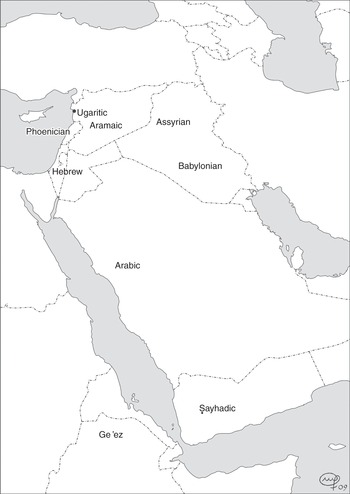
Such modern languages as Hebrew, Arabic, and Ethiopian belong to the Semitic language group. All Semitic languages developed from a common parent language between 8000 and 6000 BC.
They have many things in common, including the way word endings are formed, the similar sounds of their letters and words, and masculine and feminine genders.
At an early stage of development, all of the Semitic languages share certain characteristics with the rest of the Afro-Asiatic language family.
What Are The Semitic Languages?
The Semitic language family consists of dozens of distinct languages and modern-day dialects, but the major Semitic languages are Arabic, Amharic (spoken in Ethiopia), Tigrinya (spoken in Ethiopia and Eritrea), Hebrew, Tigre (spoken in Sudan), Aramaic ( Spoken in Lebanon, Syria, Israel, Iraq and Iran) and Maltese.
Arabic is by far the most widely spoken of the Semitic languages, with around 300 million native speakers spread across the vast majority of North Africa and throughout the Arabian Peninsula.
Although the variation in dialects (which include differences in grammar, pronunciation, and vocabulary) across the Arabic-speaking world is significant, all 30 varieties are still considered part of one language.
This is because most educated native speakers are capable of switching between their regional variety and Modern Standard Arabic, thereby having mutually intelligent conversations.
Why Are They Called Semitic Languages?
The term “Semitic” was coined by German linguist Johann Gottfried Eichhorn in the late 18th century.
He took it from biblical texts, where Shem is one of Noah’s three sons from the Book of Genesis, and the Greek version of his name is Sēm.
Eichhorn published a paper in 1795 called Semitische Sprachen (literally: “Semitic languages”) which launched the term into modern scholarship, and it has stuck around ever since.
What Makes A Language Semitic?
Contrary to what might seem implied by its name, there are very specific linguistic features that define Semitic languages and distinguish them from other language families:
1. Triconsonantal Root Morphology — The Defining Feature
The most distinctive feature of Semitic languages is that words are built from three-consonant (occasionally four-consonant) roots. Vowels and additional consonants are woven around this root to create related words with different grammatical meanings:
| Root | Arabic | Hebrew | English Connection |
|---|---|---|---|
| K-T-B (writing) | كَتَبَ (kataba — he wrote)، كِتَاب (kitab — book) | כָּתַב (katav — he wrote)، כֶּתֶב (ketev — writing) | Same root, same concept |
| S-L-M (peace) | سَلَام (salam — peace) | שָׁלוֹם (shalom — peace) | Shared Semitic root |
| M-L-K (king/rule) | مَلِك (malik — king) | מֶלֶך (melech — king) | Common ancestry clear |
2. Pharyngeal and Uvular Consonants
Semitic languages are characterized by consonants produced at the back of the throat: ع (ayn), ح (haa), خ (khaa), غ (ghayn) in Arabic have counterparts in Hebrew (ע, ח) and Amharic. These sounds are rare in non-Semitic languages.
3. Grammatical Gender
All Semitic languages assign masculine or feminine gender to nouns. There is no neutral/neuter gender in any Semitic language.
4. Dual Grammatical Number
Alongside singular and plural, Semitic languages have a special dual form for exactly two of something: Arabic رَجُلان (two men), Hebrew שְׁנַיִם (shnayim — two).
5. VSO Word Order
Classical forms of Semitic languages typically use Verb-Subject-Object order: Arabic ذَهَبَ الرَّجُلُ (“went the man” = “the man went”). Modern dialects often shift to SVO.
6. Right-to-Left Scripts
Arabic, Hebrew, Aramaic, and most other Semitic scripts read right to left — a feature inherited from ancient Semitic writing systems. Maltese is the only exception, using the Latin alphabet left to right.
The Semitic Language Family: Complete Comparison
| Language | Branch | Native Speakers | Primary Countries | Script | Status |
|---|---|---|---|---|---|
| Arabic | Central Semitic | 300–400 million | 22 Arab countries | Arabic script | Living — most spoken Semitic |
| Amharic | South Semitic (Ethiopic) | 22–32 million | Ethiopia | Ethiopic/Ge’ez | Living — official language of Ethiopia |
| Tigrinya | South Semitic (Ethiopic) | 7–9 million | Eritrea, Ethiopia | Ethiopic/Ge’ez | Living |
| Hebrew | Central Semitic | 5–9 million (native) | Israel | Hebrew script | Living — revived in 20th century |
| Maltese | Central Semitic (Arabic-derived) | 520,000 | Malta | Latin alphabet | Living — only Semitic language in EU |
| Aramaic | Central Semitic | ~500,000 | Syria, Iraq, diaspora | Aramaic script | Endangered |
| Tigre | South Semitic | 800,000–1 million | Eritrea | Ethiopic/Ge’ez | Living |
| Akkadian | East Semitic | 0 | Ancient Mesopotamia | Cuneiform | Extinct — oldest known Semitic language |
| Phoenician/Punic | Central Semitic | 0 | Ancient Carthage, Lebanon | Phoenician alphabet | Extinct |
| Ge’ez (Classical Ethiopic) | South Semitic | 0 (liturgical only) | Ethiopia, Eritrea | Ethiopic | Liturgical only |
The Afroasiatic Language Family Tree — Where Arabic Fits
AFROASIATIC LANGUAGE FAMILY
│
├── SEMITIC (Arabic, Hebrew, Amharic, Aramaic, Maltese, Tigrinya)
│   ├── East Semitic (extinct)
│   │   └── Akkadian (oldest known Semitic — 2500 BCE)
│   ├── West Semitic
│   │   ├── CENTRAL SEMITIC ← ARABIC IS HERE
│   │   │   ├── ARABIC (most widely spoken Semitic)
│   │   │   ├── Hebrew
│   │   │   ├── Aramaic
│   │   │   └── Maltese (Arabic-derived)
│   │   └── South Semitic
│   │       ├── Amharic (official language of Ethiopia)
│   │       ├── Tigrinya
│   │       ├── Tigre
│   │       └── Ge'ez (classical/liturgical)
│
├── BERBER (North Africa — Tamazight, Kabyle)
├── EGYPTIAN (extinct — evolved into Coptic)
├── CUSHITIC (Somali, Oromo)
├── OMOTIC (Ethiopia)
└── CHADIC (Hausa — largest; Central Africa)
Arabic’s unique position: Of all Semitic languages, Arabic has the largest number of speakers (300–400 million), the widest geographic spread (22 countries), and the greatest political, religious, and cultural influence — as the language of the Quran and one of six official UN languages.
What Is The Oldest Semitic Language?
The oldest known member of the Semitic family is the Akkadian, which is alternately referred to as Assyrian and Babylonian (Huehnergard).
Written in cuneiform and preserved on excavated clay throughout Mesopotamia, the Akkadian language was spoken between the third and first millennium BC (Akkadian).
If we want to trace the origin of Arabic, we should go back to Mesopotamia (present-day Iraq and Syria).
This region is probably the cradle of the Semitic languages. One of the very first Semitic languages, Akkadian, was spoken there between 2500 and 600 BCE.
Semitic Languages History
Semitic languages are attested in written form from a very early date, with texts in Eblaite and Akkadian appearing from around the middle of the third millennium BC, written in a script adapted from Sumerian cuneiform.
The oldest known member of the Semitic family is the Akkadian, which is alternately referred to as Assyrian and Babylonian.
1. Scripts used to write Semitic languages
Semitic languages are attested in written form from a very early date, with texts in Eblaite and Akkadian appearing from around the middle of the third millennium BC, written in a script adapted from Sumerian cuneiform.
The other scripts used to write Semitic languages are alphabetic.
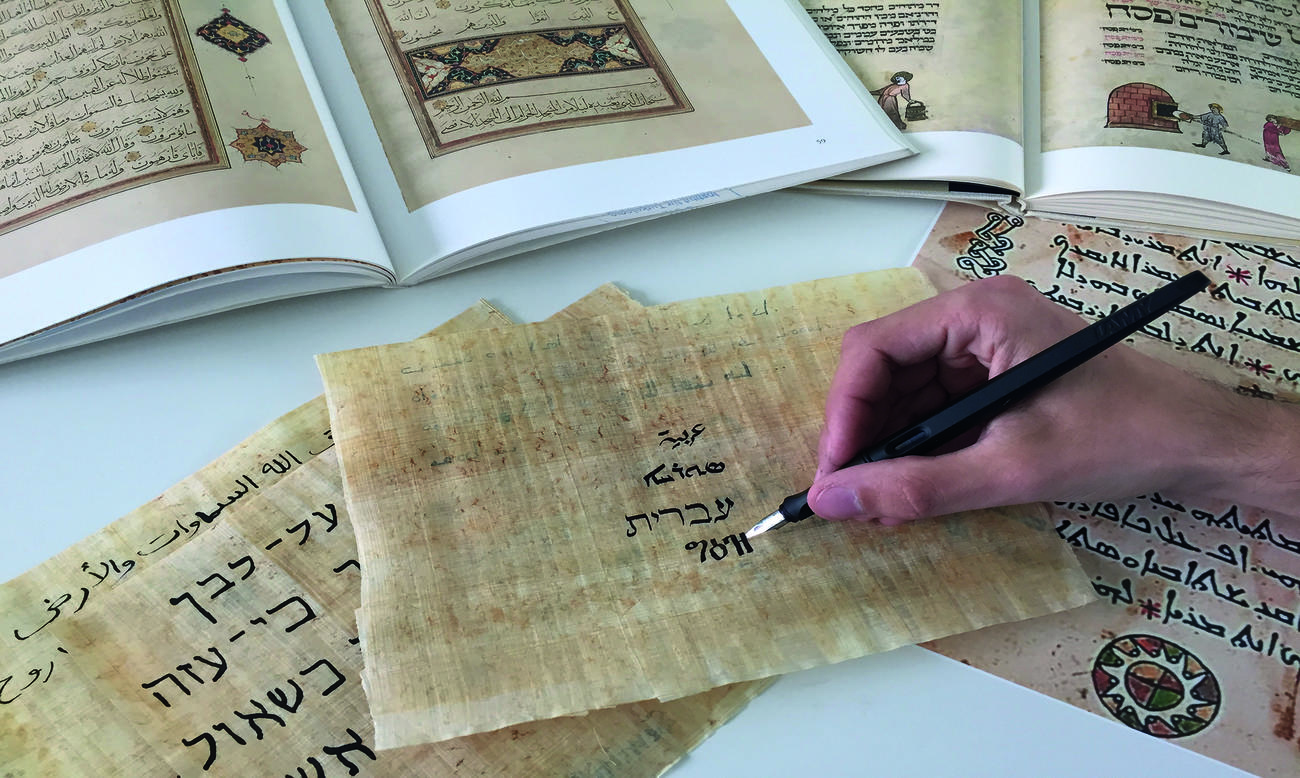
Among them are the Ugaritic, Phoenician, Aramaic, Hebrew, Syriac, Arabic, South Arabian, and Ge’ez alphabets.
Maltese is the only Semitic language written in the Latin alphabet and the only official Semitic language of the European Union.
2. The origin of Semitic-speaking peoples
The origin of Semitic-speaking peoples is still under discussion.
Several locations were proposed as possible sites of a prehistoric origin of Semitic-speaking peoples:
Mesopotamia, the Levant, Ethiopia, the Eastern Mediterranean region, the Arabian Peninsula, and North Africa.
The Arabic language, although originating in the Arabian Peninsula, first emerged in written form in the 1st to 4th centuries CE in the southern regions of The Levant.
With the advent of the early Arab conquests of the seventh and eighth centuries, Classical Arabic eventually replaced many (but not all) of the indigenous Semitic languages and cultures of the Near East.
Does mastering one language mean mastering all Semitic languages?
There is an undeniable overlap among Semitic languages, mastering one does not equate to mastering all.
These languages exhibit a fascinating interplay of similarities and differences:
Writing Systems: Semitic languages employ various writing systems, such as the Arabic alphabet, Ge’ez syllabary, Hebrew alphabet, and the Roman alphabet in the case of Maltese.
Common Words: Common origins shine through in shared words like “peace” and “house,” but their pronunciation can vary significantly. For instance, “peace” appears as “salām” in Arabic, “šlām-āʼ” in Hebrew, and “sliem” in Maltese.
Are Semitic languages mutually intelligible, allowing speakers of different Semitic languages to communicate seamlessly?
While there are indeed numerous similarities among Semitic languages, they are not fully mutually intelligible.
How Many Semitic Languages Are There?
There are approximately 70+ Semitic languages, both living and extinct. The exact count depends on how dialects are classified:
| Category | Approximate Count |
|---|---|
| Living Semitic languages | ~30–35 |
| Extinct Semitic languages | ~40+ |
| Arabic dialects alone | 30+ |
| Total (living + extinct) | ~70+ |
Living Semitic languages by speaker count:
- Arabic — 300–400 million
- Amharic — 22–32 million
- Tigrinya — 7–9 million
- Hebrew — 5–9 million
- Tigre — ~1 million
- Maltese — ~520,000
- Aramaic — ~500,000 (endangered)
- Various smaller Ethiopian Semitic languages — combined ~2–3 million
Total Semitic language speakers today: approximately 380 million
How Many People Speak Semitic Languages?
Altogether, there are currently around 380 million native speakers of Semitic languages in the world, with the vast majority of those being speakers of Arabic.
Amharic, the official language of Ethiopia, is the next most spoken Semitic language with around 65 million native speakers.
Maltese is one of the least-spoken Semitic languages with around 490,000 native speakers, but has the distinction of being the only Semitic language written with the Roman alphabet, as well as being the only one to be an official language of the European Union.
Beyond North and East Africa and the Arabian Peninsula, there are significant populations of speakers of this language family in Europe, North America, and Australasia.
For example, there are around 6 million Arabic speakers in the European Union, 200,000 Hebrew speakers in the USA, and around 20,000 Amharic speakers in Australia.
Is Arabic a Semitic Language?
Yes, Arabic is a Semitic language, belonging to a group of related languages that evolved from a common ancestral language within the Afroasiatic family. It is the most widely spoken Semitic language today, with around 300 million native speakers. Despite the numerous dialects spoken across the Arabic-speaking world, Modern Standard Arabic unifies communication among educated speakers.
Arabic shares many common traits with other Semitic languages, such as similar sounds, word endings, and grammatical structures. While Arabic is not the original Semitic language, it has significantly influenced and been influenced by other languages within the family. The earliest attested Semitic language is Akkadian, spoken between 2500 and 600 BCE.
Arabic, along with languages like Hebrew, Amharic, and Tigrinya, forms part of this ancient and historically significant language family. Arabic’s widespread use in religious, political, economic, and cultural spheres has cemented its prominence among Semitic languages.
Master Arabic with Kalimah Center
Join our expert-led online classes and start your journey toward Arabic fluency today.
Book Your Free TrialExperience Kalimah Center Classes
Watch real excerpts from our live sessions at Kalimah Center and see how we bring learning to life. These clips highlight our interactive, student-centered teaching approach across all our courses—designed to keep learners engaged, motivated, and actively involved every step of the way.
Here Are The Reviews On Our Courses:
Our students frequently commend the excellence of our courses and the commitment shown by our instructors. You can read their complete reviews on Trustpilot.
Read more reviews on Trustpilot

Learn One of the Semitic Languages “Arabic” with a professional team of native teachers
Get Started to Improve your Arabic Language & Linguistic Skills! If you wish to practice Arabic speaking, you’ve landed in the right place.
If you wish your child would get close to the Quran and learn it by heart, you’ve reached the right place!

All our courses are presented in unique attractive presentations and supported by interactive materials to boost the learning experience.
Buy the best books to learn the Arabic language now
📚 Explore Our Courses:
Online Arabic Course: Tailored to your level, our comprehensive Arabic program includes 16 teaching levels and 400+ hours of personalized sessions.
Online Quran With Tajweed Course: Perfect for non-Arabic speakers, our course spans 13 levels and equips you with Tajweed mastery from beginner to advanced.
Online Arabic Course For Kids: Nurture your child’s love for Arabic with our engaging and structured program, available in 24 levels for primary, intermediate, and secondary stages.
🚀 Start Your Free Trial Today! 🚀
Don’t miss out on this life-changing opportunity to deepen your faith and knowledge. Sign up now for your free trial and take the first step towards becoming a better practicing Muslim with Kalimah Center!
Conclusion:
Semitic languages, part of the broader Afro-Asiatic family, span a vast historical and geographical landscape, originating from a common ancestral tongue between 8000 and 6000 BC. This family includes prominent languages like Arabic, Hebrew, and Amharic, each sharing similar grammatical structures, sounds, and gender distinctions.
The major Semitic languages, including Arabic, Amharic, Tigrinya, Hebrew, Tigre, Aramaic, and Maltese, showcase the rich linguistic heritage of this group, with Arabic being the most widely spoken, unifying various dialects through Modern Standard Arabic.
FAQs about Semitic Language
Q1: What is a Semitic language?
A Semitic language is a member of the Semitic branch of the Afroasiatic language family — descended from a common ancestor called Proto-Semitic (spoken approximately 6,000–8,000 years ago). Semitic languages share distinctive features: triconsonantal root morphology (words built from three-consonant roots), pharyngeal and guttural consonants, grammatical gender (masculine/feminine, no neutral), and typically right-to-left scripts. Living Semitic languages include Arabic, Hebrew, Amharic, Tigrinya, Aramaic, and Maltese.
Q2: How many Semitic languages are there?
There are approximately 70+ Semitic languages in total — approximately 30–35 living languages and 40+ extinct languages. Arabic alone has 30+ regional dialects. Among living languages, Arabic is the most widely spoken (300–400 million speakers), followed by Amharic (22–32 million), Tigrinya (7–9 million), and Hebrew (5–9 million). Total living speakers of Semitic languages: approximately 380 million.
Q3: What is the oldest Semitic language?
The oldest confirmed Semitic language is Akkadian, spoken in ancient Mesopotamia (present-day Iraq) from approximately 2500 BCE to 600 BCE. Akkadian was written in cuneiform script and was the language of the Babylonian and Assyrian empires. It is now extinct with no direct living descendants. The oldest living Semitic language with a continuous written tradition is Hebrew, with inscriptions dating to approximately 1000 BCE.
Q4: Why are they called Semitic languages?
The term “Semitic” was coined by German linguist Johann Gottfried Eichhorn in 1781 in his paper “Semitische Sprachen” (Semitic Languages). He derived the term from the biblical figure Shem (Greek: Sēm) — one of Noah’s three sons in the Book of Genesis — because peoples speaking these languages were historically identified as descendants of Shem. The term has been used in modern linguistics ever since, though it is purely a linguistic classification with no racial or ethnic implications.
Q5: What is the most widely spoken Semitic language?
Arabic is by far the most widely spoken Semitic language, with 300–400 million native speakers across 22 countries in North Africa, the Middle East, and the Arabian Peninsula. Arabic’s prominence extends beyond native speakers — it is the language of the Quran (read by 1.8 billion Muslims), one of 6 official UN languages, and the primary language of 22 nations. The second most spoken Semitic language is Amharic (Ethiopia) with 22–32 million native speakers.