Arabic is a Semitic language within the Afroasiatic language family, originating in the northwestern Arabian Peninsula approximately 1,600–2,500 years ago. The oldest confirmed Arabic inscription — the Namara inscription (328 CE) — was found in Syria.
Arabic was standardised through the Quran (7th century CE) and spread across the Middle East and North Africa through the Arab Conquests. Today it is spoken by 400+ million people across 22 countries and is one of 6 official UN languages.
✅ Quick Direct Answers Table:
| Question | Direct Answer |
|---|---|
| Where did Arabic originate? | Northwestern Arabian Peninsula |
| When was Arabic first spoken? | Approximately 1,600–2,500 years ago |
| What language family is Arabic? | Afroasiatic → Semitic branch |
| Is Arabic a Semitic language? | Yes — the most widely spoken Semitic language |
| What is the oldest Arabic inscription? | Namara inscription, 328 CE, Syria |
| Who invented Arabic? | Arabic was not invented — it developed naturally from Proto-Semitic |
| Is Arabic the oldest language? | No — but one of the 10 oldest surviving languages |
| What languages is Arabic related to? | Hebrew, Aramaic, Amharic, Maltese, Tigrinya |
| When was Arabic standardised? | 7th century CE through the Quran |
| How many people speak Arabic? | 400+ million native speakers |
The Nature And Origin Of The Arabic Language
The Arabic language was first spoken by nomadic tribes in the northwestern frontier of the Peninsula.Arabic went through significant development throughout the 3rd to 6th centuries C.E. Throughout these years, characters were added to the script and words to the vocabulary.

Below we will review and answer the following questions:
1- What Is The Origin Of The Arabic Language?
2- What Is The Root Of The Arabic Language?
3- Is Arabic A Semitic Language?
4- What Are The Arabic Language Early Forms?
5- What Are The Families Of The Arabic Language?
What Is The Origin Of The Arabic Language?
The word “Arabic” derives from the fact that Arabs are known as ‘nomads’. It was first coined by ancient Greek geographers to describe people living in the Arabian Peninsula. The history of the Arabic language can be traced back to the Arabian Peninsula over 1600 years ago.

Arabic went through significant development throughout the 3rd to 6th centuries C.E. Throughout these years, characters were added to the script and words to the vocabulary.
It was first spoken by nomadic tribes in the northwestern frontier of the Peninsula.
What Is The Root Of The Arabic Language?
Arabic is in the Afroasiatic language family, specifically the Semitic branch. This is the very same branch that Hebrew, Amharic, Aramaic, Maltese, and many other languages with historic and literary weight are part of. All of these languages are descendants of Proto-Semitic, the common ancestor to all Semitic languages.
Proto-Semitic later split up into what would eventually become modern Arabic, Hebrew, Maltese, Amharic, and more.
The Afroasiatic Language Family Tree — Where Arabic Fits
AFROASIATIC LANGUAGE FAMILY
│
├── SEMITIC (Arabic belongs here)
│ ├── East Semitic (extinct)
│ │ └── Akkadian, Babylonian
│ ├── West Semitic
│ │ ├── Central Semitic
│ │ │ ├── ARABIC (most widely spoken)
│ │ │ ├── Hebrew
│ │ │ └── Aramaic
│ │ └── South Semitic
│ │ ├── Amharic (Ethiopia)
│ │ ├── Tigrinya
│ │ └── Maltese
│ └── North Semitic (ancestor of all above)
│
├── EGYPTIAN (extinct — evolved into Coptic)
├── BERBER (North Africa)
├── CUSHITIC (Horn of Africa)
├── OMOTIC (Ethiopia)
└── CHADIC (Central Africa)
Arabic’s unique position: Of all surviving Semitic languages, Arabic is the most widely spoken and is considered by many comparative linguists to be the closest surviving language to Proto-Semitic — the common ancestor of all Semitic languages.
Key relationships:
- Arabic and Hebrew share approximately 60–65% of basic vocabulary due to common Semitic ancestry
- Maltese is the only Semitic language written in the Latin alphabet — it developed from Sicilian Arabic
- Aramaic was the language spoken by Jesus — it predates Arabic as a literary language but is now spoken by only a small community
- Amharic (Ethiopia) and Tigrinya are the two largest South Semitic languages — both share the Semitic root system with Arabic
Is Arabic A Semitic Language?
Arabic is a member of the family of Semitic languages and it is by far the most widely spoken of the Semitic languages. It is specifically a northern Semitic language. The Semitic language family consists of dozens of distinct languages and modern-day dialects, but the major Semitic languages are Arabic, Amharic, Tigrinya, Hebrew, Tigre, Aramaic, and Maltese.
Some Semitic languages have either gone extinct or have become greatly limited because of the spread of the Arabic language. Specialists in the science of comparative languages believe that the Arabic language is closer to the mother language from which all Semitic languages emanated.
What Are The Arabic Language Early Forms?
Various forms of Old Arabic are attested in scripts like Safaitic, Hismaic, Nabatean, and even Greek. These early forms can be grouped into Old Arabic and Old North Arabian. People spoke Old Arabic in the central and southern parts of the Arabian Peninsula, while Old North Arabian was spoken in the northern part.
Over time, trade and cultural exchanges led to the evolution of these early forms, and other languages such as Persian and Greek influenced their development.
Old Arabic appears in several ancient scripts and inscriptions that pre-date the standardised Arabic we know today:
| Early Form | Script/Location | Period | Significance |
|---|---|---|---|
| Safaitic | Northern Arabian Peninsula, Syria, Jordan | 1st century BCE – 4th century CE | Used by nomadic tribes; includes thousands of inscriptions |
| Hismaic | Southern Jordan, northwestern Saudi Arabia | 1st century BCE – 4th century CE | Related to Safaitic; also nomadic tribal usage |
| Nabatean Arabic | Jordan (Petra), Syria | 1st century BCE – 4th century CE | The Namara inscription (328 CE) is written in Nabatean Arabic — the oldest confirmed Arabic-language inscription |
| Old North Arabian | Northern Arabian Peninsula | Pre-Islamic period | Umbrella term for early Arabic dialects spoken in northern Arabia |
| Old Arabic | Central and southern Arabian Peninsula | Pre-Islamic period | Ancestor of Classical Arabic; spoken language before written standardisation |
The Namara Inscription (328 CE):
Found in southern Syria, this inscription is the oldest confirmed text written in the Arabic language. It commemorates Imru al-Qays ibn Amr, described as “King of all the Arabs.” Written in Nabatean script with Arabic vocabulary and grammar, it marks the transition from Nabatean to Arabic writing.
The transition to Classical Arabic:
The Arabic writing system was not fully standardised until the 7th century CE, when scholars added dots to distinguish similar letters and vowel marks (harakat) to clarify pronunciation — essential steps that enabled accurate transmission of the Quran.
Read more about Arabic Language Facts
What Are The Families Of The Arabic Language?
The Arabic language is divided into 5 main languages but the Modern Standard Arabic is the standardized variety of the language and is used in most formal speech throughout the Arab world to ease communication.
A. North African Arabic:
It is known as Maghrebi Arabic and frequently borrows words from Spanish, French, and Italian.
B. Hassaniya Arabic:
spoken in Mauritania and the western Sahara, is regarded as a version of Maghrebi Arabic.
C. Egyptian Arabic:
Egyptian Arabic is widely understood due to the country’s cinematic influence and strong media presence.
E. Levantine Arabic:
Spoken in the Levant region – comprising Lebanon, Syria, Jordan, and Palestine.
F. Iraqi Arabic:
Aramaic was the lingua franca in Mesopotamia and Iraqi Arabic bears trac.
Master Arabic with Kalimah Center
Join our expert-led online classes and start your journey toward Arabic fluency today.
Book Your Free TrialRead also: English words of Arabic origin
The History Of Arabic Language
Old Arabic was the beginning of Arabic dialects, Safaitic dialect is the earliest dialect in old Arabic, which the desert nomadic tribes used. The Qur’an, the holy book of Islam, played a significant role in standardizing the Arabic language.

Below we will review and answer the following questions:
1. How Old Is The Arabic Language?
2. Where Did The Arabic Language Originate?
3. When Was The Arabic Language Created?
4. How Was The Arabic Language Created?
5. When Did Arabic Become A Language?
6. Is Arabic The Oldest Language?
How Old Is The Arabic Language?
There is no definitive answer, and it is still a debated question among historians and that’s a good indication that it’s old. One thing we know for sure, the Quran was revealed in Arabic over 1,450 years ago. So the Arabic language had to have been well-established in the region already.
If you want a more precise answer to “How old is the Arabic language,” you could confidently say 1600-2500 years old.
Where Did The Arabic Language Originate?
Arabic first showed up in the northwest of the Arabian Peninsula, and according to various sources, its earliest forms date back as early as 2000 BC.

At that time, the region was home to various tribes who spoke different dialects of Arabic. The language was primarily a spoken language and was used for trade, poetry, and storytelling However, regular use of the language did not happen until 500 AD.
When Was The Arabic Language Created?
The Arabic language is a natural language that was not created but rather developed. It developed naturally from its Semitic ancestor language.The exact date is not known however this is believed to have been 1600 years ago. The oldest inscription of the Arabic language, known as the Namara inscription, was found in Syria and mentions a struggle of an ancient Arab king.
The king is Imru al-Qays ibn Amr who lived around 328 AD. The language written on the inscription was in Nabataean Arabic, an ancient form of Arabic.
How Was The Arabic Language Created?
Old Arabic was the beginning of Arabic dialects, Safaitic dialect is the earliest dialect in old Arabic, which the desert nomadic tribes used.
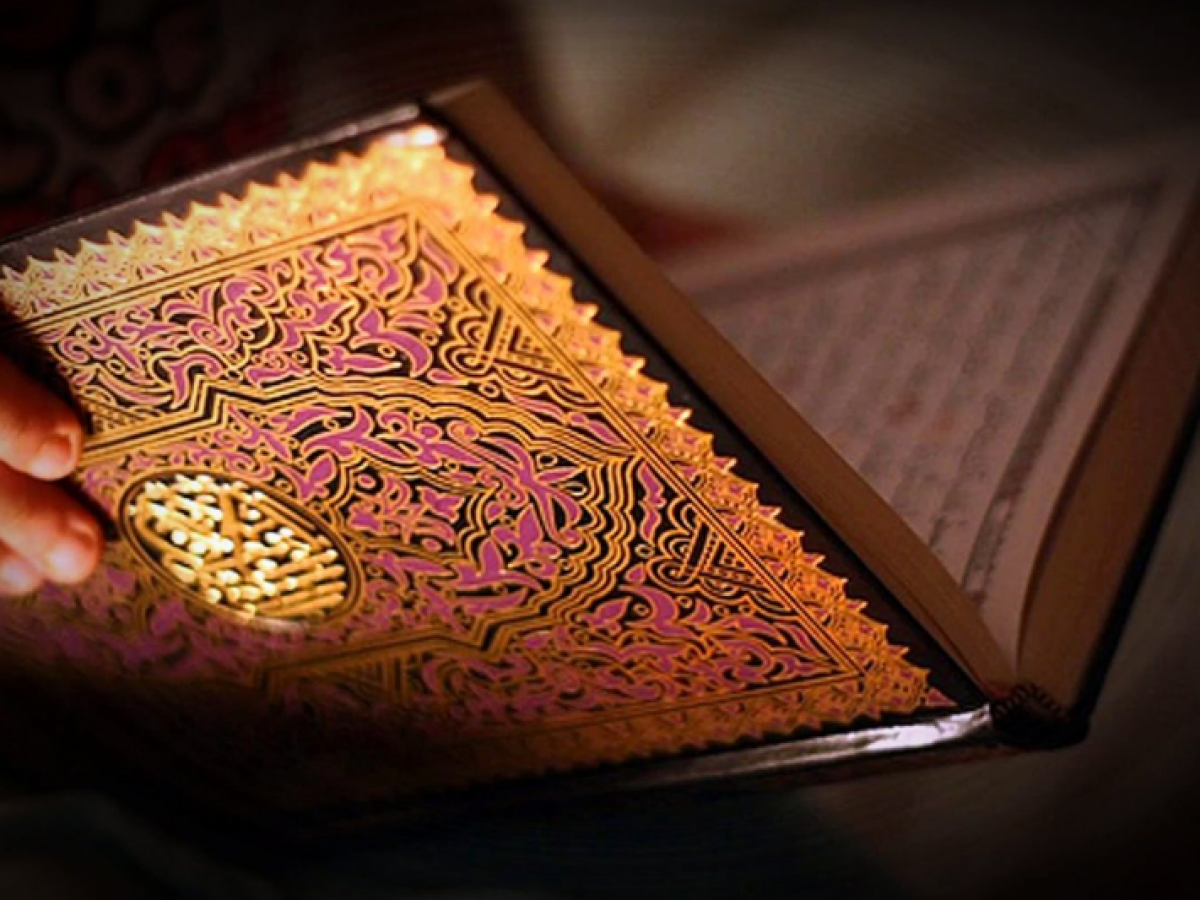
The Qur’an, the holy book of Islam, played a significant role in standardizing the Arabic language, as it was written in Classical Arabic, which became the literary form of the language.
Read more about: Family Members In Arabic And Relatives In Arabic
When Did Arabic Become A Language?
When prophet Muhammed was alive, Arabic was written without any markings or dots. When people converted to Islam after his death, scholars feared Arabic would be lost or altered.This is why Arabic scholar and linguist Abu Al-Aswad Al-Du’ali came up with a system to mark the alphabet using dots to facilitate the whole system. He is also credited for establishing nahw, the grammar system of the Arabic language.
Another scholar called Al-Khalil bin Ahmed developed another system to mark the way each word will be pronounced according to its position in the sentence. The four basic marks were fatiha, damma, kasra,sukoon and tanween. The Arabic language then spread to all the Regions in which Islam entered and became the official language of science and literature. A lot of scientific discoveries and science books were written in Arabic and later were translated by Europeans to be studied.
Is Arabic The Oldest Language?
Although Arabic is not the oldest, it is one of the 10 oldest languages in the world.Historians and linguists generally agree that Sumerian, Akkadian, and Egyptian are the oldest languages with a clear written record.All three are extinct, meaning they are no longer used and do not have any living descendants that can carry the language to the next generation.
As for the oldest language that is still spoken, several contenders emerge. Hebrew and Arabic stand out among such languages for having timelines that linguists can reasonably trace.
Evolution Of the Arabic Language
The Arabic language developed naturally from its Semitic ancestor language and it was first spoken by nomadic tribes in the northwestern frontier of the Peninsula.Arabic went through significant development throughout the 3rd to 6th centuries C.E.

The Holy Quran and Islam impacted the Arabic language and it became a widespread language spoken by many people.
Below we will review and answer the following questions:
1. Has the Arabic language changed?
2. How did the Arabic language spread and develop?
3. What is the Arabic Classification with languages’ tree
Has The Arabic Language Changed?
All the languages of the world, except for those that have disappeared, change and develop over the years. This is also the case with the Arabic language, which the Holy Qur’an influenced radically, and after the revelation of the Holy Qur’an, it preserved it from extinction or change.
Allah makes a promise in the Quran,
“إِنَّا نَحْنُ نَزَّلْنَا الذِّكْرَ وَإِنَّا لَهُ لَحَافِظُونَ”
Indeed, it is We who sent down the Qur’an and indeed, We will be its guardian. (Quran, 15:9)
The Quran cannot be really protected and preserved unless the Arabic language in which it was revealed is preserved. Otherwise, its meaning cannot be fully grasped by the reader. It would have been inaccessible. And we see the fulfillment of this promise when we look back at history.
How Did The Arabic Language Spread And Develop?
The language has been defined and refined over a considerable period of time. A significant amount of this development occurred between the 3rd and 6th century AD, with further additions made to the script in the 7th century AD when ancillary signs were added to letters in order to avoid ambiguities over how to read text.

Beginning in the 7th century CE, the Arab Conquests carried speakers of various Arabic dialects, with their religion of Islam and their language of Arabic, out of the Arabian Peninsula into almost all of the Middle East and North AfricaThe 10th century in particular saw intense interest among Arabic linguists and during this time no fewer than six Arabic dictionaries were compiled alongside more specialized works aimed at presenting particular varieties of vocabulary such as synonyms and homonyms.
Poetry and literature flourished in Classical Arabic but weren’t recorded until 800 or 900 AD.The Quran and the rise of Islam in the Arab world led to the Islamic conquests, which, along with Islam, introduced the Arabic language to North Africa, Persia, and even Spain.
What Is The Arabic Classification With Languages’ Tree?
Arabic is a Semitic language within the Afroasiatic family that originated in the Arabian Peninsula and there are considerable variations from region to region.The Arabic language family is divided into several categories which are: Old Arabic, the literary varieties, and the modern vernaculars.Specialists believe that the Arabic language is closer to the mother language from which all Semitic languages emanated.
Do You Want To Learn The Arabic Language With The Best Learning Center In Egypt?
Kalimah Centre Provides A Comfortable Learning Environment with teachers who are native Arabic speakers who are highly certified in teaching Arabic and Quran.
What`s Kalimah?
Kalimah is one of the most well-known Arabic language institutes which started providing Arabic language courses in 2011 from Cairo, Egypt.
What are the courses that Kalimah provides?
Kalimah provides a variety of courses that aim to help Arabic language learners improve their skills in any Arabic language branch such as reading, writing, listening, speaking, and many other courses including Quran and Islamic sciences.
What is the difference between Kalimah and online Arabic teaching companies?
The difference is that We respect our profession so much that we spend every minute of our life developing Arabic education and train our tutors constantly so that the student gets the best possible service.
Master Arabic with Kalimah Center
Join our expert-led online classes and start your journey toward Arabic fluency today.
Book Your Free TrialInside Kalimah Center: Moments from Our Courses
Get a glimpse into the vibrant learning experience at Kalimah Center. These snapshots capture real moments from our live classes—where students engage deeply, connect with passionate instructors, and grow in a welcoming, supportive environment.
Here Are The Reviews On Our Courses:
Our students frequently commend the excellence of our courses and the commitment shown by our instructors. You can read their complete reviews on Trustpilot.

Unlock Your Potential in Arabic and Quran with Kalimah Center!
Ready to deepen your connection with the Quran and enhance your understanding of Arabic? Join Kalimah Center today and embark on a transformative journey of learning and growth! Our professional, handpicked Online Arabic and Quran Teachers are dedicated to helping you master these essential skills with ease and expertise.
📚 Explore Our Courses:
Online Arabic Course: Tailored to your level, our comprehensive Arabic program includes 16 teaching levels and 400+ hours of personalized sessions.
Online Quran With Tajweed Course: Perfect for non-Arabic speakers, our course spans 13 levels and equips you with Tajweed mastery from beginner to advanced.
Online Arabic Course For Kids: Nurture your child’s love for Arabic with our engaging and structured program, available in 24 levels for primary, intermediate, and secondary stages.

🚀 Start Your Free Trial Today! 🚀
Don’t miss out on this life-changing opportunity to deepen your faith and knowledge. Sign up now for your free trial and take the first step towards becoming a better practicing Muslim with Kalimah Center!
Conclusion
Old Arabic was the beginning of Arabic dialects, Safaitic dialect is the earliest dialect in old Arabic, which the desert nomadic tribes used.Arabic is in the Afroasiatic language family, specifically, the Semitic branch, and specialists in the science of comparative languages believe that the Arabic language is closer to the mother language from which all Semitic languages emanated.The Arabic language is divided into 5 main languages but the Modern Standard Arabic is the standardized variety of the language and is used in most formal speech throughout the Arab world to ease communication.
Arabic first showed up in the northwest of the Arabian Peninsula, and according to various sources, its earliest forms date back as early as 2000 BC.Although Arabic is not the oldest, it is one of the 10 oldest languages in the world. The Arabic language was first spoken by nomadic tribes in the northwestern frontier of the Peninsula.Arabic went through significant development throughout the 3rd to 10th centuries C.E. Throughout these years, characters were added to the script and words to the vocabulary.
The Qur’an, the holy book of Islam, played a significant role in standardizing the Arabic language, and the Holy Quran and Islam impacted the Arabic language and it became a widespread language spoken by many people.After the revelation of the Holy Qur’an, it preserved the Arabic language from extinction or change. Allah makes a promise in the Quran: Indeed, it is We who sent down the Qur’an and indeed, We will be its guardian. (Quran, 15:9)
FAQs about Arabic Language Origin
Q1: Where did the Arabic language originate?
Arabic originated in the northwestern Arabian Peninsula — present-day Saudi Arabia, Jordan, and Syria. The earliest Arabic-speaking nomadic tribes inhabited this region, and the language gradually spread across the Peninsula through trade, poetry, and storytelling. The oldest confirmed Arabic inscription — the Namara inscription of 328 CE — was found in southern Syria. Regular written use of Arabic did not become widespread until approximately 500 CE, and Classical Arabic was standardised through the Quran in the 7th century.
Q2: When was Arabic invented?
Arabic was not “invented” — it developed naturally from Proto-Semitic, the common ancestor of all Semitic languages. The Arabic language as a distinct linguistic entity is estimated to be 1,600–2,500 years old. Its earliest written record (the Namara inscription) dates to 328 CE. The language was already well-established when the Quran was revealed in the 7th century CE. Scholars Abu Al-Aswad Al-Du’ali and Al-Khalil bin Ahmed later codified Arabic grammar and the vowel marking system in the 7th–8th centuries CE.
Q3: What language family does Arabic belong to?
Arabic belongs to the Afroasiatic language family, specifically its Semitic branch. Within the Semitic branch, Arabic is classified as a Central Semitic language — the same subgroup as Hebrew and Aramaic. Arabic is the most widely spoken of all Semitic languages, with 400+ million native speakers. It is considered by many comparative linguists to be the Semitic language most similar to Proto-Semitic, the hypothetical ancestor of all Semitic languages.
Q4: Is Arabic related to Hebrew?
Yes — Arabic and Hebrew are both members of the Semitic branch of the Afroasiatic language family, descending from a common ancestor called Proto-Semitic. They share approximately 60–65% of basic vocabulary due to this common origin. Both languages use similar root-based grammar systems, right-to-left scripts (with different letter shapes), and similar phonological features including guttural consonants. However, the two languages are not mutually intelligible — a native Arabic speaker cannot understand Hebrew without study, and vice versa.
Q5: Is Arabic the oldest language in the world?
No — but Arabic is one of the oldest living languages. The oldest languages with confirmed written records are Sumerian (approximately 3100 BCE), Akkadian (approximately 2500 BCE), and Egyptian (approximately 3100 BCE) — all now extinct. Among languages still spoken today, Hebrew and Arabic are among the oldest, with traceable histories extending back 2,000+ years. Arabic’s standardisation through the Quran (7th century CE) has preserved it in a form remarkably similar to its classical roots.