The best universities for learning Arabic range from institutions embedded in Arabic-speaking cultures (Al-Azhar University in Egypt, the University of Jordan) to elite Western research universities with strong Middle Eastern studies departments (Harvard, Oxford, Georgetown, SOAS).
The right choice depends on your goals: cultural immersion, academic research, professional Arabic, or Quranic studies. For non-degree learners or those unable to relocate, intensive language centers (Kalimah Center, Qalam wa Lawh) and online programs provide equivalent linguistic instruction at lower cost.
✅ University Comparison Table:
| University | Country | Specialisation | Programs | For Whom |
|---|---|---|---|---|
| Al-Azhar University | Egypt | Islamic + Classical Arabic | All levels, A1–C2 | Islamic studies, cultural immersion |
| University of Al-Qarawiyyin | Morocco | Classical Arabic + history | Traditional | Historical Arabic, classical scholarship |
| American University in Cairo | Egypt | MSA + dialects | Undergrad + grad | Academic + professional Arabic |
| University of Jordan | Jordan | MSA + Levantine | Undergrad + grad | Levantine Arabic, regional studies |
| University of Damascus | Syria | MSA + Classical | Undergrad + grad | Classical Arabic (limited accessibility) |
| Georgetown University | USA | MSA + Classical | Undergrad + grad | Academic, political, diplomatic Arabic |
| University of Oxford | UK | Classical + MSA | Undergrad + grad | Research, classical literature |
| University of Sydney | Australia | MSA + dialects | Undergrad + grad | Australia-based learners |
| Harvard University | USA | MSA + Classical | Undergrad + grad | Academic research, Near Eastern studies |
| SOAS University of London | UK | MSA + dialects | Undergrad + grad | Cultural studies, Middle East politics |
Best Colleges And University To Learn Arabic
If you’re looking to master Arabic while immersed in its rich cultural context, top institutions like Al-Azhar University in Egypt and the University of Al-Qarawiyyin in Morocco provide unparalleled experiences. Both universities boast centuries of academic tradition, blending rigorous Arabic language instruction with an authentic cultural atmosphere.
Al-Azhar’s specialized Education Centre for Non-Arab Students and Al-Qarawiyyin’s historic surroundings make them ideal for students interested in both linguistic proficiency and deep cultural immersion. Similarly, the University of Damascus and the University of Jordan offer comprehensive programs, balancing Modern Standard Arabic with local dialects in vibrant, historically significant settings.
For those seeking an international option, Georgetown University in Washington, D.C., and SOAS University of London offer world-class Arabic programs. Georgetown’s curriculum excels in teaching both classical and modern Arabic, with opportunities for study abroad. At SOAS, students engage in cultural and political studies alongside language courses, offering a holistic view of the Arab world.
Alternatively, Kalimah Center in Cairo and Qalam wa Lawh in Rabat provide intensive, culturally immersive programs for a more focused learning experience, perfect for students aiming to achieve fluency quickly.
Let’s discuss Them in more details:
1. Al-Azhar University (Egypt)
Al Azhar University, located in Cairo, Egypt, is one of the oldest and most prestigious Islamic universities in the world. Established in 970 AD, it has long been a central institution for Islamic scholarship and education. Its reputation extends to its Arabic language programs, particularly for non-Arabic speakers.
Education Centre for the Arabic Language for Non-Arab Students:
Overview: The Education Centre for the Arabic Language for Non-Arab Students at Al-Azhar University is specifically designed to help non-Arabic speakers learn Arabic. It caters to a diverse range of students, including those interested in Islamic studies, Arabic language, and culture. The center offers a structured and immersive approach to language learning, benefiting from Al-Azhar’s rich educational heritage.
The center conducts a preliminary examination to determine the competency level of applicants to study Arabic, and they are distributed according to the results of these examinations on seven levels (A1 – A2 – B1 – B2 – C1 – C2 – Preliminary). They use the final test result at these levels to measure student’s performance according to the skills of listening, speaking, reading, writing, interaction and participation.
The Center grants certificates from the Ministry of Higher Education upon completion of the study.
| Location | Cairo, Egypt |
| Founded | 970 AD — one of the oldest universities in the world |
| Language of instruction | Arabic (with some English support for beginners) |
| Arabic program | Education Centre for the Arabic Language for Non-Arab Students |
| Levels offered | 7 levels: A1 → A2 → B1 → B2 → C1 → C2 → Preliminary |
| Skills assessed | Listening, speaking, reading, writing, interaction, participation |
| Certification | Ministry of Higher Education certificate upon completion |
| Best for | Islamic studies, Quranic Arabic, cultural immersion, classical scholarship |
| Unique strength | Oldest Islamic university — unmatched prestige in Islamic scholarship |
| Non-Arabic speakers welcome? | ✅ Yes — dedicated centre specifically designed for non-native speakers |
| Placement test | ✅ Yes — preliminary examination determines starting level |
| Estimated cost | Low — government-subsidised institution |
| Location advantage | Cairo — one of the Arab world’s largest, most culturally rich cities |
| Website | Al-Azhar.edu.eg |

2. University of Al-Qarawiyyin (Morocco)
The University of Al-Qarawiyyin in Fez, Morocco, is celebrated as one of the oldest continuously operating universities in the world, having been founded in 859 AD by Fatima al-Fihri. Known for its rich history and academic influence, the university offers Arabic language programs that cater to non-Arabic speakers, blending instruction in both Modern Standard Arabic and Classical Arabic.
Its location in Fez provides students with an immersive cultural experience, allowing them to practice Arabic in a vibrant, historically significant setting.
The university’s campus is steeped in tradition, featuring ancient libraries and scholarly resources that enhance the learning experience.
Al-Qarawiyyin’s longstanding academic prestige and its integration with Islamic studies make it a distinguished choice for those seeking a deep and culturally immersive education in Arabic.
| Location | Fez, Morocco |
| Founded | 859 AD — oldest continuously operating university in the world |
| Founded by | Fatima al-Fihri — the world’s first female university founder |
| Language of instruction | Arabic |
| Arabic program focus | Classical Arabic, Quranic sciences, Islamic jurisprudence |
| Levels offered | Traditional Islamic scholarship levels |
| Certification | University degree in Islamic and Arabic studies |
| Best for | Classical Arabic, Quranic studies, Islamic jurisprudence, historical Arabic scholarship |
| Unique strength | The world’s oldest university — unparalleled historical and academic prestige |
| Non-Arabic speakers welcome? | ⚠️ Limited — program primarily conducted in Arabic; strong foundation required |
| Location advantage | Fez — UNESCO World Heritage city, one of the best-preserved medieval Islamic cities |
| Cultural immersion | Exceptional — Fez’s medina provides a living Islamic-Arabic cultural environment |
| Important note | This is primarily an institution for advanced Islamic scholarship, not a conventional language school — beginners should consider other options first |
| Website | Uqa.ac.ma |

3. American University in Cairo (Egypt)
The American University in Cairo (AUC) is a prominent institution known for its high-quality education and vibrant campus life. Founded in 1919, AUC offers a broad range of programs, including a well-regarded Arabic language program tailored for both native and non-native speakers.
The Arabic language program at AUC is designed to provide students with a deep and comprehensive understanding of the language.
It offers courses in Modern Standard Arabic as well as various dialects, catering to different proficiency levels. The program emphasizes both linguistic skills and cultural competence, preparing students to use Arabic effectively in various contexts.
Students have the opportunity to engage in immersive learning experiences through AUC’s diverse community and Cairo’s rich cultural environment. The program is known for its rigorous curriculum, which combines classroom instruction with practical language use, helping students to achieve fluency and cultural understanding.
AUC’s location in Cairo allows students to practice Arabic in a native setting, enhancing their learning experience. The university also offers cultural activities and excursions that complement the language coursework, providing a well-rounded education in both the language and the cultural nuances of the Arab world.
| Location | New Cairo, Egypt (main campus) |
| Founded | 1919 |
| Language of instruction | English (primary) + Arabic |
| Arabic program | Arabic Language Institute — serving native and non-native speakers |
| Programs offered | Modern Standard Arabic, Egyptian Colloquial Arabic, Intensive Arabic |
| Levels offered | Beginner through advanced |
| Degree programs | BA in Arabic Studies, MA in Arabic Studies |
| Certification | AUC degree (recognised internationally) + credit transfer available |
| Best for | Academic Arabic, Egyptian Arabic dialect, cultural immersion, international students |
| Unique strength | American-style education in an Egyptian cultural setting — best of both worlds |
| Non-Arabic speakers welcome? | ✅ Yes — courses designed specifically for non-native speakers |
| Study abroad available? | ✅ Yes — semester and summer programs for international students |
| Location advantage | Cairo — immersive Arabic-speaking environment with English-medium instruction |
| Estimated cost | Medium–high (American university tuition levels, lower than US institutions) |
| Financial aid | Available for eligible students |
| Website | Aucegypt.edu |

Master Arabic with Kalimah Center
Join our expert-led online classes and start your journey toward Arabic fluency today.
Book Your Free Trial4. University of Jordan (Jordan)
The University of Jordan, established in 1962 and located in Amman, is one of Jordan’s leading institutions of higher education. It is renowned for its strong programs in various fields, including Arabic language studies. The University of Jordan offers a comprehensive Arabic language program designed to serve both non-native speakers and advanced learners.
The program focuses on Modern Standard Arabic as well as regional dialects, providing a broad and nuanced understanding of the language.
Students benefit from a structured curriculum that includes intensive language instruction, cultural studies, and practical language use. The program is tailored to help students achieve proficiency in reading, writing, speaking, and listening, with an emphasis on both formal and colloquial Arabic.
The university’s location in Amman, the capital of Jordan, offers students the opportunity to practice Arabic in a dynamic urban setting, where they can engage with native speakers and experience the local culture firsthand. Additionally, the University of Jordan’s cultural and extracurricular activities complement the language courses, providing students with a holistic learning experience.
With its modern facilities, experienced faculty, and immersive environment, the University of Jordan provides a robust platform for mastering Arabic and gaining a deeper understanding of the Arab world.
| Location | Amman, Jordan |
| Founded | 1962 |
| Language of instruction | Arabic (primary) + English for some programs |
| Arabic program | Faculty of Arabic Language and Literature + Arabic for Non-Native Speakers |
| Programs offered | Modern Standard Arabic, Levantine Arabic dialect, Arabic for foreigners |
| Levels offered | Beginner through advanced |
| Degree programs | BA, MA, and PhD in Arabic Language and Literature |
| Certification | University of Jordan degree (regionally recognised) |
| Best for | Levantine Arabic, regional cultural immersion, affordable Middle Eastern education |
| Unique strength | Excellent Arabic instruction in one of the most politically stable and welcoming countries in the Arab world |
| Non-Arabic speakers welcome? | ✅ Yes — Arabic for Non-Native Speakers program specifically designed |
| Location advantage | Amman — modern, cosmopolitan city with a large Arabic-speaking community and safe environment for international students |
| Estimated cost | Low–medium by international standards |
| Scholarship availability | ✅ Jordanian government scholarships available for international students |
| Website | Ju.edu.jo |
Read more about Top 11 Arabic Language Study Scholarships
5. University of Damascus, Syria
The University of Damascus, founded in 1923, is one of Syria’s oldest and most prestigious universities. Located in the capital city, Damascus, it has a long-standing reputation for excellence in education across various disciplines, including Arabic language and literature.
The University of Damascus offers a well-regarded Arabic language program that caters to both native and non-native speakers. The program focuses on several aspects of Arabic, including Modern Standard Arabic, Classical Arabic, and regional dialects. This comprehensive approach allows students to gain proficiency in both contemporary and traditional forms of the language.
The curriculum is designed to develop students’ skills in reading, writing, speaking, and listening, with an emphasis on deepening their understanding of Arabic literature and culture. The university’s rich academic environment is complemented by its location in Damascus, a city renowned for its historical and cultural significance.
Students at the University of Damascus have access to extensive libraries and research resources, including rare manuscripts and historical texts. The program often integrates cultural studies, giving students insights into the historical and societal contexts of the Arabic-speaking world.
Despite the challenges posed by the ongoing conflict in Syria, the University of Damascus remains a key institution for Arabic studies, offering a unique and historically enriched perspective on the language and its literature.
| Location | Damascus, Syria |
| Founded | 1923 — oldest university in Syria |
| Language of instruction | Arabic |
| Arabic program | Arabic Language Institute for Non-Native Speakers |
| Programs offered | Modern Standard Arabic, Classical Arabic, Syrian dialect |
| Levels offered | Beginner through advanced |
| Degree programs | BA, MA in Arabic Language and Literature |
| Certification | University of Damascus degree |
| Best for | Classical Arabic, historical linguistic studies, Syrian Arabic dialect |
| Unique strength | Damascus is one of the oldest continuously inhabited cities in the world — extraordinary historical and cultural context for Arabic study |
| Non-Arabic speakers welcome? | ✅ Yes — historically strong programme for non-native speakers |
| ⚠️ Important current status | Due to the ongoing conflict in Syria, access and safety for international students is significantly limited. Prospective students should verify current conditions and consult their government’s travel advisories before considering study in Damascus. |
| Location advantage | Damascus — historically one of the most significant cities in the Arab world (when accessible) |
| Estimated cost | Very low (when accessible) |
| Website | Damascus-univ.edu.sy |

6. Georgetown University (USA)
Georgetown University, located in Washington, D.C., is a prestigious institution known for its strong programs across various disciplines, including Arabic language and Middle Eastern studies. Founded in 1789, Georgetown has a long tradition of academic excellence and international engagement.
Georgetown University’s Arabic language program is highly regarded for its rigorous and comprehensive approach to teaching the language. The program offers courses in Modern Standard Arabic, which is essential for formal communication and literary studies, as well as various Arabic dialects.
Students benefit from a structured curriculum that emphasizes all aspects of language learning: speaking, listening, reading, and writing. The program integrates cultural studies, allowing students to understand the sociopolitical and historical contexts of the Arabic-speaking world.
One of the key strengths of Georgetown’s program is its focus on both contemporary and classical Arabic, providing students with a broad understanding of the language. The university also offers opportunities for immersive learning experiences through study abroad programs in Arabic-speaking countries and internships related to Middle Eastern affairs.
Georgetown’s location in Washington, D.C., provides students with access to a range of cultural institutions, diplomatic resources, and global networks that enhance their educational experience. The university’s faculty includes experts in Arabic and Middle Eastern studies, contributing to a rich academic environment.
| Location | Washington, D.C., USA |
| Founded | 1789 — oldest Jesuit university in the United States |
| Language of instruction | English (with Arabic-language instruction in Arabic courses) |
| Arabic program | Department of Arabic and Islamic Studies + School of Foreign Service |
| Programs offered | Modern Standard Arabic, Classical Arabic, Arabic for Professional Purposes |
| Levels offered | Beginner through advanced (all proficiency levels) |
| Degree programs | BA in Arabic, MA in Arabic and Islamic Studies, joint degrees with School of Foreign Service |
| Certification | Georgetown University degree (internationally recognised) |
| Best for | Academic Arabic, diplomatic and professional Arabic, policy and international relations contexts |
| Unique strength | Washington D.C. location provides access to diplomatic community, international organisations, and Arabic-speaking embassies for real-world language practice |
| Non-Arabic speakers welcome? | ✅ Yes — full beginner-to-advanced sequence |
| Study abroad available? | ✅ Yes — programmes in Arabic-speaking countries including Egypt, Jordan, and Morocco |
| Location advantage | Washington D.C. — diplomatic capital with significant Arabic-speaking professional community |
| Estimated cost | High (elite US university tuition) |
| Financial aid | ✅ Available — merit and need-based |
| Notable | Particularly strong programme for those pursuing careers in diplomacy, international development, intelligence, or policy |
| Website | Georgetown.edu |
7. University of Oxford (UK)
The University of Oxford, an institution with a centuries-old reputation for academic excellence, offers a highly regarded Arabic language program through its Faculty of Oriental Studies. Known for its comprehensive and rigorous approach, Oxford’s Arabic program provides in-depth instruction in Modern Standard Arabic, Classical Arabic, and a variety of regional dialects.
This thorough curriculum not only focuses on linguistic proficiency but also immerses students in the rich literary and cultural contexts of the Arabic-speaking world.
Students at Oxford benefit from access to its extensive library resources, including the Bodleian Library, which houses a significant collection of rare Arabic manuscripts and texts. This wealth of resources supports a robust research environment, enabling students to engage with both classical and contemporary Arabic literature and historical documents.
The program emphasizes a holistic understanding of the Arabic language by integrating cultural studies and historical context into the curriculum. Students have the chance to participate in study abroad programs and fieldwork, allowing them to practice their language skills in real-world settings and gain firsthand experience of Arabic-speaking cultures.
The distinguished faculty, composed of leading experts in Arabic and Middle Eastern studies, provides students with exceptional mentorship and academic guidance. The diverse and international student body enriches the learning environment, fostering a global perspective on Arabic studies.
| Location | Oxford, United Kingdom |
| Founded | c. 1096 — oldest university in the English-speaking world |
| Language of instruction | English (Arabic through Arabic-language instruction) |
| Arabic program | Faculty of Oriental Studies — Arabic and Islamic Studies |
| Programs offered | Modern Standard Arabic, Classical Arabic, Arabic literature and linguistics |
| Levels offered | Intermediate through advanced (strong foundation required for entry) |
| Degree programs | BA in Oriental Studies (Arabic), MPhil, DPhil (PhD) in Arabic and Islamic Studies |
| Certification | University of Oxford degree (among the most internationally prestigious) |
| Best for | Academic research, classical Arabic literature, advanced linguistics, Quranic and Islamic manuscript studies |
| Unique strength | Bodleian Library — one of the world’s largest collections of rare Arabic manuscripts, supporting unparalleled research into classical Arabic texts |
| Non-Arabic speakers welcome? | ✅ Yes — undergraduate entry may begin with no Arabic knowledge |
| Study abroad available? | ✅ Yes — year abroad placements in Arabic-speaking countries |
| Location advantage | Oxford — one of the world’s most renowned academic environments |
| Estimated cost | High (UK/international university tuition) |
| Financial aid | ✅ Available — scholarships including Rhodes, Clarendon, and faculty-specific awards |
| Notable | Historical claim: Arabic was among the first languages formally studied at Oxford, with Arabic manuscripts held since the 17th century |
| Website | Oriental.ox.ac.uk |
8. University of Sydney (Australia)
The University of Sydney, established in 1850, is one of Australia’s oldest and most prestigious institutions of higher education. Located in Sydney, New South Wales, it is renowned for its diverse academic programs and research excellence.
The University of Sydney offers a robust Arabic language program through its School of Languages and Cultures. The program is designed to cater to a range of proficiency levels, from beginners to advanced students. It focuses on Modern Standard Arabic, which is essential for formal communication, as well as various Arabic dialects used in everyday conversation across different regions.
Students in the Arabic program benefit from a comprehensive curriculum that emphasizes not only language skills—reading, writing, speaking, and listening—but also cultural and historical contexts. The coursework includes Arabic literature, media, and the socio-political aspects of the Arabic-speaking world, providing a well-rounded educational experience.
The program is supported by modern teaching facilities and a dedicated faculty with expertise in Arabic language and Middle Eastern studies. The University of Sydney also offers opportunities for students to participate in exchange programs and internships, enhancing their practical language skills and cultural understanding.
Located in Sydney, the university provides a vibrant and multicultural environment that complements the language learning experience. Students can engage with the local Arabic-speaking community and benefit from various cultural and academic events related to the Arabic world.
| Location | Sydney, New South Wales, Australia |
| Founded | 1850 — Australia’s oldest university |
| Language of instruction | English (Arabic through Arabic-language courses) |
| Arabic program | School of Languages and Cultures — Arabic Studies |
| Programs offered | Modern Standard Arabic, Arabic dialects, Arabic literature and culture |
| Levels offered | Beginner through advanced |
| Degree programs | BA in Arabic Studies (single or combined major), postgraduate options |
| Certification | University of Sydney degree (internationally recognised) |
| Best for | Australian-based learners, Arabic for professional and academic purposes, Middle Eastern cultural studies |
| Unique strength | Best Arabic programme in Australia — ideal for learners who cannot relocate to the Middle East or Europe |
| Non-Arabic speakers welcome? | ✅ Yes — complete beginner courses available |
| Study abroad available? | ✅ Yes — exchange programmes to Arabic-speaking countries |
| Location advantage | Sydney — large and diverse multicultural city with a significant Arabic-speaking community (Lebanese, Egyptian, Iraqi diaspora communities) |
| Estimated cost | Medium–high (Australian university tuition, lower than US equivalents for domestic students) |
| Financial aid | ✅ Available — University of Sydney scholarships and Australian government awards |
| Notable | Sydney’s Arabic-speaking community (one of the largest in the Southern Hemisphere) provides excellent real-world language practice outside the classroom |
| Website | Sydney.edu.au |
9. Harvard University (USA)
Harvard University, with its long-standing tradition of academic excellence, offers a highly esteemed Arabic language program within the Department of Near Eastern Languages and Civilizations. This program provides a thorough education in Modern Standard Arabic, Classical Arabic, and various regional dialects, ensuring that students develop strong skills in speaking, reading, writing, and listening.
The curriculum is carefully designed to cater to different proficiency levels, from beginners to advanced learners, and integrates cultural and historical studies to offer a well-rounded understanding of the Arab world.
Students benefit from Harvard’s extensive library resources, including valuable Arabic manuscripts and historical texts, which support in-depth research and academic exploration. The distinguished faculty, known for their expertise in Arabic language, literature, and Middle Eastern studies, offer high-quality instruction and mentorship.
Additionally, the program promotes immersive learning experiences through study abroad opportunities and internships in Arabic-speaking countries, allowing students to practice the language in real-world contexts and gain firsthand cultural insights.
Located in Cambridge, Massachusetts, Harvard’s vibrant and diverse academic community provides a rich environment for exploring Arabic language and culture. The university’s global perspective and commitment to scholarly excellence make its Arabic program a leading choice for students aiming to achieve a deep and nuanced understanding of the Arabic language and its cultural contexts.
| Location | Cambridge, Massachusetts, USA |
| Founded | 1636 — oldest university in the United States |
| Language of instruction | English (Arabic through Arabic-language instruction) |
| Arabic program | Department of Near Eastern Languages and Civilizations (NELC) |
| Programs offered | Modern Standard Arabic, Classical Arabic, Arabic literature, Islamic manuscripts |
| Levels offered | Beginner through advanced |
| Degree programs | AB (BA) in Near Eastern Languages and Civilizations, AM (MA), PhD |
| Certification | Harvard University degree (among the most globally prestigious) |
| Best for | Academic research, classical Arabic literature, Near Eastern history, advanced language scholarship |
| Unique strength | Harvard’s libraries hold one of the world’s most significant collections of Arabic manuscripts — unparalleled for classical Arabic research. The university’s global network and prestige open exceptional career doors. |
| Non-Arabic speakers welcome? | ✅ Yes — full beginner-to-advanced sequence in the language program |
| Study abroad available? | ✅ Yes — opportunities in Arabic-speaking countries through Harvard’s international programs |
| Location advantage | Cambridge, Massachusetts — part of the Greater Boston academic ecosystem with MIT, Tufts, and other institutions |
| Estimated cost | High (elite US private university tuition — approximately $55,000+/year) |
| Financial aid | ✅ Generous — Harvard meets 100% of demonstrated financial need; many students pay significantly less than sticker price |
| Notable | Harvard’s Arabic program dates to the 19th century — one of the oldest in North America |
| Website | Nelc.fas.harvard.edu |

10. SOAS University of London (UK)
SOAS University of London, officially known as the School of Oriental and African Studies, is a renowned institution specializing in the study of Asia, Africa, and the Middle East. Founded in 1916, SOAS is part of the University of London and is known for its comprehensive and specialized programs in various fields, including languages, cultures, and politics.
SOAS offers a distinguished Arabic language program that is well-regarded for its depth and breadth. The program provides instruction in Modern Standard Arabic as well as several regional dialects, catering to students with varying levels of proficiency—from beginners to advanced learners.
The curriculum at SOAS is designed to provide thorough grounding in all aspects of the Arabic language.
This includes developing skills in reading, writing, speaking, and listening. The program is notable for its focus on both formal and colloquial Arabic, allowing students to understand and use the language in a range of contexts.In addition to language instruction, the program emphasizes cultural and historical studies. Students explore Arabic literature, media, and the socio-political contexts of Arabic-speaking regions, which enriches their understanding of the language and its cultural significance.
The university’s extensive library resources, including special collections related to Arabic studies, support both coursework and independent research. SOAS also encourages students to participate in study abroad programs and internships, providing practical language experience and further immersion in Arabic-speaking environments.
| Location | London, United Kingdom |
| Founded | 1916 — part of the University of London |
| Full name | School of Oriental and African Studies |
| Language of instruction | English (Arabic through Arabic-language instruction) |
| Arabic program | Department of the Languages and Cultures of the Near and Middle East |
| Programs offered | Modern Standard Arabic, Arabic dialects, Arabic for translation, Arabic media and politics |
| Levels offered | Beginner through advanced (Arabic ab initio available for complete beginners) |
| Degree programs | BA in Arabic, BA in Arabic with another language/subject, MA in Near and Middle Eastern Studies, PhD |
| Certification | University of London degree (internationally recognised) |
| Best for | Arabic alongside cultural, political, and historical Middle Eastern studies — the most interdisciplinary Arabic programme in the UK |
| Unique strength | No other university in the UK integrates Arabic language with such depth of cultural, political, sociological, and historical Middle Eastern studies — SOAS produces graduates who understand the Arab world, not just the language |
| Non-Arabic speakers welcome? | ✅ Yes — Arabic ab initio (from scratch) available at undergraduate level |
| Study abroad available? | ✅ Yes — year abroad at partner universities in Arabic-speaking countries |
| Location advantage | Central London — one of the world’s most cosmopolitan cities with significant Arabic-speaking communities and Arabic cultural institutions |
| Estimated cost | Medium–high (UK university tuition, variable for UK/EU/international students) |
| Financial aid | ✅ Available — SOAS scholarships and bursaries |
| Notable | SOAS has the highest concentration of Arabic language specialists and Middle East experts of any UK university |
| Website | Soas.ac.uk |
Alternatives available to these universities
Apart from renowned universities, several specialized educational centers also offer high-quality Arabic language programs
1. Kalimah Center — Online (Global) (Cairo, Egypt)
Kalimah Center is renowned for its intensive Arabic language programs designed to accommodate students of various proficiency levels. Located in Cairo, the center offers courses in Modern Standard Arabic as well as Egyptian Arabic dialect.
For learners whose goal is Arabic communication fluency — rather than an academic degree — Kalimah Center provides equivalent or superior outcomes to university language programs at significantly lower cost and without relocation.
The curriculum includes immersive classes that focus on reading, writing, speaking, and listening skills, tailored to meet the needs of both beginners and advanced learners. The center also provides cultural immersion experiences to enhance language acquisition and understanding of Egyptian culture.
| Location | Cairo, Egypt + fully online (accessible worldwide) |
| Founded | 2011 |
| Language of instruction | Arabic (with English support available) |
| Programs offered | Modern Standard Arabic, Egyptian Arabic dialect, Quran with Tajweed, Arabic for Kids |
| Levels offered | 16 levels — absolute beginner through advanced |
| Total instruction hours | 400+ hours across the full program |
| Class format | One-on-one sessions + group classes available |
| Teachers | Native Arabic speakers — qualified and experienced |
| Certification | Kalimah Center Certificate of Achievement |
| Best for | Learners worldwide who want structured, expert-guided Arabic instruction without relocating — functional Arabic fluency for communication, Quran reading, or professional purposes |
| Unique strength | Combines the native cultural authenticity of Cairo-based instruction with the accessibility of fully online learning — the only option that delivers both |
| Non-Arabic speakers welcome? | ✅ Yes — all programs start from zero if needed |
| Trial lesson | ✅ Free — no payment, no commitment |
| Compared to universities | No academic degree, but equivalent linguistic outcomes for functional Arabic fluency at a fraction of the cost and without relocation |
| Estimated cost | Significantly lower than university tuition |
| Ideal for | Adults with professional or religious Arabic goals, diaspora learners reconnecting with Arabic, Quran students, and anyone who cannot relocate to an Arabic-speaking country |
| Website | Kalimah-center.com |
Kalimah Center is distinguished from the universities above by three factors: accessibility (fully online, accessible from anywhere in the world), pace (personalized one-on-one instruction adapts to the learner’s speed), and cost (significantly less than university tuition with equivalent linguistic instruction for functional Arabic proficiency).
2. Qalam wa Lawh Center (Rabat, Morocco)
The Qalam wa Lawh Center in Rabat offers a highly immersive Arabic language learning experience. The center’s programs cater to students looking to improve their proficiency in Modern Standard Arabic and Moroccan Arabic dialect.
It features a variety of courses, from intensive language programs to specialized workshops, and incorporates cultural activities and excursions to provide students with practical language use and cultural context. The center’s approach blends rigorous academic instruction with rich cultural experiences.
| Location | Rabat, Morocco |
| Language of instruction | Arabic |
| Programs offered | Modern Standard Arabic, Moroccan Arabic (Darija), Islamic studies |
| Program types | Intensive language programs, specialised workshops, semester programs |
| Best for | Learners seeking Moroccan Arabic specifically, North African Arabic cultural immersion, Islamic studies in a Moroccan context |
| Unique strength | Immersive Moroccan cultural environment — one of the few centres providing serious instruction in Moroccan Arabic (Darija) alongside MSA |
| Non-Arabic speakers welcome? | ✅ Yes |
| Cultural activities | ✅ Cultural excursions and activities included |
| Location advantage | Rabat — Morocco’s capital city, combining modern infrastructure with deep traditional Arabic-Islamic culture |
| Estimated cost | Medium (intensive program fees) |
| Notable | Ideal for learners who want Arabic instruction combined with North African cultural context — particularly relevant for those with connections to Morocco, Algeria, or Tunisia |
| Website | Check directly for current program availability |
3. Mishkah Arabic Language Center in Amman, Jordan.
The Mishkah Arabic Language Center specializes in offering Arabic language courses tailored to non-native speakers. The center provides instruction in Modern Standard Arabic as well as Jordanian Arabic dialect. Its programs are designed to cater to various proficiency levels, from beginners to advanced learners, and focus on all aspects of language acquisition, including speaking, listening, reading, and writing.
The center emphasizes immersive learning through cultural activities and practical language use in real-life settings. Mishkah’s approach combines rigorous academic instruction with a strong emphasis on cultural integration, providing students with a comprehensive and engaging Arabic language learning experience.
| Location | Amman, Jordan |
| Language of instruction | Arabic |
| Programs offered | Modern Standard Arabic, Jordanian Arabic dialect, Islamic studies |
| Levels offered | Beginner through advanced |
| Non-Arabic speakers welcome? | ✅ Yes — specifically designed for non-native speakers |
| Best for | Levantine Arabic immersion, Islamic studies, learners who want a smaller, more intensive setting than a large university |
| Unique strength | Focused specialisation in Arabic for non-native speakers — smaller class sizes and more personalised instruction than a large university programme |
| Cultural approach | ✅ Strong emphasis on cultural integration through activities and community engagement |
| Location advantage | Amman — one of the safest and most welcoming cities in the Arab world for international learners, with a significant English-speaking expat community |
| Estimated cost | Medium |
| Compared to University of Jordan | More specialised for language learning specifically; the University of Jordan offers broader academic programs but Mishkah provides more intensive language focus |
| Website | Check directly for current program availability |
Online Arabic Degree and Credit Programs
Not all learners can relocate to an Arabic-speaking country or enroll full-time at a university. Here are the structured online options:
For University Credit:
| Institution | Program | Credit Available? | Notes |
|---|---|---|---|
| Georgetown University | Online Arabic courses | ✅ Credit-bearing | Part of their School of Continuing Studies |
| University of London (SOAS) | Distance learning Arabic | ✅ Credit-bearing | Online modules available |
| AUC (American University in Cairo) | Summer intensive | ✅ Credit-bearing | Summer and semester options |
| Coursera (various universities) | Arabic language courses | ✅ Some credit-bearing | Check individual course for credit transfer |
For Non-Credit Intensive Learning:
| Institution | Program | Notes |
|---|---|---|
| Kalimah Center | Online Arabic courses | 16 levels, 400+ hours, native teachers — free trial |
| Al-Azhar (online) | Arabic language program | Contact directly for availability |
| Madinah Arabic | Online MSA courses | Structured one-on-one |
Important note on credit transfer: If you take Arabic courses at a language center, you may be able to transfer credit via CLEP (College-Level Examination Program) examination — you study Arabic independently or at a language center, then take the CLEP Arabic exam to earn college credit.
How to Choose the Right Arabic University Program
The best university for Arabic depends on four factors specific to you:
| Factor | Questions to Ask | Best Options |
|---|---|---|
| Your Arabic goal | Quranic Arabic, academic research, or conversational fluency? | Al-Azhar (Quranic), Harvard/Oxford (research), AUC/Jordan (conversational) |
| Your language of instruction preference | Do you want English-medium or Arabic-medium instruction? | Georgetown/SOAS (English-medium), Al-Azhar/University of Jordan (Arabic-medium) |
| Your geographic preference | Can you relocate? To which region? | Egypt, Morocco, Jordan, USA, UK, Australia |
| Your budget | University tuition vs. intensive language center fees? | Al-Azhar (affordable), Harvard/Oxford (expensive), Kalimah Center (most affordable) |
| Your time commitment | Full degree vs. summer/semester program? | Full degree (2–4 years), intensive center (weeks to months) |
The most common situations:
- I want the most immersive cultural experience: Al-Azhar University (Egypt) or University of Jordan (Amman)
- I want the most academically prestigious Arabic program: Harvard, Oxford, or Georgetown
- I want to learn Arabic without relocating: Kalimah Center online or SOAS (if in UK)
- I want Quranic Arabic specifically: Al-Azhar University’s Education Centre for Non-Arab Students
- I want Egyptian Arabic specifically: American University in Cairo or Kalimah Center
Master Arabic with Kalimah Center
Join our expert-led online classes and start your journey toward Arabic fluency today.
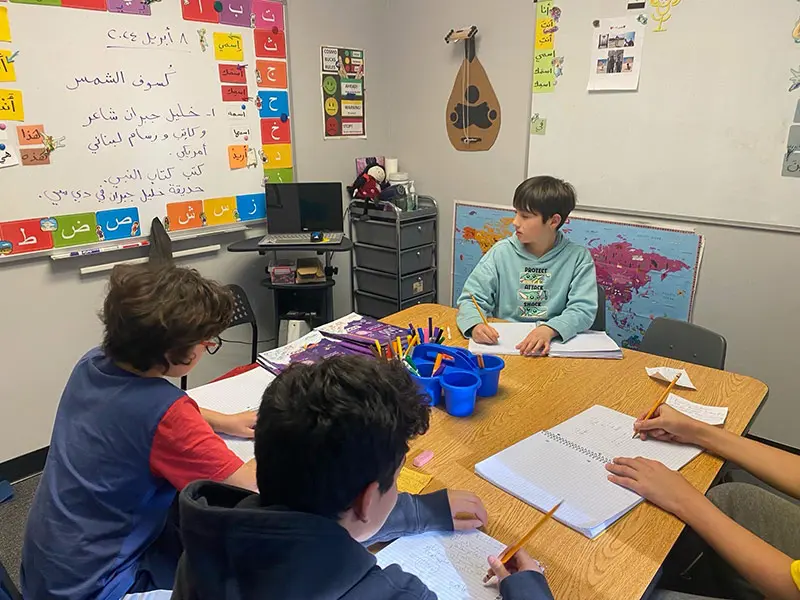
Book Your Free TrialInside Kalimah Center: Moments from Our Courses
Get a glimpse into the vibrant learning experience at Kalimah Center. These snapshots capture real moments from our live classes—where students engage deeply, connect with passionate instructors, and grow in a welcoming, supportive environment.
Here Are The Reviews On Our Courses:
Our students frequently commend the excellence of our courses and the commitment shown by our instructors. You can read their complete reviews on Trustpilot.

Discover the beauty of Arabic at Kalimah Center in Cairo
we offer immersive and comprehensive language programs tailored for all proficiency levels. Our expert instructors provide personalized courses in both Modern Standard Arabic and Egyptian Arabic dialects, designed to enhance your skills through engaging instruction and cultural immersion. Upon completion, you’ll earn a prestigious Kalimah Center Certificate of Achievement, recognized for its value in both academic and professional contexts.
Join us to unlock new opportunities and deepen your understanding of Arabic. Contact us today to start your learning journey. Enroll Now
📚 Explore Our Courses:
Online Arabic Course: Tailored to your level, our comprehensive Arabic program includes 16 teaching levels and 400+ hours of personalized sessions.
Online Quran With Tajweed Course: Perfect for non-Arabic speakers, our course spans 13 levels and equips you with Tajweed mastery from beginner to advanced.
Online Arabic Course For Kids: Nurture your child’s love for Arabic with our engaging and structured program, available in 24 levels for primary, intermediate, and secondary stages.
🚀 Start Your Free Trial Today! 🚀
Don’t miss out on this life-changing opportunity to deepen your faith and knowledge. Sign up now for your free trial and take the first step towards becoming a better practicing Muslim with Kalimah Center!
Conclusion: Choose the Right Arabic Program for Your Specific Goal
The 10 universities in this guide each excel in different dimensions — Al-Azhar and Al-Qarawiyyin for cultural and Islamic immersion, Harvard and Oxford for research prestige, Georgetown and SOAS for international professional Arabic, AUC and the University of Jordan for regional immersion.
Quick decision guide:
| Your Goal | Best Option |
|---|---|
| Academic degree in Arabic | Harvard, Oxford, Georgetown, SOAS |
| Cultural immersion in the Arab world | Al-Azhar, AUC, University of Jordan |
| Classical and Quranic Arabic | Al-Azhar University |
| Affordable cultural immersion | University of Jordan, University of Damascus |
| Online Arabic without relocation | Kalimah Center, SOAS distance learning |
| Intensive language study (no degree) | Kalimah Center, Qalam wa Lawh, Mishkah Center |
Every path leads to the same destination — Arabic proficiency. The right institution is the one that matches your goals, budget, and life situation.
FAQs about Best Universities to Learn Arabic
Q1: What is the best university in the world for learning Arabic?
For cultural immersion in an Arabic-speaking environment: Al-Azhar University (Cairo) and the American University in Cairo are the strongest options — both offer dedicated programs for non-native Arabic speakers within the language’s native cultural context. For academic prestige in a Western setting: Harvard, Oxford, and Georgetown offer the most internationally recognised Arabic programs. For Islamic and classical Arabic specifically: Al-Azhar University is unrivalled — its Education Centre for Non-Arab Students has 7 levels from A1 to C2 with Ministry of Education certification.
Q2: Can I get a degree in Arabic language?
Yes — multiple universities offer Bachelor of Arts, Master’s, and PhD degrees in Arabic language and literature, including Georgetown University, SOAS University of London, Harvard University, the University of Oxford, the American University in Cairo, and the University of Jordan. Most degrees combine Modern Standard Arabic with literary studies, cultural history, and regional politics. Some programs also offer specialisations in Quranic Arabic, Arabic dialectology, or Arabic for international relations.
Q3: Where can I study Arabic online for university credit?
Georgetown University’s School of Continuing Studies, SOAS University of London (distance learning modules), and the American University in Cairo (summer programs) all offer credit-bearing online or hybrid Arabic language courses. Additionally, completing Arabic study at a language center and taking the CLEP Arabic Language examination allows independent learners to earn college credit at many US universities without enrolling in a formal degree program.
Q4: How long does it take to get a degree in Arabic?
A Bachelor of Arts in Arabic language and literature typically takes 3–4 years at most universities (3 years in the UK, 4 years in the USA). Master’s programs in Arabic studies typically take 1–2 years. PhD programs vary but typically require 3–5 years beyond the Master’s. For non-degree intensive language study, Al-Azhar’s program runs in levels that each take one semester — reaching the highest level (C2) takes approximately 3–4 years of sequential study.
Q5: What is the cheapest way to get a high-quality Arabic education?
Al-Azhar University (Egypt) is one of the most affordable options with genuine academic prestige — tuition is subsidised as a government institution and international students pay minimal fees. For the most affordable intensive language learning without relocating, Kalimah Center offers online Arabic courses with native teachers at significantly lower cost than university tuition. Combining free resources (Language Transfer, ArabicPod101 YouTube, Anki) with structured live instruction (Kalimah Center free trial) can replicate much of a university Arabic program’s content at a fraction of the cost.