Arabic takes 240 hours to reach basic survival proficiency (FSI Level 1), 360 hours for conversational ability (Level 2), and 2,200 hours for professional fluency (Level 3) — according to the US Foreign Service Institute. For an English speaker studying 1 hour daily, this translates to approximately 8 months for conversational Arabic and 6 years for professional fluency.
With 2 hours daily: 4 months conversational, 3 years professional. Arabic is classified as the most challenging language category for English speakers — but the alphabet takes only weeks, and basic conversational ability is achievable in under a year with daily practice.
✅ Master Timeline Comparison Table:
| Milestone | FSI Hours | 1 hr/day | 2 hrs/day | 3 hrs/day |
|---|---|---|---|---|
| Alphabet mastered | ~30 hrs | 1 month | 2–3 weeks | 10 days |
| 200 core vocabulary words | ~60 hrs | 2 months | 1 month | 3 weeks |
| Basic survival (FSI Level 1) | 240 hrs | 8 months | 4 months | 2–3 months |
| Conversational (FSI Level 2) | 360 hrs | 12 months | 6 months | 4 months |
| Professional (FSI Level 3) | 2,200 hrs | 6 years | 3 years | 2 years |
Marhaban! So, you want to learn Arabic? Masha’Allah, that’s wonderful! But I know what you’re thinking: “How long will it take to learn Arabic?” Don’t worry, my friend, this article is here to help you. We will explore how many hours, months, or even years it might take. We’ll look at how quickly you can learn, especially if you’re an English speaker.
Do you want to just speak a little Arabic, or become fluent like a native? We’ll talk about that too. We’ll even discuss how long it takes to learn the Arabic letters (they look a little different, right?).
And because I know you’re curious, we’ll answer some common questions like “Can I learn Arabic in 6 months?” or “Is Arabic hard to learn?
So, come along on this journey with me, insha’Allah, and by the end of this article, you’ll know what to expect on your path to learning Arabic.
How Long Does it Take to Learn Arabic?
Honestly, expect to spend over 400 hours of focused study to reach a good level of learning Arabic.
But, it still depends on what you mean by “learn,” your goals, and how hard you’re willing to work.
Picture a ladder, each rung representing a level of mastery. The Foreign Service Institute (FSI) has a handy scale to help us measure our progress:
- Level 1: Elementary: You can handle basic travel needs and pleasantries. (“As-salamu alaykum! السلام عليكم” “Ma’a as-salama! مع السلامة” “Shukran! شكرا”)
- Level 2: Limited Working: You can chat about daily life, family, work, and hobbies.
- Level 3: Professional: You can discuss complex topics, express opinions, and even debate!
How Many Hours Does It Take to Learn Arabic?
The FSI has done the math, and here’s what they suggest for Arabic learners:
- Level 1: 240 hours of dedicated study (Imagine 10 days of non-stop Arabic!)
- Level 2: 360 hours (That’s like 15 days, masha’Allah!)
- Level 3: 2200 hours! (This is how long it takes to learn Arabic fluently)
How Many Years Does It Take to Learn Arabic?
It could take you roughly 3 years to reach professional fluency, if you study for 2 hours daily.
Let’s say you study Arabic for just 2 hours a day. You could reach:
- Level 2 in about 6 months (That’s like reading the Quran with some understanding!)
- Level 3 in about 3 years (You’ll be debating like a native, insha’Allah!)
Read more about Can You Learn Arabic in a Year?
How Long Does It Take for Specific Arabic Goals?
The 2,200-hour figure is for professional proficiency. Most learners have more specific, achievable goals:
| Goal | Realistic Timeline | Daily Study | What You Need |
|---|---|---|---|
| Read the Arabic alphabet | 2–4 weeks | 20–30 min | Letter recognition + basic reading |
| Understand Islamic phrases in prayer | 1–2 months | 30 min | 100–200 words + prayer vocabulary |
| Read simple Quranic verses | 3–4 months | 45 min | Alphabet + 300 Quranic words |
| Hold a basic conversation | 6–9 months | 1 hr | FSI Level 1 |
| Read a children’s Arabic book | 4–6 months | 45 min | 300 words + basic reading fluency |
| Understand Arabic news | 18–24 months | 1 hr | FSI Level 2–3 |
| Fluent Arabic conversation | 3+ years | 1–2 hrs | FSI Level 3 |
| Read Quran with understanding | 2–3 years | 1 hr | Classical Arabic + Quranic vocabulary |
The most achievable 6-month goal: Basic conversational Arabic (FSI Level 1) — enough to introduce yourself, ask and answer simple questions, navigate everyday situations, and begin reading simple texts.
How Quickly Can You Learn Arabic? Realistic Speed Benchmarks
You even can accelerate this: with intensive immersion (40 hours/week) it takes about 1 year to reach proficiency.
To hold a conversation and understand everyday Arabic, it could take you much less time. If you study consistently, maybe 6 months could get you there.
I Know what’s going through your mind right now: Learning Arabic while balancing a demanding career seems impossible. But Dr. Anas proves otherwise. He went from struggling to understand the Quran to fluent conversations in just one year with Kalimah Center.
“I’ve had an incredible experience with Kalimah. I highly recommend them to anyone serious about learning Arabic.” – Dr. Anas
Master Arabic with Kalimah Center
Join our expert-led online classes and start your journey toward Arabic fluency today.
Book Your Free TrialFactors Affecting the Time You Take to Learn Arabic:
The time it takes to learn depends on you – your goals, your pace, and how you choose to learn. Let’s explore these factors together and find the best path for you, my friend.
1. Your Goals
Do you want to have simple conversations (محادثات بسيطة) in the market, read the Quran (قراءة القرآن), or debate complex theological concepts? The depth of your desired knowledge will naturally affect the time it takes.
2. Your current level
Beginners might need more time than those with prior knowledge.
3. Your learning pace
Some students progress faster than others.
4. Learning Style
Are you a self-learner who thrives on books and apps, or do you prefer the guidance of a teacher (مدرس) in a structured classroom (فصل دراسي) setting? Choose the path that resonates with your soul.
5. Time Commitment
Like a delicate plant, your Arabic skills need consistent nurturing. How much time can you dedicate each day to studying (دراسة), practicing (ممارسة), and immersing yourself in the language?
6. Prior Language Experience
Have you studied other languages before? Your familiarity with grammar concepts and different writing systems can give you a head start.
For example, the time it takes to learn Arabic at Kalimah Center varies depending on several factors:
- Your chosen course: Each course has a different duration, ranging from 1-2 months for most levels to 3-4 months for the Arabic Alphabet course.
- Your current level: Beginners might need more time than those with prior knowledge.
- Your learning pace: Some students progress faster than others.
However, Kalimah Center offers a comprehensive 16-level program with over 400 hours of one-on-one sessions, which can give you a good estimate of the overall time commitment required to reach advanced proficiency.
If you want a more precise estimate for your specific situation, it’s recommended to contact Kalimah Center. As the experts can assess your level and goals and provide a personalized timeline for your Arabic learning journey.
Take a placement test to decide your starting level
And you can Try a Free Lesson

Read also: Arabic language levels
Calculate Your Personalised Arabic Timeline
Use this table to estimate your realistic Arabic milestones based on how much time you can study daily:
| Daily Study Time | Alphabet Mastered | Basic Conversation | Intermediate | Professional |
|---|---|---|---|---|
| 15 minutes | 2–3 months | 2.5 years | 5+ years | — |
| 30 minutes | 1–1.5 months | 16 months | 30 months | 12+ years |
| 1 hour | 3–4 weeks | 8 months | 18 months | 6 years |
| 2 hours | 2–3 weeks | 4 months | 9 months | 3 years |
| 3 hours | 10–14 days | 3 months | 6 months | 2 years |
| Full immersion (8+ hrs) | 3–5 days | 6 weeks | 3 months | 9–12 months |
The most important insight from this table: The jump from 1 hour to 2 hours daily halves the time to each milestone. If you can find an additional 30–60 minutes daily, the return on investment is dramatic.
What “daily study” means in practice:
- 15 minutes: Anki vocabulary review only
- 30 minutes: Anki + one YouTube lesson
- 1 hour: Full structured session (grammar + vocabulary + listening)
- 2 hours: Full structured session + speaking practice
- 3 hours: Intensive — suitable for learners with specific near-term goals
Not Sure Where You Fall on the Timeline?
Kalimah Center offers a free placement test that identifies your current Arabic level and provides a personalised timeline estimate for your specific goals — whether that is reading the Quran, conversational Arabic, or professional proficiency.
Master Arabic with Kalimah Center
Join our expert-led online classes and start your journey toward Arabic fluency today.
Book Your Free TrialHow Long Does it Take an English Speaker to Learn Arabic?
Around 2200 hours. We will again refer to the FSI ranking, as it is specifically designed with English speakers in mind. So, if your mother tongue is English, to speak Arabic like a diplomat (very fancy!), the experts say it might take around 2200 hours of study. That’s like studying for 2 hours every day for 3 years!
But, don’t let that scare you! To hold a conversation and understand everyday Arabic, it could take you much less time. If you study consistently, maybe 6 months to a year could get you there.
Can I learn Arabic in 3 months?
Honestly, you can’t achieve full conversational fluency within 3 months, as Arabic is a complex language with a rich grammatical structure and vast vocabulary.
But, In 3 months of dedicated study, you can absolutely make significant progress in Arabic! With consistent effort, you could potentially reach the FSI Level 1 proficiency, which means:
- Understanding and using basic greetings, phrases, and vocabulary.
- Asking and answering simple questions about yourself and your surroundings.
- Navigating basic travel needs and interactions in Arabic-speaking environments.
- Reading and understanding simple texts with the help of a dictionary.
Can I learn Arabic in 6 months?
In 6 months, you can reach a higher level of conversational fluency. In 6 months, with diligent practice and immersion, you could potentially reach FSI Level 2 proficiency, which opens up a whole new world of communication.
Here’s what you can potentially achieve in 6 months:
- Conversational Fluency: Engage in everyday conversations on familiar topics like family, work, hobbies, and travel.
- Intermediate Grammar: Understand more complex grammatical concepts like verb tenses, noun cases, and sentence structures.
- Expanded Vocabulary: Build a broader vocabulary to express yourself on a wider range of topics.
- Reading Comprehension: Read and understand simple texts like news articles or children’s stories with the help of a dictionary.
And, from our experience we see this is the REALISTIC shortest time to learn Arabic.
How Long Does it Take to Learn the Arabic Alphabet?
It takes only a few days to simply recognize the letters, their sounds, and their different forms (beginning, middle, end of words). But...
To build a strong foundation, you must also learn:
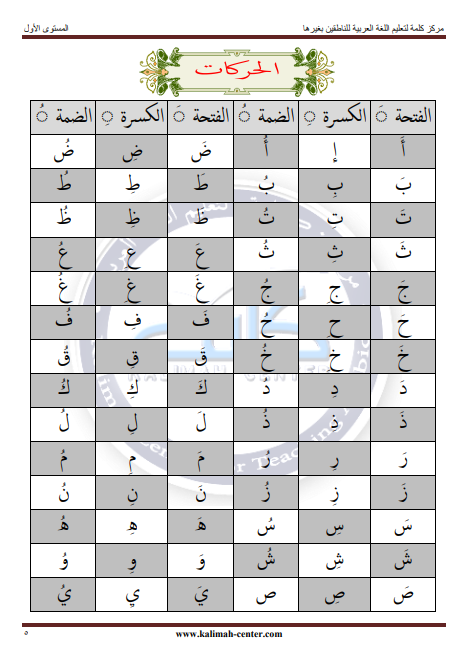
- Harakat (short vowels): Fatha, Damma, Kasra
- Similar letters: (like ث/ت in shape, and ق/ك in sound)
- Tanween (nunation): -un ( ٌ ), -an ( ً ), -in ( ٍ ) sounds
- Long vowels (Madd): aa, ee, oo sounds
- Sukoon (no vowel) and Shadda (doubled letter):
This takes a few weeks, not just days.
At Kalimah Center, we teach the alphabet with these important details. Why? Because from our experience, learning the letters alone makes a weak base. That’s why our course, “Arabic Alphabet,” has two levels and takes 3-4 months. A strong foundation is the most important thing!
Interested in learning more?
Enroll in our online course: “Learn The Whole Arabic Alphabet Online With Illustration“
- What you’ll learn: The Arabic alphabet, the right way, with all the details you need to read and write confidently.
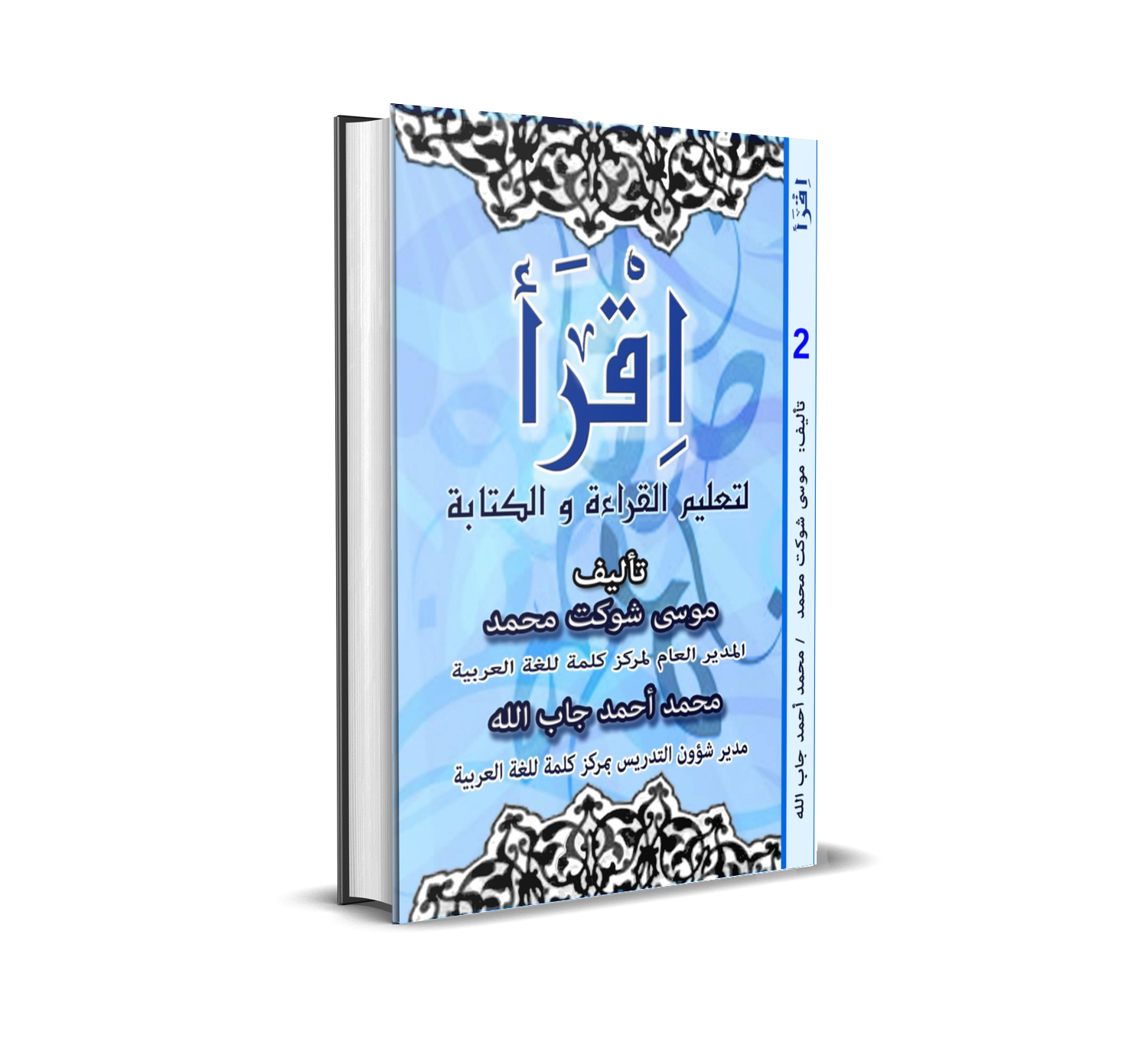
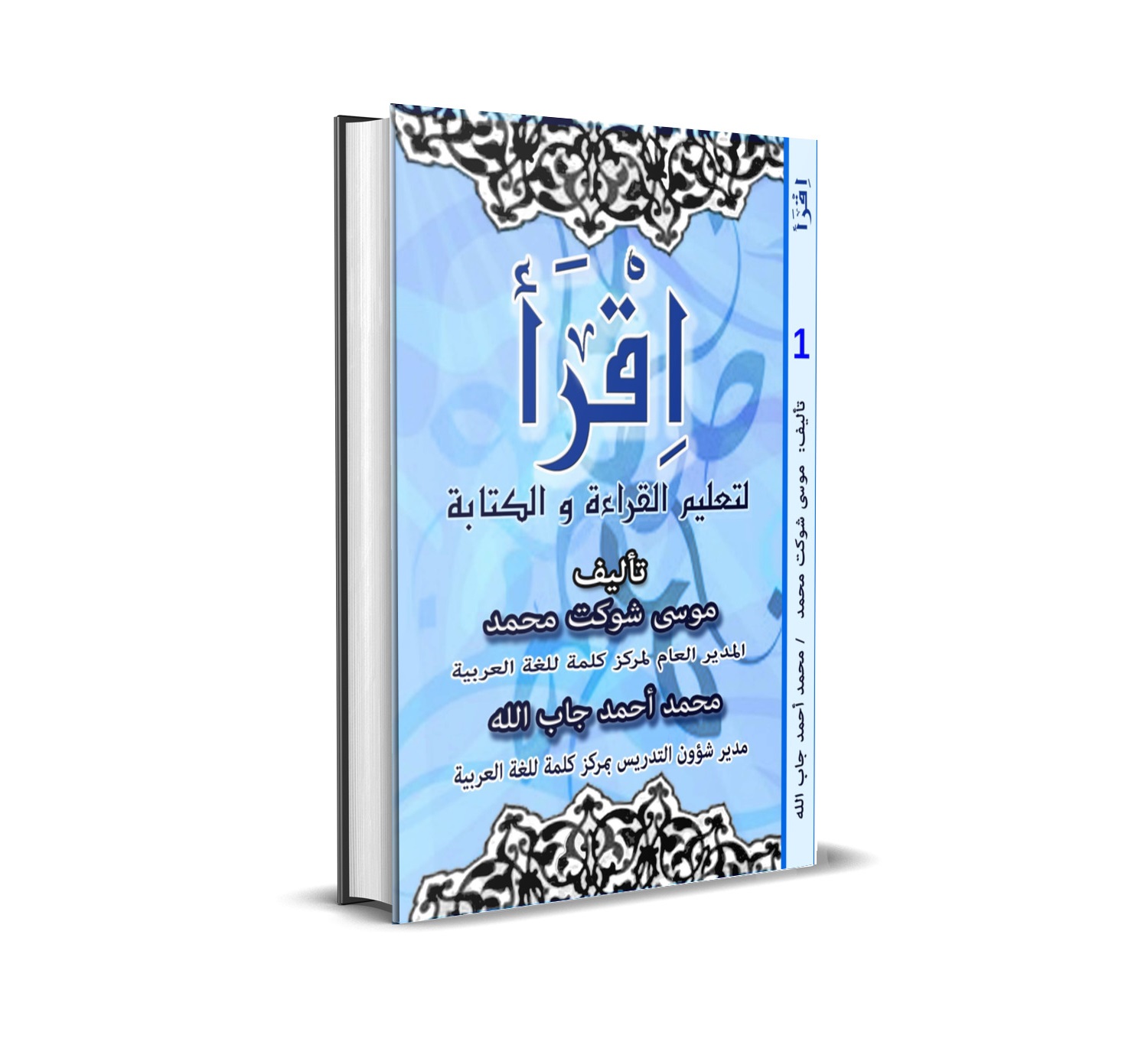
- How it’s taught: Two levels, based on the book “Iqraa“, with illustrations to make learning fun.
- How long it takes: 3-4 months with regular study.
Is Arabic Hard to Learn? Comprehensive Difficulty Assessment
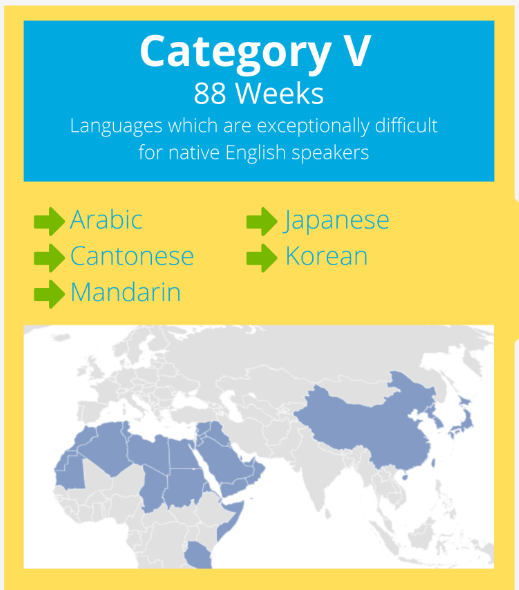
Arabic is classified by the US Foreign Service Institute as a Category IV language — the hardest category for English speakers. It shares this classification with Japanese, Korean, Mandarin, and Cantonese. This classification is based on the average hours required to reach professional proficiency compared to simpler Category I languages like Spanish or French.
Why Arabic is classified as difficult:
| Challenge | Difficulty Level | Why |
|---|---|---|
| New script (28 letters, right to left) | Moderate | Learnable in 2–4 weeks — not as hard as it looks |
| Guttural sounds (ع، ح، غ، ق) | Hard | No English equivalent — requires audio training |
| Root-based morphology | Hard | New system — but becomes a vocabulary accelerator |
| Diglossia (MSA vs dialects) | Hard | You learn formal Arabic but people speak dialects |
| Case endings (i’rab) | Very Hard | Noun endings change based on grammatical role |
| Verb patterns (10 forms) | Hard | But logical — mastery unlocks hundreds of words |
| No short vowels in everyday text | Hard | Must supply missing vowels from vocabulary knowledge |
Why Arabic is not as hard as its reputation suggests:
| Feature | Arabic Reality |
|---|---|
| Script consistency | Each letter almost always makes the same sound — more predictable than English spelling |
| Alphabet size | 28 letters — learnable in weeks |
| No tones | Unlike Mandarin — same word does not change meaning based on pitch |
| Logical grammar | Rules are consistent with fewer exceptions than English |
| Root system | Once understood, learning one root unlocks 5–10 related words simultaneously |
| Global community | 400+ million speakers — abundant practice opportunities |
Honest difficulty rating compared to other languages (for English speakers):
| Language | Category | Hours to Proficiency | Relative to Arabic |
|---|---|---|---|
| Spanish | I (Easiest) | 600 hrs | 3.7× easier |
| French | I | 750 hrs | 2.9× easier |
| German | II | 750 hrs | 2.9× easier |
| Russian | III | 1,100 hrs | 2× easier |
| Arabic | IV (Hardest) | 2,200 hrs | Baseline |
| Japanese | IV | 2,200 hrs | Same difficulty |
| Mandarin | IV | 2,200 hrs | Same difficulty |
The honest answer: Arabic is genuinely challenging. But “Category IV” does not mean “impossible.” Millions of non-native learners have reached functional Arabic proficiency. The difficulty is specific — guttural sounds, the root system, and diglossia — not general. Each of these challenges has a direct solution.
Master Arabic with Kalimah Center
Join our expert-led online classes and start your journey toward Arabic fluency today.
Book Your Free TrialInside Kalimah Center: Moments from Our Courses
Get a glimpse into the vibrant learning experience at Kalimah Center. These snapshots capture real moments from our live classes—where students engage deeply, connect with passionate instructors, and grow in a welcoming, supportive environment.
Here Are The Reviews On Our Courses:
Our students frequently commend the excellence of our courses and the commitment shown by our instructors. You can read their complete reviews on Trustpilot.

Your Arabic Journey Begins Here: Find Your Pace with Kalimah
So, you’ve read the article, explored the factors that influence learning time, and you’re still wondering… how long will it really take you to master Arabic?
The good news is, with Kalimah Center, you’re not just getting an answer, you’re getting a personalized roadmap to fluency.
Why Kalimah? Because we understand that “how long” isn’t just about hours, it’s about:
- Your Starting Point: Whether you’re an absolute beginner or picking up where you left off, our placement test ensures you start at the right level for you.
Take a placement test to decide your starting level
- Your Goals: Do you want to read the Quran, converse confidently, or write Arabic poetry? We tailor our courses to your aspirations.
- Your Pace: Life is busy. Our flexible online format allows you to learn at your own pace, with one-on-one sessions for focused practice.
Kalimah doesn’t just tell you how long, we show you the way:
- Structured Curriculum: Our 16-level program offers over 400 hours of one-on-one sessions, providing a comprehensive path to advanced proficiency.
- Proven Methodology: Our unique approach focuses on simultaneous development of all language skills, ensuring you can read, write, listen, and speak Arabic effectively.
- Personalized Support: Our expert teachers provide ongoing feedback and guidance, helping you overcome challenges and stay motivated.
As the Arabic proverb goes, “اصبر تنل” (Isbir tanal) – “Be patient, and you will attain.” So, be patient, stay committed, and let the beauty of the Arabic language unfold before you.
📚 Explore Our Courses:
Online Arabic Course: Tailored to your level, our comprehensive Arabic program includes 16 teaching levels and 400+ hours of personalized sessions.
Online Quran With Tajweed Course: Perfect for non-Arabic speakers, our course spans 13 levels and equips you with Tajweed mastery from beginner to advanced.
Online Arabic Course For Kids: Nurture your child’s love for Arabic with our engaging and structured program, available in 24 levels for primary, intermediate, and secondary stages.
🚀 Start Your Free Trial Today! 🚀
Don’t miss out on this life-changing opportunity to deepen your faith and knowledge. Sign up now for your free trial and take the first step towards becoming a better practicing Muslim with Kalimah Center!
Don’t hesitate to reach out to us at Kalimah Center to enjoy your FREE TRIAL. We’re here to guide you!
Conclusion:
The research is clear, the FSI data is reliable, and the milestones are achievable. The only variable that matters — the one you control entirely — is daily consistency.
Your Arabic timeline at a glance:
| Daily Study | Conversational Arabic | Professional Arabic |
|---|---|---|
| 30 min | 16 months | 12 years |
| 1 hour | 8 months | 6 years |
| 2 hours | 4 months | 3 years |
| 3 hours | 3 months | 2 years |
Choose your commitment level honestly. Set a minimum that is genuinely sustainable. And begin today — because every day you study Arabic is a day closer to every milestone in this article.
FAQs about How Long Does It Take to Learn Arabic?
Q1: How long does it take to learn Arabic?
According to the US Foreign Service Institute: 240 hours for FSI Level 1 (basic survival — greetings, simple phrases), 360 hours for Level 2 (conversational ability — everyday topics), and 2,200 hours for Level 3 (professional proficiency). For an English speaker studying 2 hours daily, this means basic conversations in approximately 4 months, conversational fluency in 6 months, and professional-level Arabic in approximately 3 years.
Q2: Is Arabic hard to learn for English speakers?
Yes — Arabic is classified by the FSI as a Category IV language (the hardest category for English speakers), alongside Mandarin, Japanese, and Korean. The specific challenges are: an unfamiliar script (learnable in weeks), guttural sounds without English equivalents, a root-based word formation system, and the significant difference between formal written Arabic (MSA) and spoken dialects. However, none of these are insurmountable — the alphabet takes weeks, and basic conversational ability is achievable within a year of daily practice.
Q3: Can I learn Arabic in 6 months?
Yes — to FSI Level 1–2 proficiency (basic conversational ability) with 2 hours of daily study. Six months produces approximately 360 hours of Arabic study — enough for basic survival conversations, essential phrases, simple question formation, and the ability to read vowelled Arabic texts. Fluency requires significantly more time. For a complete 6-month plan, see: Can You Learn Arabic in 6 Months?
Q4: How long does it take to learn the Arabic alphabet?
Most learners recognise all 28 Arabic letters in isolated form within 1–2 weeks of daily 20–30 minute practice. Recognising all four positional forms (isolated, initial, medial, final) takes an additional 2–3 weeks. Reading simple vowelled Arabic words fluently typically emerges after 4–6 weeks of consistent practice. Handwriting practice alongside recognition consistently accelerates these timelines. A strong alphabet foundation (not just letter names but positional forms, harakat, and connected reading) typically takes 4–8 weeks of daily practice.
Q5: How long does it take to learn Quranic Arabic?
Reading the Quran aloud with correct pronunciation (but without full comprehension) is achievable in 3–4 months of focused alphabet and basic phonics study — the Quran is fully vowelled, so once the letters and harakat are known, you can pronounce every word correctly even without understanding it. Reading the Quran with meaningful comprehension requires understanding the Quranic vocabulary and grammar — approximately 2–3 years of Arabic study to reach functional comprehension, depending on study intensity and prior Arabic knowledge.