Yes — you can reach FSI Level 2 Arabic proficiency in one year with 2 hours of daily dedicated study (approximately 720 study hours). One year of consistent Arabic study produces: fluent alphabet reading, 800–1,000 active vocabulary words, basic-to-intermediate conversational ability, reading of simple-to-moderate Arabic texts, and a solid foundation for continued advanced study.
The 52-week schedule below breaks this into monthly focus areas with specific weekly targets, milestones, and resources.
✅ Quick Overview Table:
| Phase | Months | Primary Focus | Expected Outcome |
|---|---|---|---|
| Foundation | Month 1 | Alphabet, pronunciation, basic grammar | Read vowelled Arabic, use basic greetings |
| Communication | Months 2–3 | Vocabulary, nouns, pronouns, present tense | Simple conversations on familiar topics |
| Daily Life | Months 4–5 | Root system, everyday vocabulary, idioms | Discuss daily activities, understand short texts |
| Social Arabic | Months 6–7 | Complex sentences, news vocabulary, opinions | Follow slow Arabic media, express opinions |
| Fluency | Months 8–12 | Advanced grammar, dialects, immersion | FSI Level 2 — limited working proficiency |
Here At Kalimah we often get the question, “Can I learn Arabic in one year?” our answer? Yes you can! Inshallah (God willing) But honestly, it needs a good plan and lots of hard work.
In this article, we’re going to go beyond just saying “study hard”. Here, you won’t get just general advice, instead, we will look at a phased plan, focusing on different topics and grammar for each stage.
Can You Learn Arabic In A Year?
YES, you can! Insha’Allah (God willing), reaching a good level of Arabic in one year is possible. But, you have to be ready to work hard. Aim for at least two hours of study every day.
It’s not just about the hours, though. You need the right tools and plan. A good teacher or course can make a big difference. They’ll help you focus on what’s important and guide you through the tricky parts. And don’t forget to practice speaking with native speakers whenever you can!
Think learning Arabic in a year while working full-time is impossible? Think again. Kalimah Center helped Dr. Anas achieve fluency in just one year, demonstrating that rapid progress is possible with the right guidance and dedication.
Dr. Anas did it! He went from struggling to understand the Quran to speaking fluent Arabic in just one year. If he can do it, you can too!
“I’ve had an incredible experience with Kalimah. I highly recommend them to anyone serious about learning Arabic.” – Dr. Anas
How to Learn Arabic in One Year? (A Phased Schedule)
We’ll divide your learning journey into five distinct phases, each designed to build upon the previous one and progressively enhance your skills:
Phase 1: Laying the Ground (Month 1)
Familiarize yourself with the Arabic alphabet, pronunciation, and fundamental grammar rules.
What to Study:
- Letters and Sounds: Learn the unique shapes and sounds of Arabic letters. Practice writing them and pronouncing them correctly. Did you know that Arabic has sounds that don’t exist in English, like the guttural “ح” (ḥā’)?
- Vowels: Understand the short and long vowels (e.g., “َ” – fatḥa, “ا” – ālif) and how they change the pronunciation of words.
- Sukūn and Shadda: Grasp the concept of sukūn (absence of a vowel) and shadda (doubled consonant), which are essential for accurate reading.
- Tanwīn and Sun & Moon Letters: Explore the nuances of tanwīn (nunation) and the special rules for pronouncing words with the definite article “ال” (al-).
Practice:
Read simple Arabic texts aloud, focusing on pronunciation and applying the rules you’ve learned.
Read more about Learn Arabic In 30 Days: 1 Month Experience-Based Guide
Phase 2: Building Your Conversational Toolkit (2 Months)
Expand your vocabulary, grasp essential grammar, and start forming simple sentences.
What to Study:
- Nouns, Pronouns, and Adjectives: Learn how to identify and use these parts of speech to describe people, places, and things (e.g., “هذا كتاب جديد” – hādhā kitābun jadīd meaning “This is a new book”).
- Question Words: Master the art of asking questions using words like “مَن” (man – who), “ماذا” (mādhā – what), and “أين” (ayna – where).
- Verb Conjugation: Begin conjugating verbs in the present tense to express actions you and others are doing (e.g., “أنا أدرس” – ana adrus meaning “I study”).
Practice:
Engage in basic conversations with native speakers or language exchange partners. Focus on introducing yourself, asking and answering simple questions, and describing your daily routine.
Phase 3: Conversing About Daily Life (2 Months)
Confidently discuss everyday topics, understand simple dialogues, and read short texts.
What to Study:
- Arabic Morphology (Sarf): Delve into the art of Arabic word formation. Learn how roots (e.g., “كتب” – k-t-b, meaning “write”) transform into a multitude of related words (e.g., “كاتب” – kātib (writer), “كتاب” – kitāb (book), “مكتبة” – maktaba (library)).
- Vocabulary: Expand your knowledge of words related to daily activities, food, shopping, travel, and hobbies.
- Idioms and Expressions: Start learning common Arabic phrases that add color and nuance to your speech (e.g., “على الرحب والسعة” – ala al-raḥb wa al-si’a meaning “You’re most welcome”).
Practice
Watch Arabic videos with subtitles, listen to podcasts, and read short stories or articles. Try keeping a journal in Arabic to document your thoughts and experiences.
Phase 4: Diving into Social Conversations (2 Months)
Engage in conversations about social issues, understand news articles, and express your opinions.
What to Study:
- Complex Sentence Structures: Explore different ways to combine clauses and express more nuanced ideas.
- Vocabulary: Learn words related to health, work, education, the Islamic world, and current events.
- Grammar: Delve into the use of particles, prepositions, and conjunctions to connect your ideas smoothly.
Practice
Participate in online discussions, read Arabic news articles, and write short essays or reflections on topics that interest you.
Read Also: Arabic Level Test And Exam
Phase 5: Aspiring to Fluency (5 Months)
Understand complex texts, express yourself fluently on a wide range of topics, and refine your grammar.
What to Study:
- Advanced Grammar: Tackle intricate grammatical concepts like the subjunctive mood, conditional sentences, and the nuances of verb tenses.
- Vocabulary: Continue expanding your vocabulary, focusing on areas that align with your interests and goals.
- Arabic Dialects: If you’re interested in a specific region, start learning the local dialect alongside Modern Standard Arabic (MSA).
Practice
Immerse yourself in Arabic media, engage in conversations with native speakers, and challenge yourself with more complex reading and writing tasks.
Master Arabic with Kalimah Center
Join our expert-led online classes and start your journey toward Arabic fluency today.
Book Your Free TrialThe Complete 52-Week Arabic Study Schedule
Daily commitment: 2 hours minimum
Daily session structure:
- 20 min: Anki vocabulary review (spaced repetition)
- 40 min: New learning (grammar + vocabulary)
- 30 min: Listening (podcast/YouTube)
- 30 min: Speaking or writing practice
PHASE 1: FOUNDATION (Month 1 — Weeks 1–4)
| Week | Primary Focus | Vocabulary Target | Grammar Milestone | Weekly Milestone |
|---|---|---|---|---|
| Week 1 | Alphabet letters 1–14 | 15 words | Right-to-left reading direction | Recognise letters 1–14 |
| Week 2 | Alphabet letters 15–28 | 15 words | Isolated letter forms | Recognise all 28 letters |
| Week 3 | Short vowels (Fatha, Kasra, Damma) + Sukoon | 20 words | Vowel marks + Shadda | Read simple vowelled words |
| Week 4 | Tanwin, Sun/Moon letters + basic greetings | 25 words | Definite article ال | Greet in Arabic confidently |
Month 1 resources: Language Transfer audio course, ArabicPod101 alphabet series, Anki Arabic alphabet deck
Month 1 milestone: Read any fully vowelled Arabic word. Use 10 greeting phrases.
PHASE 2: CONVERSATIONAL FOUNDATION (Months 2–3 — Weeks 5–12)
| Week | Primary Focus | Vocabulary Target | Grammar Milestone |
|---|---|---|---|
| Week 5 | Personal pronouns | +25 words | أنا، أنتَ، هو، هي، نحن conjugation |
| Week 6 | Present tense verbs | +25 words | Verb conjugation — 1st, 2nd, 3rd person |
| Week 7 | Nouns and gender | +30 words | Masculine/feminine agreement |
| Week 8 | Adjectives + noun-adjective agreement | +30 words | Adjective placement and agreement |
| Week 9 | Question words | +25 words | من، ما، أين، كيف، متى، لماذا |
| Week 10 | Numbers 1–100 | +20 words | Number-noun agreement |
| Week 11 | Days, months, time expressions | +25 words | Time prepositions |
| Week 12 | Phase 2 review + first conversation | Consolidation | All Phase 2 grammar |
Months 2–3 resources: HelloTalk (speaking practice), Coffee Break Arabic podcast, Madinah Arabic Reader app
Month 3 milestone: Hold a 5-minute guided conversation on familiar topics. Read simple sentences.
PHASE 3: DAILY LIFE ARABIC (Months 4–5 — Weeks 13–20)
| Week | Primary Focus | Vocabulary Target | Grammar Milestone |
|---|---|---|---|
| Week 13 | Arabic root system — 5 core roots | +35 words | Pattern morphology (أوزان) |
| Week 14 | Past tense conjugation | +30 words | Past tense all persons |
| Week 15 | Food and restaurant vocabulary | +30 words | Ordering and transacting |
| Week 16 | Travel and directions | +30 words | Prepositions of place |
| Week 17 | Family and relationships | +30 words | Possessive pronouns |
| Week 18 | Health and body vocabulary | +30 words | Describing physical states |
| Week 19 | Work and daily routine | +30 words | Habitual present tense |
| Week 20 | Phase 3 review + extended conversation | Consolidation | All Phase 3 grammar |
Months 4–5 resources: ArabicPod topics series, LingQ beginner content, Real Arabic podcast
Month 5 milestone: Describe your daily routine. Order food. Ask for directions. Read short texts.
PHASE 4: SOCIAL ARABIC (Months 6–7 — Weeks 21–28)
| Week | Primary Focus | Vocabulary Target | Grammar Milestone |
|---|---|---|---|
| Week 21 | Relative clauses | +35 words | الذي، التي، الذين structure |
| Week 22 | Conditional sentences | +30 words | إذا + لو conditional |
| Week 23 | Education and academic vocabulary | +35 words | Verbal nouns (مصدر) |
| Week 24 | News and current events vocabulary | +35 words | Passive voice introduction |
| Week 25 | Expressing opinions | +30 words | أعتقد، أرى، في رأيي |
| Week 26 | Technology and modern life | +35 words | Future tense with سـ and سوف |
| Week 27 | Politics and society basics | +35 words | Complex sentence structures |
| Week 28 | Phase 4 review + discussion practice | Consolidation | All Phase 4 grammar |
Months 6–7 resources: Al Jazeera Arabic learning playlist, LingQ intermediate, Qasid Arabic podcast
Month 7 milestone: Follow slow, clear Arabic news. Express opinions on familiar topics. Read news headlines.
PHASE 5: FLUENCY (Months 8–12 — Weeks 29–52)
| Week | Primary Focus | Focus Area |
|---|---|---|
| Weeks 29–30 | Advanced verb forms (أوزان 5–10) | Morphology mastery |
| Weeks 31–32 | Subjunctive and jussive moods | Advanced verb grammar |
| Weeks 33–34 | Arabic prose reading | Authentic texts — novels, articles |
| Weeks 35–36 | Dialect introduction (choose your variety) | MSA vs dialect comparison |
| Weeks 37–38 | Classical Arabic elements | Formal register |
| Weeks 39–40 | Business and professional vocabulary | Professional Arabic |
| Weeks 41–42 | Extended writing practice | Essay composition |
| Weeks 43–44 | Listening immersion — native speed | Comprehension at natural pace |
| Weeks 45–46 | Reading unvowelled texts | Intermediate reading |
| Weeks 47–48 | Presentation and formal speaking | Public register Arabic |
| Weeks 49–50 | Full immersion week — Arabic only | No English allowed |
| Week 51 | Comprehensive review | All 12 months |
| Week 52 | Final self-assessment | FSI Level 2 evaluation |
Months 8–12 resources: Sowt Arabic podcast network, Al Jazeera Arabic, LingQ advanced, italki tutor sessions
Month 12 milestone: Hold 15-minute conversations on social topics. Read Arabic news with 70%+ comprehension. Write structured paragraphs. FSI Level 2 approaching.
Read also: Arabic language levels
Monthly Milestone Summary — Your Arabic Year at a Glance
| Month | Cumulative Hours | Words Known | Grammar Level | Conversational Ability |
|---|---|---|---|---|
| 1 | 60 hrs | 75 | Alphabet + harakat | Greetings and basic phrases |
| 2 | 120 hrs | 175 | Pronouns + present tense | Simple self-introduction |
| 3 | 180 hrs | 300 | Full present tense | 5-minute guided conversation |
| 4 | 240 hrs | 400 | Past tense | Discuss past events |
| 5 | 300 hrs | 500 | Root system basics | Daily life conversations |
| 6 | 360 hrs | 620 | Relative clauses | Express opinions simply |
| 7 | 420 hrs | 750 | Conditional sentences | Follow slow Arabic media |
| 8 | 480 hrs | 850 | Advanced verb forms | Extended conversations |
| 9 | 540 hrs | 950 | Subjunctive/jussive | Read news articles |
| 10 | 600 hrs | 1,050 | Full grammar toolkit | Write structured essays |
| 11 | 660 hrs | 1,150 | Dialect awareness | Native-speed conversations (slow) |
| 12 | 720 hrs | 1,200+ | FSI Level 2 approaching | Limited working proficiency |
Master Arabic with Kalimah Center
Join our expert-led online classes and start your journey toward Arabic fluency today.
Book Your Free TrialInside Kalimah Center: Moments from Our Courses
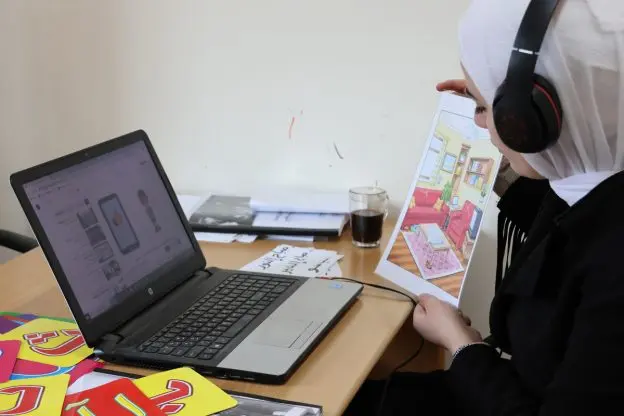
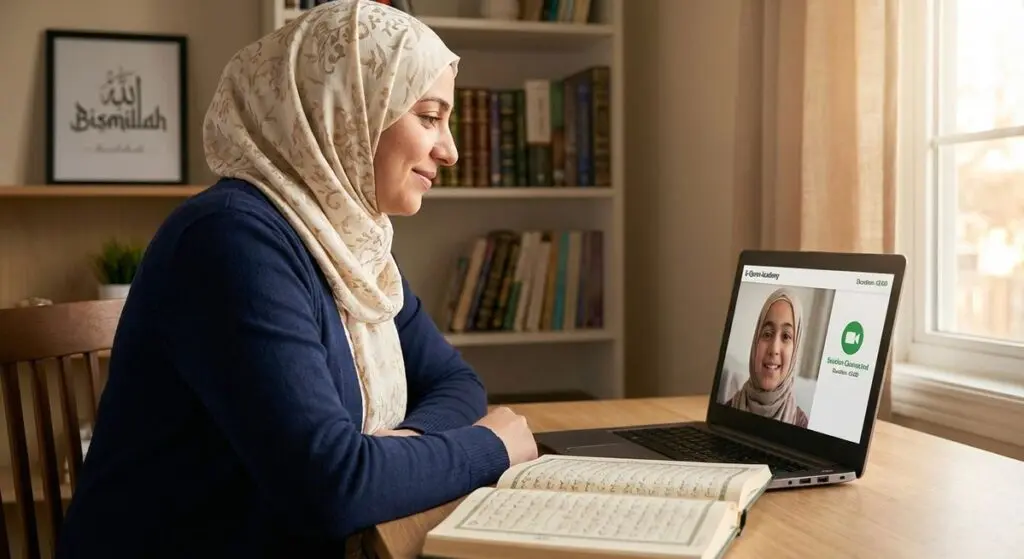
Get a glimpse into the vibrant learning experience at Kalimah Center. These snapshots capture real moments from our live classes—where students engage deeply, connect with passionate instructors, and grow in a welcoming, supportive environment.
Here Are The Reviews On Our Courses:
Our students frequently commend the excellence of our courses and the commitment shown by our instructors. You can read their complete reviews on Trustpilot.

Ready to Learn Arabic in Just One Year? Your Personalized Roadmap Awaits!
So, you’ve got the phased schedule from the article, but where’s the expert guidance and proven Arabic Language curriculum to make it a reality?
Kalimah Center is your one-stop shop for a transformative Arabic learning journey, tailored to your schedule and learning style.
With Kalimah, your one-year plan becomes a reality:
- Phase 1: Build a Strong Foundation: Master the Arabic alphabet and essential grammar in our beginner courses.
- Phase 2: Everyday Conversations: Confidently communicate about daily life topics and start expressing yourself in Arabic.
- Phase 3: Advanced Communication: Engage in conversations about complex societal topics and deepen your understanding of Arabic grammar.
- Phase 4: Mastery and Beyond: Explore specialized programs and courses to refine your skills and achieve fluency.
Why Kalimah? Because our approach aligns perfectly with your schedule:
- 16 Levels of Progressive Learning: From the Arabic alphabet to advanced grammar and conversation, our courses provide a structured path to fluency, mirroring your phased approach.
- Personalized Placement: We assess your current level and match you with the perfect starting point, ensuring your learning journey is efficient and targeted.
Take a placement test to decide your starting level
- 400+ Hours of One-on-One Instruction: Receive individual attention and feedback from experienced teachers, accelerating your progress and addressing your unique needs.
As the Arabic saying goes, “من جد وجد” (Man jadda wajada) – “Whoever strives, finds.” Put in the effort, dedicate yourself to learning, and the rewards of Arabic fluency will be yours.
📚 Explore Our Courses:
Online Arabic Course: Tailored to your level, our comprehensive Arabic program includes 16 teaching levels and 400+ hours of personalized sessions.
Online Quran With Tajweed Course: Perfect for non-Arabic speakers, our course spans 13 levels and equips you with Tajweed mastery from beginner to advanced.
Online Arabic Course For Kids: Nurture your child’s love for Arabic with our engaging and structured program, available in 24 levels for primary, intermediate, and secondary stages.
🚀 Start Your Free Trial Today! 🚀
Don’t miss out on this life-changing opportunity to deepen your faith and knowledge. Sign up now for your free trial and take the first step towards becoming a better practicing Muslim with Kalimah Center!
Start your journey with a FREE TRIAL at Kalimah Center. We’re excited to help you achieve your goals.
Conclusion:
You can learn Arabic in a year with a solid plan and dedication. Aim for at least two hours of daily study, using a phased approach to build your skills progressively. Start by mastering the alphabet and basic grammar, then move on to vocabulary and simple sentences.
Engage in conversations with native speakers, and immerse yourself in Arabic media to enhance your learning.
Kalimah Center provides a structured program to help you achieve fluency in a year. The phased schedule includes beginner to advanced courses, personalized placement tests, and over 400 hours of one-on-one instruction. With their expert guidance and your commitment, reaching a good level of Arabic in a year is attainable.
FAQs about Learn Arabic in a Year
Q1: Can you really learn Arabic in one year?
Yes — to FSI Level 2 (limited working proficiency) with 2 hours of daily focused study (approximately 720 hours in one year). At this level you can hold extended conversations on familiar topics, read simple Arabic news articles, express opinions, and navigate most everyday situations in Arabic-speaking countries. Full professional fluency (FSI Level 3) requires approximately 2,200 hours — about three years at the same daily pace. One year is enough to achieve genuinely useful, practical Arabic.
Q2: How many hours per day do I need to study Arabic for a year?
The schedule in this article requires 2 hours of daily focused study — structured as 20 minutes Anki vocabulary review, 40 minutes new grammar/vocabulary learning, 30 minutes listening practice, and 30 minutes speaking or writing. Over 52 weeks, this produces approximately 720 study hours. If you can study 3 hours daily, you will reach the same milestones by Month 8–9 rather than Month 12.
Q3: What level of Arabic will I reach after one year?
With 2 hours daily for 12 months: approximately FSI Level 1–2 (Elementary to Limited Working Proficiency). Practically: 1,000–1,200 active vocabulary words, ability to hold 15-minute conversations on social topics, reading Arabic news with 60–70% comprehension, writing structured paragraphs, and the foundation for continued intermediate study. This is equivalent to 2–3 years of university Arabic (which typically provides 3–4 hours of instruction per week rather than 2 hours of daily self-study).
Q4: Is 2 hours a day realistic for working adults?
Yes — but it requires deliberate scheduling rather than hoping to find time. The most sustainable approach for working adults: 30 minutes in the morning (Anki + one lesson), 20 minutes during lunch (listening podcast), and 30 minutes in the evening (speaking practice or writing). This produces 80 minutes — close to the 2-hour target. Weekend sessions of 2–3 hours compensate for any weekday shortfalls. Dr. Anas, who learned Arabic while working as a doctor, followed a similar schedule to achieve fluency in one year at Kalimah Center.
Q5: What is the most important thing to do in the first month?
Master the Arabic alphabet completely — all 28 letters in all four positional forms, with correct pronunciation. Do not use transliteration (romanised Arabic letters) as a substitute. Every hour spent on solid alphabet foundations in Month 1 saves multiple hours of confusion later. Language Transfer’s Introduction to Arabic audio course (free) run simultaneously with the alphabet study provides grammar context from the beginning, preventing the common mistake of learning the alphabet in isolation without understanding how it functions in words.