In a nutshell: Verbal nouns (المصدر) in Arabic capture the essence of a verb without linking it to time, enriching expression with abstract meanings like “حب” (love) or “إيمان” (faith). Derived from roots, they vary in form and use, adding depth and versatility to the language.
ِAlright, we come to the article where I’ll explain the lesson “verbal noun – اسم المصدر”. To be honest, sometimes it involves some confusion even when we try to explain it to Arabic students, and I’ll explain why.
Well, now don’t get me wrong, the lesson itself is not as difficult, but the connotations and implications associated with the term “verbal noun” can cause some confusion.
Without further ado, let me explain everything step by step. By the end of this article, you will have a clear understanding of these nouns and be able to use them confidently in your conversations Insha’allah.
What is a Verbal Noun in Arabic Grammar?
In simple terms, a verbal noun (اسم المصدر) is a noun derived from a verb, but it does not indicate time like a verb does. Instead, it refers to the action of the verb in a more abstract, timeless sense.
In clearer words, a verbal noun reflects the action or event of the verb, but not tied to past, present, or future.
Examples of Arabic Verbal Nouns:
For example, we have words like “running – الركض” (from the verb “run يركض”) or “eating – أكل” (from “eat يأكل”). These words refer to the action, not the specific time when the action happens.
But in Arabic, it is much more rich and varied.
To make it clearer, let’s compare a verbal noun to a regular noun. When we talk about a regular noun, we are usually referring to a person, place, or thing. But with a verbal noun, we are focusing on the action or the process itself. For example, in the sentence:
“الركض مفيد للصحة”
(Running is good for health)
The word “الركض” is a verbal noun, indicating the act of running, not a specific run.
Here are some examples of verbal nouns derived from various Arabic verbs:
- Verb: أعان (helped) Verbal Noun: عوناً (help)
- Verb: أثاب (rewarded) Verbal Noun: ثواباً (reward)
- Verb: أطاع (obeyed) Verbal Noun: طاعة (obedience)
- Verb: احترم (respected) Verbal Noun: حرمة
- Verb: كلّم (spoke to) Verbal Noun: كلاماً (speech)
- Verb: اغتسل (washed oneself) Verbal Noun: غسلاً (washing)
- Verb: أذّن (made the call to prayer) Verbal Noun: أذاناً (call to prayer)
- Verb: صلّى (prayed) Verbal Noun: صلاة (prayer)
- Verb: عذّب (tortured) Verbal Noun: عذاباً (torture)
Difference Between al-Masdar and Ism al-Masdar:
Here’s a piece of information you’ll only find buried deep within books, clarifying the confusion surrounding the title of this lesson:
In Arabic, there is no much difference between the term ‘[اسم مصدر]’ (Ism al-Masdar) and ‘[مصدر]’ (al-Masdar). However, Arabic grammar books refer to the ‘masdar’ as [اسم مصدر] (Ism al-Masdar) if its letters are fewer than those of its past tense verb.
For example, in the sentence ‘[سلّم خالد سلامَ مستعجلٍ]’ (Khalid greeted a hasty greeting), the word ‘[سلام]’ (greeting) is considered a ‘[اسم مصدر]’ (Ism Masdar) because its root letters are not the same as those of the past tense verb ‘[سلّم] (he greeted), there is a missing ل because there is shaddah here, so the original word is سلْلَم.
Similarly, in ‘[توضّأ وضوءاً]’ (he performed ablution), ‘[وضوء]’ (ablution) is considered a ‘[اسم مصدر]’ (verbal noun) because its letters are fewer than those of its past tense verb ‘[توضّأ]’ (he performed ablution), the ت is missing. And so on…
So in simple terms, ism al-Masdar اسم المصدر can be considered a more specific type of verbal noun.
At Kalimah Center, we specialize in teaching Arabic in a structured, easy-to-understand way. Many students have shared their success stories, highlighting how our methods helped them to use Arabic effectively in everyday communication.

Our experienced teachers at Kalimah Center focus on the patterns and functions of verbal nouns, offering plenty of examples and practice exercises. This ensures that students not only learn the rules but also apply them in real-life situations.
Join us for a FREE trial class ans see for yourself.

Experience Kalimah Center Classes
Watch real excerpts from our live sessions at Kalimah Center and see how we bring learning to life. These clips highlight our interactive, student-centered teaching approach across all our courses—designed to keep learners engaged, motivated, and actively involved every step of the way.
Master Arabic with Kalimah Center
Join our expert-led online classes and start your journey toward Arabic fluency today.
Book Your Free TrialHow Verbal Nouns are Formed?
Forming verbal nouns requires some understanding of patterns and roots in Arabic. To understand how they are formed, you need to know that verbal nouns can come from different types of verbs and can have different structures depending on these types.
According to the scholars who considered (اسم المصدر ism almasdar) and (المصدر almasdar) to be the same thing, the formation of the verbal noun from the verb follows specific patterns and formulas, which we will discuss in the next section.
On the other hand, according to the scholars who differentiated between (اسم المصدر ism almasdar) and (المصدر almasdar), you need to understand the patterns and formulas that we will discuss in the next section, and beyond that, grasp the following idea.
Scholars who distinguish between them argue that what is called اسم المصدر (Ism al-Masdar), which is a verbal noun that is shorter and does not contain all the root letters of the verb. Ism al-Masdar carries the same meaning as a verbal noun but with some letters omitted in the new form, like the letter ( أ ) in the following examples.
- عَطَاء (ata’) from the verb أَعْطَى (a’ta) – “to give”
- Translation: Giving, the action of providing.
- طَاعَة (taa’ah) from أَطَاعَ (ataa) – “to obey”
- Translation: Obedience, the state or act of following commands.
In each of these examples, Ism al-Masdar omits some letters from the past verb, yet it still represents the action or state.
Now, let’s go through the patterns of verbal nouns to know how verbal nouns are formed…
Patterns of Verbal Nouns (أوزان وتصريفات)
I have clarified that the term “verbal nouns” can be applied to what is called in Arabic “ism al-masdar اسم المصدر” and also to “al-masdar المصدر” in Arabic. I also noted that the term “ism al-masdar اسم المصدر” is sometimes used in Arabic grammar books if the letters of the masdar are fewer than the letters of the past tense verb from which it is derived, or if one of the letters of this past tense verb is missing in the masdar.
Based on this, let’s explore the patterns of Arabic verbal nouns. These patterns are like templates that can help you recognize and understand new nouns even if you don’t know the verb’s meaning.
1. Patterns of Triliteral Verbal Nouns
Triliteral roots, or three-letter roots, are the foundation of many Arabic words. Each root can create different verbal nouns, each adding its unique meaning. These patterns are not fixed by strict rules but are “سماعية” (samā’iyya) — learned by hearing and practicing. Let’s go through some common patterns:
- فِعَالَة (Fi‘ālah) – For Professions or Crafts
This pattern is often used when the action relates to a profession or craft.
Example: زراعة (zirā‘ah) – “Farming”
- فَعَلان (Fa‘alān) – For Movements or Disturbances
Used for words that imply movement or an action that may go up and down.
Example: غليان (ghalayān) – “Boiling”
- فُعال (Fu‘āl) – For Diseases or Sounds
This pattern is common for sounds or physical conditions, especially ones that imply health or discomfort.
Example: سُعال (su‘āl) – “Cough”
2. Patterns of Quadriliteral Verbal Nouns
For quadriliteral verbs, or four-letter roots, Arabic offers fixed patterns based on the verb form. Understanding these helps learners quickly grasp the meaning of new nouns.
- إفعال (If‘āl) – For Intensity or Completeness
Used when the verb has a strong or intensive meaning.
Example: إكرام (ikrām) – “Honoring”
- تفعيل (Taf‘īl) – For Making or Causing an Action
This pattern is applied to verbs with causative meanings.
Example: تعريف (ta‘rīf) – “Definition”
- فِعال (Fi‘āl) or مُفاعَلة (Mufā‘alah) – For Mutual Actions
These patterns indicate actions performed mutually or reciprocally.
Example: مُجادلة (mujādalah) – “Debate”
3. Patterns of Five- and Six-Letter Verbal Nouns
For longer verbs, Arabic verbal nouns follow predictable patterns that simplify learning. This helps learners with verb conjugation and recognizing similar words.
- فعول (Fa‘ūl) and فعالة (Fa‘ālah) – For Simplicity or Ease
Used for actions that have ease or difficulty.
Example: سُهولة (suhūlah) – “Ease”
- استفعال (Istif‘āl) – Seeking or Requesting an Action
A very useful pattern, especially in modern Arabic, for actions related to seeking, requesting, or assuming.
Example: استفادة (istifādah) – “Benefiting”
Why Are Verbal Nouns Important?
Verbal nouns give you the flexibility to express actions without always using the verb form. In a sense, they allow you to “nounify” actions.
In English, you might say, “Swimming is my favorite sport.” In Arabic, you would use the verbal noun for “swimming”—السِّبَاحَة al-sibāḥa—to express this:
السِّبَاحَة هي رياضتي المُفَضَّلَة
Swimming is my favorite sport.
Consider joining Kalimah Intensive Group Classes!
- Learn with others for less.
- Practice Arabic speaking in every class.
- Enjoy a supportive and fun learning environment.

Functions of Verbal Nouns in Arabic Sentences
In Arabic, verbal nouns play an important role in sentences, serving different functions that add depth and meaning to the language.
As a student of Arabic, understanding these functions will make it easier to grasp complex sentences and understand the deeper meanings that native speakers convey.
Let’s look at some of the main functions of verbal nouns and how they operate within sentences.
1. Verbal Nouns Express the Essence of the Action
Verbal nouns allow us to refer to an action in its basic form, without indicating when it happened or who performed it. In a sentence, this type of noun describes the “essence” or nature of the action itself, separate from any time or specific doer.
Example: حُبّ الله (ḥubbu Allāh) – The love of Allah.
Here, “حبّ” (ḥubb), meaning “love,” is a verbal noun from the verb “أحبّ” (aḥabba), which means “to love.” The verbal noun “حبّ” expresses the idea of love itself, not tied to a specific person or time. It captures the pure action of love.
2. Verbal Nouns Describe a State or Condition
Verbal nouns can describe a state or condition that is associated with a noun, often to add depth or to describe qualities more precisely.
Example: سلام خالد (salām Khālid) – Khalid’s peace.
Here, “سلام” (salām) is a verbal noun meaning “peace.” It describes a condition associated with Khalid, adding a sense of calmness or tranquility that he brings or possesses.
3. Verbal Nouns Replace Verbs for Emphasis
In some cases, using a verbal noun instead of a verb can give more emphasis to an action, as it often appears more formal or poetic. For instance:
Example: أدركت أن النجاح يتطلب صبراً كبيراً
(adraktu anna al-najah yatatalab sabran kabiran)
“I realized that success requires great patience”
Here, “صبراً” (sabr, patience) is a verbal noun, giving the sentence a more intense feel than if we used the verb form directly.
4. Conveying Continuous or Habitual Actions
Sometimes, verbal nouns can imply continuous or habitual actions, especially when used in phrases describing someone’s character or life philosophy.
Example: هو في سعي دائم للنجاح
(huwa fi sa’yin da’im lil-najah)
“He is in a constant pursuit of success”
The word “سعي” (sa’y) is a verbal noun meaning “pursuit” or “effort.” In this sentence, it implies that this pursuit is a continuous part of the person’s life.
5. Forming an Abstract Idea Without Time
Abstract ideas in Arabic are often expressed with verbal nouns. This usage allows speakers to discuss general concepts and themes without needing to specify who is involved or when the action happens.
Example: إيمان قوي (īmān qawī) – Strong faith.
The verbal noun “إيمان” (īmān) refers to the idea of faith, an abstract quality, and “قوي” (qawī) – “strong” – adds strength to this concept. By using a verbal noun, the sentence captures a quality that is timeless and not tied to specific events.
Verbal Nouns In Arabic Vs In English أسماء الأفعال
Sometimes the English term “verbal nouns” is used to refer to what we call in Arabic “اسم الفعل” (ism al-fi’l). This is because English grammar is not always comparable to Arabic grammar, and the terminology of one does not always correspond to the other.
English does not have the concept of “اسم الفعل” that exists in Arabic. Some Arabic verbal nouns, when translated into English, become interjections, such as آمين (amen), and some become imperatives, such as هات (take). Furthermore, some cannot be translated literally and the context of the sentence must be understood.
In Arabic, verbal noun اسم الفعل (Ism al-Fi’l) is a unique type of noun that acts like a verb but does not accept verb conjugation or tense markers. Essentially, اسم الفعل has the meaning of a verb, but it remains fixed and does not change to fit tense or person. It’s like a shortcut, giving you the effect of a verb without needing to adjust its form.
Let’s explore how these special nouns work.
Types of Verbal Noun (Ism al-Fi’l) Based on Tense
Ism al-Fi’l can take the meaning of different verb tenses, even though it itself stays the same. There are three types based on the tense they represent:
- Past Tense: For actions that happened in the past.
- شَتَّانَ (shattaana) – This means “separated” or “far apart.” Similar to saying افترقَ (iftaraqa).
- هيهات (hayhaat) – Meaning “it is far,” expressing distance in time or space. Like بَعُدَ (ba’uda).
- Present Tense: For actions happening now.
- أُفٍّ (uff) – This expresses annoyance or discomfort, much like saying أتضجّرُ (ataḍajjaru), “I am bothered.”
- آهِ (aah) – Means “I feel pain,” showing a present discomfort, like أتألمُ (ata’allamu).
- Imperative Tense: To give commands or requests.
- مكانَك (makanak) – “Stay put,” or literally, “your place.” It has the sense of اُثْبِتْ (uthbit), meaning “stand firm.”
- إليكَ (ilayka) – “Move away” or “leave me,” used to ask someone to step aside. It’s similar to saying تَنَحَّ (tanahha), “move aside.”
Some common verbal nouns أسماء أفعال
Here are some common verbal nouns أسماء الأفعال with their meanings and examples:
- شتان: to be different
- Example: شتان بين الحق والباطل (There is a big difference between truth and falsehood)
- أف: to be disgusted or annoyed
- Example: أف لك! (Shame on you!)
- صه: to be quiet
- Example: صه! لا تتكلم! (Quiet! Don’t speak!)
- هيهات: to be far or distant
- Example: هيهات أن أنسى فضلك (It is impossible for me to forget your kindness)
- حذار: to beware or be careful
- Example: حذار من الكذب (Beware of lying)
- آمين: to accept or agree
- Example: آمين يا رب (Amen, O Lord)
- حي: to come or approach
- Example: حي على الصلاة (Come to prayer)
- آه: to sigh or groan
- Example: آه يا قلبي (Oh my heart)
- مكانك: to stay put
- Example: مكانك لا تتحرك (Stay put, don’t move)
- بَلْهَ: to leave or abandon
- Example: بلْهَ الأمر (Leave it be)
- وا: to express surprise or wonder
- Example: وا مصيبتي (Woe is me)

What Are Verbal Sentences in Arabic?
To avoid any confusion, let’s discuss everything related to the concept of ‘verbal’ in Arabic. Now, let’s talk about verbal sentences in Arabic, or جُمَل فِعْلِيَّة (jumal fi‘liyyah). This type of sentence always starts with a verb.
In Arabic, the order of words often changes based on what you want to focus on, but for verbal sentences, the verb usually comes first.
This is very different from English, where sentences mostly start with a subject.
In Arabic, however, it’s common and natural to begin sentences with the action itself.
Basic Structure of a Verbal Sentence
A verbal sentence typically follows a simple structure:
- Verb (فِعْل) – The action word.
- Subject (فَاعِل) – The doer of the action.
- Object (مَفْعُول بِهِ) – The one receiving the action, if necessary.
So, a basic sentence like “The man wrote the letter” would start with “wrote” in Arabic:
كَتَبَ الرَّجُلُ الرِّسَالَةَ
Kataba al-rajulu al-risālah
The man wrote the letter.
Notice how the verb “كَتَبَ” (kataba) comes first, then the subject “الرَّجُل” (al-rajul – the man), and finally the object “الرِّسَالَةَ” (al-risālah – the letter).
Why Start with the Verb?
In Arabic, starting with the verb gives a sense of action. It is as if we are diving straight into what is happening. This style keeps the sentence active and lively. This also shows how Arabic can be more flexible, focusing on different parts of the sentence depending on what’s important in that context.
What are the 10 Verb Forms in Arabic?
Arabic verbs follow patterns we call “forms,” and these forms help give specific meanings or variations to a root verb. Usually, the root is made up of three letters, like “شرب”, which means “to drink.” This root can turn into different forms, each adding a slight change in meaning.
Let’s go over the 10 main verb forms, each one special in its way. I will also give examples so you can see how each form works and how meanings change.
1. First Form of Arabic Verb Forms (فَعَلَ – Fa’ala)
This is the basic form, the original shape of the root. There is no additional prefix or suffix; it simply expresses the base meaning of the verb.
For example:
- وَزَنَ (wazana) – “He weighted”
Form I is straightforward, giving you the pure meaning without any changes.
2. Second Form of Arabic Verb Forms (فَعَّلَ – Fa”ala)
Second form of Arabic verb forms is known for intensifying or causing an action. You can identify it by the doubled second root letter (a shadda). This form often makes the action stronger or more focused.
Shadda (شَدَّة) – a small “w” shape placed above a letter, indicating that the letter is doubled or emphasized.
Example: مّ (mm) – “mm”.

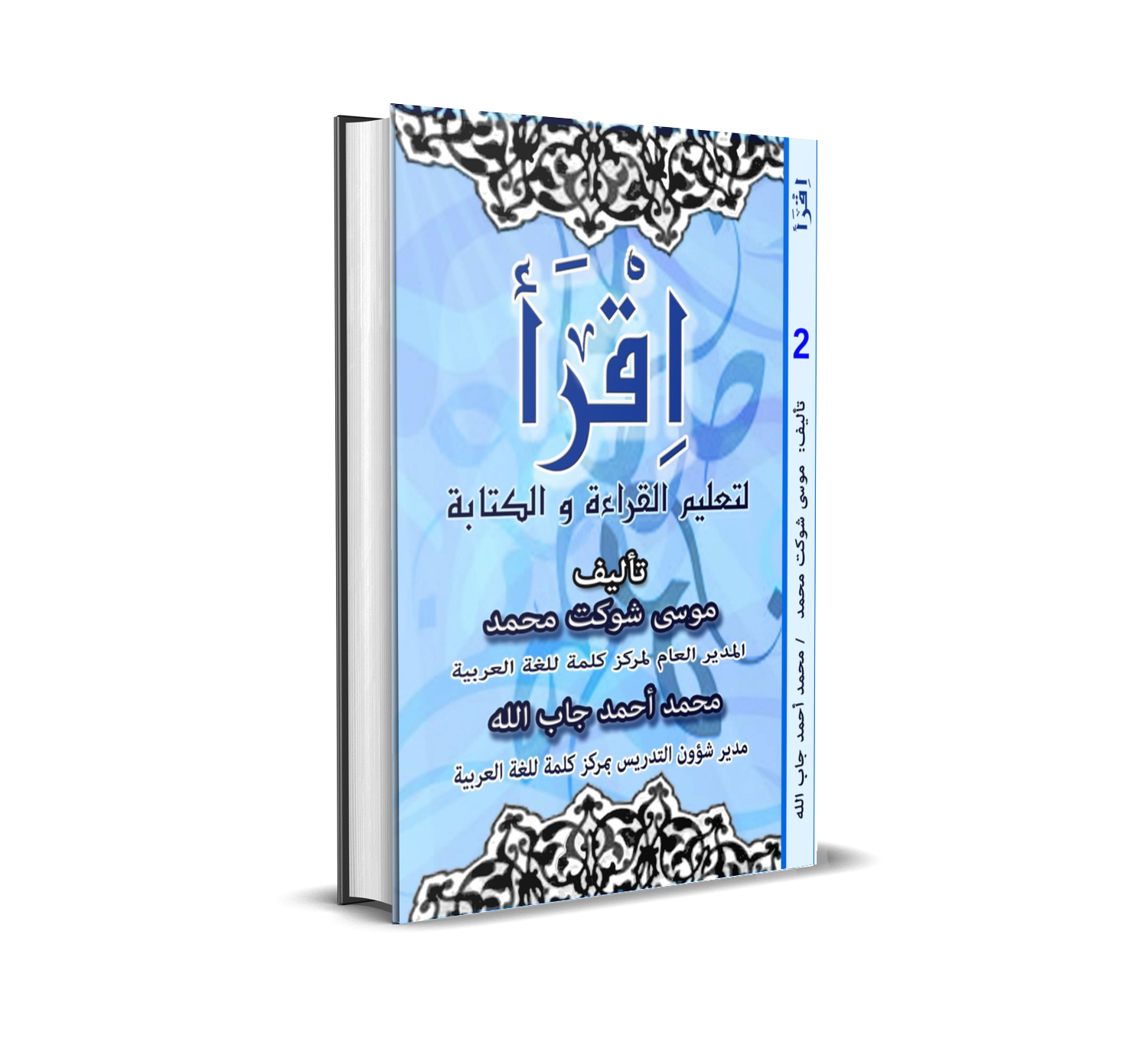
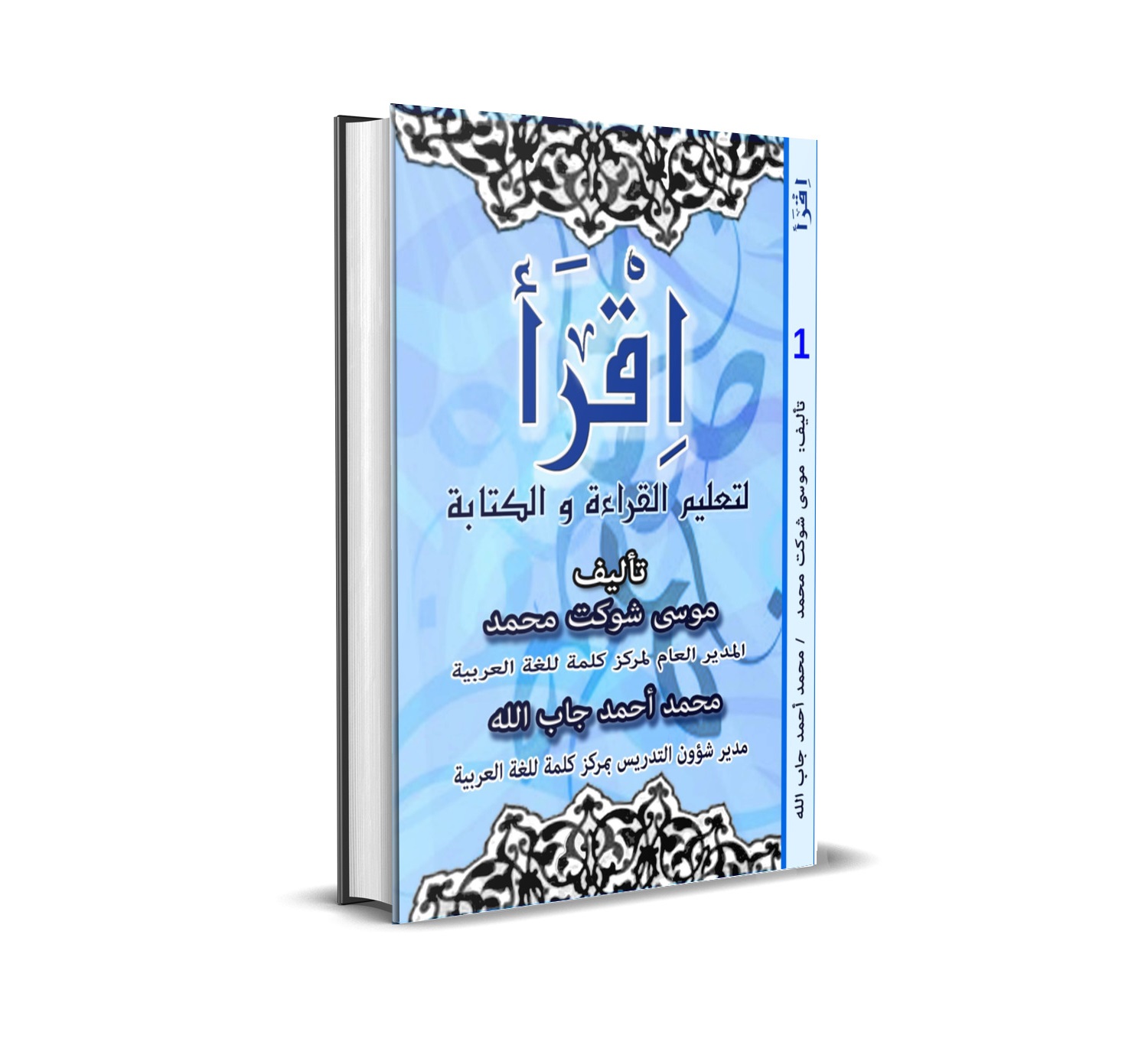
* From Kalimah’s Iqraa book, which is used in our online Arabic course.
For example:
- دَرَّسَ (darrasa) – “He taught” (from the root دَرَسَ, which means “to study”).
By using Form II, we turn “study” into “teach,” giving the sense that the subject is causing someone else to study.
3. Third Form of Arabic Verb Forms (فَاعَلَ – Fā’ala)
This form is commonly used when the action involves two people or entities. The form often implies a mutual or shared action, a sort of “doing something with or to someone.”
For example:
- كَاتَبَ (kātaba) – “He corresponded” or “He wrote to.”
This form often conveys the idea of interaction. So, “kātaba” means “to correspond or exchange letters.”
4. Fourth Form of Arabic Verb Forms (أَفْعَلَ – ‘Af’ala)
This form usually means causing or initiating an action. It’s marked by an “alif” (أ) at the beginning of the root.
For example:
- أَكْرَمَ (akrama) – to honor or to respect.
From the root كَرَمَ (karama), which means “to be generous.” In this form, it becomes “to honor” or “to make someone feel respected.”
5. Fifth Form of Arabic Verb Forms (تَفَعَّلَ – Tafa”ala)
This form adds “تَـ” at the start of the second form, and it tends to give a sense of passive or reflexive meaning
For example:
- تَعَلَّمَ (ta’allama)
- تَزوَّجَ (Tazawaja).
6. Sixth Form of Arabic Verb Forms (تَفَاعَلَ – Tafā’ala)
This form is built from third form by adding “تَـ” at the beginning. This form usually suggests a reciprocal or mutual action, similar to Form III but more intense.
For example:
- تَشَارَكَ (tashāraka) – “They shared” or “They participated with each other.”
This form makes it clear that there is an action happening between two or more participants.
7. Seventh Form of Arabic Verb Forms (اِنْفَعَلَ – Infa’ala)
This form is created by adding the prefix “اِنـ” to the root. This form is often used to convey a passive meaning or to indicate an action happening by itself, without a specific doer.
For example:
- اِنْكَسَرَ (inkasara) – “It broke” (from the root كَسَرَ, meaning “to break”).
This is useful when you want to say something was broken without mentioning who did it, like “The glass broke by itself.”
8. Eighth Form of Arabic Verb Forms (اِفْتَعَلَ – Ifta’ala)
This form usually has the meaning of taking on an action or doing it oneself. It’s identified by the addition of “ت” after the first letter of the root.
For example:
- اِشْتَغَلَ (ishtaghala) – “He worked” (from the root شَغَلَ, which means “to occupy or keep busy”).
This form often shows that the subject is engaged in an action by themselves.
9. Ninth Form of Arabic Verb Forms (اِفْعَلَّ – If’alla)
This form is rare and often used for colors and physical defects. It changes the meaning to describe a quality or state rather than an action.
For example:
- اِبْيَضَّ (ibyadda) – “It became white.”
This form applies to adjectives describing colors, like “ibyadda” for “becoming white”.
10. Tenth Form of Arabic Verb Forms (اِسْتَفْعَلَ – Istaf’ala)
The last form is unique because it implies requesting or seeking. It’s made by adding the prefix “اِسْتَـ” to the root and often translates to English as “to seek” or “to ask for.”
For example:
- اِسْتَفْهَمَ (istafhama) – “He inquired” or “He asked for clarification.”
This form can indicate that someone is seeking information, asking questions, or looking for something specific.
Master Arabic with Kalimah Center
Join our expert-led online classes and start your journey toward Arabic fluency today.
Book Your Free TrialInside Kalimah Center: Moments from Our Courses
Get a glimpse into the vibrant learning experience at Kalimah Center. These snapshots capture real moments from our live classes—where students engage deeply, connect with passionate instructors, and grow in a welcoming, supportive environment.
Here Are The Reviews On Our Courses:
Our students frequently commend the excellence of our courses and the commitment shown by our instructors. You can read their complete reviews on Trustpilot.

Want to Master Arabic Verbal Nouns? Go Beyond Theory with Kalimah Center!
You’re learning about verbal nouns, which is an important step in mastering Arabic grammar. But understanding the rules is just the beginning. To truly grasp this concept, you need practical application and expert guidance.
Our online Arabic courses offer a unique blend of theoretical knowledge and practical exercises, ensuring you not only understand verbal nouns but also use them confidently in your speaking and writing.
Here’s what you can expect:
- Clear Explanations: Our experienced teachers will break down the complexities of verbal nouns in a way that’s easy to understand.
- Engaging Activities: You’ll participate in interactive exercises and discussions that reinforce your learning.
- Personalized Feedback: Receive guidance and support from your teacher to improve your skills.
- Focus on all skills: Our courses cover reading, writing, listening, and speaking, ensuring a well-rounded understanding of Arabic.
📚 Explore Our Courses:
Online Arabic Course: Tailored to your level, our comprehensive Arabic program includes 16 teaching levels and 400+ hours of personalized sessions.
Online Quran With Tajweed Course: Perfect for non-Arabic speakers, our course spans 13 levels and equips you with Tajweed mastery from beginner to advanced.
Online Arabic Course For Kids: Nurture your child’s love for Arabic with our engaging and structured program, available in 24 levels for primary, intermediate, and secondary stages.
🚀 Start Your Free Trial Today! 🚀
Don’t miss out on this life-changing opportunity to deepen your faith and knowledge. Sign up now for your free trial and take the first step towards becoming a better practicing Muslim with Kalimah Center!

Conclusion:
Verbal nouns (اسم المصدر) in Arabic are nouns derived from verbs that encapsulate the essence of an action or state without tying it to a specific time. Unlike verbs, they abstractly represent the occurrence or concept of an action, such as ركض (running) from the verb يركض (to run) or أكل (eating) from يأكل (to eat).
Verbal nouns enrich Arabic with their versatility, serving various functions, such as describing actions, emphasizing processes, or expressing abstract ideas. For instance, in الركض مفيد للصحة (Running is good for health), الركض reflects the act of running without any temporal limitation.
The concept of verbal nouns extends to اسم المصدر, a specialized form where some root letters are omitted but the meaning remains intact, such as وضوء (ablution) from توضأ (performed ablution). These nouns follow patterns like فِعَالَة (e.g., زراعة – farming) or إفعال (e.g., إكرام – honoring), revealing the richness of Arabic morphology. T
hey also differ from جُمَل فِعْلِيَّة (verbal sentences) that prioritize the verb, reflecting Arabic’s dynamic word order. By mastering verbal nouns and their patterns, learners unlock the ability to express nuanced actions and ideas with precision.
FAQs about Verbal Nouns in Arabic
What is a verbal noun (Ism al-Masdar) in Arabic grammar?
A verbal noun in Arabic, known as Ism al-Masdar (اسم المصder), is an abstract noun derived from a verb that indicates an action or state without being bound by tense or time. Unlike regular nouns that denote people or places, a verbal noun isolates the pure essence of the process itself, such as al-rakd (الركض – running).
What is the difference between al-Masdar and Ism al-Masdar?
The primary difference lies in letter count. In Arabic grammar, a verbal noun is classified as al-Masdar if it retains all root letters of its past-tense verb. It is called Ism al-Masdar if it contains fewer letters than the original verb, such as wudu (وضوء – ablution) derived from the verb tawadda’a (توضّأ).
How are triliteral verbal nouns formed in Arabic?
Triliteral (three-letter root) verbal nouns are primarily samā‘iyyah (سماعية), meaning their patterns are learned through listening and linguistic tradition rather than rigid rules. Common templates include Fi‘ālah (فِعَالَة) for professions like zirā‘ah (زراعة – farming), and Fa‘alān (فَعَلان) for movements like ghalayān (غليان – boiling).
What is an Ism al-Fi‘l (verbal noun/verb-noun) in Arabic?
An Ism al-Fi‘l (اسم الفعل) is a unique type of noun that carries the meaning and force of a verb but does not accept standard verb conjugations or tense markers. It acts as a linguistic shortcut and can signify past, present, or imperative tenses, such as Heihāt (هيهات – it is far) or Āmīn (آمين – accept/amen).
What is the structural layout of an Arabic verbal sentence?
An Arabic verbal sentence, or Jumlah Fi‘liyyah (جملة فعلية), is a sentence that fundamentally begins with a verb rather than a subject. The standard word order follows a strict sequence: Verb (فِعْل) + Subject (فَاعِل) + Object (مَفْعُول بِهِ), which emphasizes the action itself to create a dynamic narrative style.